Val d'Orcia road trip
Val d'Orcia: Montepulciano, Pienza and Montalcino with winery
- Free cancellation
- Small group
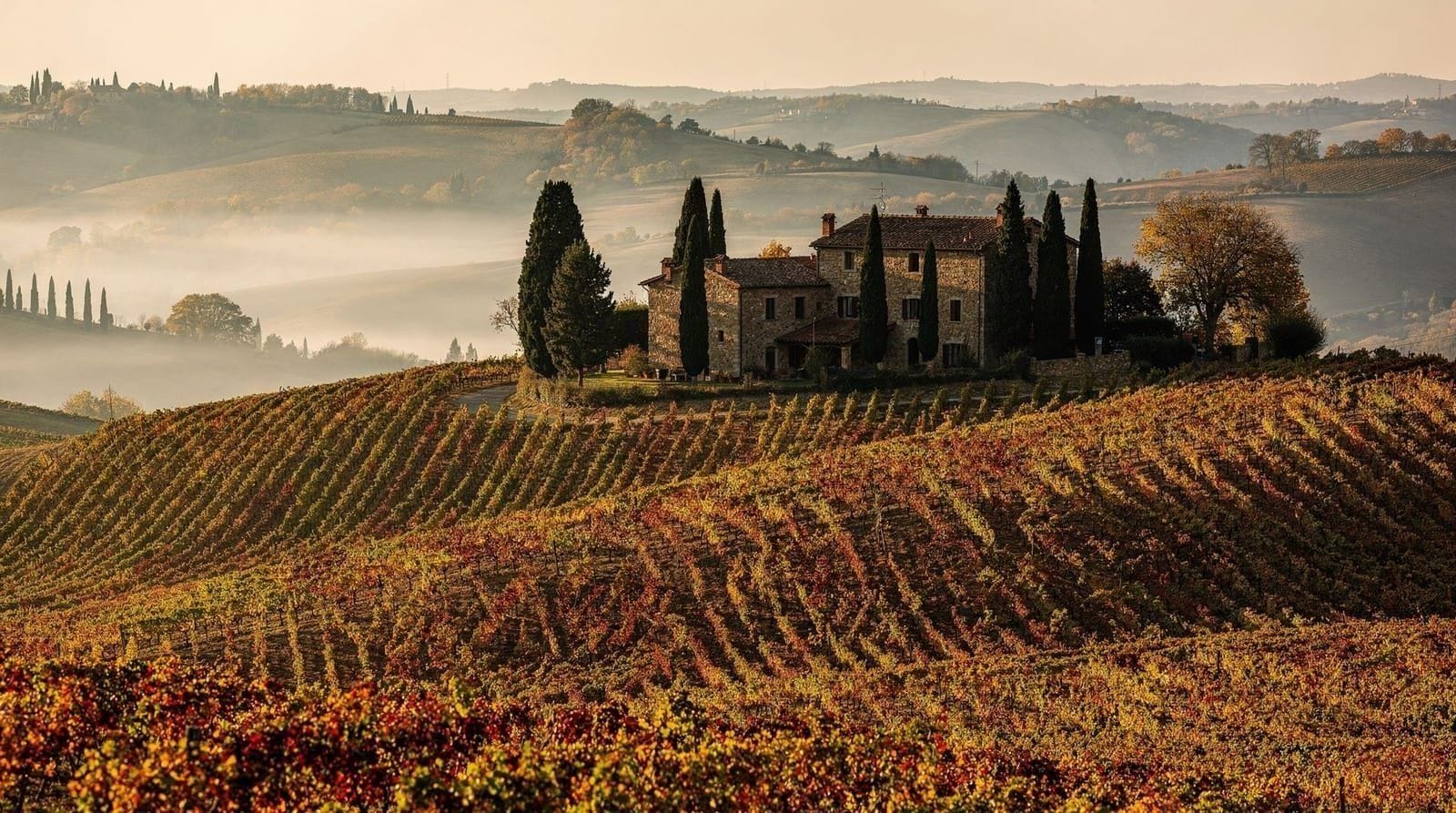
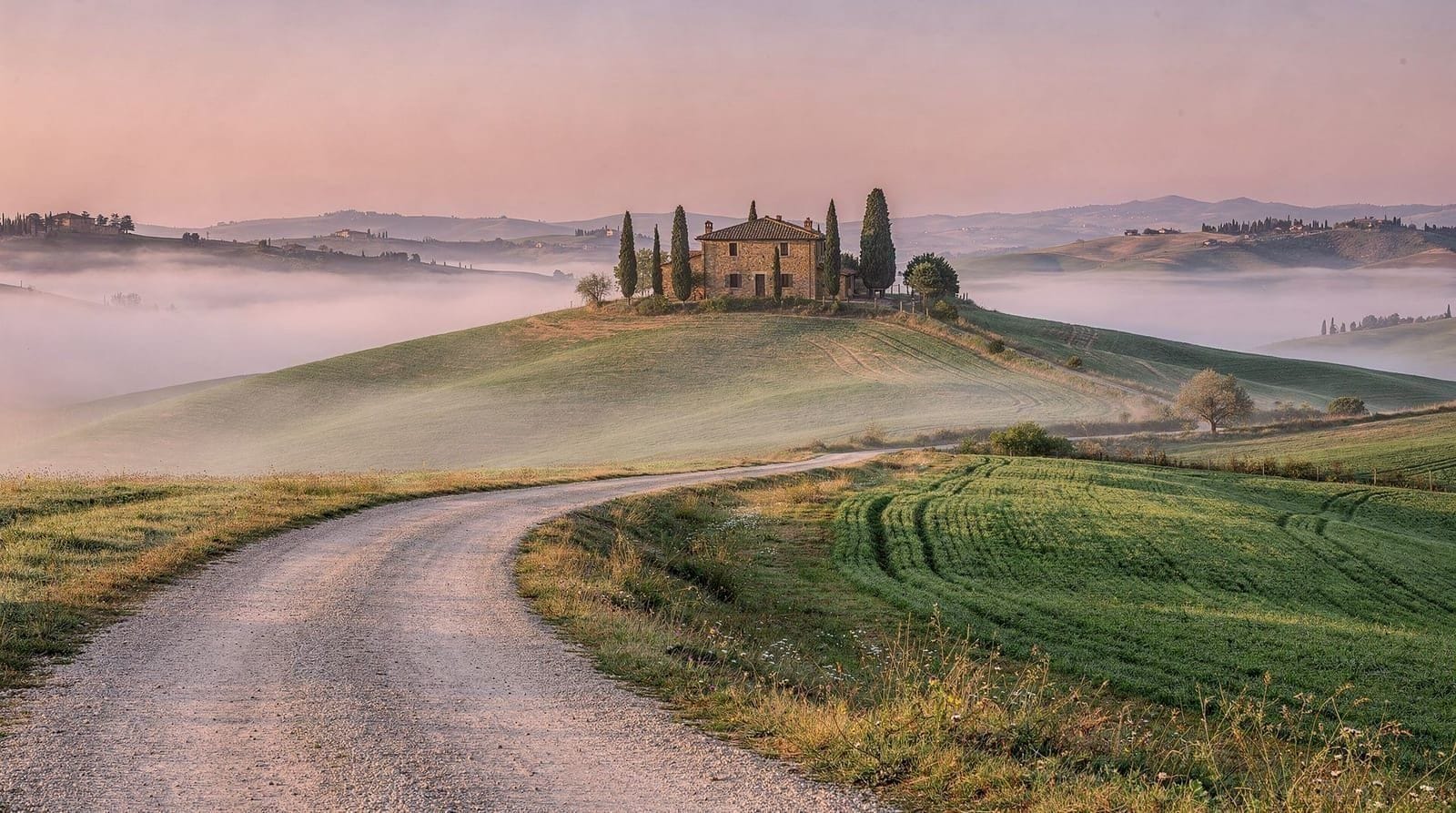
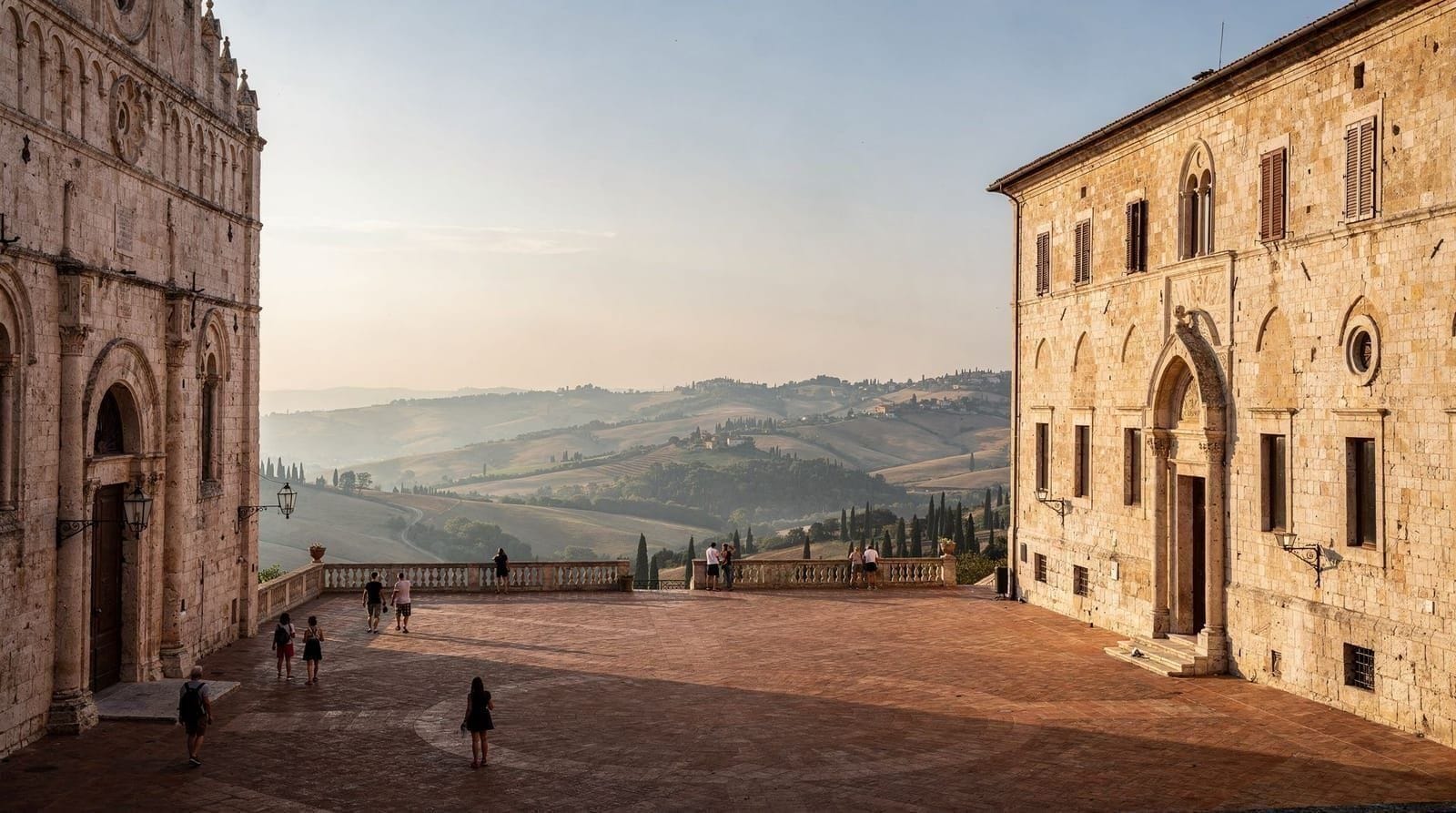
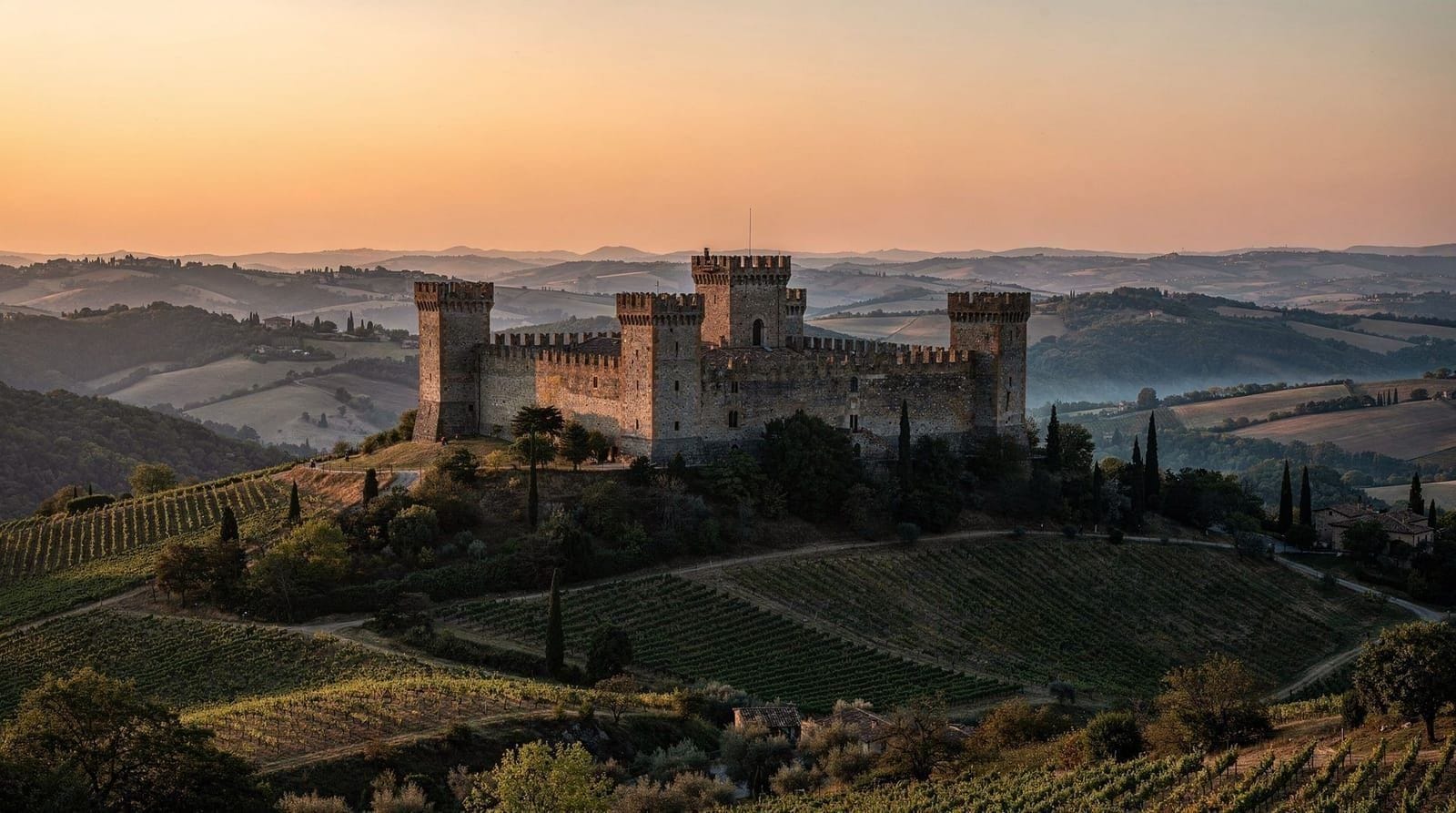
The Val d’Orcia is what most people picture when they think of Tuscany: rolling hills striped with cypress trees, medieval hilltop towns, sheep grazing on pale clay soil (the characteristic crete senesi), and winemakers producing Brunello di Montalcino — one of Italy’s most powerful red wines. UNESCO inscribed the landscape in 2004. This three-day road trip uses it properly.
| Where | Montepulciano, Pienza, Bagno Vignoni, Montalcino |
| Cost | Around €200–320pp over three days |
| Time needed | 3 days, car mandatory |
| Getting there | Rental car from Florence, Siena or Chiusi |
| Best time | Late April–mid-May or late September–October |
A car is mandatory for this itinerary. The towns are connected by scenic provincial roads that buses serve infrequently. The best light for photography is at dawn and dusk — which means being based in the landscape, not day-tripping from Siena or Florence.
Budget estimate: €200–320 per person over three days: agriturismo accommodation (€80–180/night per room), meals (€50–70/day), wine tastings (€20–50 per session), car fuel (the distances are short — 30–60 km per day total).
Base options: Stay in Pienza, Montalcino or a Val d’Orcia agriturismo. Avoid basing in Siena if you want full days in the valley.
ZTL reminder: Both Montepulciano and Pienza have restricted zones. Most accommodation provides parking codes. Park at the designated car parks outside the walls and walk in.
Three days at a glance:
| Day | Base | Highlights |
|---|---|---|
| Day 1 | Montepulciano/Pienza | Vino Nobile wineries, Tempio di San Biagio |
| Day 2 | Pienza | Cypress road at dawn, Pienza, Bagno Vignoni |
| Day 3 | Montalcino | Brunello estates, Abbazia di Sant’Antimo |
Day 1: Arrival and Montepulciano
Getting to Montepulciano
From Florence: A1 autostrada south to Chiusi Chianciano exit, then SP146 north (1h40 total, 120 km). From Siena: SS2 south then SP146 (45 minutes, 65 km). No direct train; the Chiusi railway station is 14 km away.
Montepulciano (10:00–17:00)
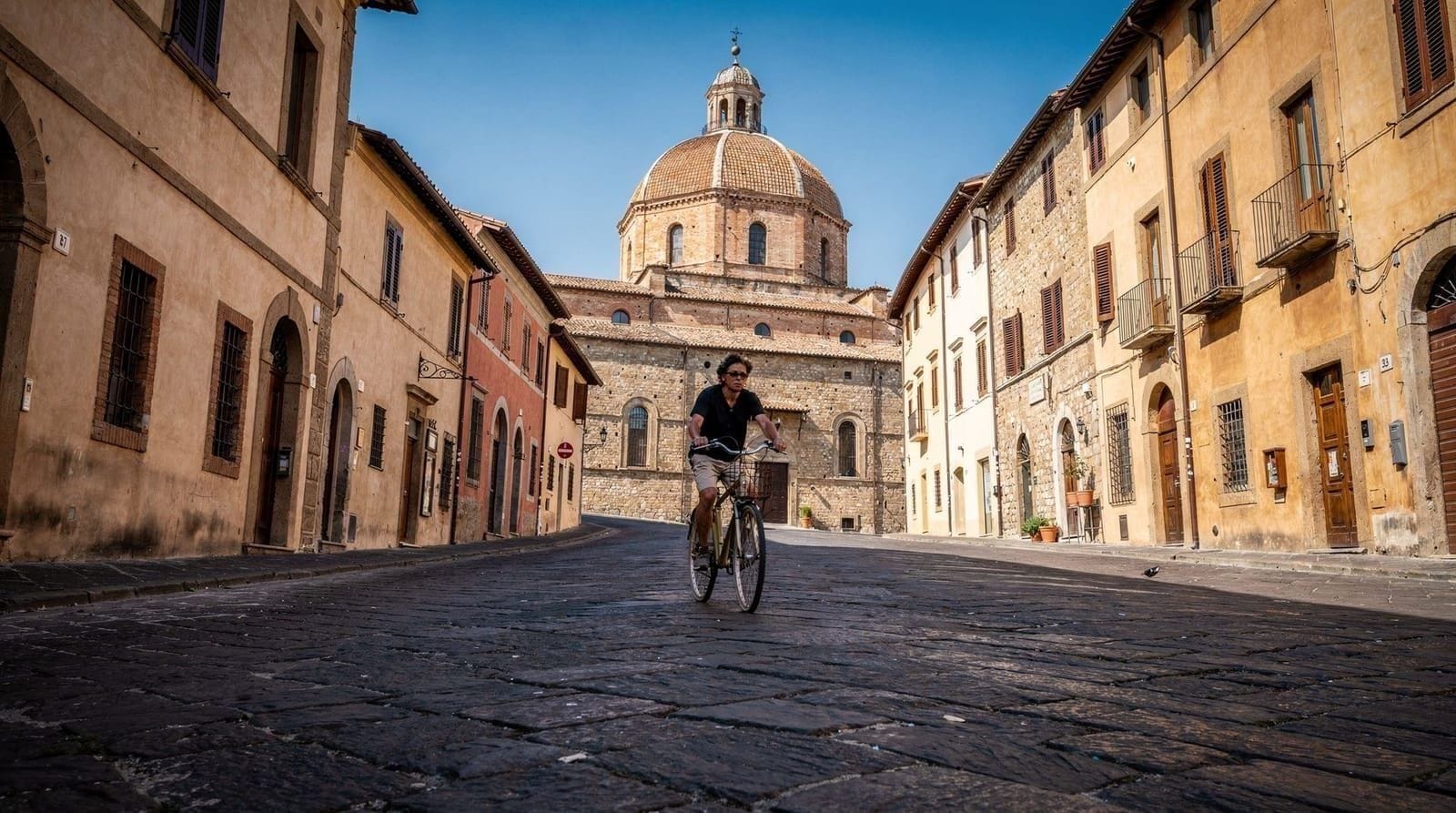
Montepulciano climbs a long ridge at 605 metres, the highest of the Val d’Orcia hilltop towns. The main street (Via di Gracciano, which changes names as it climbs) runs 1.5 km from the lower gate to Piazza Grande at the top — and rises 180 metres in elevation.
Morning walk (10:00–12:00):
Start at Porta al Prato (lower gate) and walk up. On the way:
- Palazzo Bucelli — Etruscan and Roman funerary urns embedded in the base of the building wall, visible from the street
- Sant’Agostino church — the facade is by Michelozzo (Medici architect); free entry
- Columns and well at Piazza Grande — the civic square at the top, with the uncompleted Duomo facade (the Baroque architect ran out of funds)
Winery visit (12:00–14:00):
Vino Nobile di Montepulciano is a DOCG wine made from Prugnolo Gentile (a local Sangiovese clone). The best cellars are built into the volcanic tufa beneath the town.
- Cantina dei Ricci (Via Colloredo 2) — one of the best cellars in town; the underground space is dramatic; tasting of 3–5 wines ~€20
- Contucci (Via del Teatro 1) — the oldest family estate, informal and knowledgeable; tastings €10–15
- Palazzo Avignonesi (Via Colloredo 1) — higher-end estate; appointment required; excellent Vino Nobile and Vin Santo
Lunch in Montepulciano (14:00–15:30):
- Osteria Acquacheta (Via del Teatro 22) — famous for pici pasta and the Fiorentina; very popular, book ahead; mains €14–20
- La Grotta (Via San Biagio 15, near the lower town) — good seasonal cooking, terrace setting
Afternoon: San Biagio (15:30–17:00):
Walk or drive 1 km downhill from the town gates to the Tempio di San Biagio — a 16th-century Renaissance church by Antonio da Sangallo il Vecchio, standing alone in a cypress-surrounded meadow. One of the most perfectly proportioned small churches in Italy. Free entry; open 9:00–12:30 and 15:30–19:00.
Evening: move to Pienza or agriturismo (17:30)
Drive 15 km west to Pienza for the evening. Check in to your hotel or agriturismo.
Dinner in Pienza:
- Ristorante Dal Falco (Piazza Dante Alighieri 3) — traditional, pici with ragù, local Pecorino; mains €14–20
- Latte di Luna (Via San Carlo 2) — reliably good, seasonal vegetables and pasta
Day 2: Pienza, Bagno Vignoni and the Val d’Orcia landscape
Dawn or early morning: the cypress road
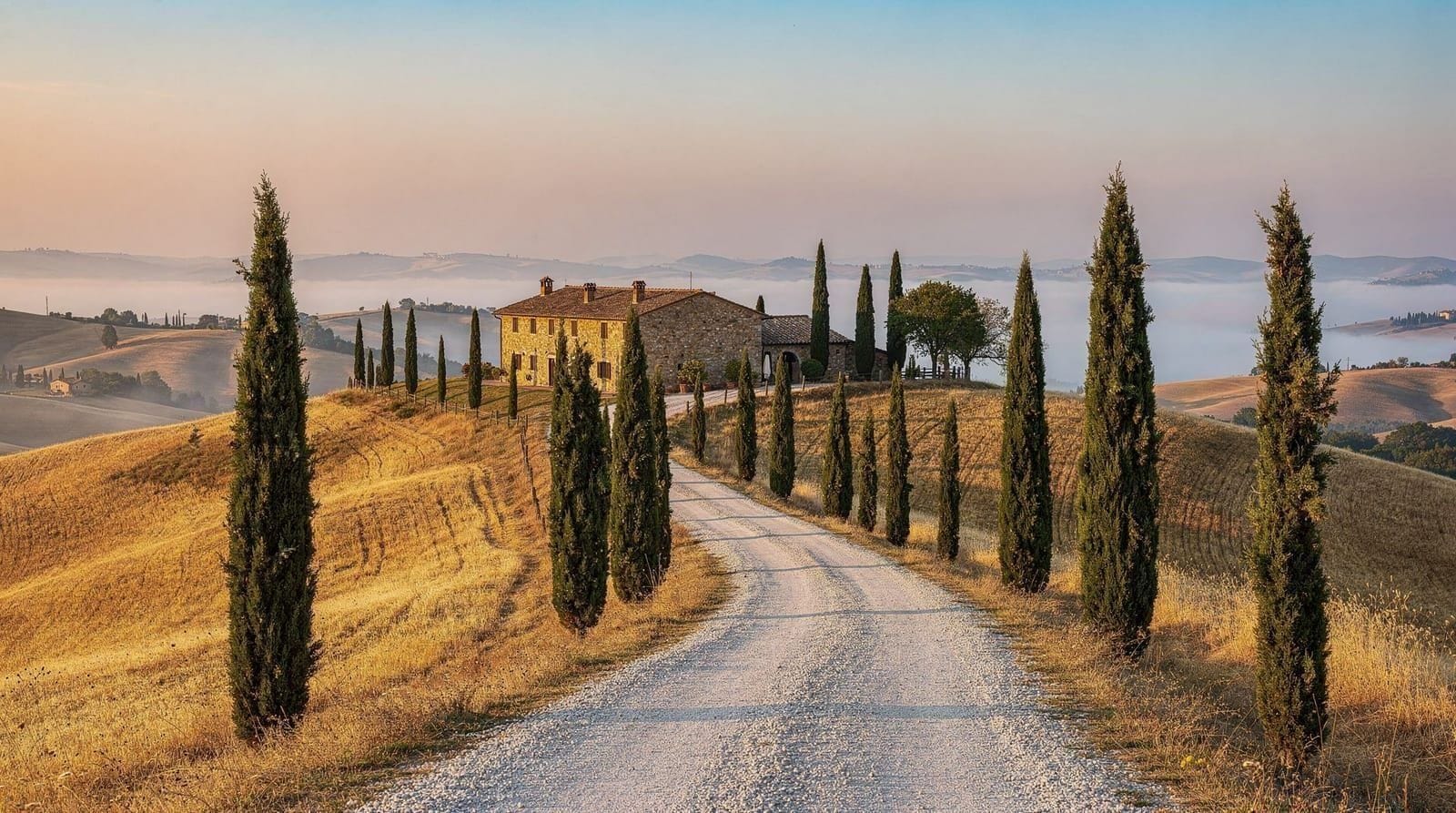
The iconic Val d’Orcia cypress-lined road near San Quirico d’Orcia is best photographed at dawn (5:30–7:00 in summer, 7:00–8:00 in spring/autumn). The road — locally called the Strada Provinciale 146 near Monticchiello — has the famous row of cypresses on a small hill that appears on every Tuscany calendar photograph.
You need a car and an early start. Drive 12 km east from Pienza toward Monticchiello, then explore the back roads between San Quirico, Bagno Vignoni and Pienza. A clear day with light mist in the valleys is the ideal condition.
Morning: Pienza (9:00–12:00)
Pienza was built almost entirely in 3 years (1459–1462) by Pope Pius II as the ideal Renaissance city. The entire town centre is a UNESCO World Heritage Site.
What to see:
- Piazza Pio II — the civic square designed by Bernardo Rossellino; three palaces face each other across the space in perfect Renaissance symmetry
- Duomo di Pienza — the interior is surprisingly light (the pope wanted Gothic windows in a Renaissance building; the mix is strange and beautiful); the apse windows look directly out over the Val d’Orcia
- Palazzo Piccolomini (€7) — the papal palace; the hanging garden on the south side overlooks the Val d’Orcia; tour the piano nobile with original 15th-century furnishings
Pecorino di Pienza — the local sheep’s milk cheese comes in several stages of aging (fresco, semi-stagionato, stagionato) and is sold in shops throughout the town. Buy a piece of stagionato and eat it with a glass of local wine for a €5 lunch.
Lunch:
- Bar Il Rossellino — coffee and pastries in the piazza; light lunch
- Via del Bacio delis — buy Pecorino, salumi, local honey and eat in the piazza
Afternoon: Bagno Vignoni (14:00–16:00)
Bagno Vignoni is unlike any other village in Tuscany: the entire central piazza is a 16th-century thermal pool (Renaissance bathing cistern), 49 x 29 metres, fed by sulphurous springs at 52°C. You cannot swim in the historic pool (it’s a protected monument), but the scene is one of the most photographed in southern Tuscany.
Walk down the steep path from the pool to the Mulino Medici ruins — old watermills in the river gorge below the village, fed by the overflow from the thermal springs.
Spa option: The Terme di Bagno Vignoni (€25–35 for 2 hours) is the licensed bathing facility a short walk from the village; proper thermal pools where swimming is permitted.
Late afternoon: San Quirico d’Orcia (16:30–18:00):
6 km northwest of Bagno Vignoni, San Quirico is a quiet medieval town with excellent gardens (the Horti Leonini, free, geometric Renaissance parterre) and the outstanding Collegiata di San Quirico — a 12th-century Romanesque church with three elaborately carved portals, each in a different medieval style.
Evening
Return to Pienza or your agriturismo. Sunset from the Pienza ramparts (walk the south edge of the old town, free) looks directly over the Val d’Orcia plain.
Dinner:
- Your agriturismo hosts are usually the best option; many prepare set dinners with estate wines
- Or return to Latte di Luna or Dal Falco in Pienza
Day 3: Montalcino and the Brunello estates
Morning: drive to Montalcino (9:00)
Montalcino is 25 km west of Pienza (35 minutes). The town sits at 564 m on a ridge commanding the convergence of several river valleys. Population 5,000 — its economic power (the Brunello wine market turns over hundreds of millions of euros annually) is wildly disproportionate to its size.
Montalcino town (9:30–11:00)
- La Fortezza (the medieval fortress) — the wine bar inside the lower rampart serves Brunello and Rosso di Montalcino by the glass with views over the vineyards; €8–18 per glass depending on producer and vintage
- Piazza del Popolo and the old town — compact; 30 minutes to walk the main streets
- Museo Civico e Diocesano (Piazza Garibaldi, €5) — small collection with a 13th-century Sienese polyptych and local history
Winery visit (11:00–13:30)
Brunello di Montalcino DOCG must be 100% Brunello (the local Sangiovese Grosso clone), aged a minimum of 5 years (6 for Riserva). The best bottles age for 20–30 years.
Top estates near Montalcino for visits (book ahead):
- Biondi-Santi (Villa Greppo) — the founding estate of Brunello; the Riserva is the most historic Italian wine still in production; tastings by appointment, formal and expensive but extraordinary
- Altesino (Siena road, 8 km from Montalcino) — welcoming cellar visits and tastings, good introductory experience; €20–30
- Castelgiocondo (Frescobaldi estate) — panoramic vineyard setting, guided cellar tour and comparative Brunello tasting; €25–40
- La Gerla (Castelnuovo dell’Abate direction) — small estate, excellent Brunello, personable owners
The Brunello di Montalcino guide explains the wine, the estates and how to read a Brunello label.
Lunch:
- Il Leccio (Sant’Angelo in Colle, 14 km south of Montalcino) — panoramic terrace, excellent local food, stunning view; mains €16–22
- Trattoria Sciame (Via Ricasoli 9, Montalcino) — simple, local, ribollita and pici al ragù ~€12
Afternoon: Abbazia di Sant’Antimo (14:30–16:30)
Drive 12 km south from Montalcino to the Abbazia di Sant’Antimo — a Romanesque abbey in a meadow valley surrounded by olive groves and vineyards. The building dates from the 12th century (some elements possibly 8th–9th century). The pale travertine and onyx marble interior glows in afternoon light.
Gregorian chants are sung by the small resident community at canonical hours — call ahead (0577-835659) to check the schedule. Free entry. One of the most peaceful places in Tuscany.
After Sant’Antimo, drive back toward Siena, Florence or your next destination.
Departure options:
- To Florence: A1 autostrada north from Chiusi or SS2 north via San Quirico; 1h40–2h
- To Siena: 40 km north on SS2; 45 minutes
- To Pisa/coast: via Grosseto and the Aurelia; 2h30
Val d’Orcia driving notes
Scenic roads: The SP146 between San Quirico and Montepulciano is the classic landscape drive; the road between Montalcino and Castelnuovo dell’Abate passes through DOCG vineyard land; the dirt road (strada bianca) between Monticchiello and the SP146 has the famous cypress grove.
Strada bianche: Many scenic back roads in Val d’Orcia are white gravel (unpaved). Standard hire cars handle them; lower your speed on blind corners. Check the GPS route against Google Maps satellite view before turning onto an unfamiliar track.
Fuel: Fill up in Montepulciano or Montalcino — petrol stations on minor roads are scarce. Many are self-service with card payment only.
Parking: Most towns have paid car parks outside the ZTL gates. Follow the P signs. Do not park in the ZTL — cameras issue fines automatically.
Extending to a full Tuscany week
Three days in Val d’Orcia pairs naturally with Florence and Siena on either end — most visitors arrive from Florence, spend these three days in the valley, then continue to Siena or the coast. If you have more time, the perfect Tuscany week builds this exact Val d’Orcia stretch into a fuller seven-day loop with Florence, Chianti and Pisa around it. Travellers who want hill towns with more architectural variety and less wine-region focus should look instead at the Tuscany hill towns road trip, which covers Siena, San Gimignano, Volterra, Cortona and Arezzo.
Wine tasting logistics
Every winery on this route requires advance booking, even informal-feeling family estates — a phone call or email a few days ahead is usually enough outside peak season, but April–May and September need 1–2 weeks’ notice for the better-known names. If you’re driving between tastings, appoint a designated driver for each day or space visits so the driver tastes lightly and spits rather than swallows; Italian drink-driving limits are strict and rural roads are unlit at night. Our Brunello di Montalcino guide explains how to read a producer’s reputation before you commit to an appointment, which matters more here than in most wine regions given how much quality varies between estates a few kilometres apart.
When to skip Bagno Vignoni
Bagno Vignoni is a genuine highlight, but it’s a 30–45 minute stop, not a half-day destination — the historic pool cannot be entered, and beyond photographs and a coffee, there’s little to fill more time unless you book the Terme di Bagno Vignoni spa session. If your three days feel tight, this is the easiest single stop to compress: photograph the piazza, walk down to the Mulino Medici ruins, and move on to San Quirico d’Orcia, which offers considerably more to see for the same amount of time.
Frequently asked questions about this itinerary
Can I do Val d’Orcia without a car?
Very difficult. The Treno Natura (a restored steam train) runs seasonal excursions through the Val d’Orcia from Siena — beautiful but limited to set dates and routes. For an independent visit, a car is required. See our driving in Tuscany guide for rental tips.
When is the best time for Val d’Orcia photography?
Late April to mid-May for green hills and wildflowers (the iconic look). Late September–October for golden harvest light. The famous cypress road looks best in early morning mist — set your alarm. Winter (December–February) after light snowfall is extraordinary but requires flexibility as some agriturismo close.
Is Brunello di Montalcino worth the price?
A current-release Brunello costs €30–50 retail; a Riserva from a great vintage (2010, 2015, 2016) can run €80–150+. The Rosso di Montalcino (same grape, younger wine, less ageing requirement) offers much of the character at €15–25. For casual drinking with food, Rosso is often the better choice. For a special occasion bottle, Brunello from a serious estate is genuinely remarkable. Our Brunello guide explains the vintage chart.
What is the ZTL situation in Val d’Orcia towns?
Montepulciano and Pienza both have ZTL zones (cameras at the upper and lower gates). Park in the signposted car parks outside the walls (Montepulciano: Parking A Porta al Prato or Parking B near the bus station; Pienza: Parking Parcheggio Sud). Montalcino has restricted parking near the centre; use the Parking Fortezza. Most agriturismo have private parking.
Should I stay in an agriturismo or a town hotel?
Agriturismo gives you the landscape experience — waking to vineyard views, dinner with the owners, wine direct from the cellar. Town hotels are more convenient for evening walks and restaurants. For a three-day Val d’Orcia trip, at least one agriturismo night is strongly recommended. The where to stay in Tuscany guide has options in all budget ranges.
Top experiences
Bookable activities with verified prices and instant confirmation on GetYourGuide.

Val d'Orcia: Montepulciano, Pienza and Montalcino with winery
- Free cancellation
- Small group
Florence: Val d'Orcia highlights tour with wine tasting
- Free cancellation
- Small group

Florence: Montalcino, Montepulciano and Val d'Orcia with lunch
- Free cancellation
- Small group
Montalcino: Brunello wine tasting and lunch in a Tuscan castle
- Free cancellation
- Small group