Duomo district
Florence's cathedral quarter: the dome climb, Baptistery, Bell Tower, Piazza della Repubblica and honest tips on avoiding tourist traps near the Duomo.
Florence: ticket to Brunelleschi's Dome with panoramic views
- Skip the line
- Free cancellation
Quick facts
- Best for
- Iconic architecture, history, photography
- Days needed
- Half day to full day
- Booking required
- Yes — all Duomo complex tickets need advance booking
- Nearest transport
- 10-min walk from SMN station
Heart of the Renaissance city
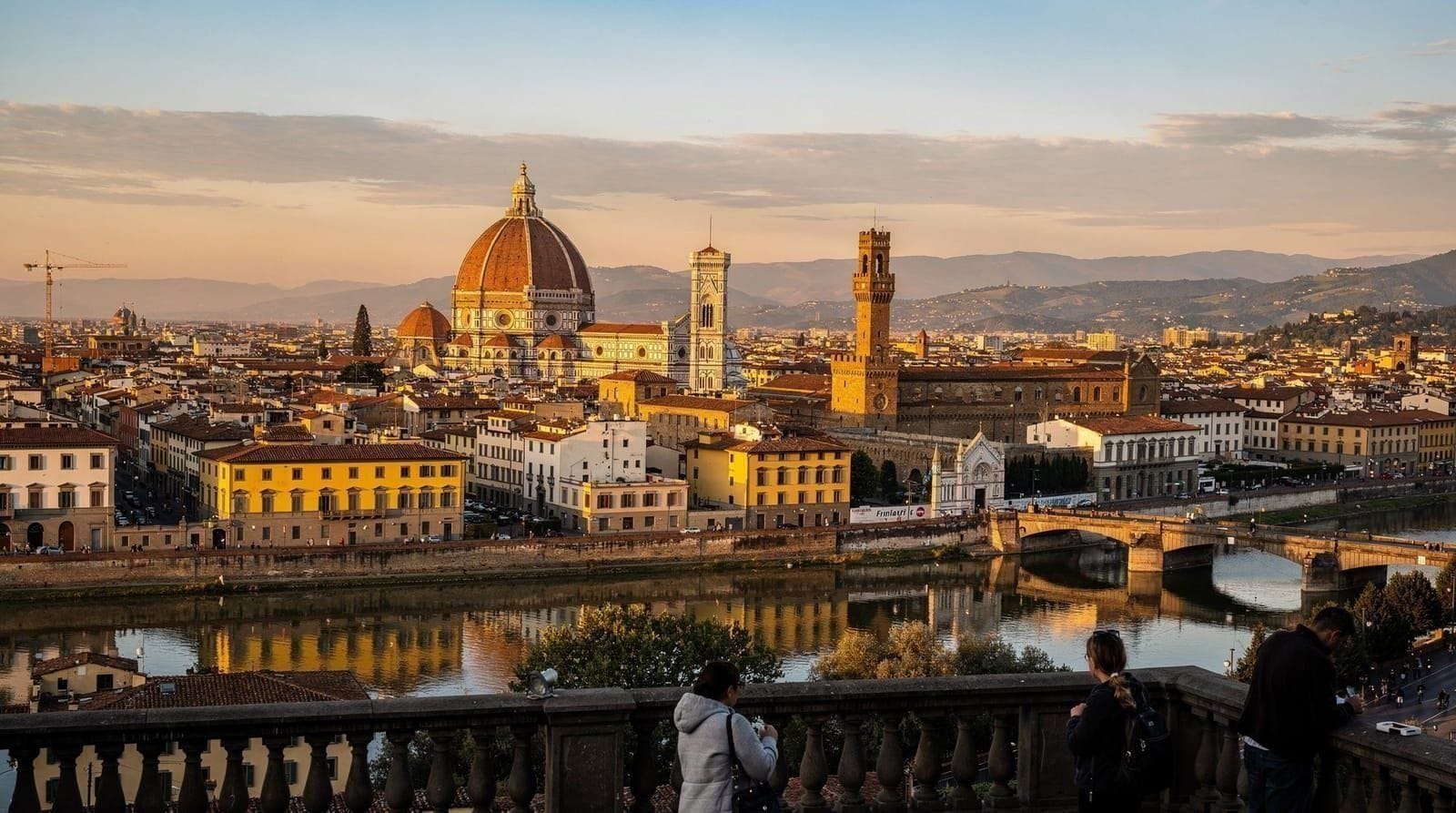
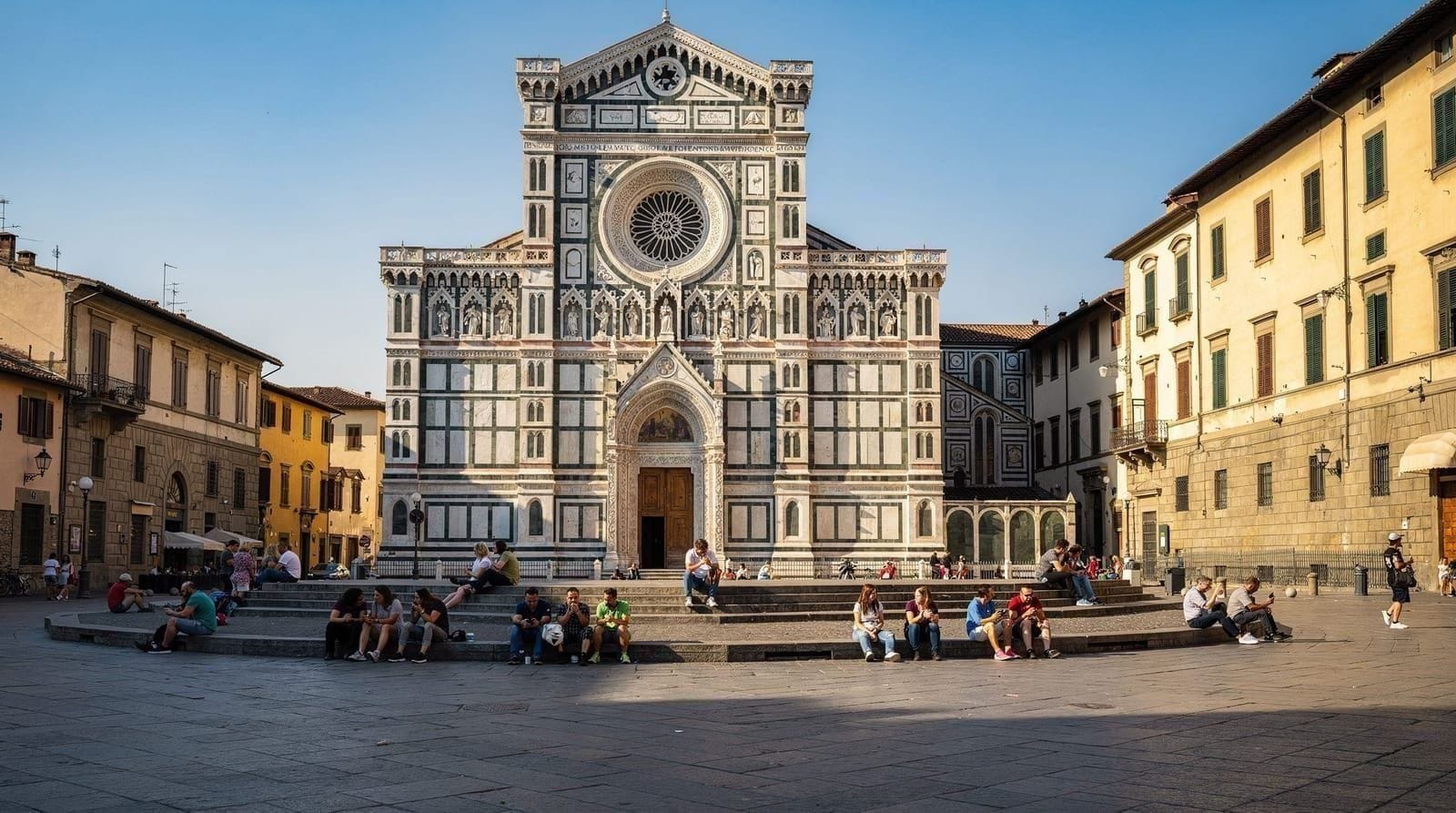
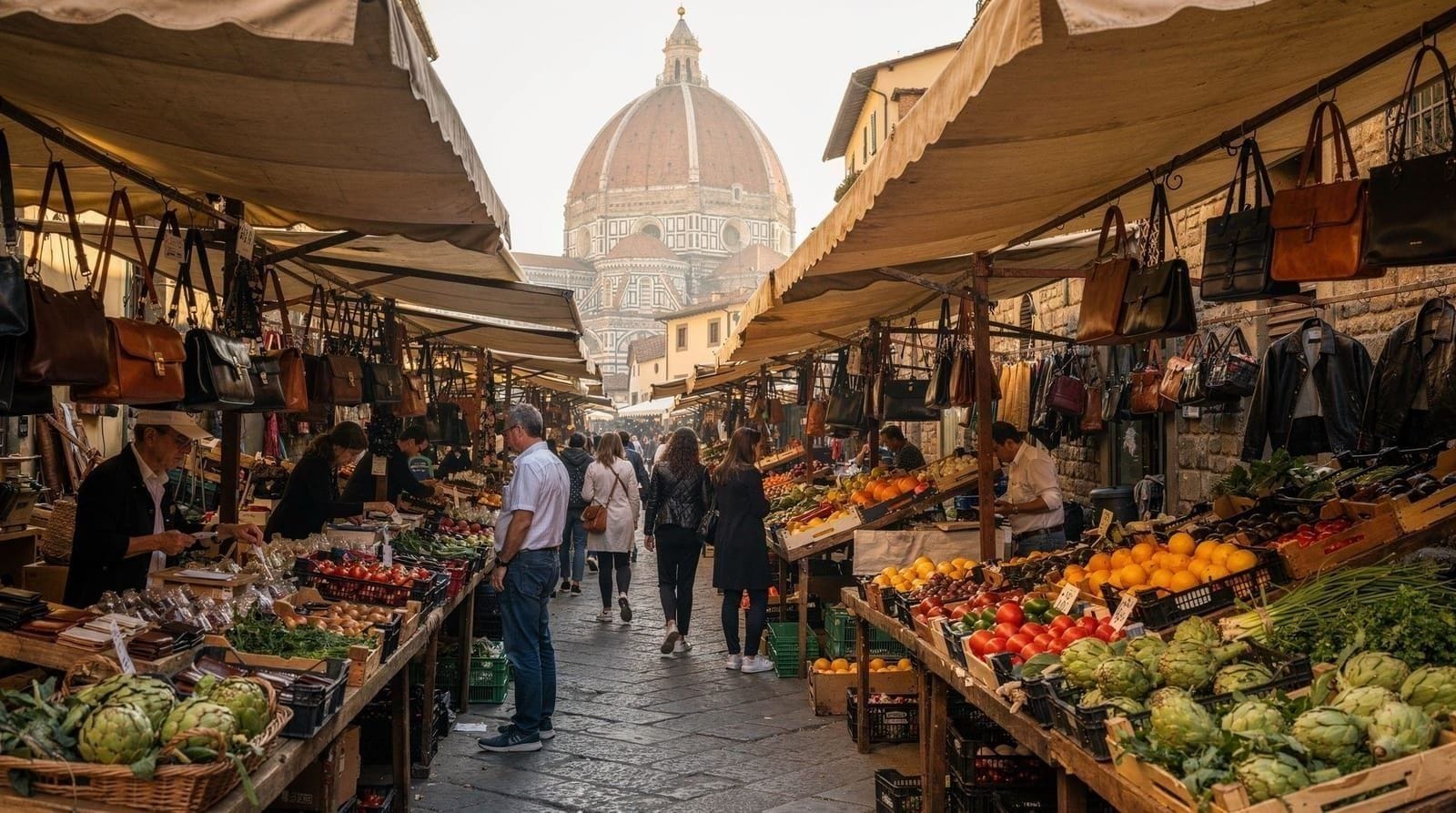
The area around the Duomo is simultaneously the most visited and most misunderstood part of Florence. Millions of visitors photograph the white, green and pink marble facade every year, but many don’t realize that the cathedral interior is actually less spectacular than its exterior, that the dome can only be climbed with a timed ticket booked in advance, and that the restaurants surrounding the piazza charge premium prices for mediocre food.
This guide is about the architecture and experiences that actually justify the time — and what to skip.
| Where | Central Florence, 10-min walk from Santa Maria Novella station |
| Cost | Around €20-30 for the combined Duomo complex pass |
| Time needed | Half day (full day with the Uffizi and Orsanmichele) |
| Booking | Required for dome, tower, baptistery, museum — book ahead |
| Best time | Early morning (8-9am) or after 4pm to avoid crowds |
The Duomo complex: what’s included
Since 2019, Florence’s Opera del Duomo (the organization managing the cathedral complex) has unified all its sites under a single timed-entry system. You cannot buy tickets at the door for the dome climb. The complex includes:
- Cattedrale di Santa Maria del Fiore (the cathedral): free entry to the nave, but timed entry required for the dome climb
- Brunelleschi’s Cupola (dome): 463 steps, the main attraction
- Campanile di Giotto (bell tower): 414 steps, different views
- Battistero di San Giovanni (Baptistery): the oldest building in the complex
- Museo dell’Opera del Duomo: houses the original Ghiberti doors and Michelangelo’s Pietà Bandini
- Santa Reparata (archaeological excavations under the cathedral floor)
Ticket prices (2026 approximation): A combined pass covering dome + tower + baptistery + museum costs around €20-30. The dome-only timed entry is approximately €20. Book at the official Opera del Duomo website at least 2-3 days ahead in shoulder season and 1-2 weeks ahead from April to October.
Opening hours: The Duomo complex is open daily, but the cathedral closes Sunday mornings for mass (roughly 10:30am-12:30pm). The dome and tower have morning opening times; the museum stays open into the evening in peak season. Always check official hours — they change seasonally.
Brunelleschi’s dome: the climb
Filippo Brunelleschi’s dome, completed in 1436, was an engineering impossibility for its era. At 114.5 metres high and 45 metres in diameter, it was the largest dome built in Europe since the Pantheon in Rome — and it was built without centering (the wooden framework that normally supports a dome during construction). The technique Brunelleschi developed, using interlocking herringbone brickwork and a double-shell structure, has never been fully replicated.
The climb to the lantern involves 463 narrow steps. The passage between the inner and outer shells is narrow and in places requires ducking. Claustrophobics find it difficult. The last section, an exterior ladder to the lantern, is exposed. Wear layers — the upper sections are cold even in summer.
At the top: a 360-degree view across Florence and the surrounding Tuscan hills. On clear days you can see to Fiesole and, in winter, to the Apennines.
Practical advice: Book the first available morning slot to beat heat and crowds. The climb takes around 45-60 minutes depending on pace. There is no lift. The dome closes in heavy rain. Children under a certain age may not be able to complete the climb. Read our Brunelleschi’s dome guide for the fuller history of how it was built.
Choosing between the dome, the tower and skipping the climb
Most first-time visitors assume they should climb the dome, but the tower is a genuinely different (and for some, better) experience, and skipping both is a legitimate choice too.
| Option | Steps | What you see | Best for |
|---|---|---|---|
| Dome (Cupola) | 463 | Vasari’s Last Judgment up close, 360° panorama | The full engineering experience |
| Bell tower (Campanile) | 414 | The dome itself in the frame | The better photograph of the dome |
| Neither, ground level only | 0 | Free nave entry, exterior architecture | Time-limited or mobility-limited visitors |
If you can only do one climb, choose the tower for photographs of the dome, or the dome itself for the interior fresco and the sense of Brunelleschi’s engineering. See our Duomo complex tickets explained guide for exact combinations and current pricing, and our firenzecard worth it guide if you are weighing a city-wide pass against individual tickets.
Giotto’s Bell Tower
The Campanile di Giotto is 84.7 metres tall and requires climbing 414 steps. The difference from the dome: from the tower, you can see the dome itself. It’s often the better photographic experience. The views from the upper terrace include the dome, the cathedral roof, and the terracotta sea of rooftops to the north and east.
The climb is slightly less claustrophobic than the dome. The tower opens earlier than the dome in some seasons. Included in the combined Duomo pass.
The Baptistery of San Giovanni
Florentines believe the Baptistery to be among the oldest buildings in their city — possibly built on the ruins of a Roman temple, though archaeological evidence for this is contested. What is certain is that it was the site where all Florentines were baptized for centuries, including Dante Alighieri.
The East Doors by Lorenzo Ghiberti — the ones facing the cathedral — are known as the “Gates of Paradise,” a name allegedly given by Michelangelo. The current doors on the building are high-quality replicas installed in 1990; the five gilded bronze originals are in the Museo dell’Opera del Duomo across the piazza, where you can examine them at close range.
Inside, the ceiling mosaic (begun in the 13th century) is one of the oldest and most extensive in Tuscany. The Baptistery is smaller than it looks from outside; entry is included in the Duomo complex ticket.
Museo dell’Opera del Duomo
This museum, reopened in its current expanded form in 2015, displays the original works removed from the Duomo complex for conservation. The key pieces:
- The five original Ghiberti “Gates of Paradise” panels, displayed at eye level
- Michelangelo’s Pietà Bandini (also called the Pietà Fiorentina), one of his last and most emotionally raw sculptures
- Donatello’s Mary Magdalene, carved in wood in 1455
- The original marble reliefs from the bell tower’s first tier
- Arnolfo di Cambio’s marble Madonna, salvaged from the original cathedral facade
The museum is often underestimated — visitors rush through to see the dome and miss what is arguably the finest collection of medieval and early Renaissance sculptural work in Florence. Budget at least 90 minutes.
Piazza della Repubblica
Two minutes’ walk west of the Duomo, this large piazza occupies the site of the Roman forum — and more recently, of the Jewish ghetto that was demolished in the late 19th century during Florence’s brief period as capital of unified Italy. The arch at the west end bears the inscription “l’antico centro della città, da secolare squallore, a vita nuova restituito” (the ancient centre of the city, restored from centuries of squalor to new life). Florentines have mixed feelings about the square and the demolition it commemorates.
The piazza is ringed by expensive cafés (Caffè delle Giubbe Rosse and Caffè Paszkowski have literary history — the Futurists gathered here — but prices today reflect location rather than quality). The carousel in the centre is a fixture.
Piazza della Signoria and the Palazzo Vecchio
A 5-minute walk south from the Duomo brings you to Piazza della Signoria, Florence’s political heart since the 14th century. The L-shaped space is flanked by the Palazzo Vecchio (the medieval town hall, still the seat of city government), the Loggia dei Lanzi (an open-air sculpture museum with originals including Cellini’s bronze Perseus with the Head of Medusa and Giambologna’s Rape of the Sabine Women), and the entrance to the Uffizi Gallery.
The Neptune Fountain at the north end is a Florentine joke — Ammannati’s 1565 bronze Neptune is derided by locals. “Ammannato, Ammannato, quanto marmo hai sciupato!” (“Ammannati, Ammannati, what marble you have wasted!”) the saying goes.
Palazzo Vecchio entry: the courtyard is free. The museum and apartments require a ticket (€12-16 for audio guide version; guided tours around €20-30). The tower is accessible separately or included in some packages. The view from the tower battlements at 94 metres is excellent. See the Palazzo Vecchio tour options guide.
What to eat near the Duomo — honest advice
The short version: walk five minutes away from the Duomo before eating anything.
The restaurants on Piazza del Duomo and via dei Calzaiuoli are not necessarily bad, but they price for tourist traffic. A pasta dish that costs €10 in the Oltrarno costs €18 here. The ratio of tourists to locals at tables outside the cathedral is diagnostic.
Exceptions worth noting:
- Coquinarius (Via delle Oche 11, 5 minutes from the Duomo): wine bar with honest Tuscan food; crostini and ribollita at fair prices.
- Cantinetta dei Verrazzano (Via dei Tavolini 18): Chianti-region focaccia bakery run by the Verrazzano estate; take-away schiacciata and wines from their estate.
For a proper meal, the Santa Croce district is 10 minutes east and has a genuine neighbourhood restaurant scene.
Photography notes
The west facade of the Duomo is best lit in afternoon light (roughly 2-5pm). The view looking back at the dome from Via de’ Cerretani (northwest approach) is the classic one. For the full facade with no crowd-cut, arrive before 8am.
The Baptistery-Duomo view from just north of the piazza (Via dei Servi direction) shows the octagonal Baptistery in the foreground with the dome behind — classic composition. From Giotto’s tower, the dome fills the frame beautifully at any time of day.
Piazzale Michelangelo (Oltrarno, 20-minute walk) provides the famous full-city panorama that includes the dome. Best at sunrise and in the early evening. See the Florence photography guide.
Orsanmichele: the grain market-turned-church
One block west of the Bargello and two blocks south of the Duomo, Orsanmichele (Via dell’Arte della Lana) is one of the most unusual buildings in Florence — a 14th-century grain market converted into a church, with an exterior decorated with bronze and marble statues commissioned from the great artists of the 15th century by the city’s trade guilds.
Each guild was assigned an exterior niche and commissioned a patron saint for it. The result is an open-air museum of Renaissance sculpture surrounding a working church:
- Donatello’s marble Saint George (1415-1417): Commissioned by the Armouries Guild; the original is in the Bargello, but the niche at Orsanmichele retains a copy and the marble predella with the world’s first true perspective relief.
- Ghiberti’s bronze Saint John the Baptist (1412-1414): The first large-scale bronze statue cast in Florence since antiquity.
- Verrocchio’s bronze Christ and Saint Thomas (1467-1483): A double figure group in a single niche — unprecedented and structurally innovative.
- Nanni di Banco’s marble Four Crowned Saints (1409-1417): Four Christian sculptors martyred for refusing to carve a pagan idol, shown as if in conversation.
Entry to the church interior is free. The upper-floor loggia, now a museum with the original bronze statues (replaced outside by copies), opens limited hours and is worth seeking out.
The Uffizi surroundings
The Uffizi Gallery (from uffici, offices — it was built by Vasari to house the Florentine administrative offices in 1565-1581) runs from the Piazza della Signoria south to the Arno, forming a U-shape with a narrow courtyard between the two wings. The courtyard — the Piazzale degli Uffizi — is often filled with street musicians and portrait artists; the view down it toward the Arno and the hills beyond is one of the classic Florence perspectives.
The Loggia dei Lanzi (adjacent to Palazzo Vecchio): An open-air sculpture display under a three-arched Renaissance loggia, free to view at any hour. Contains originals of Cellini’s bronze Perseus with the Head of Medusa (1545), Giambologna’s Rape of the Sabine Women (1582), and a collection of Hellenistic marbles including the Ajax and Menelaus Supporting the Body of Patroclus.
Galileo Museum (Museo Galileo, Piazza dei Giudici 1): A 5-minute walk east along the Arno from the Uffizi, this small but excellent science museum houses instruments from the Medici collection — Galileo’s original telescopes (including the one with which he observed Jupiter’s moons in 1609), Hellenistic armillary spheres, early cartographic globes, and scientific instruments from the 16th-19th centuries. Consistently undervisited relative to its quality. Entry €9.
Via dei Calzaiuoli and the main pedestrian route
The main pedestrian artery connecting the Duomo to the Piazza della Signoria runs south on Via dei Calzaiuoli — a wide, entirely pedestrianized street lined with shops at every price point, from fast-fashion chains to established Florentine boutiques.
The street follows the route of a Roman road. Several medieval tower bases are visible at ground level embedded in the current buildings. Orsanmichele interrupts the street at its midpoint.
This is the most tourist-dense corridor in Florence; locals use parallel streets (Via dello Studio to the east, Via dei Tosinghi and Via Por Santa Maria to the west) when they need to move between the Duomo and the Signoria quickly.
Getting to and from the Duomo district
The Duomo is 10 minutes walk from Santa Maria Novella station. Most of the historic centre is pedestrianized; buses don’t run through the piazza. The tram T2 stops at SMN; from there, walk.
If you’re staying in the Oltrarno or San Frediano area, the Duomo is about a 15-minute walk across the Ponte Vecchio or Ponte alla Carraia.
Frequently asked questions about the Duomo district
Can I enter the cathedral for free?
Yes — entry to the nave of the cathedral is free, but it’s for visiting the church, not sightseeing. Shorts and bare shoulders are not permitted (a wrap is available at the entrance). Free entry does not include the dome climb, the bell tower, the baptistery or the crypt.
How far in advance should I book the dome climb?
In spring and summer (April-September), book at least one week in advance, ideally 2 weeks. Slots sell out faster on weekends. The Opera del Duomo website allows booking up to 3 months ahead.
Is the bell tower or the dome better?
They offer different perspectives. From the dome you see the lantern at close range and the full panorama without any major structure blocking you. From the bell tower you see the dome itself — which is often the better photograph. The tower is slightly less physically demanding (414 vs 463 steps) and has broader stairways.
How long does the dome climb take?
Allow 45-90 minutes for the round trip — longer if you stop to study the frescoes inside the dome (Vasari’s Last Judgment fills the interior ceiling and can be examined from the narrow walkway that circles it midway up).
Are there restaurants worth visiting near the Duomo?
For affordable local food, walk at least 5 minutes from the piazza. The Sant’Ambrogio market area (10 minutes east) and the streets behind Piazza della Repubblica have better value options. See the best restaurants in Florence guide.
Is the Firenze Card worth it for the Duomo complex?
It depends on how much else you plan to see. The Firenze Card covers many museums but not the Duomo dome climb specifically (which still requires its own timed slot even with the card in some configurations) — check current terms before assuming full coverage. For visitors focused mainly on the Duomo complex plus one or two other major sites, buying the combined Duomo pass directly is usually simpler and no more expensive; see our Firenze Card vs individual tickets guide for a full cost comparison.
How much time should I budget for the whole Duomo district, not just the cathedral?
A rushed visit covering only the dome or tower climb takes half a day. To properly see the Baptistery, the Museo dell’Opera del Duomo, Orsanmichele and Piazza della Signoria as well, budget a full day. Trying to combine this with the Uffizi Gallery on the same day is possible but tiring — many visitors split the area across two mornings instead.
Top experiences
Bookable activities with verified prices and instant confirmation on GetYourGuide.

Florence: ticket to Brunelleschi's Dome with panoramic views
- Skip the line
- Free cancellation
Florence: skip-the-line Duomo, Baptistery and Giotto Bell Tower
- Skip the line
- Free cancellation
Florence: Duomo tour with Brunelleschi's Dome climb access
- Skip the line
- Free cancellation
Florence: Palazzo Vecchio entrance ticket with audioguide
- Instant confirmation
- Mobile ticket