Florence in three days
Florence: Uffizi Gallery skip-the-line tickets
- Skip the line
- Free cancellation
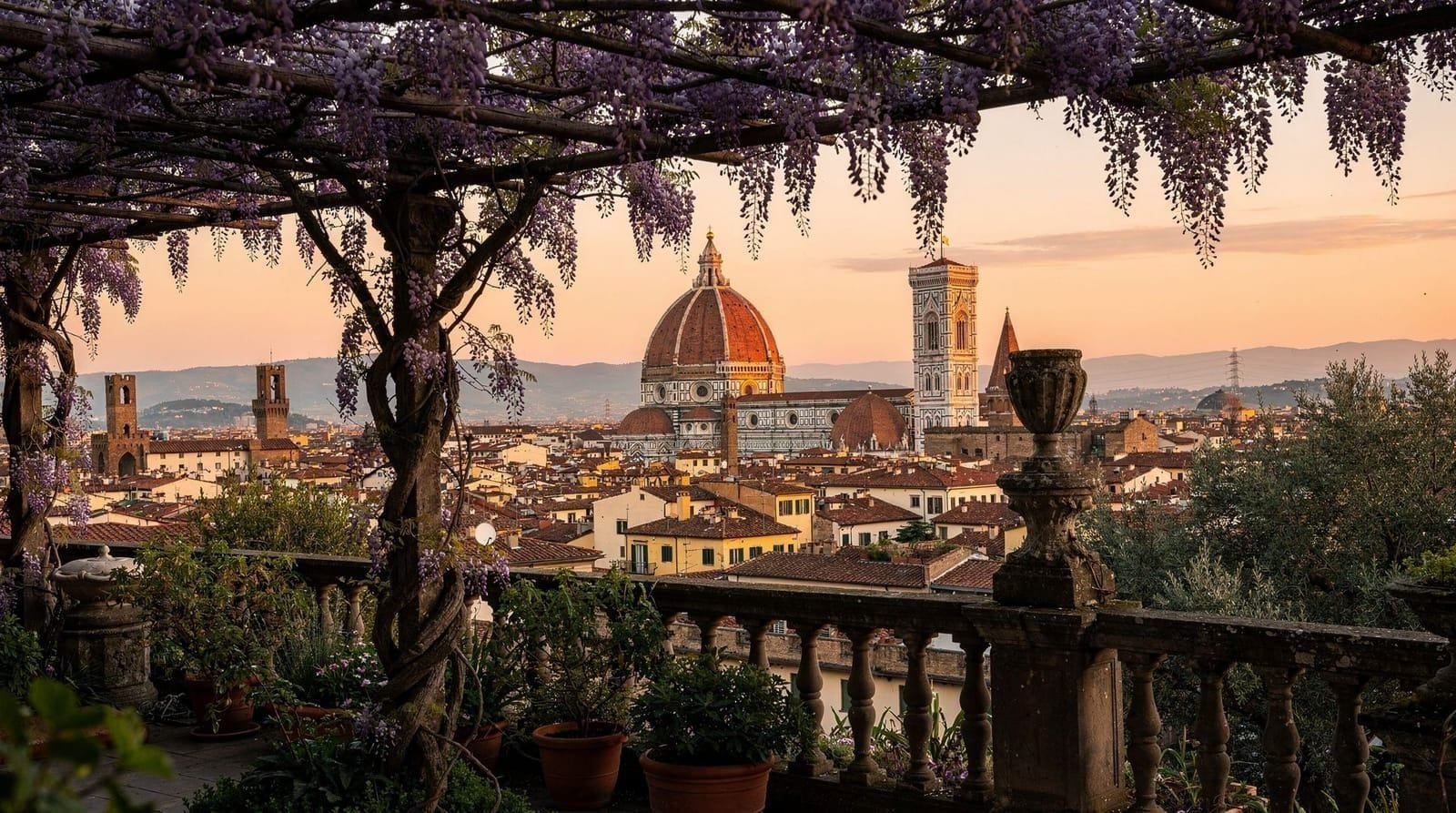
Three days is the ideal minimum for Florence. You can see the two great art museums properly, explore both sides of the Arno, climb the Duomo, eat in the right places and still have half a day for Fiesole or a quiet church. This itinerary is calibrated for a visitor who wants depth over box-ticking: two to three hours per museum, long lunches, evening walks.
Budget estimate: €200–280 per person over three days, including museum tickets (Uffizi ~€30, Accademia ~€22, Duomo pass ~€20, Pitti ~€16, Medici Chapels ~€12), three restaurant lunches, three dinners and coffee throughout. Adjust upward for wine at dinner or a guided walking tour.
Pre-book before arriving: Uffizi, Accademia, Duomo dome climb and Medici Chapels all require advance reservation. In April–May and September, book two to three weeks ahead. See how to book Uffizi tickets for the full process.
Three-day trip at a glance
| Where | Florence with a Fiesole half-day |
| Cost | €200–280 per person over three days |
| Time needed | 3 days, all nights based in Florence |
| Getting around | Walking, plus bus 7 for Fiesole and bus 13 for Piazzale Michelangelo |
| Best time | April–May or September–October |
Day 1: Uffizi, Piazza della Signoria and the Oltrarno
Morning: Uffizi Gallery (9:00–12:30)
The Uffizi is the anchor of any Florence visit. With a 9:15 or 9:30 timed entry, you enter as the museum opens and the Botticelli rooms are relatively uncrowded. Plan 3 hours.
Essential rooms:
- Rooms 2–7 (Cimabue, Duccio, Giotto) — the transition from Byzantine flatness to Renaissance depth
- Rooms 10–14 (Botticelli) — Primavera and Birth of Venus; arrive here within the first 30 minutes
- Room 25 (Michelangelo’s Doni Tondo) — his only finished panel painting; the saturated colours were revolutionary
- Rooms 35–40 (Leonardo, Raphael, Titian) — three of the top five Western painters in sequence
- The Terrace — step out between the second and third corridors for the Arno view
With three days, you can afford to linger. The mistake is trying to see everything: 45 rooms in 3 hours means 4 minutes per room. Choose wings and give them time.
Lunch: Buca dell’Orafo or similar (12:30–14:00)
Eat near the Uffizi but not in the tourist trap zone on the Piazzale. Walk one block to:
- Buca dell’Orafo (Vicolo dei Girolami 28) — traditional Florentine, good ribollita and pappa al pomodoro, mains €16–22
- Golden View Open Bar (Via dei Bardi 58) — on the Arno side, fresh pasta and river views, busier but reliable
- Semel (Via degli Alfani 44, slightly north) — excellent panini for a quick, cheap lunch
Afternoon: Piazza della Signoria, Palazzo Vecchio (14:00–16:30)
Piazza della Signoria is Florence’s civic heart. The Loggia dei Lanzi is an open-air sculpture gallery with Cellini’s Perseus and Giambologna’s Rape of the Sabine Women — both originals, both free.
Enter Palazzo Vecchio for the Hall of Five Hundred (Vasari’s painted ceiling, Leonardo’s lost fresco hidden beneath) and the private apartments. Ticket ~€12, open 9:00–19:00 (Thursdays until 14:00). The tower climb adds another €12 and another panoramic view.
Alternatively, this slot works well for Santa Croce Basilica (15-minute walk east) — the burial church of Michelangelo, Galileo, Machiavelli and Dante (cenotaph). The interior is more emotionally resonant than many visitors expect.
Evening: Oltrarno aperitivo and dinner (17:30 onwards)
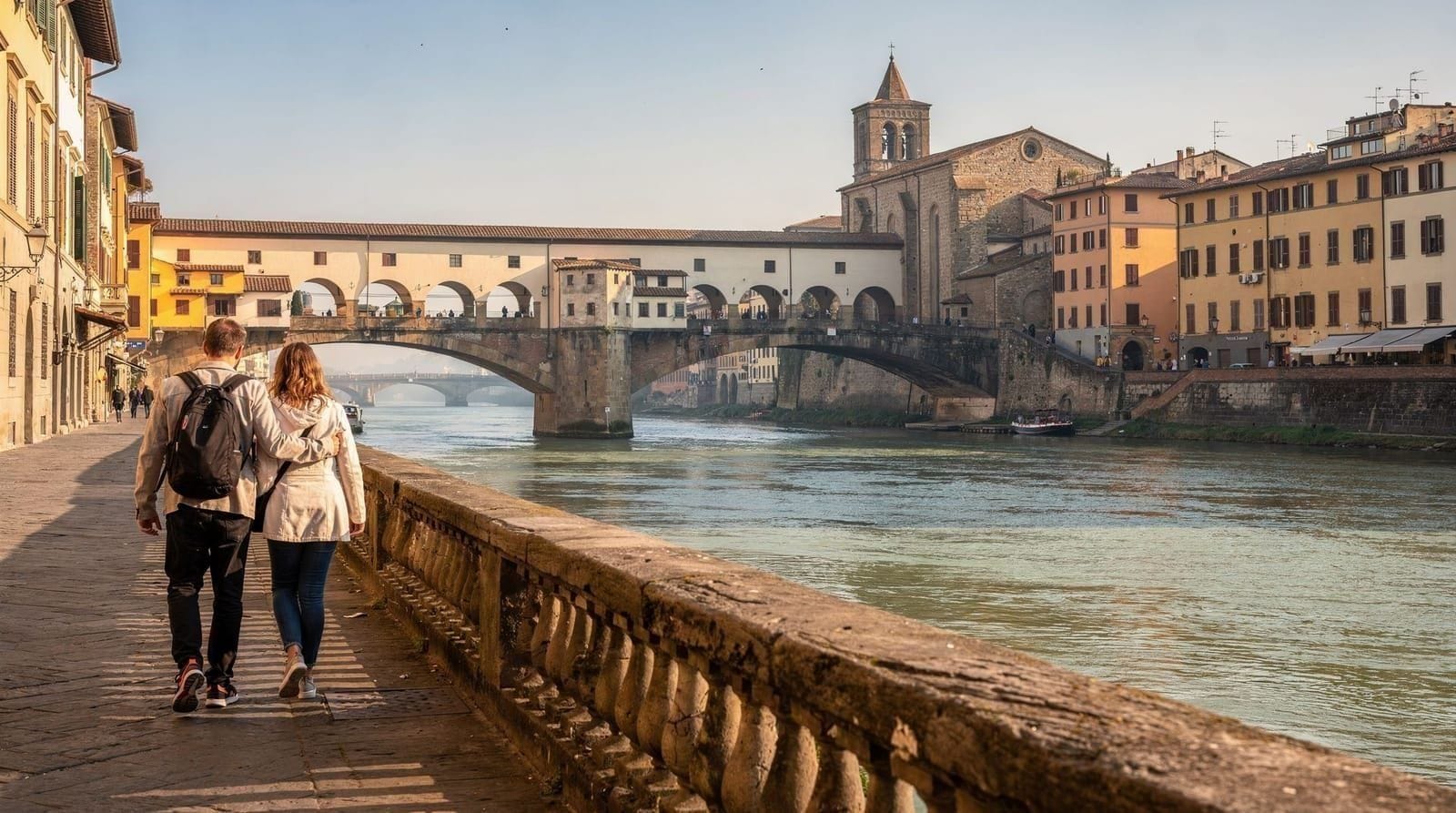
Cross Ponte Vecchio for aperitivo time in the Oltrarno. Piazza Santo Spirito fills up from 18:00 with locals.
Dinner picks, Day 1:
- Trattoria Sostanza (Via del Porcellana 25) — the burro e salvia egg pasta is one of the great dishes of Florentine cooking. Book ahead, cash only, mains €14–20.
- Buca Mario (Piazza degli Ottaviani) — oldest restaurant in Florence (1886), solid ribollita and bistecca, dependable
- Il Guscio (Via dell’Orto 49) — neighbourhood trattoria with seasonal dishes, quieter crowd
Day 2: Accademia, the Duomo complex and San Lorenzo
Morning: Accademia Gallery and the David (9:00–11:00)
The Accademia opens at 9:15. Your timed entry ticket admits you directly; walkers-in line will wait 2 hours. The museum is more focused than the Uffizi — plan 1.5 to 2 hours.
Michelangelo’s David occupies a purpose-built rotunda at the end of the main hall. The scale surprises almost everyone: 5.17 metres. Walk the full perimeter before settling in front. Note how Michelangelo carved the figure with its weight on the right leg (contrapposto), the left knee slightly bent, the eyes angled left — the exact pose of a young man about to act.
The Prigioni (Prisoners) that line the corridor approaching David are often overlooked but fascinating: four figures Michelangelo left half-emerged from the marble, apparently trapped in stone.
Mid-morning: San Lorenzo district and Medici Chapels (11:30–13:00)
Walk five minutes south to the San Lorenzo district. The exterior market selling leather goods is tourist-oriented (and the leather quality varies widely — see our honest Florence guide). Push past it to the Basilica di San Lorenzo itself (entry €8), which holds Brunelleschi’s perfectly proportioned nave and Donatello’s bronze pulpits.
The Medici Chapels (separate entry, ~€12, book ahead) are directly behind: the New Sacristy contains Michelangelo’s tombs of Lorenzo and Giuliano de’ Medici with the allegorical figures of Night, Day, Dawn and Dusk. Book a timed entry — the space is small and visits get crowded.
Lunch: San Lorenzo area (13:00–14:30)
Lunch options near San Lorenzo:
- Trattoria Mario (Via Rosina 2) — the institution: communal tables, ribollita, Florentine tripe for €10–14. Cash only, arrives before 12:30 or expect a wait.
- Mercato Centrale (ground floor) — excellent lampredotto from Nerbone, fresh pasta, cheese, cured meats. Budget €8–12.
- Sergio Gozzi (Piazza di San Lorenzo 8) — old-school, cheap, outdoor tables on the piazza
Afternoon: Duomo complex (14:30–18:00)
The Duomo complex pass (€20) covers five monuments. With an afternoon slot, the best sequence:
- Baptistery (Battistero di San Giovanni) — the golden mosaics inside the ceiling are extraordinary; Ghiberti’s bronze doors on the east face are the originals’ bronze replicas (originals in the museum). 30 minutes.
- Giotto’s Campanile (bell tower, 414 steps) — slightly fewer steps than the dome, equally good view, usually shorter queues. 45 minutes.
- Cathedral interior — free entry without a pass for the nave; the Duomo pass gives access to the crypt and certain restricted areas. 30 minutes.
- Dome climb — if you haven’t done it on Day 1. The 463-step climb takes 45 minutes up and 30 down; wear layers. Book the earliest slot you can.
Read the Duomo complex tickets explained guide to understand which monuments need separate booking.
Evening: Medici walking tour and dinner (19:00)
Day 2 evening is the moment for a Medici walking tour if that interests you — the family’s story is woven into every palazzo and piazza in the north bank, and a guide makes it dramatically more vivid. Or self-guide with our Renaissance art in Florence guide.
Dinner, Day 2:
- Osteria del Cinghiale Bianco (Borgo San Jacopo 43) — Oltrarno, excellent wild boar and game, mains €16–24
- Il Santo Bevitore (Via Santo Spirito 64) — sophisticated Tuscan menu, great wine list, book ahead
- Alla Vecchia Bettola (Viale Ariosto 32) — undecorated room, serious Florentine food, excellent bistecca alla Fiorentina for two (€50–55 for the steak alone)
Day 3: Pitti Palace, Oltrarno walking and Fiesole
Morning: Pitti Palace and Boboli Gardens (9:15–12:30)
The Pitti Palace is Florence’s second great museum complex, almost never as crowded as the Uffizi despite holding comparable masterpieces. The Palatine Gallery (first floor) holds works by Raphael, Titian, Rubens and Caravaggio, displayed as the Medici hung them — not in chronological order, but in the overlapping, ornate manner of a 17th-century aristocratic collection. The effect is overwhelming in a different way from the Uffizi’s scholarly arrangement.
Allow 2 hours for the Palatine Gallery and 45 minutes for the Boboli Gardens — a terraced Renaissance garden with an amphitheatre, grottos and a long cypress-lined allée rising toward the Forte di Belvedere. The garden gives superb views back over the city.
Combined ticket (Pitti + Boboli): ~€22. The Pitti Palace guide covers all six museums.
Lunch: Oltrarno neighbourhood trattorie (12:30–14:00)
Walk east through the Oltrarno toward the San Niccolò neighbourhood for lunch at one of the area’s neighbourhood spots:
- Fuori Porta (Via Monte alle Croci 10) — wine bar with crostini and full Tuscan lunch, excellent list of local wines, particularly good for an unhurried glass
- Osteria Antica Mescita San Niccolò (Via San Niccolò 60) — tiny, standing lunch, ribollita and pappa al pomodoro, excellent value
- Zeb (Via San Miniato 2) — more polished, seasonal vegetables and handmade pasta
Afternoon: Fiesole half-day (14:30–18:00)
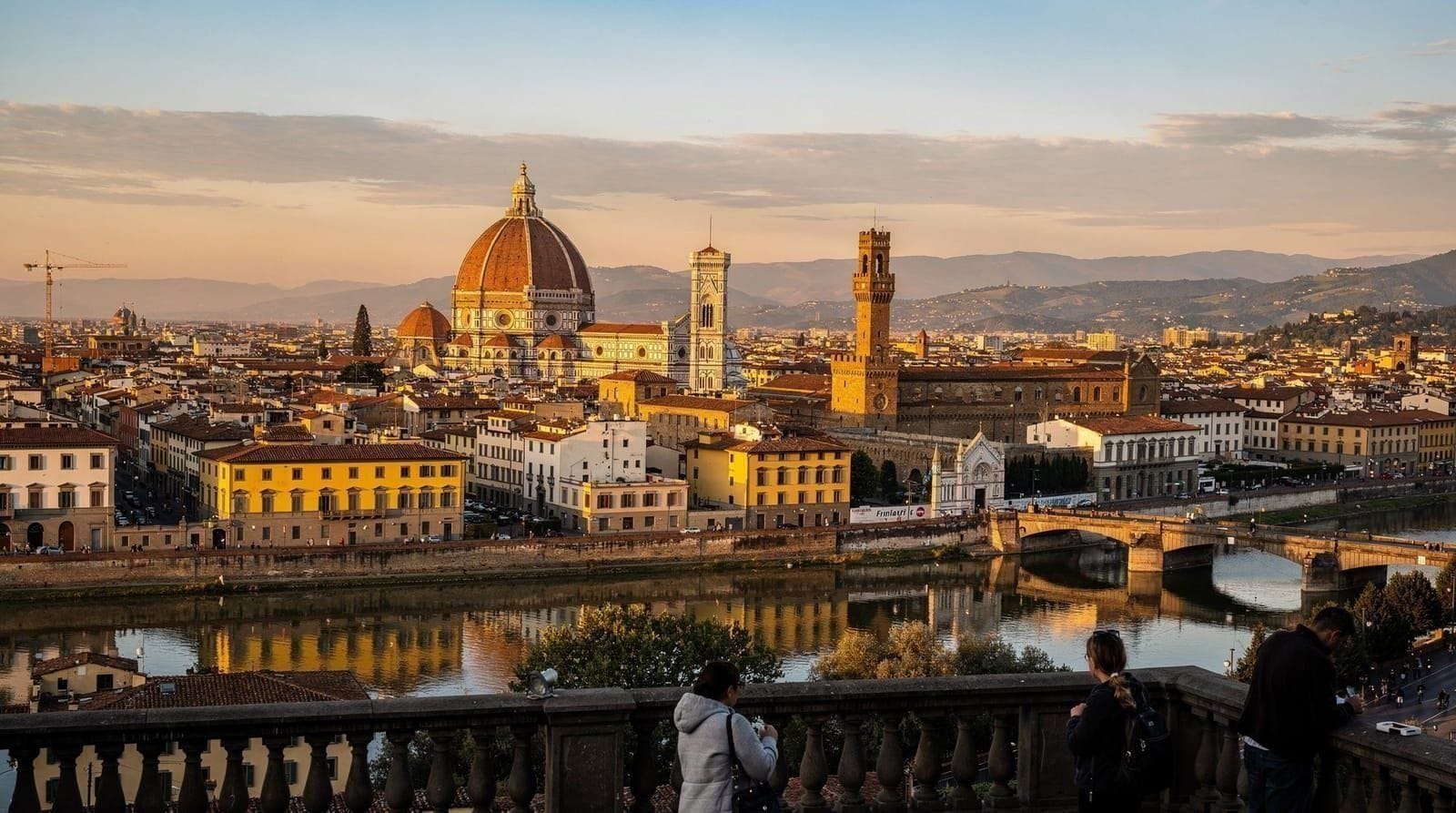
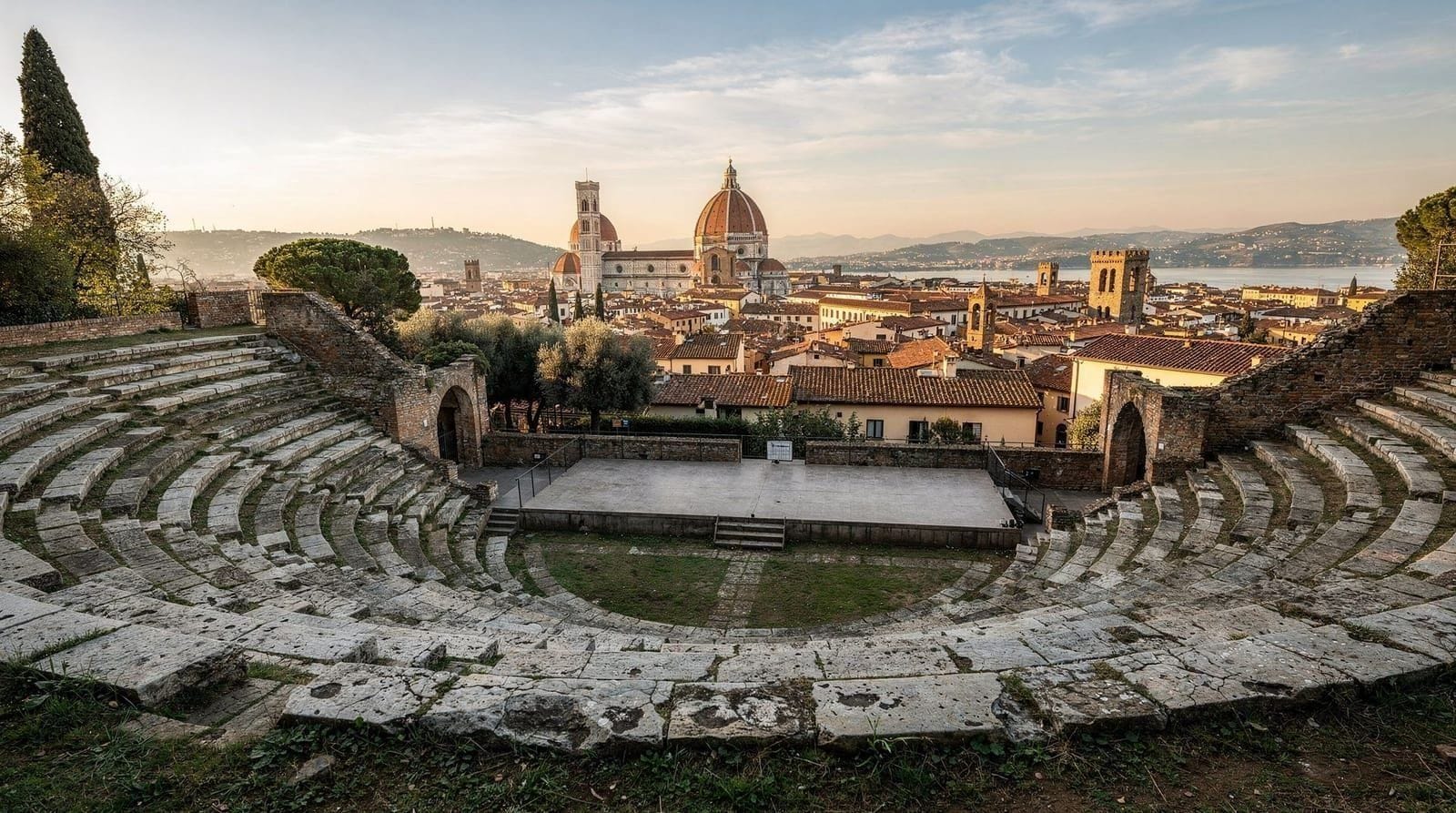
Fiesole is 8 km northeast of Florence, perched on a hill above the Arno valley at 295 m elevation. The view from Fiesole looking back over Florence and its surrounding hills is the definitive panoramic perspective — better than Piazzale Michelangelo for the quality of light and the sense of context.
Getting there: Bus 7 from Piazza San Marco in Florence (30 minutes, €1.70). Runs every 30 minutes. Or taxi (~€20 one way).
In Fiesole:
- The Archaeological Area (€7) holds a 1st-century BC Roman theatre and baths, still used for summer concerts
- Museo Bandini holds medieval art in a manageable small collection (included with the archaeological area ticket)
- The Duomo di Fiesole has a 12th-century crypt worth seeing
- Walk up to the Monastery of San Francesco for the best view — 10 minutes uphill, free
Our full Fiesole half-day guide covers the best walking routes and timings.
Evening: final dinner (19:30)
Return to Florence by bus for a final dinner. Make it count:
- Buca dell’Orafo — see Day 1; worth returning for the ribollita and a Chianti Classico
- Osteria dell’Enoteca (Via Romana 70) — finest Tuscan cooking in a formal setting, tasting menu €65–85
- Trattoria da Ruggero (Via Senese 89, Oltrarno) — neighbourhood staple, roast meats and seasonal vegetables, about €35 all-in
End the evening with a walk along the Lungarno Torrigiani in the Oltrarno — the embankment that faces north, with the lit facades of the city reflected in the Arno after dark.
Three-day logistics
Getting around: Walk everywhere in the historic centre. Bus 7 for Fiesole. Bus 13 for Piazzale Michelangelo (if you skip the uphill walk). Taxis are metered and reliable; ride-share apps work.
ZTL: Do not drive into the ZTL zone. Fines run €80–335 and rental car companies pass them on with an admin fee. Full details in our Florence ZTL guide.
Museum closures: Uffizi and Accademia close on Mondays. Pitti Palace closes second and fourth Monday of each month. The Medici Chapels close on Tuesdays. Plan Day 1 to include whichever museum falls on your first open day.
Day-by-day summary
| Day | Morning | Afternoon | Evening |
|---|---|---|---|
| Day 1 | Uffizi | Piazza della Signoria, Palazzo Vecchio or Santa Croce | Oltrarno aperitivo and dinner |
| Day 2 | Accademia | San Lorenzo, Medici Chapels, Duomo complex | Medici walking tour |
| Day 3 | Pitti Palace, Boboli Gardens | Fiesole half-day | Final dinner |
Where this itinerary flexes if you swap in Pisa or Siena
Day 3’s Fiesole half-day is the most easily substituted block in this itinerary. Travellers who’d rather see the coast can swap it for a Pisa morning (trains run hourly, about an hour each way from Santa Maria Novella) provided they start earlier and skip the Boboli Gardens’ full hour. Travellers who want a second hill-town instead can substitute a Siena half-day using the same afternoon slot described in the four-day itinerary. Neither swap is a downgrade — Fiesole simply requires the least planning and the shortest travel time, which is why it’s the default here. If you’re deciding between the three, our best day trips from Florence guide compares Fiesole, Siena and Pisa side by side for a half-day slot.
Making the most of shoulder-season light
Three days in April–May or September–October means working around two very different qualities of light: harsh midday sun in the piazzas and long, warm late-afternoon light along the Arno. This itinerary is built to use both — morning museum time avoids peak crowds and midday glare, while the Lungarno walk and Fiesole’s hilltop views on Day 3 are timed for the golden hour. If your dates fall in July or August instead, shift outdoor time earlier and later in the day and expect the Piazzale Michelangelo and Ponte Vecchio areas to be considerably more crowded at sunset; see Florence in summer for heat-specific adjustments to this same three-day structure.
Frequently asked questions about this itinerary
Is three days in Florence enough?
Three days covers the major highlights without feeling rushed. You’ll see both great art museums, the Duomo, the Oltrarno and have time for Fiesole or an additional church. For a first visit, it’s the ideal length. If you want to add a day trip to Siena or Chianti, extend to four days.
What order should I visit the museums?
Uffizi first (Day 1 morning) while your eyes are fresh and the Botticelli rooms are less crowded. Accademia second (Day 2 morning). Pitti on Day 3 when you’ve settled into the city’s rhythm. This order also avoids museum fatigue — by Day 3 you have context for the works you’re seeing.
Can I skip Fiesole and add a different attraction?
Absolutely. Day 3 afternoon alternatives: the Galileo Science Museum (Museo Galileo, on the Arno, €9), the Bargello Museum (sculpture, Donatello’s David, open mornings, ~€9), or the San Marco Museum (Fra Angelico frescoes in each monk’s cell, ~€8). The best museums in Florence guide covers all options.
How much should I budget for three days?
Expect €200–280 per person excluding accommodation. Key costs: Uffizi €30, Accademia €22, Duomo pass €20, Pitti €16, Medici Chapels €12 = ~€100 in museums alone. Add €60–80 per day for meals (lunch + dinner + coffee). Cheap options (market lunches, trattoria set menus) bring this down significantly.
What is the best neighbourhood to stay in for three days?
The Oltrarno is quieter, slightly cheaper and perfectly placed for this itinerary. Santa Croce puts you close to the Uffizi and Accademia. Both are excellent choices. Read our where to stay in Florence guide for hotel recommendations by budget.
Which walking tour is worth booking?
A Renaissance and Medici walking tour is the best single guided experience for first-time visitors — it connects the city’s monuments to the family that built them, making everything you’ve already seen click into place. Our best walking tours Florence guide reviews the top options.
When is the best time to visit Florence for three days?
April–May and September–October offer the best combination of weather, daylight and manageable crowds. July–August is hot (30–35°C), very crowded and some businesses close in August. November–March is quieter, cheaper, with shorter museum queues — but cold and rainy. See best time to visit Florence.
Should I swap Fiesole for Pisa or Siena on Day 3?
You can, and it’s a reasonable swap — see the section above on flexing this itinerary. Fiesole needs the least planning (a 30-minute local bus, no advance booking), Pisa needs the least time commitment for a “second place visited” feeling, and Siena is the richest single alternative if you’re willing to manage a SITA bus timetable. All three fit the same afternoon slot; none fit alongside each other on a three-day trip.
Top experiences
Bookable activities with verified prices and instant confirmation on GetYourGuide.

Florence: Uffizi Gallery skip-the-line tickets
- Skip the line
- Free cancellation
Florence: Accademia Gallery — David skip-the-line ticket
- Skip the line
- Instant confirmation
Florence: ticket to Brunelleschi's Dome with panoramic views
- Skip the line
- Free cancellation
Florence: Pitti Palace and Boboli Gardens ticket
- Instant confirmation
- Mobile ticket
Florence: walking tour and optional fast-track Duomo visit
- Free cancellation
- Small group