Florence shopping guide
Florence: The Mall outlets tour
- Free cancellation
- Hotel pickup
What is Florence best known for shopping?
Leather goods (bags, wallets, belts, shoes), gold jewellery on Ponte Vecchio, artisan crafts from Oltrarno workshops, paper goods and notebooks, and designer outlets at The Mall (Gucci, Prada, Saint Laurent) 30 minutes outside the city.
Florence as a shopping city: what is actually worth your time
Florence’s shopping reputation rests on three pillars: leather goods, gold jewellery and designer fashion. All three are real and genuinely available — but all three come with a tourist-trap layer that requires navigating.
This guide maps the entire shopping landscape honestly: where the good artisan leather is (not where the tourist market says it is), what The Mall outlet is actually like, what prices are realistic for different quality levels, and how to avoid spending EUR 200 on a bag that cost EUR 15 to manufacture.
| Best for leather | Oltrarno workshops and Santa Croce, not San Lorenzo stalls |
| Best for outlets | The Mall (ultra-premium) or Barberino (accessible luxury) |
| Best for gold | Ponte Vecchio and Via Por Santa Maria |
| Bargaining | Outdoor markets only, 10–15% typical |
| Tax refund minimum | EUR 154.94 per receipt for non-EU visitors |
The shopping geography of Florence
Florence’s shopping districts are geographically distinct.
Via de’ Tornabuoni corridor: The city’s luxury spine. Gucci was founded in Florence; its flagship is here. Ferragamo’s historic palazzo (and a museum of the brand’s shoe history) is on this street. Prada, Valentino, Burberry, Roberto Cavalli and Bottega Veneta all have presence. These are full-price luxury boutiques — no discounts, but genuine product.
Piazza della Repubblica and surrounding streets: Mid-range international retail and Italian chains — Max Mara, Furla, Rinascente department store (good for Italian beauty and accessories), and the covered Mercato Nuovo (Straw Market, now selling leather goods and souvenirs rather than straw).
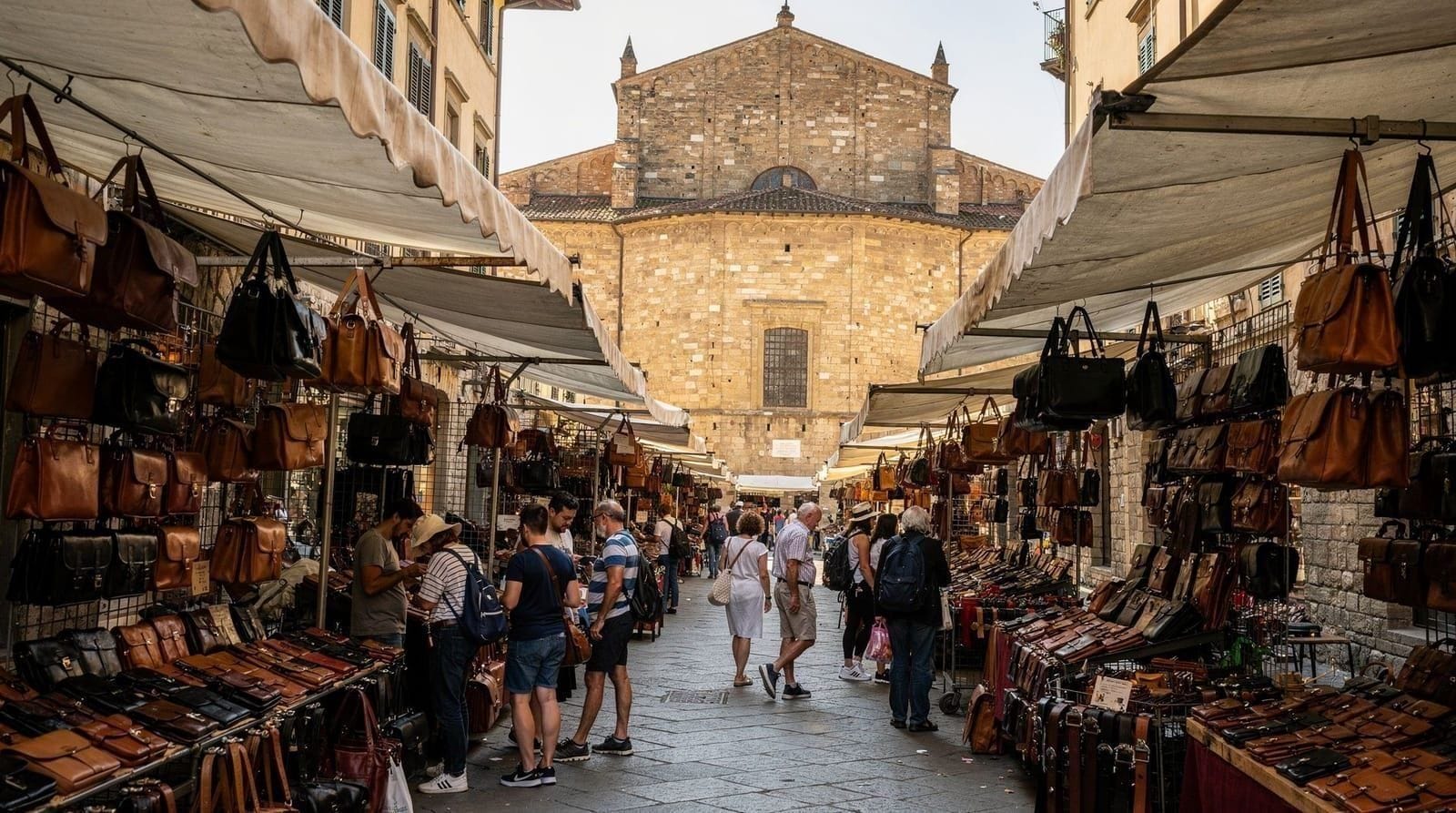
San Lorenzo district: The outdoor leather market and Mercato Centrale (covered food market). The outdoor stalls are where the fake-leather warning applies most strongly. The indoor Mercato Centrale food hall upstairs is excellent.
Ponte Vecchio and Via Por Santa Maria: The historic gold jewellery corridor. Shops on Ponte Vecchio have sold gold here since Cosimo I de’ Medici expelled the fishmongers and butchers in the 16th century and replaced them with goldsmiths. Prices are not cheap, but authenticity is not in question here — these are established goldsmiths, not souvenir stalls.
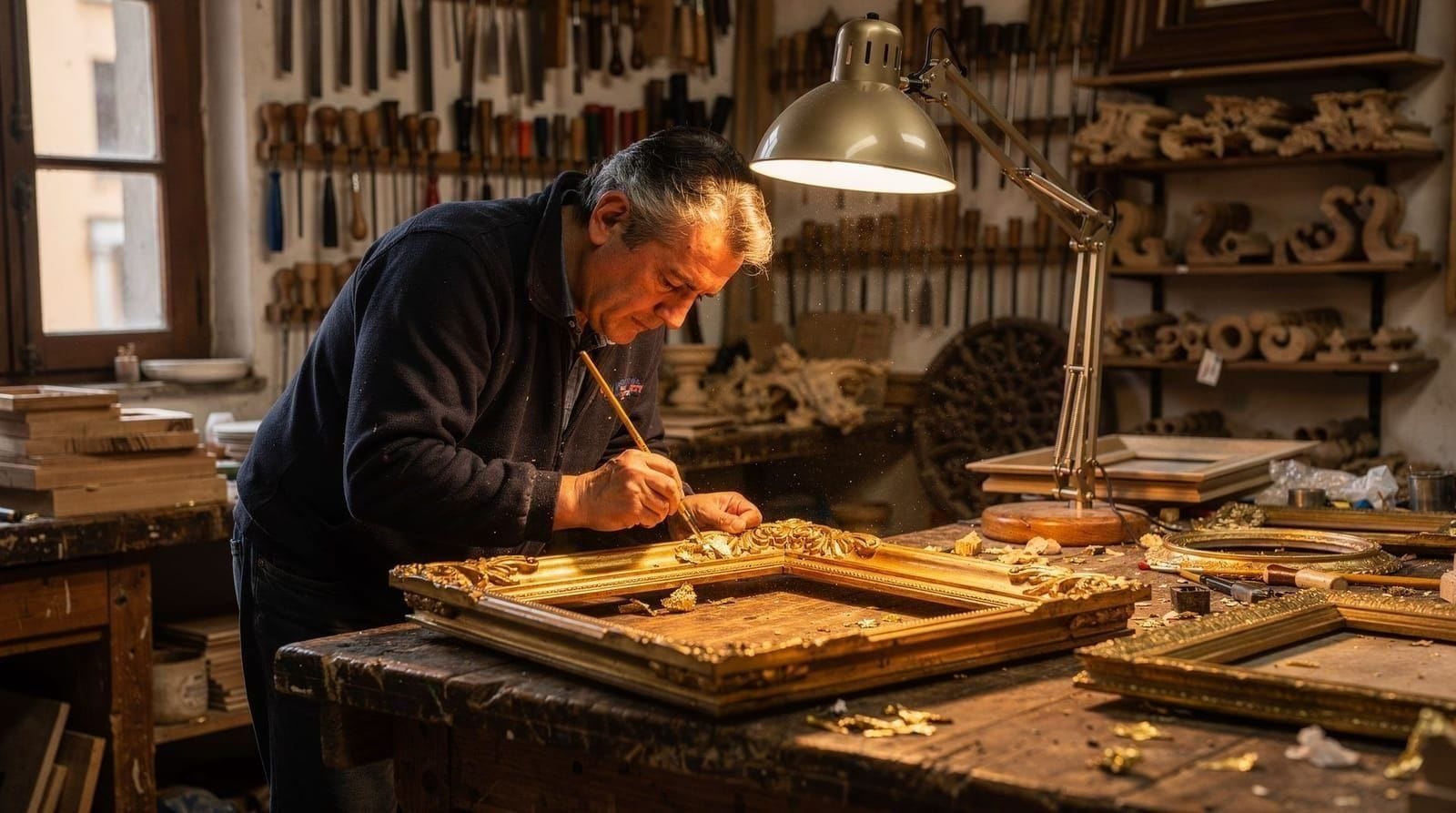
Oltrarno: The best neighbourhood for genuine artisan shopping. Leather workshops, bookbinders, furniture restorers, paper artists and frame-makers still operate from workshops on streets like Via Maggio, Borgo San Jacopo, Via Toscanella and Via dell’Orto. Many will demonstrate their craft and take custom orders.
Santa Croce area: Antique dealers, quality leather shops (Beltrame, Riccardo Barthel), and the working-leather craftspeople who supply to fashion houses. Slightly less tourist-oriented than San Lorenzo.
Leather: what to buy and where
The quality spectrum
Florentine leather ranges from extraordinary to fraudulent, with a genuine middle ground in between.
Premium artisan leather (EUR 150-600+ for a bag): Workshop-made using vegetable-tanned Tuscan leather, hand-stitched, often personalised. Bags, wallets, belts and gloves at this level are among the best in the world. Workshops in the Oltrarno and around Santa Croce.
Mid-range genuine leather (EUR 80-180 for a bag): Machine-stitched using genuine full-grain leather, sold at established shops. Quality drops significantly from the artisan tier but is still a legitimate leather product.
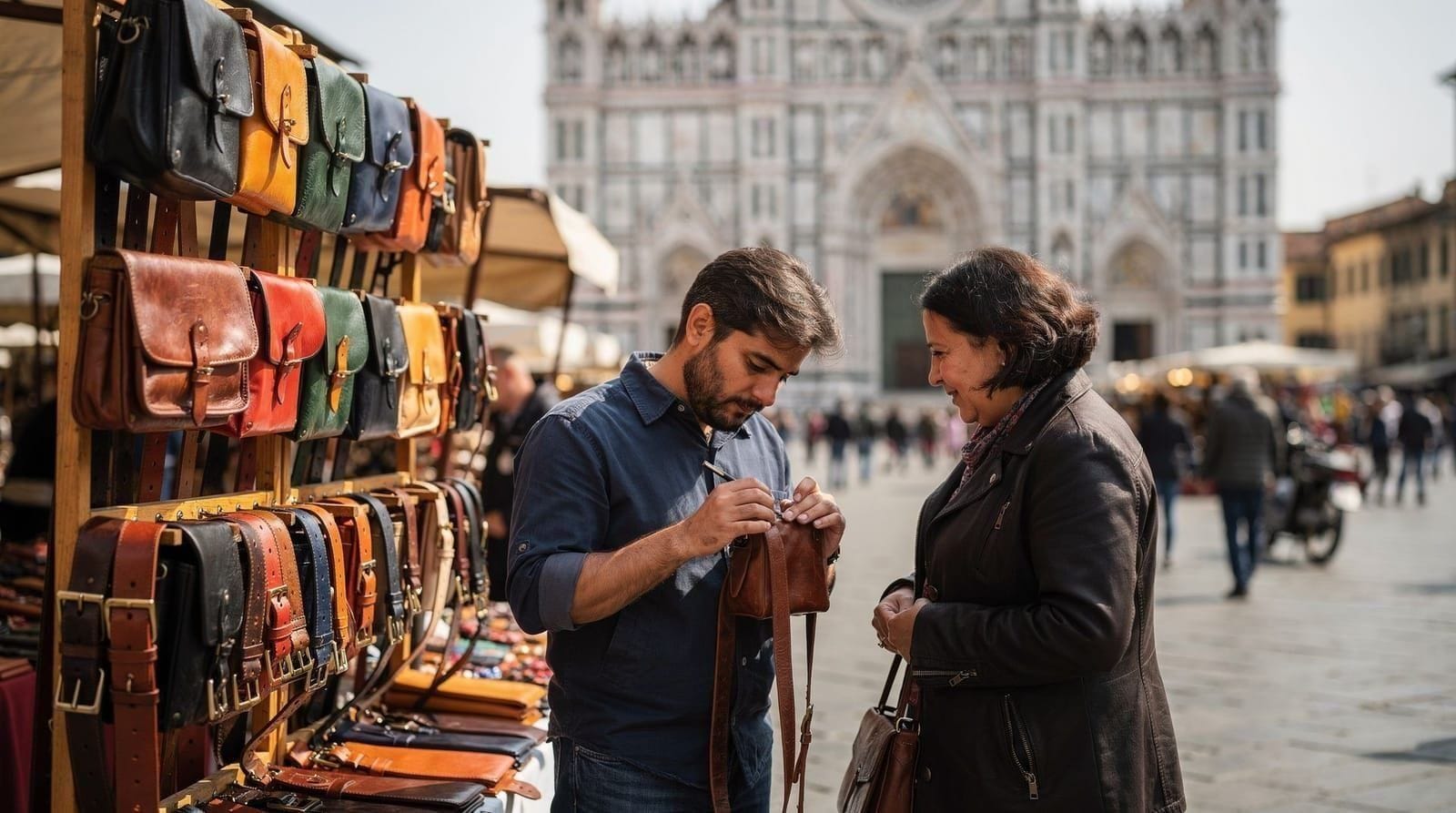
San Lorenzo market quality (EUR 20-80): Variable. Some stalls sell genuine split leather (the lower layer of a hide, genuine but less durable) or bonded leather (leather fibres compressed with adhesive) at these prices. Some sell Chinese-manufactured goods labelled “Made in Italy.” You cannot reliably tell by looking. Our advice: if you are willing to take the risk on a EUR 25 wallet, that is your choice — just understand what you are buying.
Avoid entirely: Vendors approaching you near tourist sites offering “genuine leather” samples, or shops with very large inventory displayed outside at aggressive prices (EUR 10-20 for wallets).
Where to buy genuine artisan leather
Il Bussetto (Via del Parione 6): Traditional small leather goods — wallets, card holders, key fobs — made entirely on premises using vegetable-tanned leather. Small workshop, limited stock, genuinely excellent. Wallets from EUR 80.
Scuola del Cuoio (Piazza Santa Croce 16): Founded in 1950 inside the monastery of Santa Croce, this leather school teaches traditional craftsmanship and sells goods made by students and master craftspeople. Bags from EUR 180, wallets from EUR 60. A legitimate and honest shop.
Peruzzi (Borgo dei Greci 8-20): Large, established leather shop near Santa Croce. Not a workshop, but stock is genuine quality leather and the staff are knowledgeable. Good selection for shoppers who want to browse without the artisan prices.
Oltrarno workshops: Borgo San Jacopo and Via Santo Spirito have several working leather workshops. Not all sell to the public, but those that do (look for the workshop sign “laboratorio artigianale”) often offer made-to-measure options. Our Oltrarno shopping guide has specific addresses. For the broader context on why Oltrarno leather differs from San Lorenzo’s, see Florentine leather tradition.
Verifying what you’re buying
A few practical checks help even a non-expert avoid the worst mistakes. Genuine vegetable-tanned leather has an earthy, slightly sweet smell — synthetic or heavily treated leather smells more chemical or has almost no smell. It should feel warm rather than cold and slightly plasticky to the touch, and should show natural grain variation rather than a uniform printed texture. Ask directly where an item was made and whether the shop will put that in writing on the receipt — a legitimate workshop answers without hesitation; evasive answers are themselves informative. None of this is foolproof, but combined with buying from an address in this guide rather than an approaching street vendor, it meaningfully reduces the risk of overpaying for a bonded-leather or synthetic product.
The San Lorenzo outdoor market: honest assessment
The outdoor stalls of Mercato San Lorenzo (open daily except Sunday, from approximately 9 am to 7 pm) cover the streets around the Basilica di San Lorenzo and extend through several blocks. They sell leather goods, scarves, ceramics, prints, clothing and accessories.
The good: It is a genuine market, lively and colourful. Some stalls sell good-quality items — particularly ceramics from Deruta producers, Florentine paper goods, and food products (olive oil, pasta, wine).
The problem: The leather goods section is where the fake-leather issue is most acute. Stalls selling bags for EUR 25-40 with “genuine leather” tags are frequently selling products that are not full-grain leather, not made in Florence, or both. The Italian legal definition of “Made in Italy” requires only that the final manufacturing step occurred in Italy — a bag with Chinese-tanned, cut and stitched leather that received a final clasp attachment in Tuscany can legally carry the label.
What to buy at San Lorenzo: Food (truffle products, olive oil, wines), ceramics (if you verify the maker’s mark), scarves and accessories (where the leather question does not apply), and souvenirs at market prices. See our San Lorenzo market guide for more detail.
What to be cautious about: Any leather item priced under EUR 80. The attractive stall presentation is professional; the products are not always.
Gold jewellery on Ponte Vecchio
Ponte Vecchio has housed goldsmiths since 1593 when Ferdinando I de’ Medici ordered the fishmongers and tanners removed (their work was incompatible with his private corridor above the bridge). The approximately 40 shops that remain today are genuine jewellers with established reputations.
Prices on Ponte Vecchio are not discounted — you are paying for location as well as craftsmanship. For the same quality at lower prices, Via Por Santa Maria (the street leading to Ponte Vecchio from the city side) and the streets around Via de’ Tornabuoni have jewellers with less rent to cover.
What Ponte Vecchio offers that other shopping cannot: the experience of buying jewellery in the same location where Florentines have bought jewellery for 400 years. For a honeymoon purchase or anniversary gift, this context has genuine value. For value-first gold shopping, look elsewhere.
Average prices for 18K gold on Ponte Vecchio: Simple chains EUR 200-600, rings EUR 300-1500, bracelets EUR 400-2000+. Custom work takes several days and requires a deposit.
Designer outlets near Florence
The Mall Leccio
Location: Via Europa 8, Leccio Reggello (30 km southeast of Florence) Transport: Dedicated SITA bus from Via Santa Caterina da Siena (near Santa Maria Novella station), EUR 8-12 return. Journey approximately 45 minutes. Hours: Monday-Saturday 10 am-7 pm, Sunday 10 am-8 pm (hours vary by season; check the-mall.com)
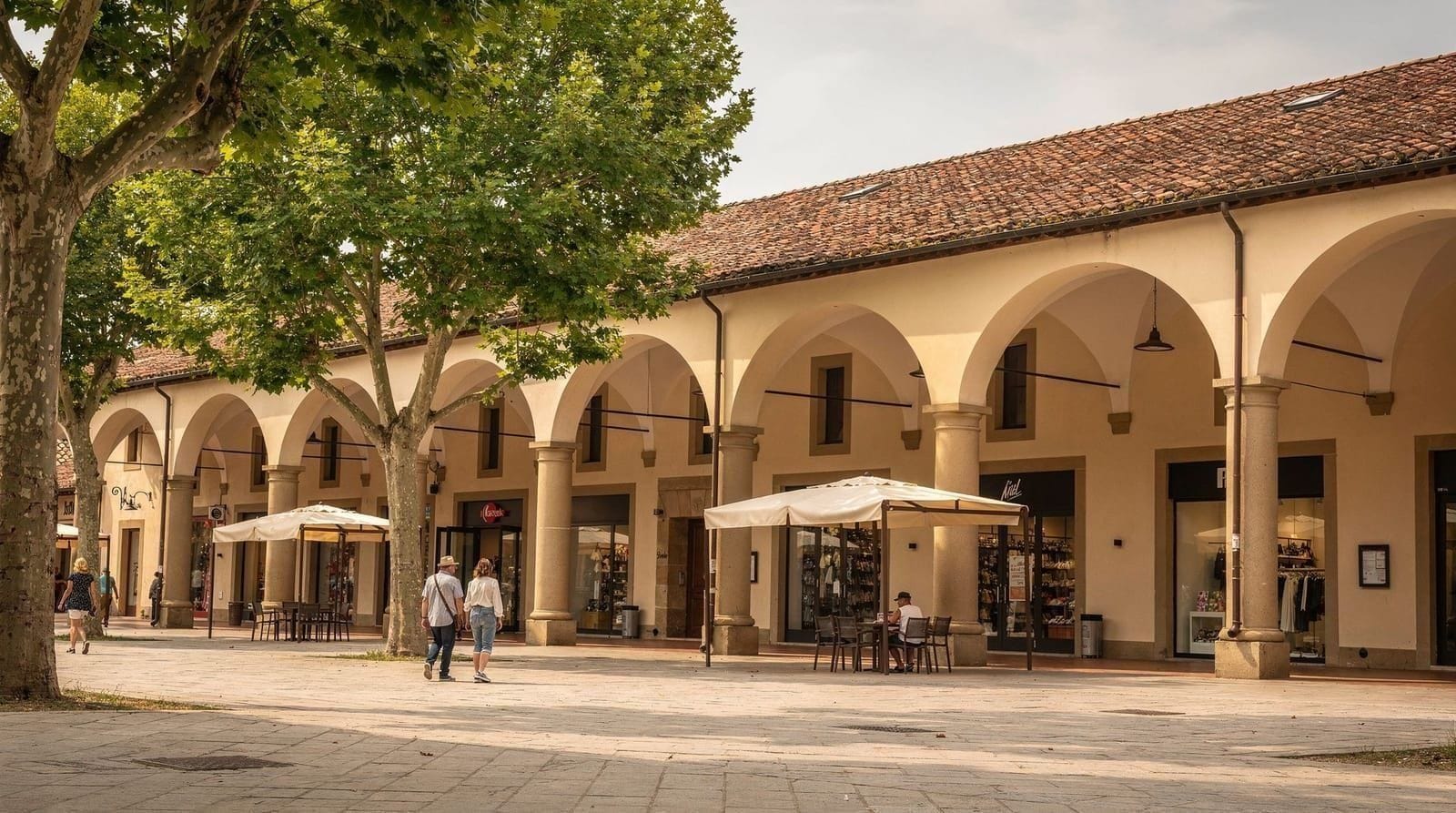
The Mall Leccio is the premium designer outlet near Florence. Unlike American-style outlet malls, it is architecturally quiet — purpose-built low buildings in a Tuscan-inflected style, surrounded by trees. The atmosphere is calm compared to the city.
Brands at The Mall: Gucci (the largest store, occupying a dedicated building), Bottega Veneta, Saint Laurent, Balenciaga, Valentino, Alexander McQueen, Loro Piana, Brunello Cucinelli, Moncler, Golden Goose.
Typical discounts: 30-50% below full retail, occasionally more on older season stock. Current season items appear at The Mall within a season or two. The Gucci sale section regularly has significant reductions.
Honest caveats:
- The Mall is a destination for people interested in luxury fashion specifically. If you are not a Gucci or Bottega customer at full price, The Mall may not be worth the trip.
- Stock changes constantly — there is no guarantee that the specific item you want will be in your size.
- Weekend crowds, especially on Saturday, can make the experience less pleasant. Tuesday-Thursday mornings are quietest.
- Prices are still high by any objective standard — a EUR 400 Gucci bag instead of EUR 800 is a significant saving, but still EUR 400.
See our full The Mall outlet guide for logistics, seasonal advice and what to expect.
Barberino Designer Outlet (McArthurGlen)
Location: Barberino di Mugello, 35 km north of Florence Transport: SITA bus from Florence, approximately 40 minutes. Or car (A1 motorway). Hours: Daily 10 am-8 pm
Barberino is larger than The Mall and has a broader brand mix — more accessible luxury alongside the premium tier. Brands include Armani, Hugo Boss, Calvin Klein, Tommy Hilfiger, Coach, Liu Jo, Furla, and the Italian-specific brands Pinko, Twin Set and Patrizia Pepe.
Best for: Shoppers who want mid-range to accessible luxury at outlet prices. The accessible Italian brands (Furla, Pinko) offer excellent value here.
Comparison with The Mall: Barberino is better for accessible luxury, The Mall for ultra-premium. See our outlet comparison guide for a side-by-side analysis.
Combining an outlet trip with the rest of Tuscany: Neither outlet is a full day’s activity on its own for most shoppers — two to three hours is typically enough. Some visitors combine The Mall with a stop in Fiesole on the return, since both are reachable from the same side of the city, though this requires arranging your own transport rather than the dedicated SITA bus, which runs directly to and from the centre.
Artisan crafts: what Florence makes that you cannot buy elsewhere
Marbled paper and stationery
Florentine carta marmorizzata (marbled paper) is made by carefully floating pigments on water, then combing them into patterns, then pressing paper into the surface. The technique arrived in Florence via Venice in the 17th century; Florence refined it and kept it alive when Venice abandoned it.
Where to buy: Giulio Giannini e Figlio (Piazza de’ Pitti 37), Il Papiro (multiple locations), Alberto Cozzi (Via del Parione 35). Notebooks EUR 15-40, photo albums EUR 40-120.
Florentine bookbinding
Traditional legatoria workshops bind books and photo albums in genuine leather and cloth. Several workshops in the Oltrarno take small commissions and sell ready-made albums.
Alabaster from Volterra
Not Florence itself, but widely sold in Florence: alabaster figures, bowls and lamps from Volterra (1 hour by car). The best pieces are carved by hand; machine-carved and resin imitations are also sold. Genuine hand-carved alabaster is warm to the touch, slightly translucent when held to light.
Terracotta from Impruneta
Impruneta, a village 15 km from Florence, produces the terracotta pots used in Italian gardens since the Renaissance. If you are driving and want a large decorative pot, Impruneta producers sell direct.
Food as a shopping category
Food is arguably Florence’s most underrated souvenir category — it packs better than most people expect and delivers more repeat enjoyment than a trinket. The Florence food markets guide covers Mercato Centrale and Sant’Ambrogio in more depth than this shopping-focused page can, including which vendors sell packable products (vacuum-sealed cured meats, bottled olive oil, dried pasta) versus items that don’t travel well. Combining a shopping morning with a market visit — leather in the Oltrarno, then food at Sant’Ambrogio — is an efficient way to structure a half day.
Shopping logistics
Opening hours
Most Florence shops open 10 am to 7:30 pm, with a lunch break (1-3:30 pm) at smaller independent shops. Large stores and chains increasingly stay open through lunch. Markets open earlier (8-9 am) and close in the afternoon (sometimes by 5 pm).
Sundays: Most shops are closed in the morning. Many reopen 3:30-7:30 pm. Markets are largely closed on Sundays.
Bargaining
Bargaining is appropriate at outdoor markets (San Lorenzo, Mercato Nuovo) — typically 10-15% off is achievable if you are buying multiple items. It is not appropriate in established shops, even small ones.
Shipping large purchases
Most established shops can arrange international shipping. Ask at the point of purchase. Ceramics and glass are best shipped rather than carried; leather goods are safer in luggage.
Tax refunds for non-EU visitors
Request a Global Blue or Premier Tax Free form at participating shops (look for the Tax Free Shopping sign). Minimum purchase EUR 154.94 per receipt. Process the refund at Florence airport (Terminal A, near the departure gates) — bring receipts, passport and the goods. Allow 30-45 minutes.
Frequently asked questions about shopping in Florence
Is there a department store in Florence?
Yes. La Rinascente (Piazza della Repubblica) is the main department store, with fashion, beauty, accessories and a food court. Coin (Via dei Calzaiuoli) is more accessible mid-range. For electronics, MediaWorld is in shopping centres outside the historic centre.
When is the best time to shop in Florence?
Early morning (before 11 am) for markets — San Lorenzo is busiest between noon and 4 pm. For boutiques, weekday mornings. Avoid Saturday afternoons in summer when the historic centre is at maximum density.
Are prices negotiable at The Mall or Barberino?
No. Outlet prices are fixed. However, the Gucci store at The Mall has a specific sale section with further reductions; ask to be shown it if it is not immediately visible.
What are the best souvenirs to bring home from Florence?
Florentine leather small goods (wallet, card holder — more portable than bags), marbled paper notebooks, a bottle of Chianti Classico DOCG wine (under 1 litre for carry-on), a small tin of Tuscan extra-virgin olive oil, locally produced truffle products (truffle salt, truffle paste), and prints or reproductions from Uffizi and Accademia museum shops.
Should I shop in Florence or wait for The Mall / Barberino?
Both, for different things. Florence itself is better for genuine artisan leather, gold and marbled paper — the kind of purchase where craftsmanship and provenance matter. The Mall and Barberino are better for full-price fashion brands you’d buy anywhere, just at a discount. If your budget is tight, prioritise one outlet trip over spreading purchases across both, since the SITA bus journey (about 40–45 minutes each way) eats into a day either way.
Top experiences
Bookable activities with verified prices and instant confirmation on GetYourGuide.

Florence: The Mall outlets tour
- Free cancellation
- Hotel pickup
Florence: private shopping tour at The Mall
- Free cancellation
Florence: leather crafting experience — made in Florence
- Free cancellation
- Small group
Florence: San Lorenzo food market and wine tasting tour
- Free cancellation
- Small group
Florence: leather and passion — a tour of Florentine craftsmanship
- Free cancellation
- Small group