Ponte Vecchio Florence: complete visitor guide
Florence: Vasari Corridor and Uffizi Gallery exclusive tour
- Small group
- Free cancellation
What is the Ponte Vecchio famous for?
Ponte Vecchio is Florence's oldest bridge, built in 1345, and the only bridge in the city to survive World War II. It is lined with goldsmiths' and jewellers' shops — a tradition dating from 1593, when Duke Ferdinand I expelled the butchers and replaced them with goldsmiths. The Vasari Corridor runs above the shops along the bridge's eastern side.
Ponte Vecchio is, by the measure of almost any tourist survey, the most photographed site in Florence — and arguably the most photographed bridge in Europe. The reasons are obvious: the cluster of shops overhanging the water, the wooden shutters painted in jewel-box colours, the view downstream to San Miniato’s white facade on the hill.
| Where | Connecting the historic centre to the Oltrarno, 5 min from Piazza della Signoria |
| Cost | Free to cross; jewellery from around €100 up |
| Time needed | 15–20 min to cross and appreciate properly |
| Getting there | Walkable from anywhere central; ZTL applies, no driving |
| Best time | Sunrise for quiet, golden hour for photos |
Less obvious is the depth of the bridge’s history. There has been a bridge at this crossing since Roman times — the Romans needed a crossing here for the Via Cassia, the road north to Fiesole and ultimately Rome. The current bridge was built in 1345, replacing an older structure swept away in the great flood of 1333. It survived the 1966 flood (which destroyed much of the city), the Arno floods of subsequent centuries, and — most remarkably — the German army’s demolition of every other bridge in Florence in August 1944.
Architecture of the bridge
Ponte Vecchio is a segmental arch bridge — three low, flat arches spanning the Arno at its narrowest navigable point in the historic city. The arches have a very low rise relative to their span, giving the bridge its characteristic elegantly horizontal profile. The three-arched structure measures approximately 95 metres in length and 32 metres in width (including the overhanging shops).
The shops were rebuilt after the 1333 flood flood and have been part of the bridge’s fabric ever since. The current layout — two rows of shops facing each other across a narrow pedestrian passage about 3 metres wide — dates from the 16th century reconstruction under the Medici.
The buche (openings cut in the back walls of the east-side shops) were made to allow the Vasari Corridor to pass through without entering the shop interiors. Look up as you walk along the east side and you will see the corridor’s windows running above — a pale wall with windows that are not quite aligned with anything below.
The Taddei bust above the bridge on the Oltrarno side (south) was placed in 1900 in memory of Benvenuto Cellini, the Renaissance goldsmith and sculptor who, despite not being a permanent occupant of Ponte Vecchio shops, became the bridge’s symbolic patron. Couples attach padlocks to the railings near the bust — this practice is technically prohibited, and the locks are regularly removed by the city.
The jewellers and goldsmiths
Ferdinand I’s 1593 edict transforming the bridge from a butchers’ market to a goldsmiths’ quarter was partly practical (the Medici wanted the Vasari Corridor above to be odour-free) and partly a matter of civic status. The bridge’s rent was partly paid in gold rather than cash.
Today around 40 shops operate on the bridge. They sell gold, silver, and gemstone jewellery; several carry antique pieces. Prices range from modest silver trinkets to significant investment-level pieces. The most reputable shops are the ones that have been here for generations — look for family names that appear on multiple plaques and in guidebooks.
Honest note: The bridge is also surrounded by vendors and less scrupulous shops on the approach streets selling “Florentine jewellery” of uncertain provenance. The €15 gold-plated bracelet from a street vendor on Via Por Santa Maria is not comparable to work from an established Ponte Vecchio goldsmith. If you are buying seriously, stay on the bridge proper and check for hallmarks and provenance documentation.
Shopping is entirely free to browse. The narrow pedestrian passage gets very congested between 10:00 and 18:00; if you want to look at the shop windows without being jostled, come early morning.
The Vasari Corridor
The corridor running above the east side of Ponte Vecchio was designed by Giorgio Vasari and built in 1565 in five months — an extraordinary feat that involved threading a raised passageway through existing buildings, over the bridge, and along the riverbank to connect the Uffizi (then the Medici administrative offices) to the Palazzo Pitti (the Medici residence).
Cosimo I de’ Medici commissioned it for security as much as convenience. The Medici had enemies; moving between residence and government offices at street level meant exposure to crowds and potential assassination. The corridor allowed them to travel between the two palaces entirely in private, accompanied by guards.
The corridor is approximately 1 kilometre long and passes through numerous private buildings along the Oltrarno bank. It was used by the Medici and their successors until the late 18th century, then converted into a display gallery for the Uffizi’s collection — it once held the famous self-portrait collection that now resides elsewhere in the Uffizi.
After years of closure for restoration, the corridor reopened in 2023. Visits require advance booking via the Uffizi; access is included in some guided tour packages available through GetYourGuide. Numbers are strictly limited. See the Vasari Corridor guided tour options or check directly with the Uffizi for current availability.
Where to photograph the bridge
Ponte Vecchio is one of those places where the best views are not from the bridge itself but from nearby vantage points:
| Location | View | Best time |
|---|---|---|
| Ponte Santa Trinita (100 m upstream) | Classic long shot of the bridge with Arno | Early morning, golden hour |
| Ponte alle Grazie (200 m downstream) | Three arches from downstream, shops visible | Late afternoon |
| Lungarno Acciaiuoli (north bank) | Bridge from eye level with Oltrarno hills behind | Morning and evening |
| Lungarno Guicciardini (south bank) | Reverse angle; Vasari Corridor visible | Afternoon |
| Piazzale Michelangelo (above Oltrarno) | Aerial view of bridge in city context | Sunrise, golden hour |
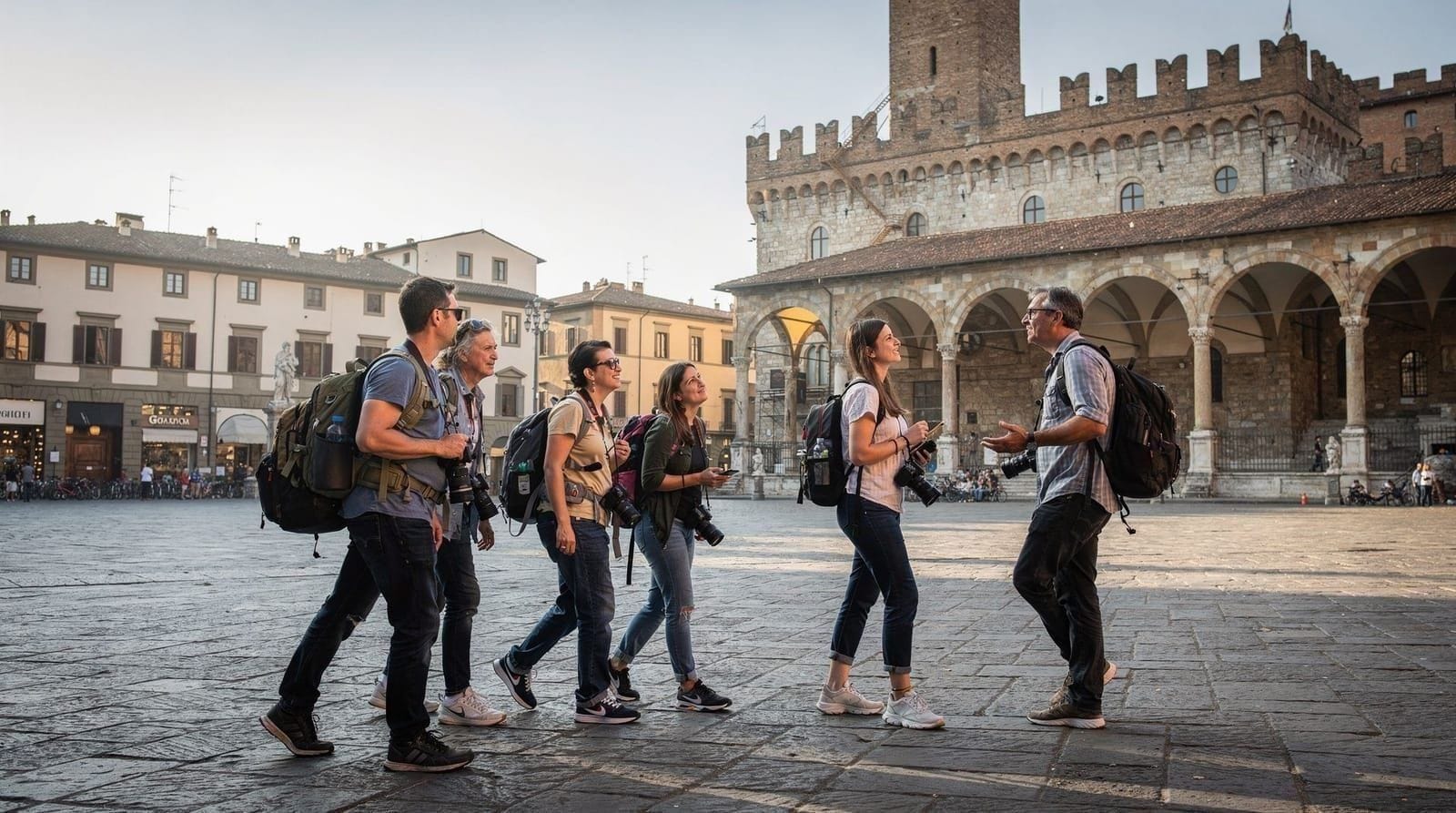
For dedicated photography tours of Florence including Ponte Vecchio, the private photo walking tour options cover all the key vantage points with guidance on timing and angles.
Getting there
Ponte Vecchio sits at the southern edge of the historic centre, connecting the centro storico (north bank) to the Oltrarno neighbourhood (south bank).
| Starting point | Walking time |
|---|---|
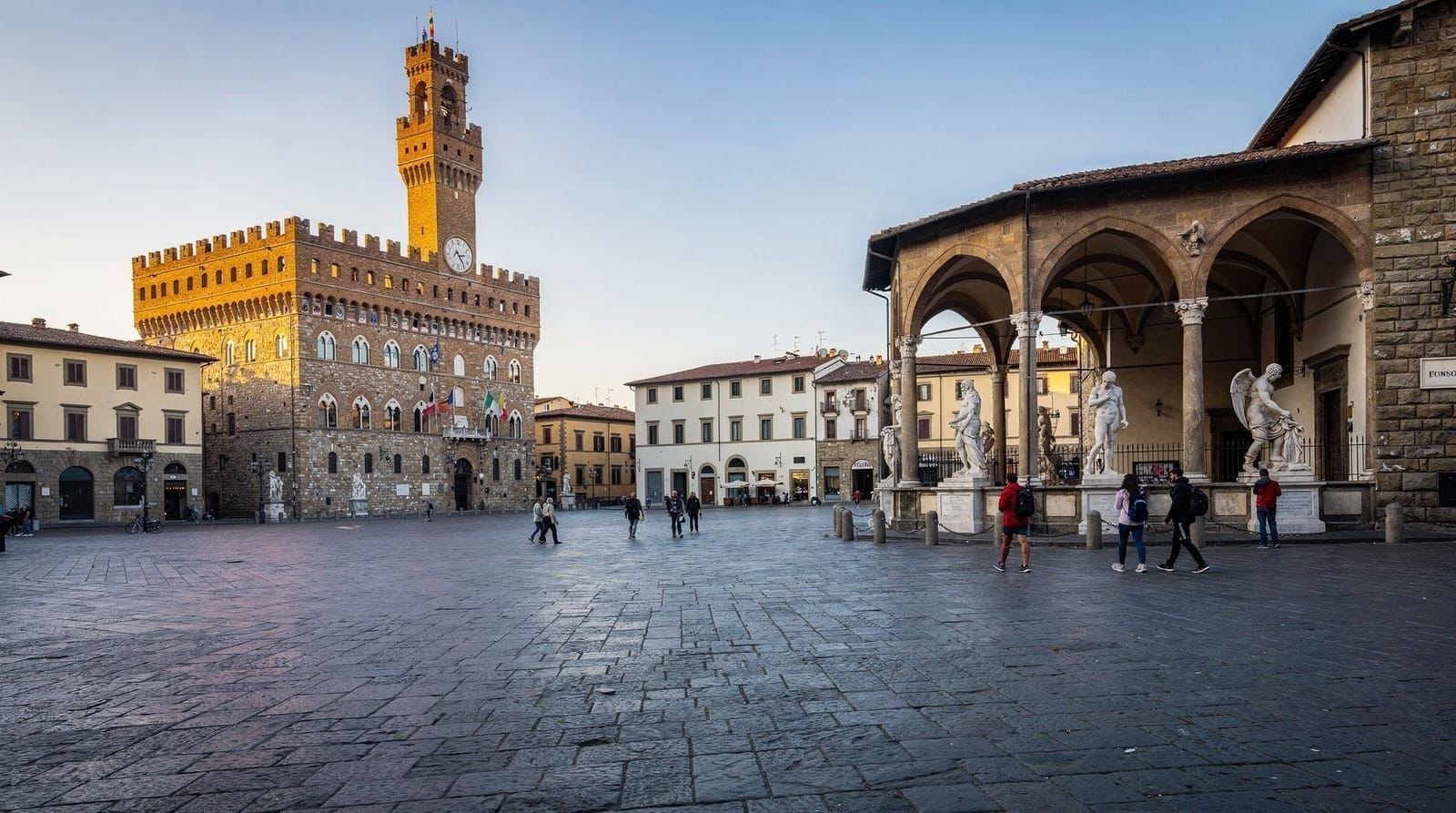
| Piazza della Signoria | 5 minutes (via Via Por Santa Maria) |
| Uffizi Gallery | 3 minutes (south side of the building) |
| Duomo | 12 minutes (south along Via dei Calzaiuoli) |
| Santa Maria Novella station | 20 minutes |
| Pitti Palace | 12 minutes (north through Oltrarno) |
The ZTL covers both banks at this point. Do not drive to the bridge.
Combining Ponte Vecchio with other sites
The bridge is naturally central to several Florence routes:
Medici route: Palazzo Vecchio → Uffizi → Vasari Corridor → Ponte Vecchio → Pitti Palace → Boboli Gardens. This is the Medici itinerary in condensed form. See the Medici Renaissance tour guide for context.
Oltrarno walk: Cross the bridge, turn right into the Oltrarno, and explore the neighbourhood of artisan workshops, smaller museums, and the hilltop churches of San Miniato and San Giorgio. See the full Oltrarno walking tour guide.
River route: Walk the north bank (Lungarno degli Acciaiuoli) east to Piazza dei Cavalleggeri and Santa Croce, or west toward the Cascine park. The Arno in evening light is Florence at its most serene.
For the full planning context, see the Florence destination guide and the best walking tours of Florence.
What to actually expect when you cross it
The postcard version of Ponte Vecchio — quiet, golden-lit, the shutters glowing — is real, but only at specific times. In the middle of a summer day, the pedestrian passage between the shop fronts is narrow (about 3 metres) and can feel genuinely congested, with slow-moving groups, street sellers on the approaches, and a real pickpocket risk in the crush. Neither version cancels the other out: the bridge is both the beautiful structure the photographs show and a busy shopping street at peak hours. For a more candid, planning-focused take on managing that gap between expectation and midday reality, see the Ponte Vecchio reality check.
Frequently asked questions about Ponte Vecchio
Why was Ponte Vecchio spared in WWII?
In August 1944, the retreating German army destroyed all five of Florence’s main bridges to slow the Allied advance, except for Ponte Vecchio. The official reason has never been definitively established. One theory cites a personal order from Hitler, transmitted via the German consul; another notes that German engineers found the bridge technically difficult to demolish without risk to surrounding buildings. The medieval tower-houses on both approaches were destroyed instead to block the roads.
Can I walk over Ponte Vecchio at night?
Yes. The bridge is a public road and is open 24 hours. At night the jewellers’ shutters are closed and the bridge is quieter. The street lamps reflect in the Arno. The view from Ponte Santa Trinita downstream toward Ponte Vecchio at night is one of the classic Florence images.
Are there restaurants on Ponte Vecchio?
No restaurants on the bridge itself. The area immediately around the bridge — particularly Via Por Santa Maria and the streets approaching from the north, and Borgo San Jacopo on the Oltrarno side — has numerous restaurants, though many directly adjacent to the bridge charge a location premium. Eating one street further away in the Oltrarno gives better value.
What is the best time to visit Ponte Vecchio?
Sunrise gives the best light and the fewest people. The bridge at 7:00 in summer is peaceful; by 10:00 it is already crowded. If you want to photograph without crowds, set an early alarm — the light on the Arno in early morning is exceptional.
How long should I budget to see Ponte Vecchio?
15–20 minutes is enough to cross slowly, look at the shop windows, and take photos from the bridge itself. Add another 15–20 minutes if you also want to walk to Ponte Santa Trinita or Ponte alle Grazie for the classic external views. It’s a stop that fits easily into a longer walk between the Uffizi and the Oltrarno rather than a standalone destination.
Is Ponte Vecchio included on the Vasari Corridor tour?
The Vasari Corridor tour walks above the bridge’s shops rather than across the pedestrian level, so you’ll see Ponte Vecchio from inside the corridor’s windows rather than experience it as a crossing. Most visitors do both separately: cross the bridge at street level on one occasion, and book the corridor tour, subject to availability, as a distinct experience.
Top experiences
Bookable activities with verified prices and instant confirmation on GetYourGuide.

Florence: Uffizi Gallery with optional Vasari Corridor guided tour
- Skip the line
- Free cancellation
Florence: Uffizi Gallery and Vasari Corridor private tour
- Free cancellation
Florence: Medici's secret path from Palazzo Vecchio to Uffizi
- Small group
- Free cancellation
Florence: walking tour and optional fast-track Duomo visit
- Free cancellation
- Small group