Super Tuscans explained
Florence: wine tasting experience in city centre
- Free cancellation
- Small group
What is a Super Tuscan wine?
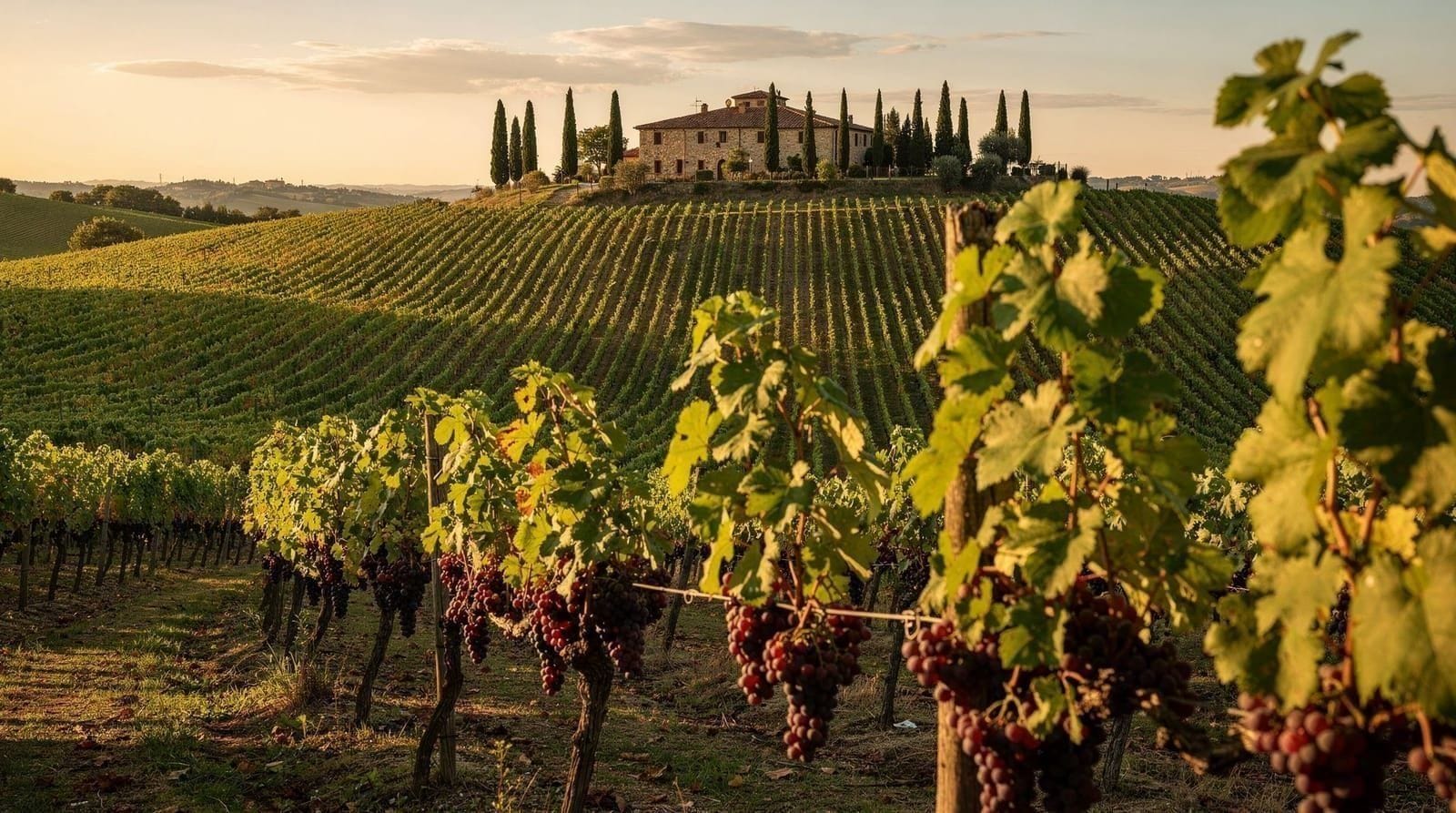
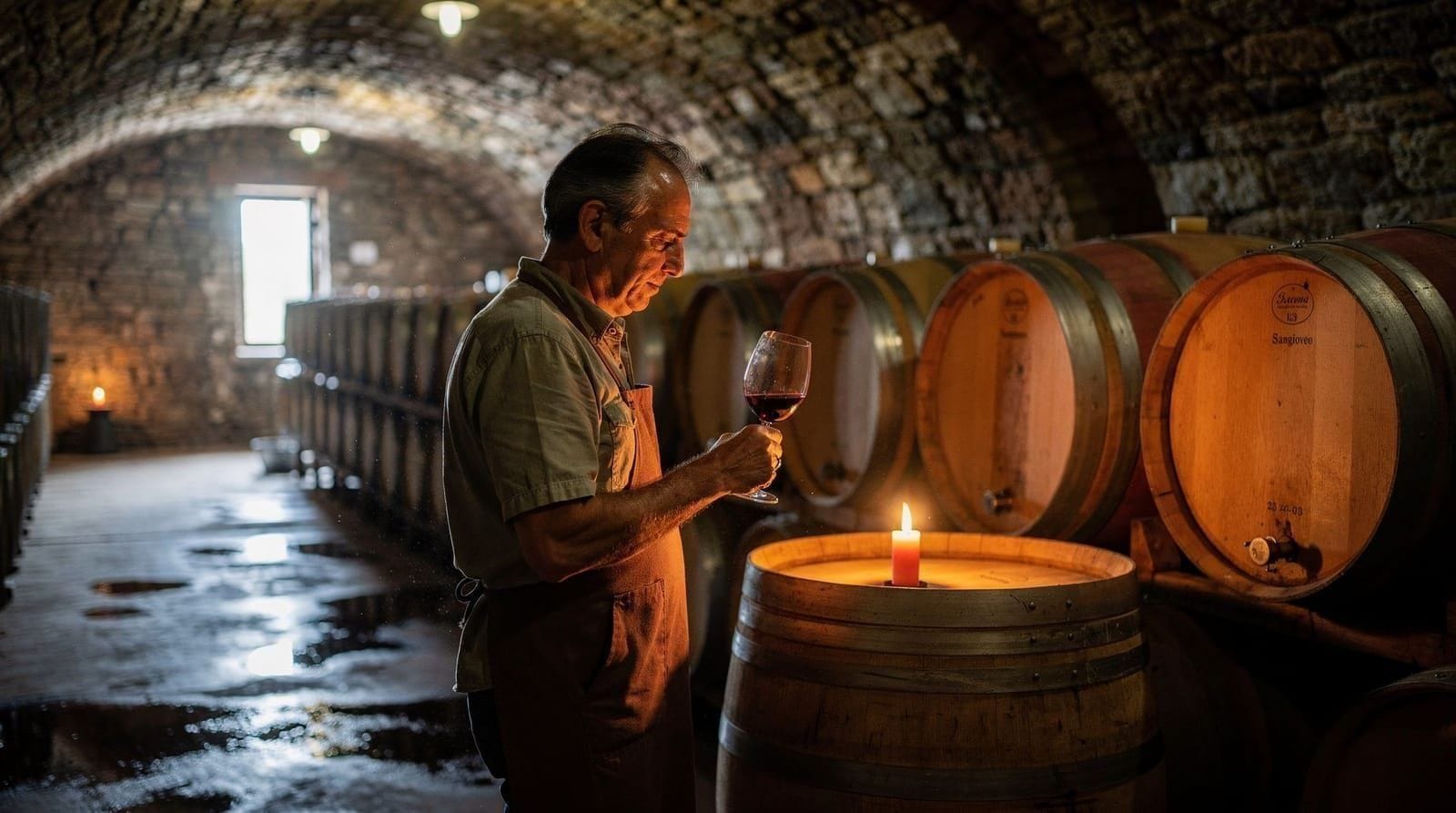
Super Tuscans are premium Italian wines from Tuscany that don't conform to traditional DOC/DOCG rules — often because they use international grape varieties like Cabernet Sauvignon or Merlot alongside Sangiovese. They're classified as IGT (a lower designation), but many are Italy's most sought-after and expensive wines.
| What | Premium Tuscan wines classified IGT, outside DOC/DOCG rules |
| Where to taste in Florence | Antinori wine bar, Via Tornabuoni; around €20–40/glass |
| Where they’re made | Chianti Classico zone and Bolgheri coast (1h30 from Florence) |
| Price range | €25–700+ per bottle depending on label and vintage |
| Visiting Bolgheri | Car essential, reservations required for top estates |
The revolution that embarrassed Italy’s wine laws
In 1978, a bottle of wine called Tignanello appeared on the market. It was made by the Antinori family, one of Florence’s oldest noble houses, from their estate south of the city. The blend was revolutionary: 80% Sangiovese combined with 15% Cabernet Sauvignon and 5% Cabernet Franc, aged entirely in small French barriques rather than the large Slavonian oak casks that Chianti law demanded.
Under the Italian wine regulations of the time, this wine was illegal. Chianti required white grape varieties in the blend. Adding Cabernet was forbidden. So Antinori bottled it as a humble Vino da Tavola — table wine — the lowest possible classification in Italian law.
The wine was spectacular. Critics noticed. Prices climbed. And suddenly Italy found itself in the embarrassing position of its most prestigious and expensive bottles being classified below mass-market plonk.
This is how the Super Tuscans were born.
The Sassicaia precedent
Tignanello was not quite the first. That honour belongs to Sassicaia, created by Marchese Mario Incisa della Rocchetta at his Tenuta San Guido estate in Bolgheri, on the Tuscan coast. Inspired by Bordeaux, the Marchese planted Cabernet Sauvignon and Cabernet Franc in 1944 and began experimenting with winemaking styles borrowed from the great chateaux of the Médoc.
For decades, Sassicaia was a private wine — made for the family and shared with friends. Antinori (already in the family by marriage) persuaded the Incisa della Rocchetta family to commercialise it. The 1972 vintage became the first commercial release.
In 1978, Decanter Magazine organised a blind tasting of Cabernet Sauvignons. Sassicaia 1972 won — beating first-growth Bordeaux. Suddenly everyone in the wine world was paying attention to Bolgheri.
The key names: a Super Tuscan primer
Understanding the Super Tuscans requires knowing the leading estates and their flagship wines.
Tignanello (Marchesi Antinori)
The archetype. Produced from the Tignanello estate south of Florence in the Chianti Classico zone. The 2020 vintage is: 80% Sangiovese, 15% Cabernet Sauvignon, 5% Cabernet Franc. Aged 12 months in French and Hungarian oak barriques. Market price: €80–120 per bottle. The estate also produces Solaia (a Cabernet-dominant blend) at €250–400+ and Badia a Passignano Chianti Classico Gran Selezione.
Antinori maintains a spectacular visitor centre 30 km south of Florence — the Antinori nel Chianti Classico winery is one of the most architecturally dramatic wine facilities in Italy.
Sassicaia (Tenuta San Guido, Bolgheri)
The originator. A pure Bordeaux-style blend (roughly 85% Cabernet Sauvignon, 15% Cabernet Franc), aged 24 months in French barriques. In 1994, Sassicaia was granted its own DOC — the only single-estate DOC in Italy. Current release prices: €120–180 for the standard Sassicaia, considerably more for older vintages.
The estate is in Bolgheri, 80 km from Florence, at the end of the famous Viale dei Cipressi (cypress avenue). Visits by appointment only, limited to 4–6 guests, roughly €100–150 for the experience.
Ornellaia (near Bolgheri)
Founded in 1981 by Lodovico Antinori (brother of Piero). Now owned by Frescobaldi. The Ornellaia flagship is a Merlot-dominant blend (typically 50–60% Merlot, 25–30% Cabernet Sauvignon, 10–15% Cabernet Franc, plus a small percentage of Petit Verdot). Often described as Tuscany’s answer to Pomerol. Current price: €150–250. The estate’s second wine, Le Serre Nuove, offers similar DNA at €50–70.
Ornellaia’s visitor programme is more accessible than Sassicaia — the estate has a wine art project that pairs each vintage with a commissioned artwork and holds an annual auction.
Masseto
Technically produced by the Ornellaia estate but sold and marketed separately. Masseto is 100% Merlot from a specific plot of clay-rich soil adjacent to the main Ornellaia vineyards, widely considered Italy’s finest Merlot. Very limited production (about 30,000 bottles per year). Price: €400–700 per bottle depending on vintage.
Il Sodaccio and Flaccianello (Fontodi and Montevertine)
Not all Super Tuscans come from the coast. Within Chianti Classico, several estates produce wines that technically fall outside DOCG rules. Fontodi’s Flaccianello della Pieve (100% Sangiovese, but produced outside the Chianti Classico regulations) and Montevertine’s Le Pergole Torte (also 100% Sangiovese, IGT) are considered Super Tuscans because they bypassed the system to make wine on their own terms.
Luce (Frescobaldi and Mondavi)
A 1990s Italo-American joint venture between the Frescobaldi family and the late Robert Mondavi, produced in the Montalcino zone. Luce is typically 50% Sangiovese, 50% Merlot — an unusual blend that bridges Italian and Californian sensibilities. More approachable and reasonably priced than the Bolgheri icons (€50–80).
Why IGT doesn’t mean inferior
The Indicazione Geografica Tipica (IGT) classification sits below DOCG and DOC in Italy’s wine hierarchy. It simply means the wine indicates its geographic origin without conforming to a specific set of production rules. Most everyday Italian wine is DOC or DOCG; most Super Tuscans are IGT.
This sounds counterintuitive — shouldn’t the best wines have the highest classifications? In Italy’s case, the regulations were written for traditional wine styles, and the Super Tuscans deliberately broke those rules. Today a bottle classified IGT Toscana (€120 for Tignanello) costs considerably more than many DOCG Chianti Classico Gran Selezione (€40–90), which illustrates that consumer perception of quality long ago overtook bureaucratic classifications.
Tasting Super Tuscans in Florence
Florence is the best base for experiencing these wines. Several options:
The Antinori wine bar in Palazzo Antinori (Via Tornabuoni 48): The Antinori family’s palazzo, with a ground-floor enoteca serving their complete portfolio including Tignanello and Solaia by the glass. Also a full restaurant (Cantinetta Antinori). Expect €20–40 for a glass of Tignanello.
Enoteca Alessi (Via delle Oche 27): One of Florence’s oldest wine shops, with an impressive back cellar. Not always open for tasting but excellent for purchasing.
Buca Mario (near Piazza della Repubblica): A good selection of Super Tuscans by the glass alongside Chianti and Brunello.
Wine tasting experiences: Several Florence wine tasting tours include Super Tuscans alongside Chianti and other Tuscan wines. Ask specifically when booking whether Super Tuscans are included — they typically add €10–20 to the tasting fee.
Visiting Bolgheri: the Super Tuscan coast
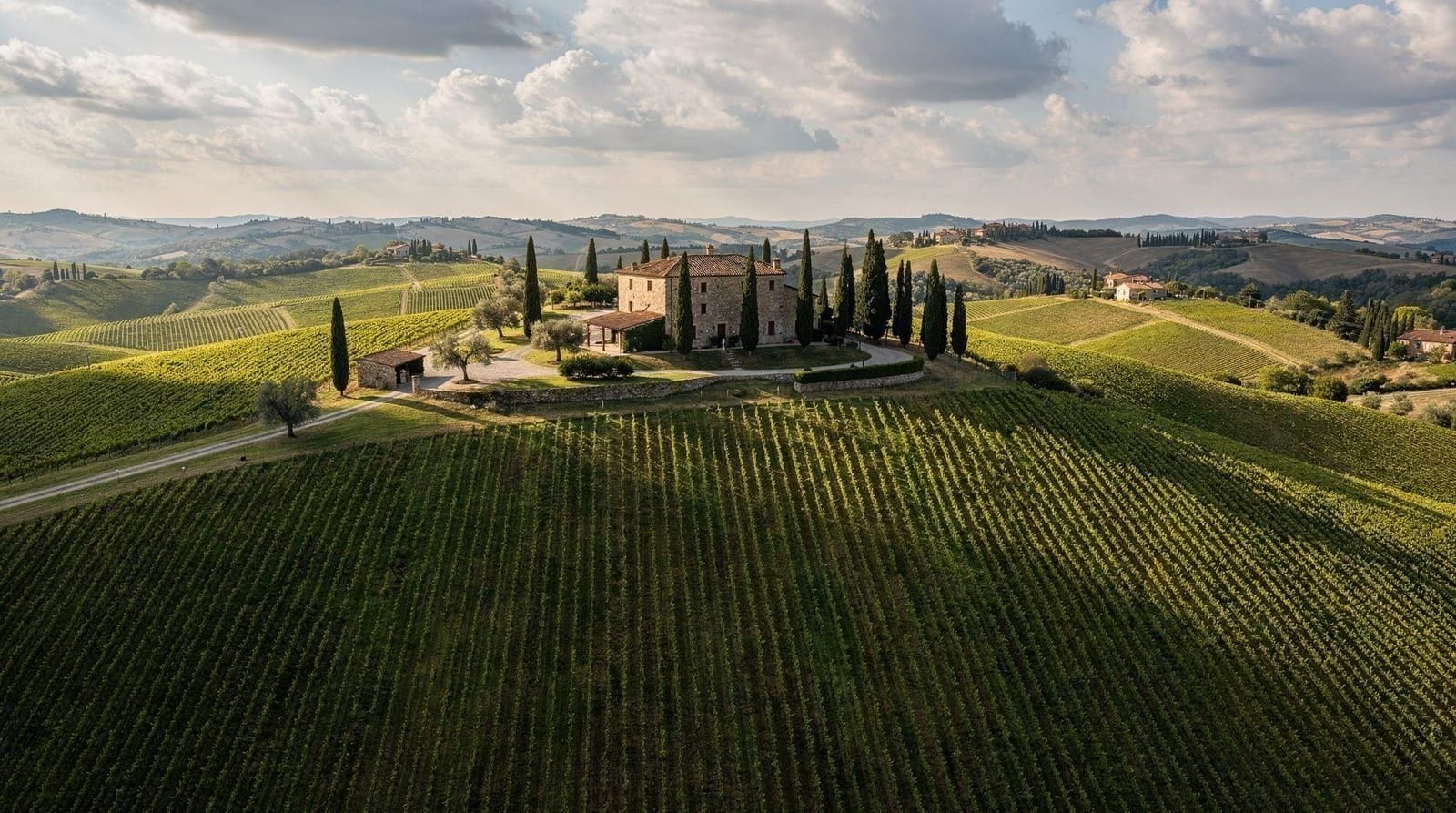
Bolgheri is the epicentre of the coastal Super Tuscan revolution. The area around the village has been transformed from malarial marshland (drained in the 1930s) into Tuscany’s most fashionable wine destination.
The village itself is tiny and charming — a single main street leading to the medieval tower. The Viale dei Cipressi (the cypress avenue) is the most photographed road in Tuscany, 5 km long with 62-year-old cypresses on either side. Nearby towns like Bolgheri Superiore, Castagneto Carducci, and Donoratico have good restaurants.
Getting there from Florence: About 80 km via the A1 and A11 motorways, then south on the Via Aurelia. Allow 1h30 by car. There is a train to Cecina (nearest station, 12 km from Bolgheri) but no direct connection.
There is no easy public transport from Florence to Bolgheri — this really requires a car or a private tour.
Super Tuscans and food: less obvious than Chianti
Super Tuscans, especially the Cabernet-dominant styles, pair differently from Sangiovese-based wines. The higher tannin structure and darker fruit of Cabernet Sauvignon calls for:
- Red meats: Bistecca alla Fiorentina works beautifully, as does roast lamb or venison
- Aged hard cheeses: Parmigiano-Reggiano at 36 months is surprisingly good
- Truffle dishes: The earthiness of truffle echoes in aged Super Tuscans
- Less well with: light pasta dishes, fish, fresh cheeses — these are big wines that need big food
Merlot-dominant Super Tuscans (Ornellaia, Masseto) are more versatile — more medium-bodied with softer tannins.
Super Tuscans in the wine shop: buying without overpaying
The secondary market for top Super Tuscans is active and global. A few practical notes on buying:
Current release vs. mature bottles: Sassicaia 2021 (the current release in 2026) costs €120–160 at retail. A mature Sassicaia 2010 or 2012 from a specialist retailer may cost €200–350 but will drink significantly better now. For wines at this price level, cellaring ability matters.
Florence wine shops to try: Enoteca Alessi stocks a rotating selection of Super Tuscans with reasonable retail pricing. Buca Mario occasionally has older vintages. For serious purchases, the dedicated wine merchants near Santa Croce are better stocked than the tourist-facing shops near the Duomo.
The airport duty-free: Pisa and Florence airports have reasonable wine shops with Super Tuscans at retail prices plus a duty-free margin. Not the best prices, but convenient for last-minute purchases.
What to avoid: Tourist-trap wine shops near major sights (Piazza del Duomo, Ponte Vecchio) typically mark up Super Tuscans 40–80% above genuine retail. The same bottle available for €80 at Enoteca Alessi may cost €130 at a shop with a prime view of the Uffizi.
Regulatory changes: how Italian wine law caught up
The embarrassment of Italy’s best wines being classified as humble table wine eventually forced regulatory action. In 1992, the IGT classification was created — a middle tier between the humble Vino da Tavola and the regulated DOC/DOCG system. This allowed wines like Tignanello to carry a geographic indication (Toscana IGT) without conforming to specific grape-blend rules.
Bolgheri DOC was further refined to accommodate the Cabernet Sauvignon and Merlot blends that had become the area’s signature. In 1994, Sassicaia was granted its own exclusive DOC — the only single-estate DOC in Italy. Essentially, the regulatory system bent around the wine rather than the wine bending to the system.
Vintages: which years matter
Super Tuscans from coastal Bolgheri are influenced by the Mediterranean climate — warmer and more consistent than inland Tuscany. Great vintages tend to align with low rainfall during the growing season.
| Vintage | Quality | Notes |
|---|---|---|
| 2015 | Exceptional | One of the greatest decades for Bolgheri |
| 2016 | Outstanding | Elegant, structured, long potential |
| 2018 | Very good | Approachable, drinking well now |
| 2019 | Excellent | Fresh, balanced, age-worthy |
| 2020 | Very good | Warm, rich, earlier maturing |
| 2021 | Excellent | Great acidity and freshness |
Comparing Super Tuscans to Chianti and Brunello
Newcomers to Tuscan wine often ask where Super Tuscans fit relative to the DOCG mainstays. The short version: Super Tuscans trade tradition for international grape varieties and modern technique, while Chianti Classico and Brunello di Montalcino stay within strict Sangiovese-based rules. Neither approach is objectively better — they represent different philosophies of Tuscan winemaking that happen to share the same hills.
For a broader map of how Super Tuscans sit alongside every other Tuscan appellation, the Tuscan wine regions guide covers Chianti, Brunello, Vino Nobile and Bolgheri side by side. If you’re planning a tasting day around Florence rather than a full Bolgheri excursion, the wine tasting in Florence guide lists which city venues pour Super Tuscans by the glass.
Frequently asked questions about Super Tuscans
Are Super Tuscans worth the price?
The top labels (Sassicaia, Ornellaia, Masseto, Tignanello) command high prices based on genuine quality and limited production. For most wine drinkers, the second wines offer better value: Le Serre Nuove from Ornellaia (€50–70), Guado al Melo’s Athénais, or even good Chianti Classico Gran Selezione at €50–90. The best Brunello from Montalcino often outperforms Super Tuscans at similar price points.
Why is Sassicaia more famous than Ornellaia?
Historical accident and the first-mover advantage. Sassicaia was first commercial in 1972, while Ornellaia didn’t begin commercial releases until the late 1980s. The 1978 Decanter tasting victory established Sassicaia’s international reputation. Both are now considered peers in terms of quality, though Sassicaia’s cachet remains marginally higher.
Can I visit Antinori’s Chianti estate from Florence?
Yes. The Antinori nel Chianti Classico winery is about 30 km south of Florence, near San Casciano Val di Pesa. The architecture alone is worth the trip. Visits by reservation (essential); the estate’s restaurant serves lunch and dinner. See the best wineries near Florence guide for booking details.
What is a “second wine” in Super Tuscan terms?
Top estates produce a flagship wine (Sassicaia, Ornellaia, Masseto) from their best barrels and a second wine from younger vines or less selected lots. Second wines offer a more accessible price (30–50% of the flagship) with similar winemaking philosophy. Examples: Guado al Tasso’s Il Bruciato (€25–35), Ornellaia’s Le Serre Nuove (€50–70). Good value for experiencing these estates’ style without paying icon-wine prices.
Top experiences
Bookable activities with verified prices and instant confirmation on GetYourGuide.

Florence: wine tasting experience in city centre
- Free cancellation
- Small group

Florence: Chianti wineries tour with wine tasting
- Free cancellation
- Small group

Florence: small group wine tasting experience in Tuscany
- Free cancellation
- Small group
Florence: Tuscany full day small group wine and food tour
- Free cancellation
- Small group