Volterra day trip from Florence
Florence: Siena, San Gimignano and Chianti day trip
- Free cancellation
- Hotel pickup
How do I visit Volterra from Florence in a day?
Volterra requires a car or guided tour — public bus service from Florence is very limited (1 direct bus per day, sometimes none). Drive time is about 1h40–1h50 via the Superstrada Fi-Pi-Li and SR68. By car, plan 5–6 hours in Volterra. Guided tours from Florence covering Volterra and San Gimignano cost €50–80 per person.
Volterra: the Etruscan city that time forgot
Volterra is positioned on a plateau at 531m, surrounded on all sides by dramatic eroded clay cliffs (balze) and the remains of ancient Etruscan walls. It’s one of the oldest continuously inhabited cities in the world — settled by the Etruscans before 700 BC, it became one of the twelve great Etruscan city-states (Velathri was its Etruscan name) before Roman conquest in the 3rd century BC.
Today Volterra (population 10,000) is one of the least touristy of the major Tuscan hill towns, which is partly a function of its relative inaccessibility and partly because it doesn’t have a single globally iconic landmark on the level of the Leaning Tower or the Siena Duomo. What it has instead is a layered, authentic history visible in the streets — Etruscan gates, Roman theatre, medieval tower-houses, and Renaissance civic architecture all coexisting — and a serious museum with one of the finest Etruscan collections in the world.
| Where | 78km southwest of Florence, on a plateau above the Val di Cecina |
| Cost | Museum entry around €9–15; guided tours around €50–80/person |
| Time needed | 5–6 hours by car; a full day if combining with San Gimignano |
| Getting there | Car strongly recommended; bus service is minimal (1–2/day) |
| Best time | Spring or autumn — cooler and windier than Florence even in summer |
For a car-free alternative or a comparison of the region’s hill towns, see the best day trips from Florence guide, and if you’re weighing where to base yourself, the where to stay in Tuscany guide covers Volterra alongside Chianti and Val d’Orcia.
Getting to Volterra from Florence
By car (strongly recommended)
Florence to Volterra is about 78km. The fastest route: take the Superstrada Fi-Pi-Li (SS11) west toward Pisa, exit at Pontedera, then SR439 and SR68 east to Volterra. Journey time approximately 1h40–1h50.
Alternative scenic route: Via the Chianti (SR222 south through Greve toward Siena), then west toward Colle Val d’Elsa and SR68 to Volterra. Adds 30–40 minutes but passes through beautiful Chianti landscape.
Volterra has multiple car parks outside the historic centre. The ZTL covers the old town. Use the large Parcheggio Vallebuona (below Piazza Martiri della Libertà) or the smaller lots near Porta Fiorentina.
By guided tour
Guided day tours combining Volterra and San Gimignano are available from Florence (€50–80 per person). The two towns are about 30km apart and pair well. Check specific tour operators for departure times and included stops.
By bus
One or two CTT Nord buses per day connect Florence (from the Autostazione) to Volterra via Colle Val d’Elsa, with a journey of 2h–2h30 and a required change. Return timing is often impractical for day trippers. Check current schedules at cttnord.it — services vary by season.
Renting a car for the trip
If you don’t already have a car in Florence, renting specifically for a Volterra day trip is worth the cost — public transport simply doesn’t work for this destination. Pick up and drop off outside the ZTL (most rental desks near Santa Maria Novella station are already outside the restricted zone), and remember that Volterra itself, like every Tuscan hill town, has its own ZTL covering the historic centre. See the Florence ZTL guide and the wider driving in Tuscany guide before you set off, especially if this is your first time driving on Italian roads.
What to see in Volterra
Museo Etrusco Guarnacci
One of the oldest civic museums in Europe (established 1761) and one of the most important Etruscan collections in the world. The museum occupies multiple floors of a former Palazzo and houses over 600 alabaster and terracotta funerary urns dating from the 3rd–1st centuries BC, plus bronze, ceramic, and jewellery collections.
The urns are extraordinary: each depicts a reclining figure on the lid (representing the deceased at a banquet in the afterlife) with mythological scenes carved in relief on the chest — the Rape of Persephone, battles between Greeks and Trojans, journeys to the underworld. Many are clearly from family workshops, with stylistic similarities within groups. They represent an entire lost culture’s view of death and the afterlife.
The museum’s crown jewel is the Ombra della Sera (Shadow of Evening): a thin, attenuated bronze figurine dating from around 300 BC, its body elongated in a way that resembles a human shadow at sunset (hence the name, given by the poet Gabriele d’Annunzio). It looks startlingly modern — some describe it as anticipating Giacometti by 2,000 years.
Entry: approximately €9 (combined ticket with Pinacoteca and Palazzo dei Priori available for €12–15). Opening hours: 9am–7pm in summer; reduced hours in winter.
Piazza dei Priori and medieval Volterra
The Piazza dei Priori is considered one of the finest medieval squares in Tuscany — more austere and less visited than Siena’s Campo but architecturally coherent and impressive. The Palazzo dei Priori (1208–1254) is the oldest town hall in Tuscany and possibly all of Italy; the Council Chamber inside has frescoes and civic decoration dating from the 13th century. Climb the tower for views over the clay cliffs and surrounding hills.
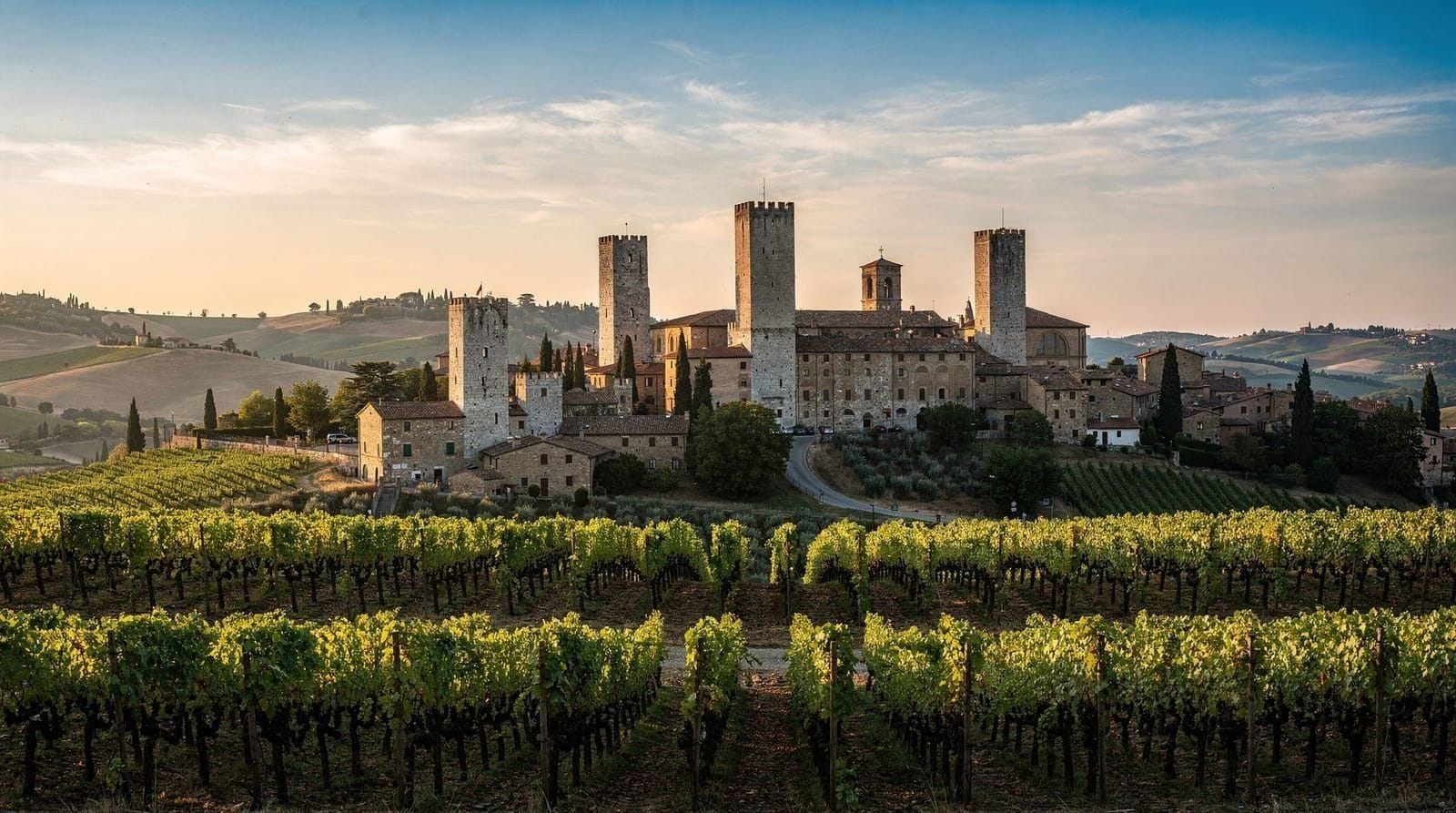
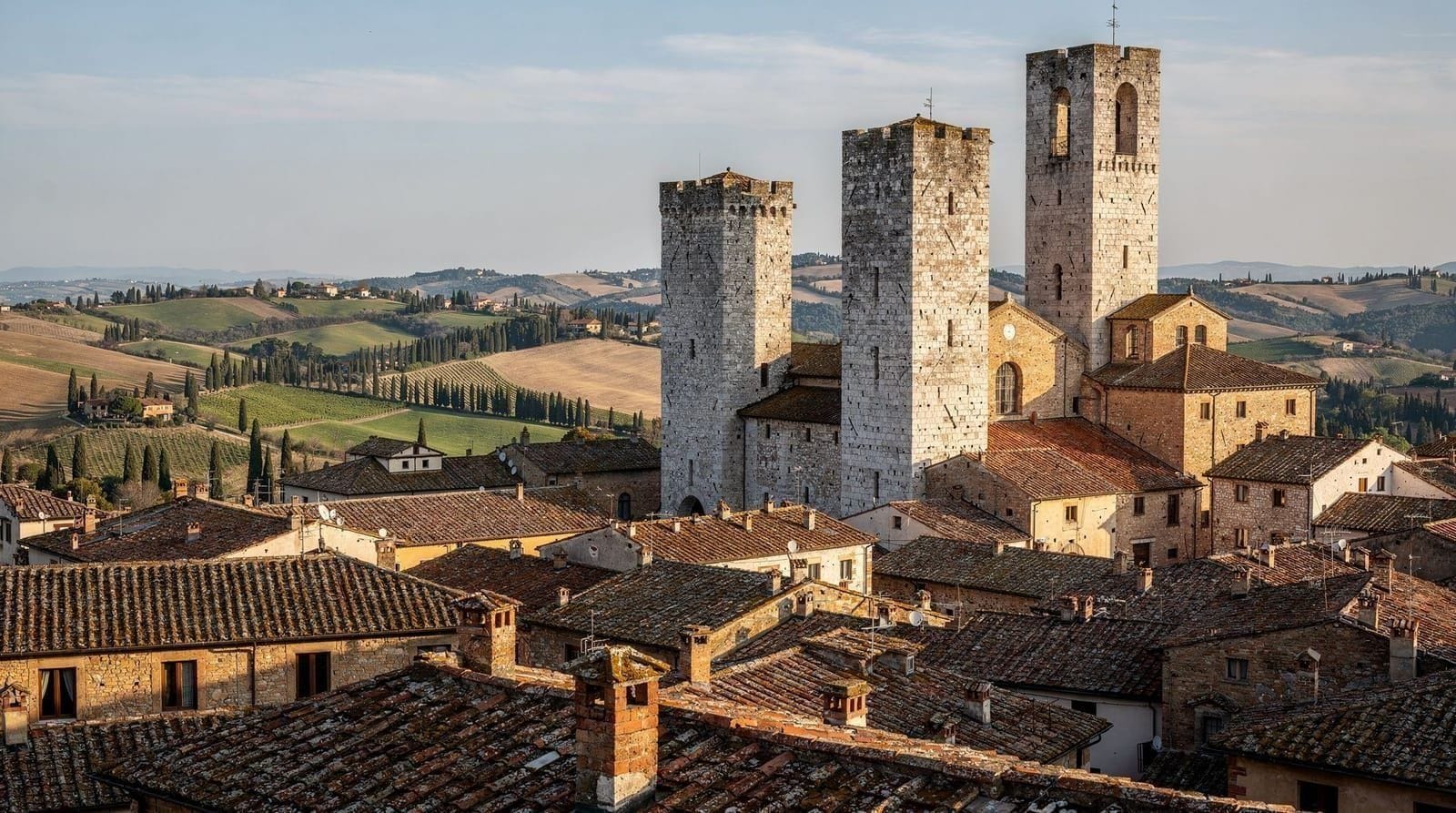
The surrounding streets contain some of the best-preserved medieval tower-houses in Tuscany — the towers were built by competing noble families for prestige and defense, much like San Gimignano but less famous.
Pinacoteca e Museo Civico
The civic art gallery in the Palazzo Minucci-Solaini contains Volterra’s most important paintings: Luca Signorelli’s altarpiece of the Annunciation and Sacra Conversazione (superb), and Rosso Fiorentino’s Deposizione (1521) — an almost expressionist treatment of the Descent from the Cross in startling colours that was revolutionary for its time and is now considered one of the masterpieces of early Mannerism.
Porta all’Arco
The best-preserved Etruscan arch in the world, dating from the 4th century BC. Three basalt heads on the keystone represent Etruscan deities; the arch itself was incorporated into the medieval city walls when Volterra expanded. You can walk through it — it’s still a functioning city gate. The worn faces of the deities are haunting.
Roman Theatre
Just outside the medieval walls, visible from the city overlook on Viale Francesco Ferrucci, the 1st-century BC Roman theatre is in excellent condition. The stage wall (scaena) rises to partial height and the orchestra and seating banks are clearly legible. Access from below by guided tour (check hours) or view from the overlook above — the bird’s-eye view from above is quite dramatic.
Alabaster workshops
Volterra has been carving alabaster since at least the 4th century BC (the Etruscan funerary urns in the Guarnacci are partly alabaster). About 40 workshops still operate in the town. The stone is extracted from quarries in the hills around Balze di Volterra.
Walk along Via Lungo le Mura del Mandorlo and Via Gramsci to find working studios where you can watch craftspeople turning, carving, and polishing the translucent white stone. Pieces range from small tourist souvenirs (€10–20) to serious artistic works (€200–2,000+). The Cooperativa Artigiana Alabastro (Piazza dei Priori 5) is a good starting point for quality pieces at fair prices.
Note on authenticity: Buy from workshops in Volterra itself, not from souvenir shops along the Tuscan tourist circuit. The Volterra artisans guild marks authentic locally made pieces.
The Balze (clay cliffs)
On the western edge of town, enormous erosion gullies have been slowly eating into the plateau for centuries. The Balze di Volterra — pale grey clay badlands with medieval ruins crumbling into them — is an eerie landscape. Walk 10 minutes west from the Porta San Francesco to see the ruined Church of Sant’Anastasio teetering on the cliff edge. The erosion continues slowly; parts of the Etruscan necropolis have already been lost to it.
Fortezza Medicea
Visible on the eastern edge of town, the imposing Medici fortress (built 1472–1475 for Lorenzo de’ Medici) has been a functioning prison since the 19th century and remains one today, so the interior is not open to visitors. Even so, the exterior walls and the older Rocca Vecchia beside it are an impressive sight from the public gardens (Parco Fortezza) at the base — a pleasant, shaded spot to rest after the museums, with good views over the surrounding countryside.
Volterra’s Etruscan heritage in context
The Etruscans are one of the most mysterious civilisations of the ancient Mediterranean — they spoke a non-Indo-European language that was not fully understood until modern times, and they left no literary tradition. What we know of their beliefs, practices, and society comes primarily from archaeology: their tombs, grave goods, and the ritual objects they buried with the dead.
Volterra (Velathri in Etruscan) was one of the twelve major city-states of the Etruscan Confederation, reaching its peak between the 6th and 3rd centuries BC. The city controlled extensive territory in what is now Tuscany and Latium, with a city wall circuit of nearly 8km (much of which is still visible). The wealth that supported the city came from mineral resources — copper, iron, lead — extracted from the Colline Metallifere hills nearby.
The alabaster industry connects directly to Etruscan funerary practice. The Etruscans carved the locally available gypsum into urns that would receive the cremated remains of the deceased. The urns in the Guarnacci Museum are not decorative objects — they are containers for human remains, each with a reclining figure representing the individual on the lid. The relief carvings on the chest of each urn tell a story (often mythological) that encodes beliefs about the journey to the afterlife and the moral judgments awaiting the dead. Reading these objects as a sequence across the museum reveals an entire worldview about death, family, and the cosmos.
The Etruscan civilisation was absorbed into Roman culture gradually between the 4th and 1st centuries BC, with cultural assimilation preceding formal political annexation. By the time of Augustus, the Etruscan language was dying and the specific religious practices were being Romanised. What remained was absorbed into what we call Roman Tuscany — and the agricultural, architectural, and craft traditions of the Etruscans continued in modified form. Volterra’s alabaster industry is the most direct living link to this pre-Roman past.
Where to eat in Volterra
Volterra’s food scene is small but solid, reflecting local Tuscan traditions without heavy tourist markup.
Ristorante Etruria (Piazza dei Priori 6) — On the main piazza, with traditional cooking: pici with wild boar, roasted meats, good local Vernaccia (which you can also get here — the Volterra zone is adjacent to the San Gimignano Vernaccia territory). €25–35 per person.
La Carabaccia (Piazza XX Settembre 4) — Named after a medieval Florentine onion soup, this small restaurant has excellent local pasta and a welcoming atmosphere. €20–28 per person.
Ristorante Il Sacco Fiorentino (Piazza XX Settembre 18) — Probably the best restaurant in town, with more creative takes on Tuscan ingredients and a strong wine list. €35–45 per person. Reservations recommended for dinner.
Gelateria L’Incontro (Via Matteotti) — Very good gelato in the centre. Try the local walnut flavour.
Combining Volterra with San Gimignano
The two towns are about 30km apart and combine well for a full day by car:
- Morning in Volterra (arrive 9–10am): Guarnacci Museum, Piazza dei Priori, alabaster workshops
- Lunch in Volterra
- Afternoon in San Gimignano (arrive 3pm): Towers, Collegiate Church, Vernaccia and gelato
- Return to Florence from San Gimignano (1h30 by car)
The drive between the two towns (via Colle Val d’Elsa) is pleasant and takes about 45 minutes. See the San Gimignano day trip guide for details.
Volterra vs San Gimignano vs Siena
| Volterra | San Gimignano | Siena | |
|---|---|---|---|
| Character | Etruscan history, alabaster, uncrowded | Medieval towers, iconic skyline | Grand Gothic city, serious art |
| Crowds | Light, even in August | Heavy, especially midday | Moderate to heavy |
| Time needed | 5–6 hours | 3–4 hours | Full day |
| Public transport from Florence | Very limited — car recommended | Bus with change, workable | Direct bus, easy |
| Best paired with | San Gimignano (same day) | Volterra or Siena | Val d’Orcia or Chianti |
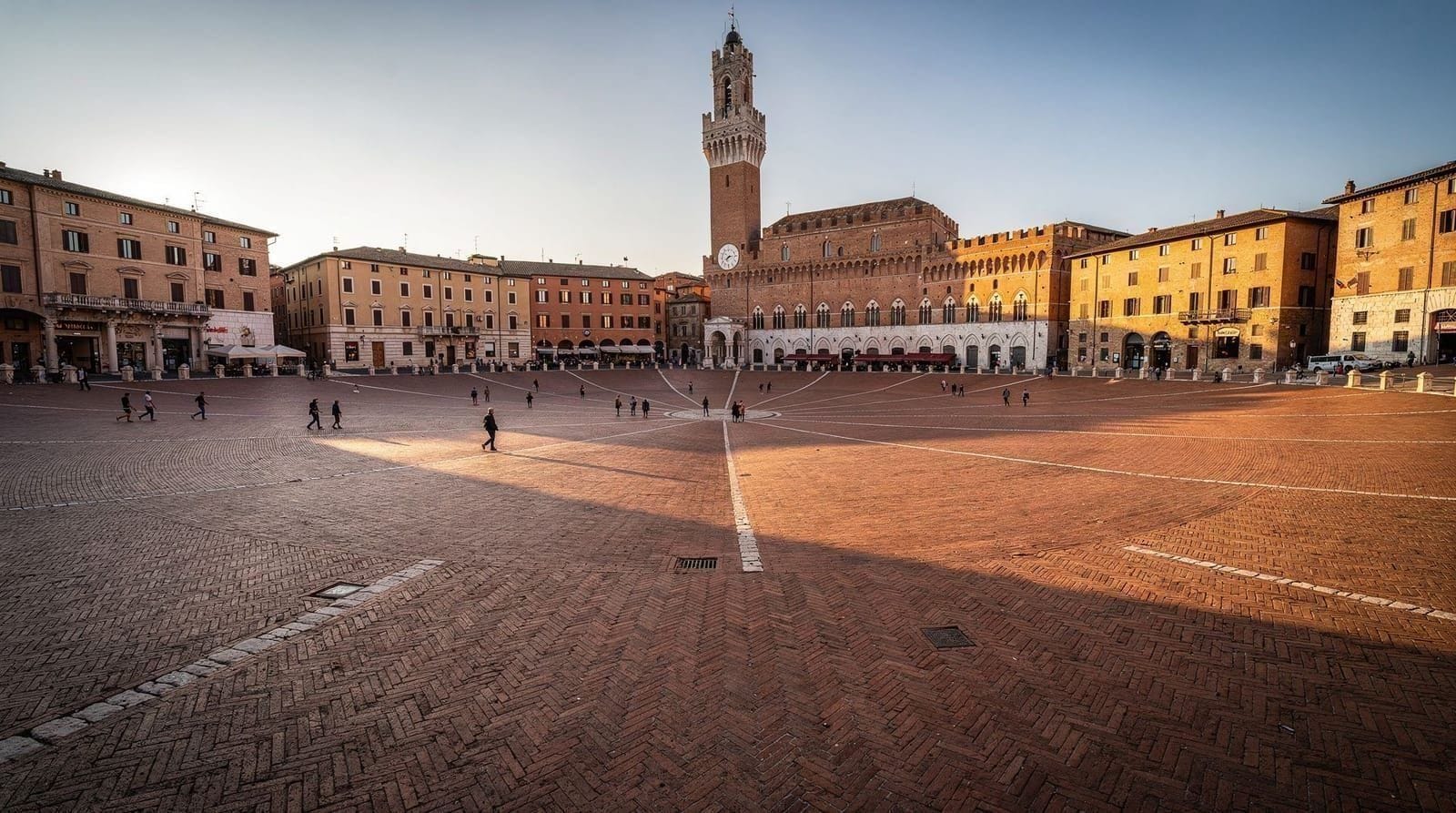
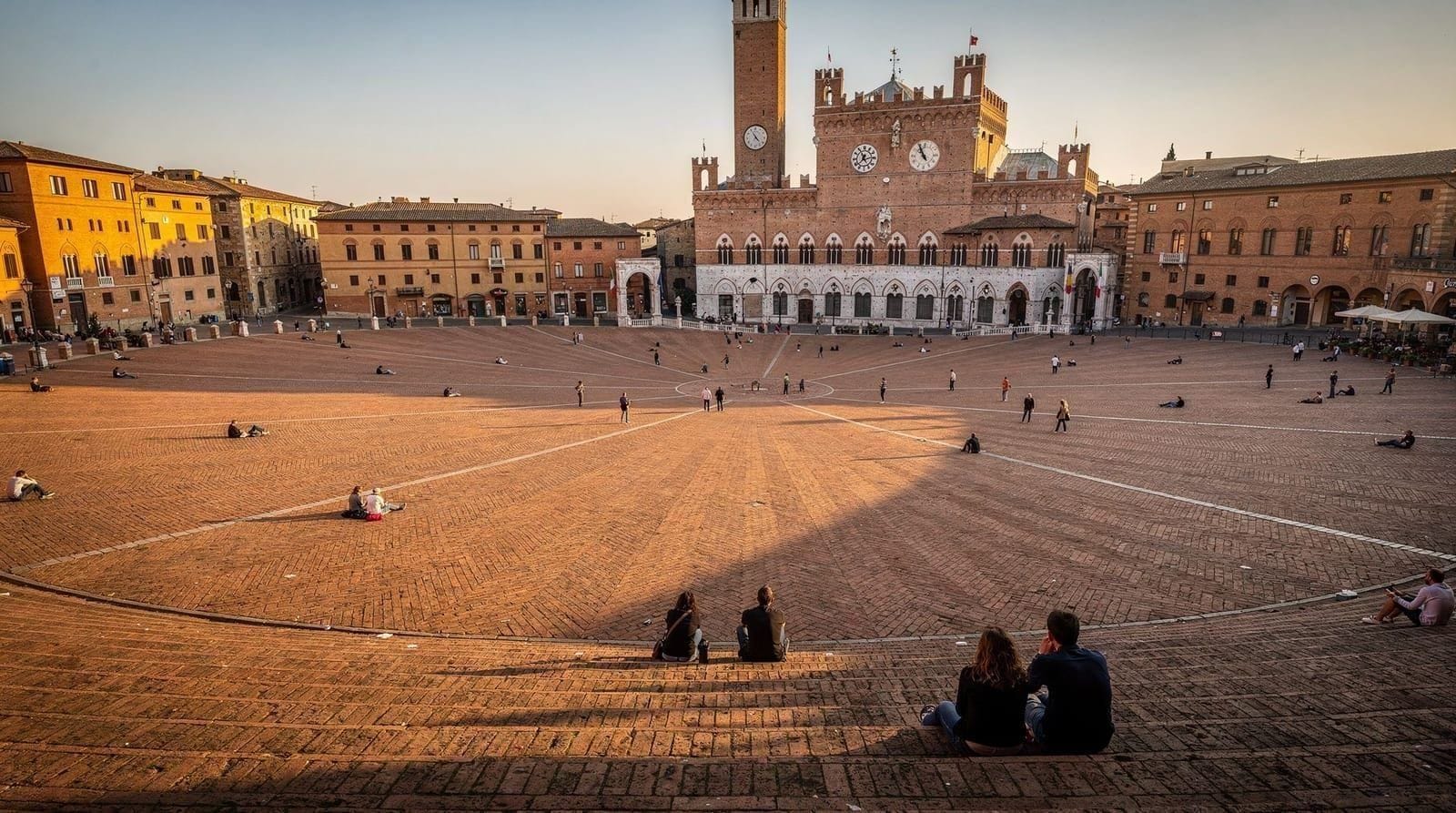
For the fuller picture on the region’s most photographed town, see the Siena day trip guide; for the wine side of a Tuscan day out, the Chianti day trip guide covers a different kind of countryside excursion entirely.
Practical information for Volterra visitors
Opening hours: The Guarnacci Museum and Pinacoteca are open 9am–7pm March–October; reduced hours November–February (check volterratur.it for current hours). Many small shops close 1–3pm for lunch.
Hills and walking: Volterra is on a plateau but has significant internal hills — the walk from Parcheggio Vallebuona up to Piazza dei Priori involves a 15-minute uphill walk. Wear comfortable shoes.
Weather: At 531m, Volterra can be cooler and windier than Florence even in summer (often a pleasant 5–8°C cooler). Bring a layer in spring and autumn.
Crowds: Significantly lighter than San Gimignano or Siena. Even in August, Volterra feels uncrowded by comparison.
Parking: Parcheggio Vallebuona (Via Lungo le Mura) is the largest and most convenient. Parking is paid (approx €1.50/hour) but spaces are generally available.
Frequently asked questions about the Volterra day trip
How does Volterra compare to San Gimignano for a day trip?
San Gimignano is more famous (towers, Gelateria Dondoli) and more crowded. Volterra is quieter, more historically substantive (the Guarnacci is a serious museum), and more authentically Tuscan in character. They’re different experiences: San Gimignano is for the towers and Vernaccia; Volterra is for the Etruscan history and alabaster culture. Both reward a visit.
Is Volterra the town from Twilight?
Yes — parts of the 2009 film New Moon were filmed in Volterra (Piazza dei Priori appears in several scenes), and this has made the town a minor stop on some film tourism circuits. The town celebrates “Volterra in Twilight” events periodically that draw young fans. This is a minor part of Volterra’s identity but worth knowing about if visiting in that context.
Is there a good view of the Etruscan walls from outside town?
Yes — the approach from San Gimignano on the SR68 offers a distant view of the town on its plateau with the Etruscan wall sections visible. The best close-up view of the surviving Etruscan walls (much longer than the Roman and medieval sections) is on the north and east sides of town — ask at the tourist office for the walking route along the outside of the walls.
Are there wine tastings available in Volterra?
Yes, though Volterra is not primarily a wine town. The surrounding Val di Cecina zone produces decent local DOC wines (Bianco della Valdinievole, local whites). Several enotecas in town carry Vernaccia di San Gimignano and broader Tuscan selections. The focus here is alabaster and Etruscan history rather than wine.
Is Volterra worth it without a car?
It’s difficult but not impossible. A guided tour that includes Volterra (usually paired with San Gimignano) solves the transport problem entirely and is the practical choice for car-free visitors. Relying on the CTT Nord bus alone means a long, awkward day with a required change and limited return options — workable only if you’re comfortable with a very early start and flexible plans.
How does Volterra compare to Siena or Lucca for a first Tuscany day trip?
Volterra rewards visitors specifically interested in ancient history and craft; it’s a quieter, more niche choice than Siena’s grand Duomo and Campo or Lucca’s walkable Renaissance walls. If this is your only Tuscan day trip, Siena is the more broadly satisfying choice for most first-timers — Volterra is the better pick for a second or third excursion, or when paired with San Gimignano.
Top experiences
Bookable activities with verified prices and instant confirmation on GetYourGuide.

Florence: Siena, San Gimignano and Chianti day trip
- Free cancellation
- Hotel pickup

Florence: Tuscany full day small group wine and food tour
- Free cancellation
- Small group
Florence: day trip to Pisa, Siena and San Gimignano with lunch
- Free cancellation
- Hotel pickup
Florence: San Gimignano, Siena and Chianti full day tour
- Free cancellation
- Hotel pickup