Where to eat in Oltrarno: Florence's best food neighbourhood
Florence: ultimate food tour — full Tuscan meal with a local
- Free cancellation
- Small group
Why is Oltrarno good for food?
Oltrarno is the neighbourhood most Florentine residents recommend for eating. South of the Arno, away from the main tourist crush, it has a dense concentration of honest trattorias, wine bars, and neighbourhood restaurants at fair prices. Piazza Santo Spirito is the heart of the scene.
Why Oltrarno is Florence’s food heartland
Every city has a neighbourhood that the residents keep to themselves. Florence’s is Oltrarno. Not exactly a secret — travel writers have been writing about it for twenty years — but still meaningfully quieter than the north bank, still genuinely home to working Florentines rather than just their tourist-facing businesses, and still the place where the best food is often served without any ambition to be discovered.
The neighbourhood occupies the south bank of the Arno river from the Ponte Vecchio westward to the old city gate at Porta San Frediano. Within this triangle of medieval streets and Renaissance palazzi live the artisan workshops, the neighbourhood wine bars, the old-school trattorias where the second course arrives before you’ve finished your first, and the Piazza Santo Spirito — the square at the social heart of everything.
| Where | South bank of the Arno, Ponte Vecchio to Porta San Frediano |
| Cost | Trattorias around €15–30/person; wine bars €5–15/glass |
| Time needed | 2–4 hours for a proper meal-and-wander visit |
| Getting there | On foot — 2–15 minutes from any Centro Storico landmark |
| Best time | Lunch (12:30–14:00) or aperitivo (18:00–20:00) |
If you’re deciding where to base yourself rather than just where to eat, the where to stay in Florence guide covers Oltrarno as an accommodation choice, and the Oltrarno neighbourhood guide has the fuller picture beyond food.
Getting to Oltrarno
Cross the Arno. That’s it.
From the Uffizi, walk to Ponte Vecchio (2 minutes) and cross. From Piazza della Repubblica, walk south on Via dei Calzaiuoli to the Arno and cross Ponte Santa Trinita. From Santa Maria Novella station, it’s about 15 minutes on foot to Ponte alla Carraia.
There is no direct tram service into Oltrarno’s backstreets. The neighbourhood is best explored on foot — the streets are narrow, the ZTL restriction covers most of the area, and the distances are walkable from anywhere in the centre.
Piazza Santo Spirito: the social hub
Piazza Santo Spirito is Oltrarno’s living room — a slightly scruffy, genuinely local square dominated by the unfinished façade of Brunelleschi’s Basilica di Santo Spirito (worth visiting for the interior proportions alone). The square hosts:
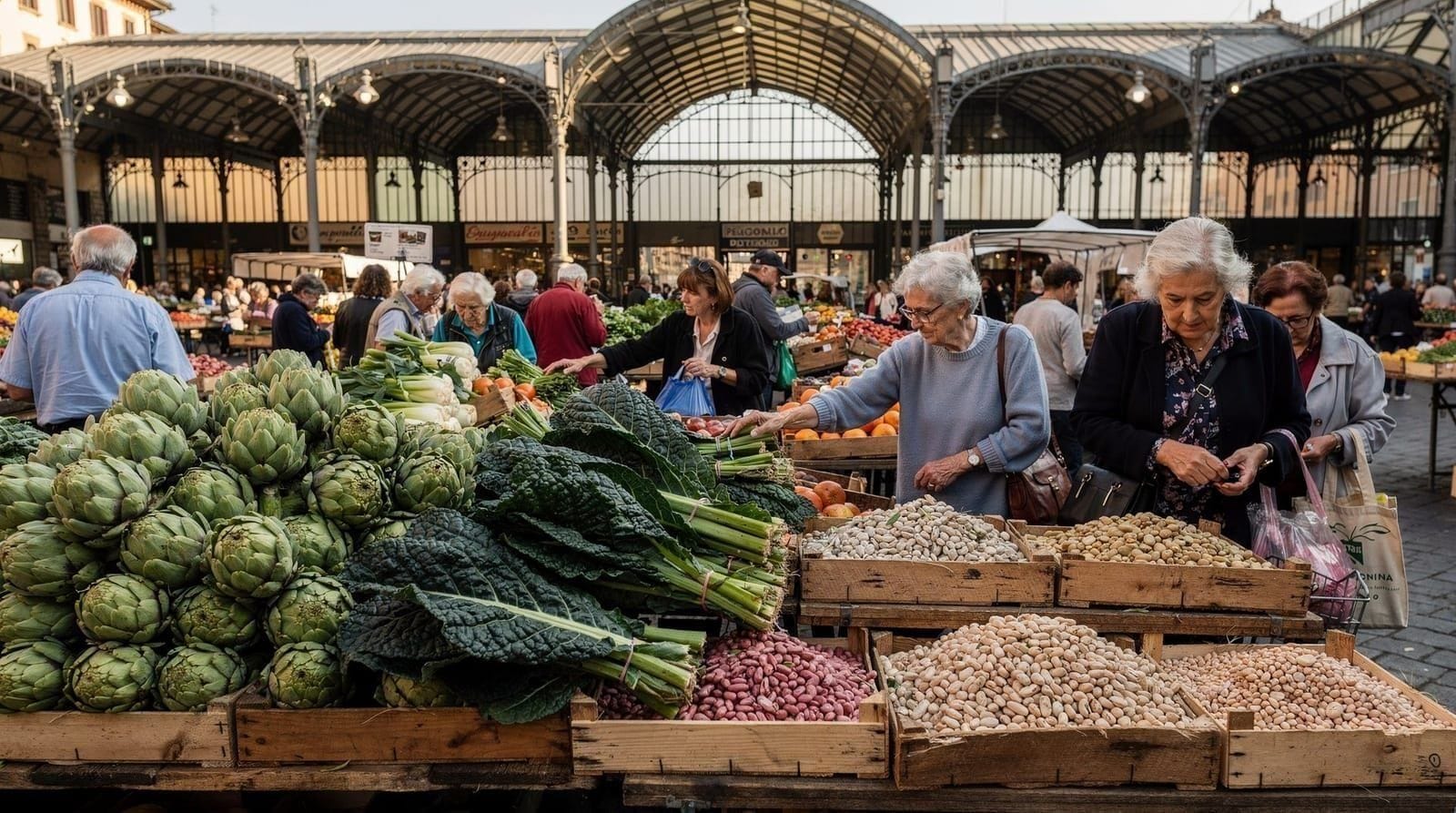
- A small daily morning market (fruits, vegetables, flowers) on weekdays
- An antique market on the second Sunday of each month
- Outdoor tables from surrounding bars and restaurants that spill across the piazza in warm months
- A population of locals — elderly residents, art students, young Florentines — that makes it feel less like a tourist site than almost any other major square in the city
Eating and drinking on the piazza:
Caffe Ricchi occupies a prime corner position. Coffee, aperitivo, and simple lunch dishes. Prices are fair (€1.20 for an espresso at the bar). The terrace fills up fast on summer evenings.
Osteria Santo Spirito serves reliable Tuscan cooking — ribollita, pasta, grilled meats — at reasonable prices. The location brings some tourist traffic but the kitchen doesn’t coast on it.
Il Santino (enoteca) is the wine bar annex of Enoteca Pinchiorri, one of Florence’s great wine estates. The selection by the glass is exceptional. Small plates of charcuterie, cheese, and seasonal dishes pair well with the wine. A distinctly civilised place for aperitivo.
The best trattorias in Oltrarno
Trattoria da Ruggero (Via Senese)
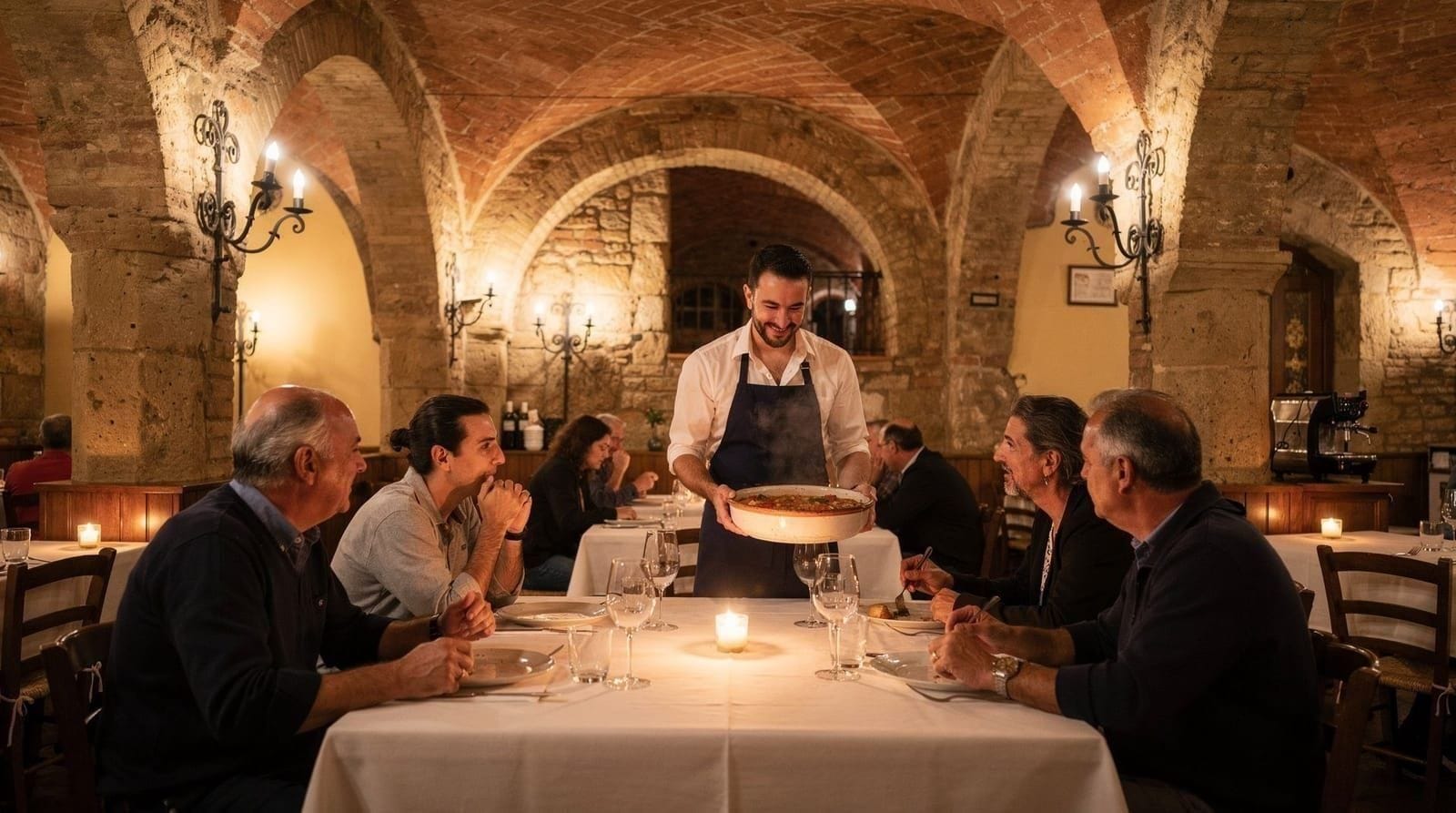
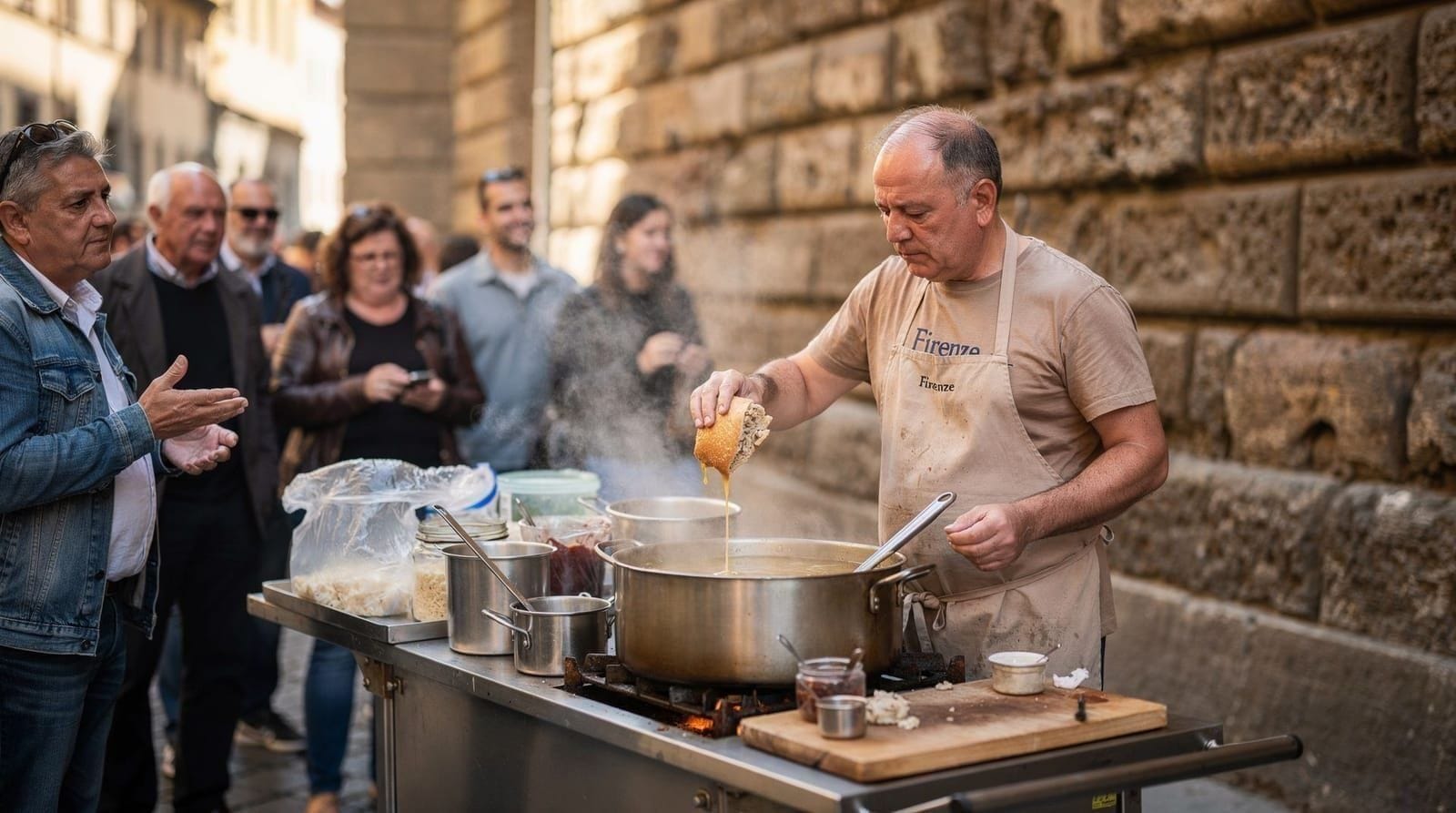
Among the most consistent recommendations from Florentine residents. The ribollita is outstanding — thick, properly cooked, ladled from a pot rather than heated to order. Secondi include roast rabbit, ossobuco, and baccalà (salt cod) on Fridays. The wine list is short and the house Chianti is more than adequate. Service can be slow; this is not a problem.
Price: €20–30 per person with wine. Closed Tuesdays. Book for dinner.
Trattoria dell’Orto (Via dell’Orto)
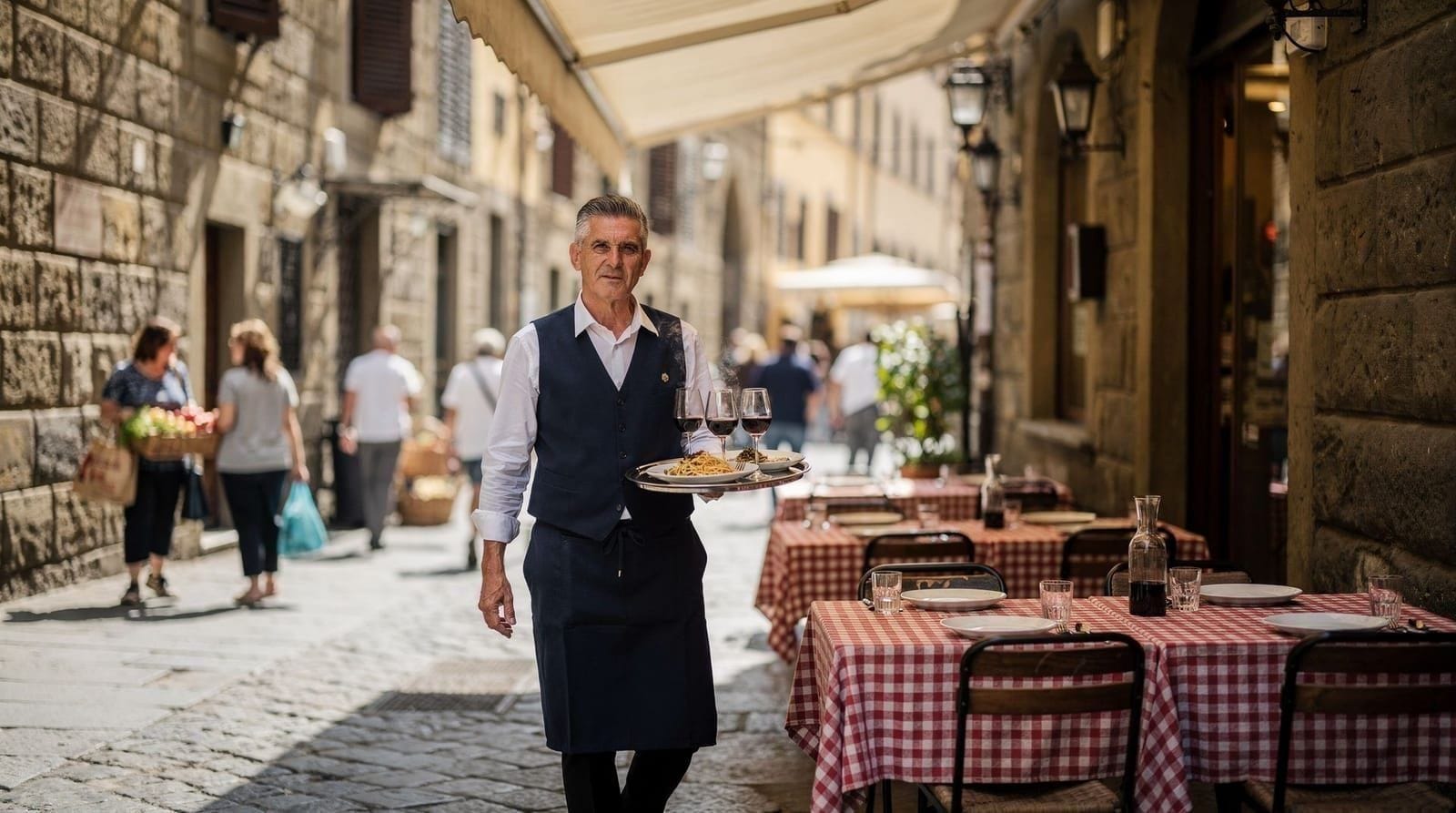
A proper neighbourhood trattoria with plastic tablecloths, mismatched chairs, and cooking that puts most restaurants charging twice the price to shame. Daily specials written on a chalkboard, almost entirely sourced locally. The lampredotto in umido (braised tripe with tomato) is a benchmark for this much-underrated dish.
Price: €15–22 per person with house wine.
Buca Mario (Lungarno Ferrucci branch)
Not to be confused with the Santa Croce original — this Oltrarno branch has a quieter, more neighbourhood feel and an excellent kitchen handling bistecca, pasta, and grilled vegetables with skill.
Il Magazzino (Piazza della Passera)
A small, atmospheric spot on one of Oltrarno’s prettiest piazzette (little squares). The pasta is handmade daily and the seasonal vegetable dishes are excellent. More expensive than the neighbourhood average (€35–45 per person) but justified by quality and setting.
How Oltrarno trattorias compare on price and style
| Trattoria | Price/person | Style | Best for |
|---|---|---|---|
| Trattoria dell’Orto | €15–22 | Blackboard specials, no frills | Cheapest genuine meal |
| Trattoria da Ruggero | €20–30 | Classic Tuscan, unhurried | Best all-round ribollita |
| Buca Mario (Oltrarno) | €25–35 | Bistecca, pasta, grills | Steak without Santa Croce crowds |
| Il Magazzino | €35–45 | Handmade pasta, seasonal veg | A step up in setting and quality |
For steak specifically, the bistecca alla fiorentina guide covers cuts, prices and where to order it across the city, not just in Oltrarno.
Borgo San Frediano: the artisan quarter
The long street of Borgo San Frediano runs westward from Piazza Santo Spirito through the most artisan-dense part of Oltrarno. Gold workshops, furniture restorers, leather craftsmen, and frame gilders occupy ground-floor ateliers. The food scene is woven between these workshops:
Trattoria Annamaria (Via del Presto di San Martino, just off Borgo San Frediano): A genuine working-class lunch spot with no concessions to tourism. The menu is whatever was fresh at the market that morning. Cash only. Packed with artisans from the surrounding workshops at noon.
Berberè (on Borgo San Frediano itself): A Roman-Neapolitan pizza chain, but with a serious commitment to natural leavening and quality ingredients. The Margherita is excellent; so is the seasonal special. Not traditional Florentine but good pizza is never unwelcome.
Walking Borgo San Frediano end to end is also one of the better ways to see the artisan workshops that give Oltrarno its character — leather, gold and frame-gilding studios sit between the trattorias, and several welcome visitors to watch the work in progress. The artisan workshops guide covers which ones offer demonstrations or short courses.
Via Maggio and the antique mile
Via Maggio runs south from Ponte Santa Trinita through the heart of Oltrarno’s antique district. The street itself is more gallery than restaurant, but the side streets — Via dello Sprone, Via de’ Bardi — have wine bars and restaurants worth seeking out.
Buca dell’Orafo (Via de’ Bardi, near Ponte Vecchio): Covered in the best restaurants guide. One of the few places near Ponte Vecchio worth eating at.
Enoteca Pitti Gola e Cantina (Piazza de’ Pitti): A wine bar facing the Pitti Palace with an outstanding Tuscan wine list and excellent charcuterie plates. Best for afternoon aperitivo before visiting the Boboli Gardens.
The eastern Oltrarno: Via de’ Serragli and surroundings
The eastern section of Oltrarno — around Via de’ Serragli, Via del Campuccio, and the streets near the Porta Romana — is less visited and correspondingly more local in character.
Trattoria Cammillo (Borgo San Jacopo): Highly regarded for its bistecca alla fiorentina and traditional Tuscan cooking. The wine list is strong on Chianti Classico. Reservation essential.
II Guscio (Via dell’Orto): A small enoteca with food that punches well above its size. Excellent Tuscan wines by the glass, seasonal small plates, and a low-key atmosphere that makes it ideal for a long lunch.
Coffee and pastry in Oltrarno
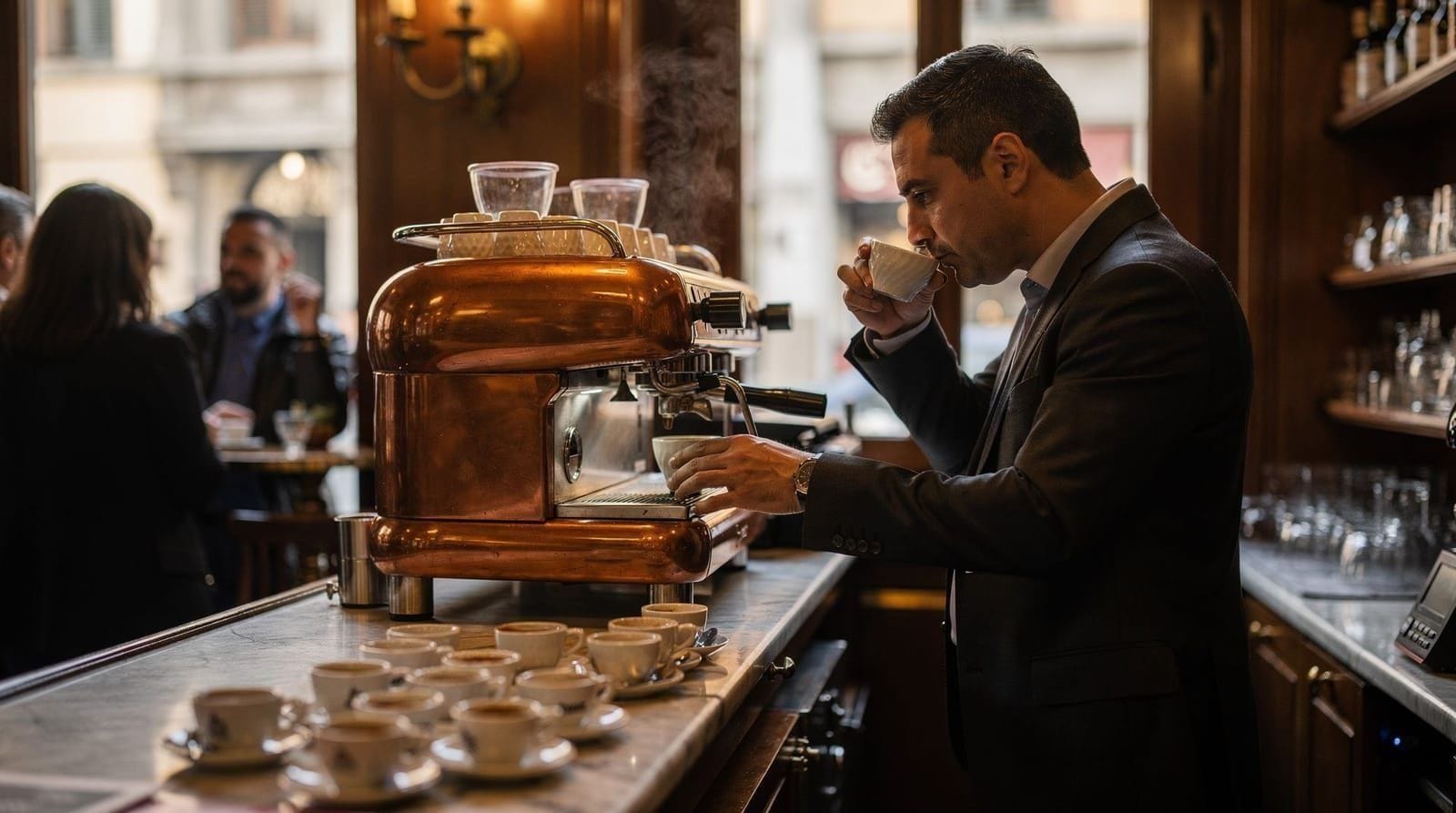
Caffè degli Artigiani (Via dello Sprone): The artisan quarter’s coffee bar. The espresso is reliable and the cornetti (Italian croissants) are made fresh each morning. Standing at the bar costs €1.20; sitting at a table doubles it — stand.
Dolce Vita (Piazza del Carmine): A popular corner bar with excellent cappuccino and a small selection of pastries. The terrace on the piazza is one of Oltrarno’s best spots for an early morning coffee.
For a wider tour of Florence’s café culture beyond this one neighbourhood, see the Florence coffee culture guide, which covers standing-at-the-bar etiquette and prices across the city.
Gelato in Oltrarno
Oltrarno doesn’t have the single most famous gelateria in Florence, but it has several genuinely good ones without the queues of the north-bank landmarks. Look for muted, natural colours in the cases — the same authenticity signal that applies everywhere in the city — and check the best gelato Florence guide for the full citywide ranking, since a couple of the top entries sit just across Ponte Vecchio and are worth the short walk from a Santo Spirito lunch.
Aperitivo in Oltrarno
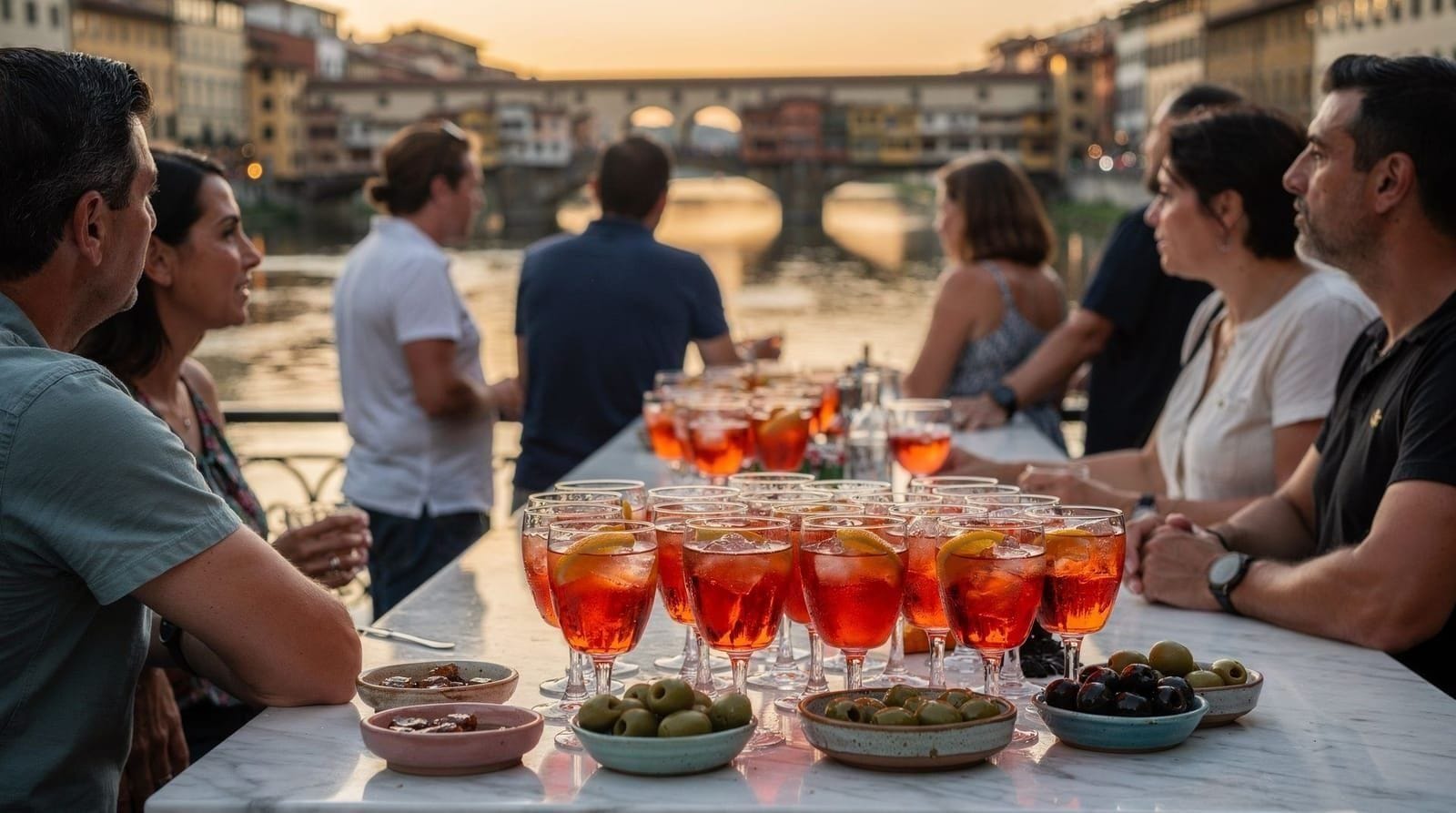
Aperitivo is the Florentine early evening ritual — a glass of Aperol Spritz, Negroni, or local wine accompanied by snacks (nibbles, crostini, sometimes a small buffet), typically between 18:00 and 20:00. Oltrarno has some of the best aperitivo bars in the city. Full coverage in the aperitivo guide.
Il Santino (near Santo Spirito): Wine-focused aperitivo with exceptional small plates.
Mad Souls and Spirits (Borgo San Frediano): Craft cocktail bar that takes aperitivo seriously. The Negroni is particularly good.
Volume (Piazza Santo Spirito): The most popular piazza bar, outdoor tables, affordable Aperol Spritz, consistently busy from 18:00 onwards.
Where to buy food in Oltrarno
The main market for Oltrarno residents is the Sant’Ambrogio market on the north bank, a short walk across Ponte alle Grazie. There are neighbourhood grocery shops (alimentari) along Borgo San Frediano and Via Romana, and a good cheese shop on Piazza de’ Pitti.
For wine, Enoteca Pitti Gola e Cantina and Il Santino both sell bottles to take away at fair prices. The selection of Chianti Classico, Morellino di Scansano, and Vernaccia di San Gimignano is strong.
Oltrarno in context: neighbourhood changes
Oltrarno is changing. The art-tourism wave that transformed the rest of Florence’s centre has been lapping at the south bank for a decade, and some of the neighbourhood’s scruffier edges have smoothed out. Short-term holiday rentals have replaced some of the traditional housing stock; new restaurants catering primarily to visitors have opened alongside the old trattorias.
The authentic Oltrarno is still very much present — Trattoria dell’Orto and Trattoria Annamaria have not changed — but the neighbourhood now requires a degree of navigation to separate the genuine from the carefully art-directed. The honest Florence guide gives broader context on this phenomenon across the city.
Frequently asked questions about eating in Oltrarno
Is Oltrarno safe at night?
Yes — Oltrarno is a normal residential neighbourhood and is safe after dark. The streets around Piazza Santo Spirito can be noisy on summer evenings but this is cheerful rather than threatening. Standard city awareness applies.
Are there good restaurants near the Pitti Palace?
Yes. Enoteca Pitti Gola e Cantina on the piazza directly opposite the palace entrance is excellent for wine and light food. For a fuller meal after a morning at the Pitti, Trattoria da Ruggero (10 minutes on foot down Via Senese) is the best choice.
Can I walk to Oltrarno from the Uffizi?
Yes — 5 minutes across Ponte Vecchio. From the Accademia, it’s about 20 minutes on foot through the centre.
Does Oltrarno have any Michelin-starred restaurants?
Not currently. There are some ambitious and expensive restaurants in the area but Michelin stars in Florence concentrate in the north bank and in Fiesole. Oltrarno’s strength is in excellent food at trattoria prices, not fine dining.
What is the best time of day to explore Oltrarno?
Morning (09:00–12:00) for the piazza market and artisan workshops. Lunch (12:30–14:00) for trattorias. Late afternoon (17:00–19:00) for a walk through Boboli Gardens and a pre-dinner aperitivo. Evening (20:00 onwards) for dinner and the animated piazza atmosphere in warm months.
Do I need to book Oltrarno restaurants in advance?
For the more established names — Trattoria Cammillo, Il Magazzino, Buca dell’Orafo — yes, especially for dinner and any weekend. The smaller neighbourhood spots like Trattoria dell’Orto and Trattoria Annamaria are more first-come-first-served, though arriving right at opening avoids any wait. When in doubt, a phone booking earlier in the day solves the problem.
Is Oltrarno better for lunch or dinner?
Both work well, but the character shifts: lunch is quieter and more workaday, with artisans and locals filling the cheaper trattorias, while dinner brings out the piazza atmosphere and aperitivo crowd, particularly around Piazza Santo Spirito in warmer months. If you only have one meal to spend here, dinner captures more of what makes the neighbourhood distinctive.
Top experiences
Bookable activities with verified prices and instant confirmation on GetYourGuide.

Florence: ultimate food tour — full Tuscan meal with a local
- Free cancellation
- Small group
Florence: food and wine tour
- Free cancellation
- Small group
Florence: flavours of Tuscany food tour with wine
- Free cancellation
- Small group
Florence: old city street food tour and guided sightseeing
- Free cancellation
- Small group