Best trattorias in Florence: the honest shortlist
Florence: ultimate food tour — full Tuscan meal with a local
- Free cancellation
- Small group
What makes a good trattoria in Florence?
A proper Florence trattoria has a handwritten or chalk-board menu, house wine from a terracotta jug or unlabelled bottle, communal tables or small rooms with checked tablecloths, and a limited daily menu that changes with what's available. Budget €18–28 per person with wine.
What a real Florence trattoria looks and tastes like
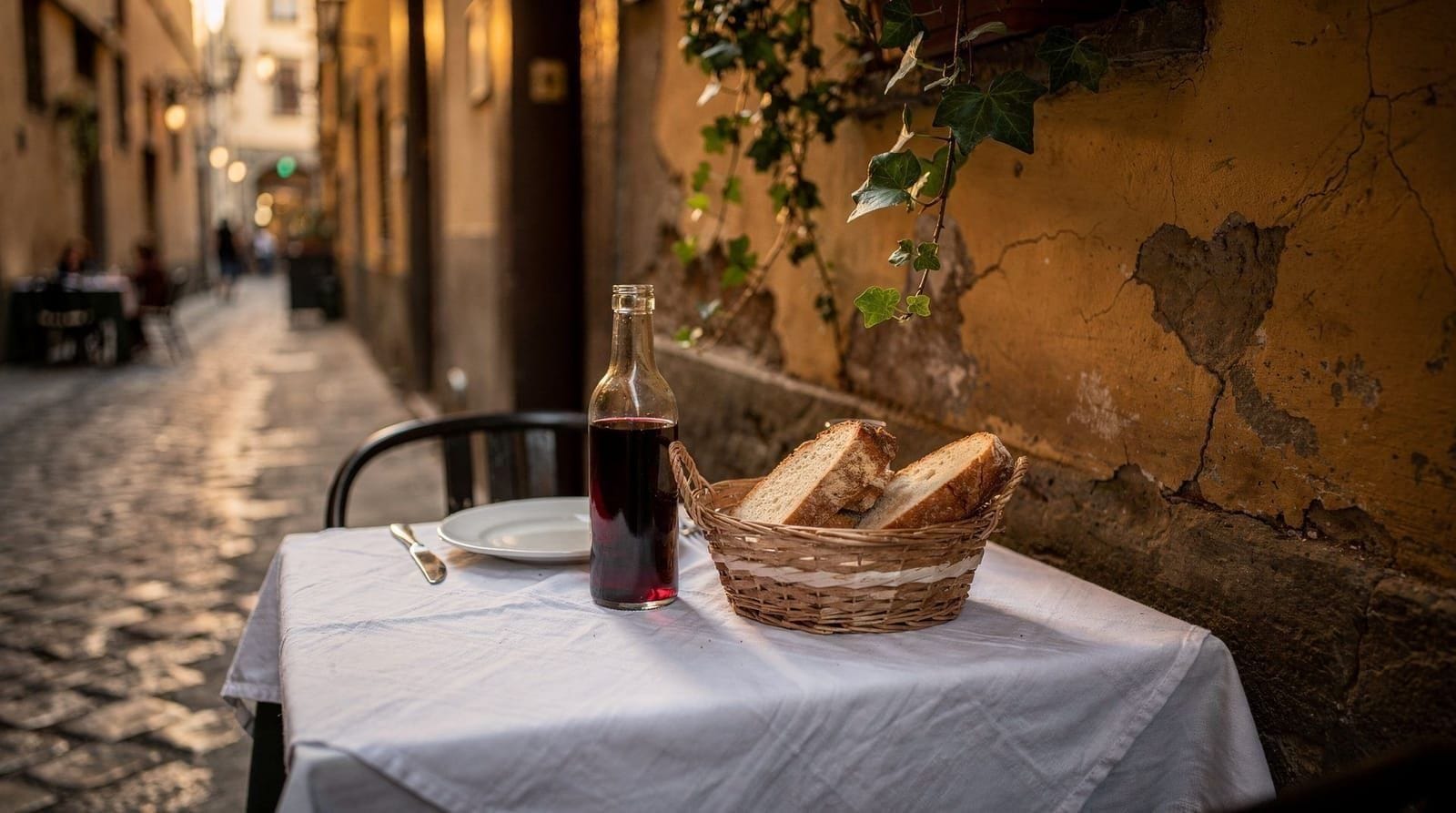
A genuine Florentine trattoria is not photogenic in the food-blog sense. The tablecloths are paper or checked red-and-white cotton, sometimes stained. The wine arrives in a small carafe or terracotta flask. The menu is written on a chalkboard or a handwritten sheet and changes daily. The waiter is brisk rather than attentive, often elderly, frequently the owner’s sibling.
What the food is: honest, seasonal, cooked to tradition rather than innovation, calibrated to the expectations of Florentines who will return next week. Ribollita that tastes like the pot has been cooking since morning. Pappardelle where the pasta is rough-edged and the sauce has real depth. A secondo that is what the butcher had today, not what the kitchen wanted to put on a printed menu.
This is a shortlist of those places — not every trattoria in Florence, but the ones that consistently do what a trattoria should do.
| Where | San Lorenzo, Oltrarno, Sant’Ambrogio, Santa Croce |
| Cost | Around €12–28 per person (lunch), €25–50 (dinner, name places) |
| Booking | Lunch counters: no reservations, arrive early; dinner: book ahead |
| Watch for | Servizio on top of coperto — unusual at a genuine trattoria |
| Best dish to judge by | Ribollita — thick, dark, and generously oiled |
The benchmark lunch counters
Trattoria Mario (San Lorenzo) — the essential
Via Rosina 2, near the Mercato Centrale. No reservations. Communal tables. Cash preferred. Open Monday–Saturday lunch only, 12:00–15:30.
Trattoria Mario has been here since 1953 and the formula has not changed. The daily menu is chalked on a board; the dishes rotate with what was available at the market that morning. You share tables with strangers — there is no alternative — and the service model involves ordering quickly, eating, and leaving so the next queue of people can sit.
What to order: ribollita (a standard, always good), pappardelle al cinghiale when the wild boar sauce appears on the board, bollito misto (mixed boiled meats) when available, fagioli all’olio (white beans with olive oil) as a side. House wine is a quarter-litre; full portions cost €6–9.
A full meal runs €12–15 per person. This is not special-occasion dining; it is the best representation of what Florentines eat for lunch on a Tuesday.
The queue: arrive by 11:45 or expect to wait 15–20 minutes in high season. The queue moves quickly once doors open.
Trattoria Sostanza (Santa Maria Novella) — the oldest and most famous
Via della Porcellana 25. One of the oldest restaurants in Florence, operating since 1869. Also called Il Troia (a historical nickname). Very small room, communal tables, reservations recommended for dinner but difficult to secure.
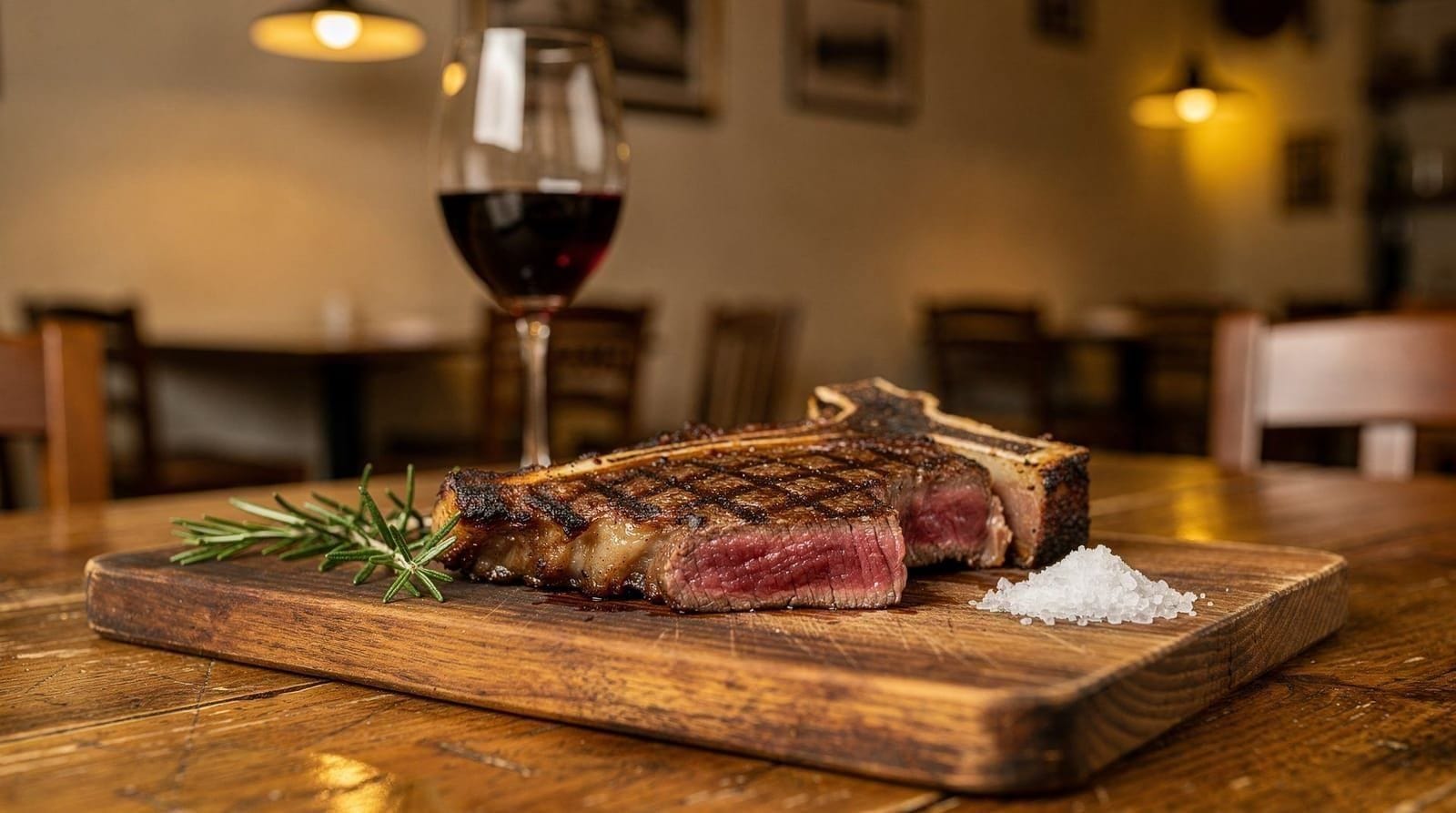
Sostanza is famous for two dishes above all others: the bistecca alla fiorentina (charcoal-grilled, massive, rigorously rare — see the bistecca guide) and the tortino di carciofi (artichoke and egg flan in butter). Both are the benchmarks for their respective dishes in Florence.
The pasta is also exceptional: pappardelle with duck ragu, hand-rolled tagliolini with butter and truffle in season. The wine list is short and the house Chianti is adequate.
Price: €35–50 per person with wine. Higher than a standard trattoria, justified by quality and history.
Best neighbourhood trattorias by area
Oltrarno
Trattoria da Ruggero (Via Senese 89): Discussed in the Oltrarno eating guide. The ribollita is the best in the neighbourhood; the secondi rotate daily and include genuinely offal-positive options (lampredotto in umido, tripe with tomato) alongside the more accessible roast meats. €20–28 per person. Closed Tuesdays.
Trattoria Cammillo (Borgo San Jacopo 57): More expensive than the typical neighbourhood trattoria (€35–45 per person) but serious about sourcing — Chianina bistecca from a verified butcher, seasonal vegetables from nearby farms. The wine list is the best in the immediate area.
Trattoria dell’Orto (Via dell’Orto 35): The most reliably consistent cheap lunch in Oltrarno. Plastic tablecloths, chalkboard menu, €15–22 per person. The lampredotto in umido (tripe with tomato sauce, parsley, and Parmigiano) is exceptional.
Sant’Ambrogio quarter
Trattoria Cibreino (Via dei Macci 122): The accessible annex of the famous Cibreo restaurant empire. The same kitchen, shorter menu, half the price. Cibreo’s owner Fabio Picchi has been one of Florence’s most influential food figures for decades; his approach — anchored in Florentine tradition but intellectually curious — makes Cibreino a particularly interesting place to eat. The passata di peperoni e ricotta (roasted pepper and ricotta soup) and the cold vitello tonnato are consistently excellent. €25–35 per person. No reservations.
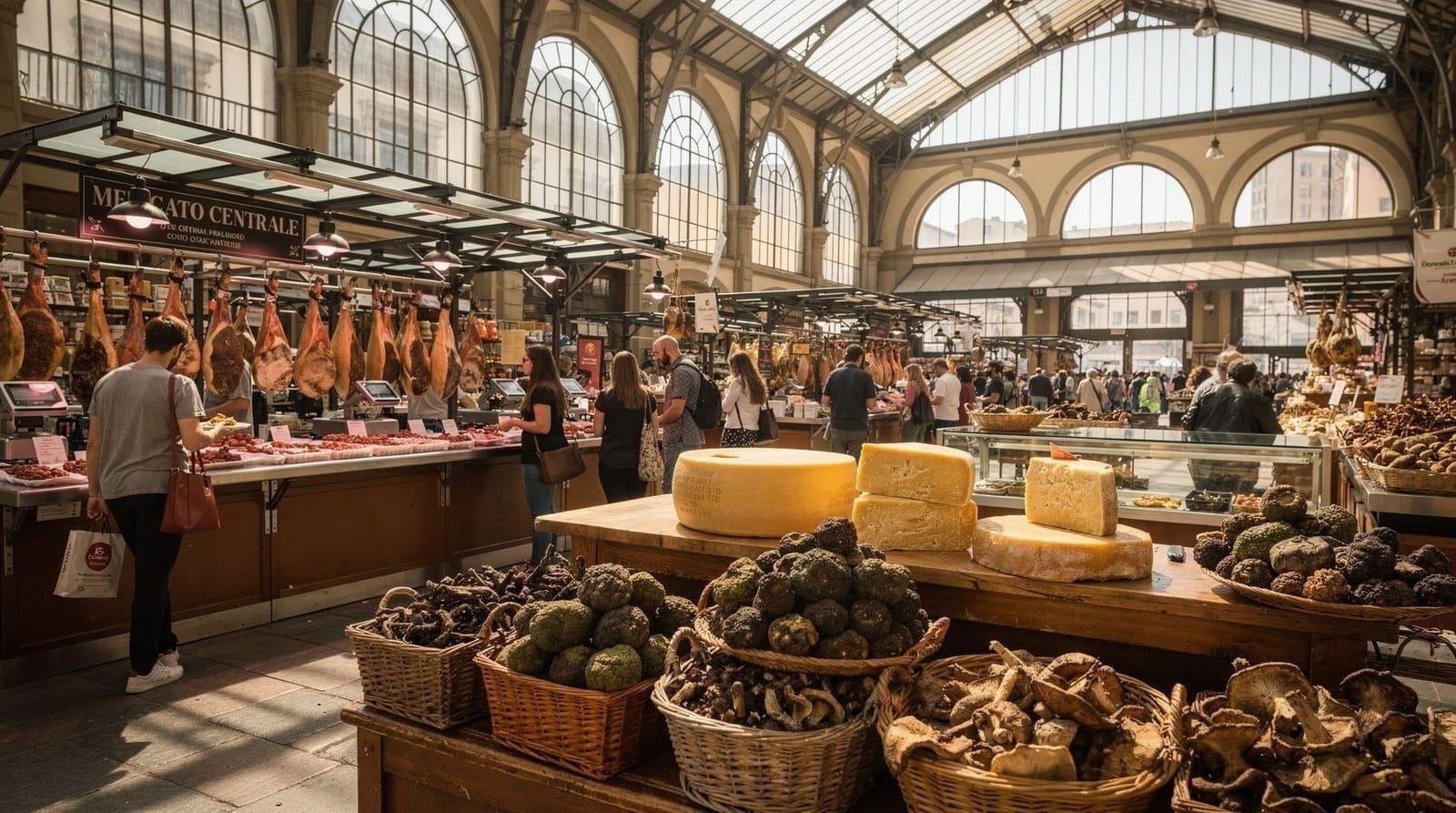
Trattoria da Rocco (Mercato di Sant’Ambrogio): Inside the Sant’Ambrogio market itself. This is the platonic ideal of a market trattoria: a daily changing menu sourced from the vendors who close their stalls at 13:00, communal tables, no reservations, cash only, enormous portions for €12–18. The ribollita, pasta e fagioli, and whatever the secondi is that day. Closes by 15:00.
San Lorenzo
Trattoria Mario (see above): Repeated here because San Lorenzo is its neighbourhood.
Trattoria Sergio Gozzi (Piazza San Lorenzo 8): Less famous than Mario but equally good and occasionally less crowded. Similar format: daily menu, communal tables, market-driven. A particular strength in handmade pasta and simple grilled meats. €15–22 per person.
Santa Croce
Il Latini (Via dei Palchetti 6): Strictly in the Santa Maria Novella border zone but often grouped with Santa Croce-area dining. Noisy, communal, boisterous — plates arrive before you’ve finished ordering and keep arriving until you signal otherwise. The ribollita, prosciutto starter, and bistecca are all reliable. €35–45 per person with wine.
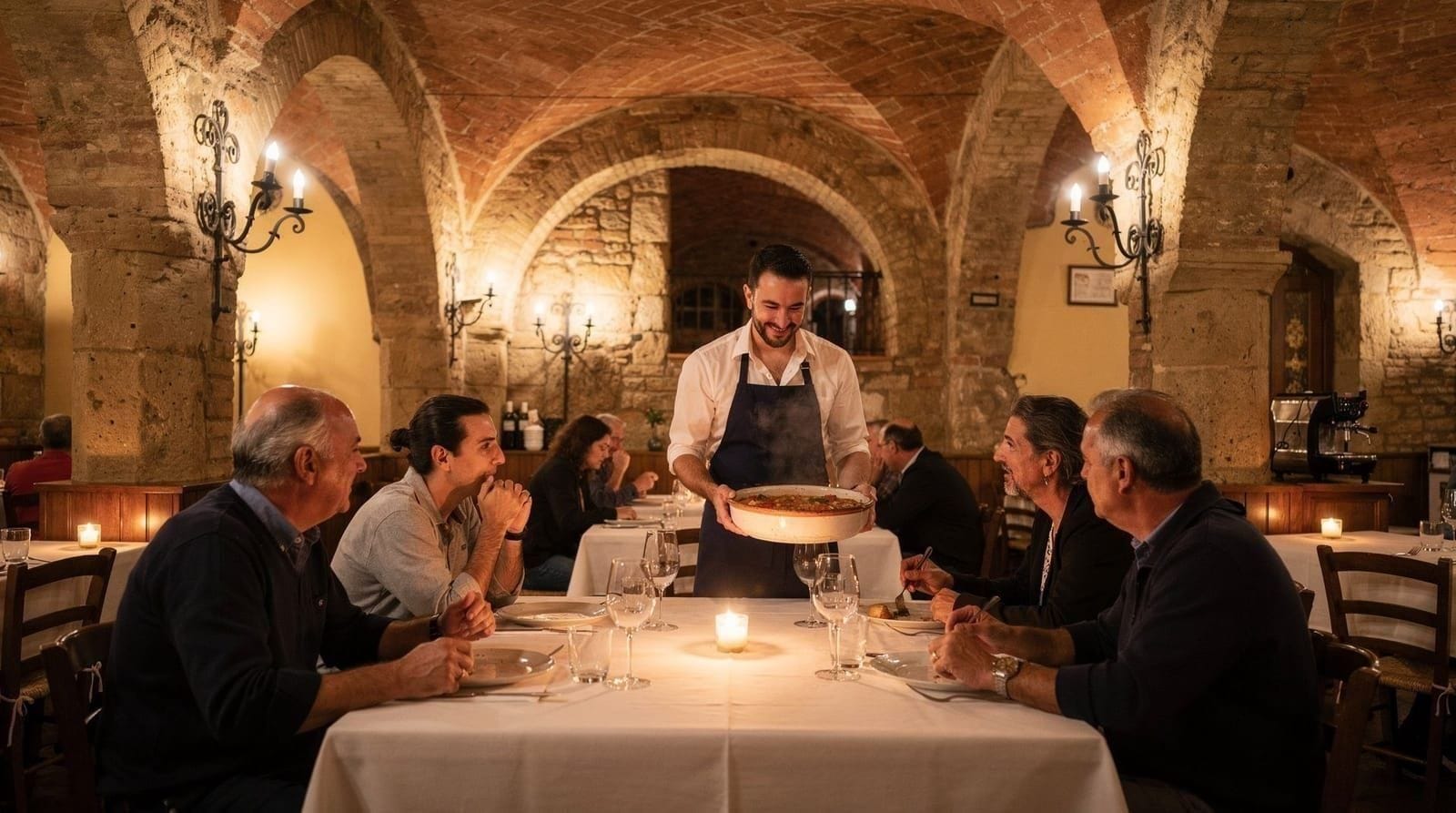
Buca Mario (Piazza Ottaviani 16): Florentine cooking in a Renaissance-era cellar. The setting — stone walls, vaulted ceilings, candlelit tables — is genuinely atmospheric rather than manufactured. Reliable for bistecca and traditional pasta dishes. €35–45 per person.
Osteria dell’Enoteca (Via Romana 70): On the border of Oltrarno and Santa Croce. A more polished osteria format than a typical trattoria, with an excellent wine list and slightly more experimental seasonal menu. The pasta dishes are outstanding. €35–50 per person.
Trattoria vs osteria vs ristorante
The terms overlap in modern usage, but the traditional distinctions still guide expectations. A trattoria is family-run, informal, menu-driven by what’s fresh that day — everything covered above. An osteria originally meant a simple wine-focused tavern with basic food, though today many osterie (like Osteria dell’Enoteca, mentioned above) are effectively upscale trattorias with a stronger wine list and a more composed menu. A ristorante implies a fuller service format — printed menu, formal waitstaff, higher prices — and is where you’ll find most of Florence’s best restaurants proper, including the splurge-tier options.
None of these labels is strictly enforced, so treat them as a rough signal rather than a guarantee — a converted tourist-area “trattoria” with a laminated multilingual menu is a trattoria in name only.
The ribollita standard
Ribollita is the benchmark dish by which a Florentine trattoria should be judged. The name means “reboiled” — the soup is made with stale Tuscan bread, cavolo nero (black kale), cannellini beans, celery, carrot, onion, and tomato, cooked long and slow, then literally reboiled the next day to deepen the flavour.
What good ribollita looks like: thick enough to hold a spoon upright, dark with cavolo nero, deeply flavoured from the beans and the bread, dressed with a generous pour of Tuscan olive oil at the table.
What bad ribollita looks like: watery, thin, with undercooked vegetables and insufficient bread. This is often what tourist-area trattorias serve because it requires less time and cheaper ingredients.
The seasonal caveat: cavolo nero (the kale that makes authentic ribollita) is a winter vegetable, available roughly October–April. Summer ribollita is made with substitute greens — it’s still good but different. The best ribollita is a cold-weather dish.
A note on coperto and service charges
Every legitimate trattoria in Florence charges a coperto (cover charge) of €1.50–3 per person. It appears on your bill as a separate line. It is standard and legal.
Some tourist-area restaurants add a further servizio (service charge) of 10–15%. This is unusual and worth noticing — a genuine neighbourhood trattoria does not add service on top of the coperto.
Tipping is not expected or required. The coperto covers the table, the bread, and the service. Leave small change if you want to acknowledge particularly good service; anything else is discretionary.
When trattorias close
Most traditional Florentine trattorias close on one or two days per week — typically Sunday or Monday, sometimes both. Many close in August (especially the first two weeks) when their regular clientele leaves the city. Some close at Christmas and New Year.
Before making a significant detour to a specific trattoria, check its opening hours on the day. WhatsApp reservations often confirm current hours as part of the booking exchange.
If a trattoria you were counting on turns out to be closed, the Florence food markets guide is a reliable backup — Sant’Ambrogio and Mercato Centrale both have market-adjacent eating that follows the same honest-food principles even outside a formal trattoria setting. And for a lighter alternative to a full trattoria meal, the aperitivo in Florence guide covers the buffet-with-a-drink format many Florentines use instead of dinner out.
Frequently asked questions about trattorias in Florence
What should I order at a Florentine trattoria for the first time?
Start with crostini neri (chicken liver pâté on toast) or prosciutto Toscano. For primo, pappardelle al cinghiale (wide pasta with wild boar) or ribollita. For secondo, bistecca if budget allows, or a roast meat or seasonal vegetable dish. Dessert: cantucci with Vin Santo, or skip dessert and have gelato from a nearby gelateria.
Are Florentine trattorias family-friendly?
Yes — Italian dining culture is inherently family-inclusive, and trattorias are no exception. Children are welcome everywhere. Some trattorias have high chairs; those that don’t will improvise. The communal table format at places like Trattoria Mario naturally includes families with young children.
Can I eat at a Florence trattoria on a budget?
Yes. At lunch, Trattoria Mario, Trattoria Sergio Gozzi, and Trattoria da Rocco (inside Sant’Ambrogio market) all offer full meals for €12–18 per person. The formula typically requires ordering from the daily menu rather than requesting something from outside it.
Do Florentine trattorias serve pasta without meat?
Yes — pasta e fagioli (pasta with beans), pappa al pomodoro (bread and tomato soup), pasta with seasonal vegetables, and various pasta in bianco (with butter and Parmigiano) options are available at most trattorias. Florentine cuisine is not vegetarian-forward but vegetarians can eat reasonably well.
What is the difference between lunch and dinner at a trattoria?
Lunch at a trattoria is typically more affordable (a daily pranzo formula), faster-paced, and draws more local working customers. Dinner tends to be fuller-priced, slower, and has more restaurant feel. The food quality is usually identical. Lunch is generally better value.
How is a trattoria different from the restaurants in the main guide?
The best restaurants in Florence guide covers the full spectrum, from budget trattorias to splurge-tier ristoranti; this guide narrows in specifically on the trattoria format — informal, family-run, menu-of-the-day places — for visitors who want that experience specifically rather than a broader restaurant shortlist.
Top experiences
Bookable activities with verified prices and instant confirmation on GetYourGuide.

Florence: ultimate food tour — full Tuscan meal with a local
- Free cancellation
- Small group
Florence: food and wine tour
- Free cancellation
- Small group
Florence: flavours of Tuscany food tour with wine
- Free cancellation
- Small group
Florence: taste of Tuscany wine and local food tour
- Free cancellation
- Small group