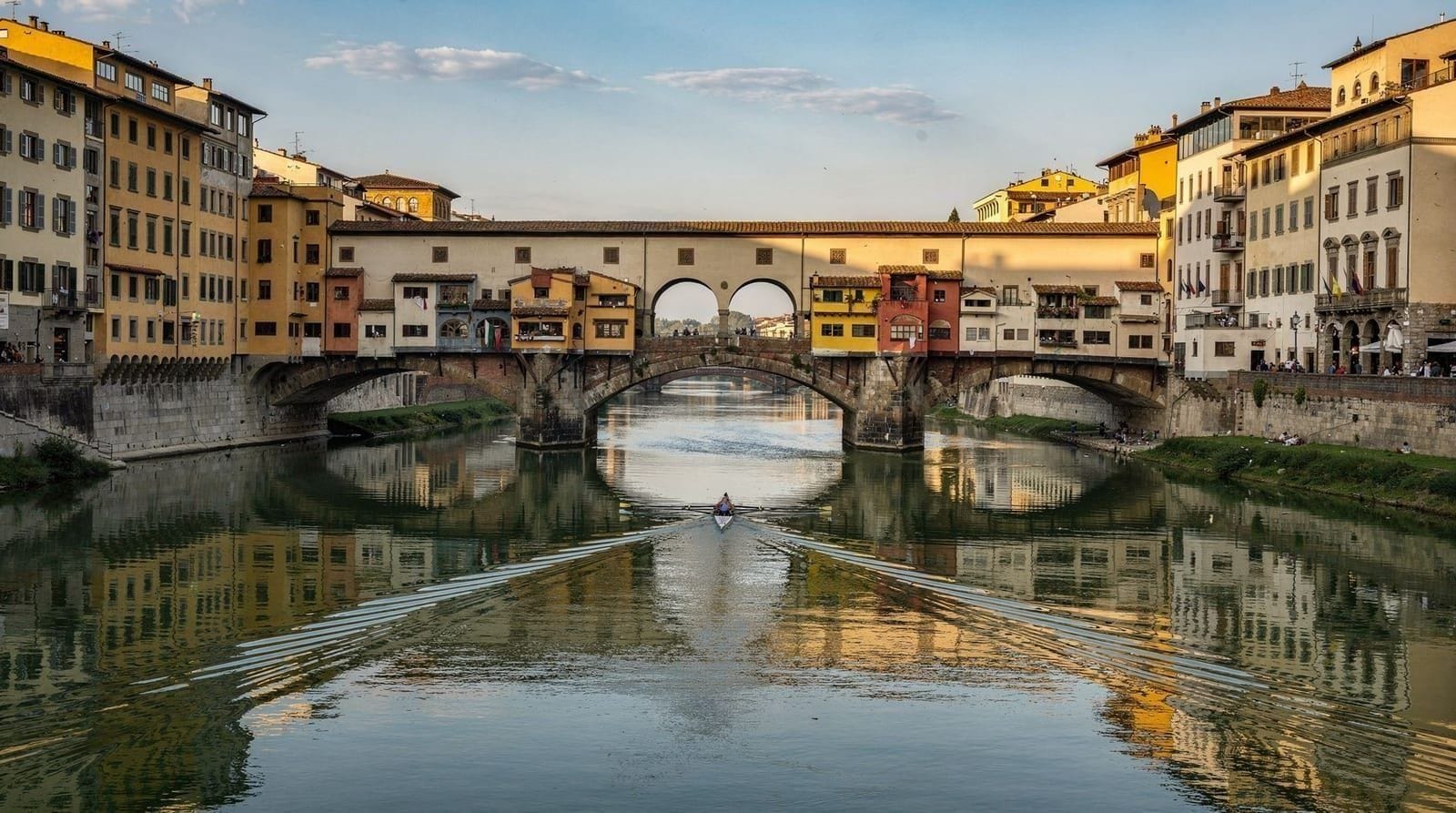
Where to stay in Tuscany — regions, towns and accommodation guide
Florence: Chianti wineries tour with wine tasting
- Free cancellation
- Small group
Where should I stay in Tuscany?
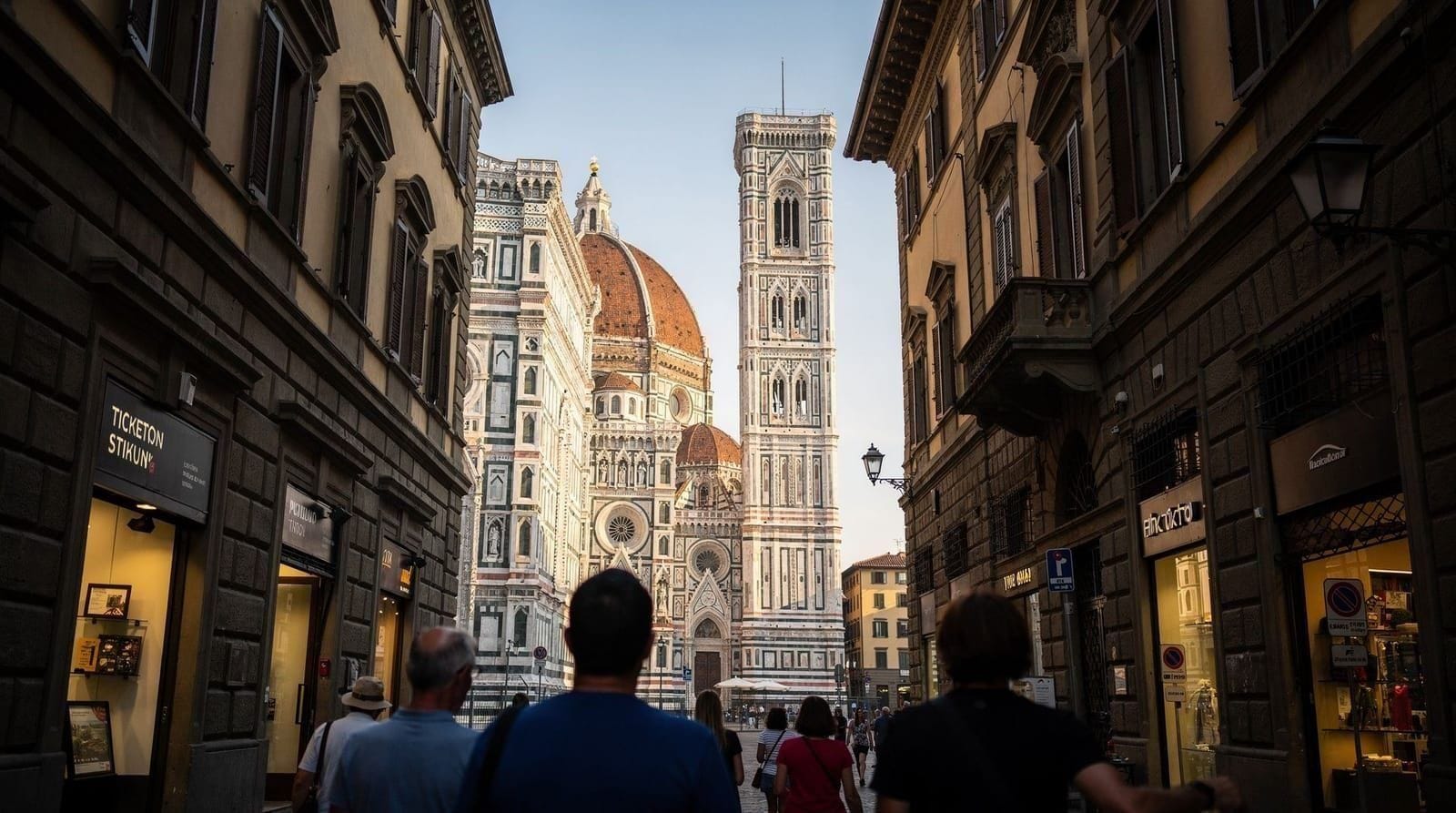
Florence is the right base for most first-time visitors — central, well-connected by train, with day trips to all major destinations. Choose Siena if you want a car-free medieval city experience in the south. Stay in Chianti or Val d'Orcia farmhouses if slow rural Tuscany with your own car is the goal. Pisa and Lucca work well for coast and north Tuscany.
Choosing your Tuscan base
Tuscany is not a city — it is a region the size of Wales, containing half a dozen distinct landscapes and at least as many distinct travel experiences. Where you base yourself determines everything: what you can reach easily, how much a car matters, and whether you experience Tuscany as a cultural entity or a rural one.
| Where | Florence, Siena, Chianti, Val d’Orcia, Pisa/Lucca, or a hilltop village |
| Cost | Roughly €80–250/night for a comfortable double, €250+ for luxury |
| Time needed | 4–5 days minimum for one base; 8–12 days for a two- or three-base trip |
| Getting there | Train for cities; a car is close to essential outside Florence and Siena |
| Best for first-timers | Florence — central, train-connected, day trips to everywhere |
The choice breaks down along a few primary axes:
Art and museums vs countryside and wine. Florence’s extraordinary museums are city-based — they require urban hotel or apartment accommodation. The Chianti wine country, Val d’Orcia’s UNESCO landscape, and Montalcino’s Brunello cellars are rural — they work best with a car and a farmhouse or small hotel.
First-time Tuscany vs return visit. Most first-timers should base in Florence. Return visitors who have already covered the Uffizi and Accademia often find a Chianti agriturismo or Siena hotel provides a more authentic, deeper Tuscan experience.
Train-based vs car-based. Train from Florence reaches Pisa (1 hour), Lucca (1.5 hours), and various Siena-direction towns. The southern Tuscan highlights — Val d’Orcia, Montalcino, Montepulciano, Pienza — require either a car or organised day trips. Chianti’s best wineries are also only accessible with a car.
Florence as a base
Best for: First-time visitors, art lovers, non-drivers, anyone visiting for fewer than 5 days.
Florence places you within:
- 1 hour of Pisa (train, €9–12)
- 1–1.5 hours of Siena (bus, €10–14)
- 1.5 hours of Lucca (train, €10–13)
- 1.5–2 hours of San Gimignano (bus + connection)
- 45 minutes to Chianti (car, no public transport to best wineries)
The train station at Santa Maria Novella is one of Italy’s best-connected regional hubs. For sightseeing without a car, Florence is the only sensible base in Tuscany.
Florence neighbourhood guide for accommodation:
| Neighbourhood | Character | Best for | Price |
|---|---|---|---|
| Centro Storico | Central, busy, historic | Convenience, central access | €€€ |
| Oltrarno | Atmospheric, local feel, excellent restaurants | Couples, longer stays | €€–€€€ |
| San Marco | Quieter, near Accademia | Art-focused visits | €€ |
| Santa Croce | Good restaurants, local markets | Mid-range, local experience | €€ |
| Santa Maria Novella (station area) | Convenient, less charming | Budget, transit hub | €–€€ |
For a detailed breakdown, see the first-time Florence guide on accommodation.
Siena as a base
Best for: Return visitors, couples wanting a smaller medieval city, wine travellers heading to Montalcino and Montepulciano.
Siena is arguably Tuscany’s second city for cultural significance — its Duomo rivals any in Italy, its medieval Campo is extraordinary, and it maintains a local character that Florence’s tourist volume has partially diluted. The city centre is car-free (ZTL applies here too) and entirely walkable within 30–40 minutes.
From Siena you can reach:
- Montalcino (50km south, best by car, bus connections limited)
- Montepulciano (65km southeast, bus from Siena)
- Pienza (50km southeast, bus from Siena)
- Val d’Orcia (accessible by car from any of the above)
- Florence (1.5 hours by bus — the train route requires a change and takes longer)
Note on trains: Siena has a train station but no direct high-speed line to Florence. The bus (SENA/Tiemme from Siena’s Piazza Antonio Gramsci) is faster and more direct at around 1.5 hours. From Siena, bus connections to southern Tuscany towns are available but infrequent — a car is strongly recommended if you want to explore Val d’Orcia from Siena.
Siena accommodation:
The historic centre within the city walls has a limited hotel supply; book early. Good options include:
- Alma Domus (Via Camporegio): Run by Dominican nuns, simple but lovely rooms, extraordinary views of the Duomo from upper rooms. €80–130.
- Hotel Palazzetto Rosso (Via dei Termini): Boutique, 15th-century palazzo, near the Campo. €150–220.
- Campo Regio Relais (Via della Sapienza): Small luxury hotel with some rooms overlooking the Campo. €200–350.
For a full day-trip breakdown rather than an overnight stay, see the Siena day trip guide — many first-time visitors debate an overnight vs a day visit, and the trade-offs are worth reading before booking either way.
Chianti wine country
Best for: Wine lovers, couples, cyclists, countryside-focused travellers. Requires a car.
The Chianti Classico wine zone runs south from Florence through Greve in Chianti, Radda in Chianti, Gaiole in Chianti, and down toward Siena. This is the landscape on every Chianti bottle label: terraced vineyards, olive groves, medieval villages on hilltops, and stone farmhouses converted to luxury accommodation.
Staying in Chianti means:
- Wine is on your doorstep — many agriturismo (farm stays) sell their own Chianti Classico
- Landscape is stunning — cypress avenues, rolling vine-terraced hills
- Driving is part of the experience — narrow winding roads through the wine country
- Florence is 30–45 minutes by car; day trips are easy without the ZTL problem (park outside the city)
Types of accommodation in Chianti:
Agriturismo (farm stays): The authentic Chianti experience. You stay on a working estate — wine, olive oil, sometimes vegetables and animals. Dinner may be included (farm produce). Pools are common in summer. Prices: €120–250 per night for a double room, €200–400 for a full apartment on the estate.
Some established agriturismo options in the Chianti zone include properties around Radda in Chianti, Panzano, and Gaiole. These are best booked directly with the property. Look for denominations “Chianti Classico DOCG” on the estate wine — it indicates the wine is produced by the property itself.
Small village hotels: Greve in Chianti has a small hotel supply in the village centre. Radda and Castellina have traditional inn-style options (locanda) at €100–200 per night.
Luxury options: Several luxury hotels and converted castles (hotel-castello) operate in the Chianti zone, ranging from €250 to €800+ per night.
Getting around Chianti without a car: Very limited. Local buses connect Greve, Radda, and Gaiole but infrequently (1–3 times per day). Wine tasting day trips from Florence by minivan are available if you want the experience without driving. But for genuine Chianti exploration, a rental car is effectively essential. See the driving in Tuscany guide before picking up a rental, and the Chianti wine guide for what to actually taste once you’re there.
Two villages worth naming individually as bases: Greve in Chianti, the largest and most practical Chianti town with the best small hotel and restaurant supply, and Castellina in Chianti, quieter and more purely residential, better for travellers who want minimal commercial infrastructure around them.
Val d’Orcia — the UNESCO landscape
Best for: Landscape photography, slow travel, wine (Brunello, Montepulciano), Etruscan towns. Requires a car.
Val d’Orcia is the postcard landscape of Tuscany — golden rolling hills, isolated farmhouses, cypress avenues, the particular quality of light that has been painted since the Renaissance. It was designated a UNESCO World Heritage Site in 2004 for its perfectly preserved Renaissance landscape design.
The main towns:
- Montalcino — hilltop fortress, Brunello di Montalcino (Italy’s most prestigious red wine), good local restaurants, small hotel supply
- Pienza — planned Renaissance town, excellent Pecorino cheese, tiny and charming
- Montepulciano — hilltop town, Vino Nobile wine, more commercial than Montalcino but beautiful
- Bagno Vignoni — thermal baths in a piazza (genuinely unusual and beautiful)
- San Quirico d’Orcia — walled garden (Horti Leonini), a less-visited gem
Where to stay in Val d’Orcia:
Accommodation is limited and books up fast, especially for the September–October harvest season. Main options:
- Montalcino agriturismo: Several wine estates near Montalcino offer rooms alongside Brunello wine tasting. Booking well ahead is essential; many require minimum stays.
- Pienza B&Bs: Small town, small hotel supply, atmospheric. Prices €90–180 per night.
- Luxury options: Castello di Velona (Montalcino area, €400–800 per night) is the benchmark luxury property in the zone.
Getting to Val d’Orcia from Florence by public transport is possible but complex (train to Chiusi or Buonconvento, bus connection, then limited local options). Essentially, Val d’Orcia is a car destination.
For the wines specifically, the Brunello di Montalcino guide — see the tuscan wine regions overview for the full map — explains why Montalcino commands such a premium over other Tuscan reds, useful context before choosing which Val d’Orcia town to base in.
Pisa and Lucca — north Tuscany
Best for: Travellers flying into PSA (Pisa Airport), coastal day trips, travellers who prefer a smaller base with easier logistics.
Pisa and Lucca are in north Tuscany, within 30 minutes of each other and 1–1.5 hours from Florence by train.
Pisa is primarily a transit city with a world-famous monument (the Leaning Tower). Most visitors spend 3–4 hours in the Campo dei Miracoli and move on. Pisa Airport (PSA) has good international connections; if you fly in to PSA, Pisa itself is a perfectly reasonable overnight base before moving to Florence.
Lucca is one of Tuscany’s most underrated cities — intact Renaissance walls (you can walk or cycle the top), well-preserved medieval streets, and a pleasantly local atmosphere away from the tourist concentration of Florence. Lucca destination guide for details.
From Lucca or Pisa, the Ligurian coast and Cinque Terre are also accessible (1.5 hours northwest by train to La Spezia for Cinque Terre), making these cities a viable base for visitors who want to combine Tuscany with coastal Italy. See the Pisa day trip guide and Lucca day trip guide for whether a day visit or an overnight base makes more sense for your itinerary.
San Gimignano and the towered villages
San Gimignano deserves a mention on its own — its skyline of medieval towers is one of Tuscany’s most photographed sights, and a small hotel supply inside the walls lets you experience the town in the early morning and evening once the day-trip crowds have left. Book well ahead; the in-town hotel supply is genuinely limited. Most visitors, though, are better served treating it as a day trip from Florence or Siena rather than an overnight base — see the San Gimignano day trip guide for the honest comparison.
The Tuscan hilltop villages — slower pace
Best for: Writers, artists, couples on a second or third Italy trip, people who want to “live like a local” in a small medieval town.
Tuscany has dozens of beautiful small towns rarely considered as bases: Volterra, Cortona, Arezzo, Pitigliano (the “little Jerusalem” carved into tuff rock), Sorano. These are genuinely less touristed, genuinely authentic, and genuinely less convenient.
Volterra: Etruscan walls, alabaster workshops, excellent museums, 50km from Florence by car. Small hotel supply; a stay of 1–2 nights is perfect for a self-contained visit. Volterra guide.
Cortona: Famous partly through Frances Mayes’ books and the film adaptation, Cortona is a beautiful hilltop town above Lake Trasimeno. 2 hours from Florence by train and bus, or 1.5 hours by car. Summer crowds in the old centre; quieter in the surrounding countryside.
Arezzo: Less visited than its size suggests, with Piero della Francesca’s Legend of the True Cross fresco cycle in the basilica of San Francesco — one of the great fresco cycles in Italy. 1 hour from Florence by train.
Agriturismo — the Tuscan farm stay
The agriturismo is a category of accommodation specific to rural Italy. These are working farms — wine estates, olive groves, sheep farms, mixed agricultural land — that have been licensed to take paying guests. The quality range is vast, from charming rustic rooms in a converted stone farmhouse to luxury villas with infinity pools and Michelin-quality farm dinners.
What distinguishes a good agriturismo from a country hotel:
- The land: The farm is working. You can watch the harvest, buy the wine directly, sometimes participate.
- The food: Dinner at a good agriturismo is farm-to-table in the literal sense — the vegetables are from the kitchen garden, the wine is from the estate, the olive oil is from the trees you can see from your window.
- The location: Often in countryside without easy walking access to towns. A car is essential.
- The experience: Staying still. Not ticking off attractions, but sitting in a vine-shaded courtyard with a glass of the estate Chianti Classico at 6pm.
Price range: €100–250 per night for a double room including breakfast. Many offer half-board (dinner included) for an additional €30–50 per person per day — excellent value if the cooking is good. Some offer full apartments from €200–400 per night (minimum stay of 3–7 nights often required).
When to visit an agriturismo: September for the harvest. May–June when everything is green and flowering. Avoid August if you want peace — popular estates can feel like hotels in August.
Booking: Many excellent Chianti agriturismo properties are booked directly (not through Booking.com). Search “agriturismo Chianti Classico” and contact the estates directly; the smaller, family-run properties often have the best food.
Florence vs Rome as a Tuscany base
Some visitors planning a wider Italy itinerary wonder whether Florence or Rome makes a better base for Tuscany exploration. The answer is clear: Florence.
Rome to Siena is 2.5–3 hours by train (change required). Rome to Florence is 1.5 hours — from which Florence to Siena is another 1.5 hours. Day tripping from Rome to Tuscan destinations is possible but exhausting. Florence is inside Tuscany; Rome is a different region.
If your Italy trip covers both Rome and Tuscany, the standard approach is: Rome 3–4 days, train to Florence 1.5 hours, Florence 3–4 days. The Frecce (high-speed trains) make this easy.
Planning a multi-base Tuscany trip
For visitors spending 8–12 days in Tuscany, a two- or three-base approach often gives the best range:
Option 1: Florence then Chianti
- 3–4 nights Florence (art, museums, city)
- 2–3 nights Chianti agriturismo with rental car (wine, countryside, day trips to Siena and San Gimignano)
Option 2: Florence then Siena then Val d’Orcia
- 3 nights Florence
- 2 nights Siena (pick up rental car here)
- 2 nights Montalcino or Pienza area
Option 3: Florence then coast
- 3 nights Florence
- 2 nights Lucca (base for Cinque Terre day trip, coastal exploration)
Comparing the main Tuscan bases
| Base | Car needed | Best for | Typical stay |
|---|---|---|---|
| Florence | No | First-timers, art, day trips to everywhere | 3–5 nights |
| Siena | No (city-free) but useful beyond | Second-time visitors, medieval city, wine access | 2–3 nights |
| Chianti | Yes | Wine, countryside, couples | 2–3 nights |
| Val d’Orcia | Yes | Landscape, Brunello, slow travel | 2–3 nights |
| Pisa/Lucca | No | Coast combination, PSA arrivals | 1–2 nights |
| Hilltop villages | Yes (mostly) | Second/third Italy trip, quiet | 1–2 nights each |
Frequently asked questions about where to stay in Tuscany
Is it better to stay in Florence or take day trips?
Florence as a base with day trips is the most flexible approach. You get all the museums, a comfortable hotel with good transport links, and you return to the city for dinner. The alternative — staying in Chianti or Siena and visiting Florence as a day trip — works well for 2nd-time visitors but means longer travel days to reach the Uffizi and Accademia.
Can I do Tuscany without a car?
Yes, for Florence and the main train-connected cities (Pisa, Lucca, Siena by bus). No, for Chianti wine country, Val d’Orcia, and the southern hilltop villages. If no car, supplement with organised day tours for the countryside — there are excellent guided minivan tours to Chianti, Val d’Orcia, and San Gimignano from Florence.
When should I book accommodation in Tuscany?
April–May and September–October are the most popular windows. Book Florence hotels and popular Chianti agriturismo 3–4 months in advance for these months. Val d’Orcia properties (especially Montalcino estates) fill up even faster for the October harvest season. Low season (November–March excluding Christmas) allows much shorter booking lead times.
Is Tuscany more expensive than other parts of Italy?
Florence and the main Chianti properties are among the more expensive parts of Italy for accommodation. However, food and wine prices are competitive with other regions — good restaurant meals are genuinely affordable outside of tourist-facing venues. The overall cost of a Tuscany trip depends heavily on accommodation choices: an agriturismo with half-board at €200/night is excellent value; a boutique Chianti hotel at the same price for room only is a different calculation. For a fuller cost breakdown, see the Florence trip cost and budget guide.
Should I base in one place or move around Tuscany?
For trips under a week, one base (usually Florence) with day trips is more relaxing and avoids repeated packing and check-ins. For 8–12 days, a two- or three-base approach genuinely adds range — Florence for art, then Chianti or Val d’Orcia for countryside — but budget travel time and a rental car pickup/drop-off into the plan.
Is a rental car worth it for a Tuscany-wide trip?
Yes, if your itinerary includes Chianti, Val d’Orcia, or the smaller hilltop villages — these are genuinely difficult without one. If your trip stays within Florence, Siena, Pisa, and Lucca, a car adds cost and ZTL risk without much benefit; the Florence ZTL guide explains why driving into any of these historic centres is worth avoiding regardless.
Top experiences
Bookable activities with verified prices and instant confirmation on GetYourGuide.

Florence: Chianti wineries tour with wine tasting
- Free cancellation
- Small group

Florence: Siena, San Gimignano and Chianti day trip
- Free cancellation
- Hotel pickup

Florence: Val d'Orcia highlights tour with wine tasting
- Free cancellation
- Small group
Florence: walking tour
- Free cancellation
- Instant confirmation