Baptistery of Florence: Gates of Paradise and mosaic guide
Florence: skip-the-line Duomo, Baptistery and Giotto Bell Tower
- Skip the line
- Free cancellation
What is special about the Florence Baptistery?
The Baptistery of San Giovanni is one of Florence's oldest buildings and contains the original Gates of Paradise bronze doors by Lorenzo Ghiberti — named by Michelangelo himself. Inside, the 13th-century mosaic ceiling is one of the finest in Italy. Entry is included in the €30 Duomo Complex pass.
Florence’s oldest sacred building
The Battistero di San Giovanni stands directly opposite the main facade of the cathedral, enclosed within its own octagonal marble shell. For medieval Florentines, this was the most sacred building in the city — every Florentine was baptised here, including Dante Alighieri, who references his “beautiful San Giovanni” in the Inferno.
The structure is Romanesque in style, clad in the same white Carrara and green Prato marble that covers the cathedral, but considerably older. Most architectural historians date the current building to the 11th and 12th centuries, though excavations beneath the floor have revealed remains going back to Late Antiquity. Medieval Florentines believed it was a converted Roman temple of Mars — the attribution was false but gave the building an extraordinary prestige in the civic imagination.
Today the Baptistery is most famous for its three pairs of bronze doors and for the mosaic ceiling inside. Both rewards serious attention. It’s part of the wider Duomo complex, alongside Brunelleschi’s Dome and Giotto’s Campanile.
| Where | Piazza del Duomo, opposite the cathedral facade |
| Cost | Included in the €30 Duomo Complex pass |
| Time needed | 20–35 minutes |
| Best time | Before 9:30am or the last hour before closing |
| Don’t miss | The original Gates of Paradise panels are in the Opera del Duomo Museum, not on the door |
The three pairs of doors
The South Doors (Andrea Pisano, 1336)
The oldest of the three pairs, completed by Andrea Pisano in 1336, face the Via Calzaioli. They depict 28 scenes: the life of John the Baptist in the upper panels, the eight Cardinal and Theological Virtues below. The Gothic quatrefoil frames anticipate the competition held in 1401 for the north doors.
The North Doors (Lorenzo Ghiberti, 1424)
The 1401 competition for the north doors was the event that effectively launched the Florentine Renaissance. Seven artists submitted trial panels — the subject assigned was Abraham and Isaac — and the two finalists were Ghiberti and Filippo Brunelleschi. Both trial panels survive in the Bargello museum. Ghiberti won.
He spent 21 years completing the north doors (1403–1424). The 28 panels depict the life of Christ, the four Evangelists, and the four Church Fathers, still within a Gothic framework. The craftsmanship is exquisite; the compositional confidence grows visibly across the sequence.
The East Doors (Lorenzo Ghiberti, 1452) — the Gates of Paradise
The east doors, facing the cathedral, are the masterpiece. In 1425, with the north doors barely finished, the Florence Wool Guild commissioned Ghiberti to make another set. He spent 27 years.
The new doors abandoned the Gothic framework entirely. The 28-panel format was reduced to ten large rectangular panels, each depicting an Old Testament narrative with a depth and spatial complexity previously seen only in painting. Ghiberti used mathematical perspective to create receding architectural backgrounds; he modelled individual figures in full relief in the foreground and near-flat incisions in the background, achieving the illusion of great depth on a surface only a few centimetres thick.
The ten panels depict:
- Adam and Eve — the Creation, Fall, and Expulsion
- Cain and Abel
- Noah
- Abraham and the three angels; the sacrifice of Isaac
- Jacob and Esau
- Joseph sold into slavery; Joseph and the pharaoh
- Moses receiving the Law
- Joshua and the fall of Jericho
- David and Goliath
- Solomon and the Queen of Sheba
The gilded figures in the borders of each panel are portraits — Ghiberti included a self-portrait in the left jamb: a bald, round-faced man looking out with quiet satisfaction. Renaissance art historians point to this as one of the first true artist’s self-portraits in post-antique European art.
What you see on the door today are exact replicas. The originals — removed for conservation in 1990 — are displayed in the Museo dell’Opera del Duomo, 200 metres away. In the museum, the panels are at eye level and brilliantly lit; the detail visible is far greater than anything you can see on the exterior door. If the Gates of Paradise are your primary reason for visiting, budget time for both the door and the museum.
Inside the Baptistery: the mosaic ceiling
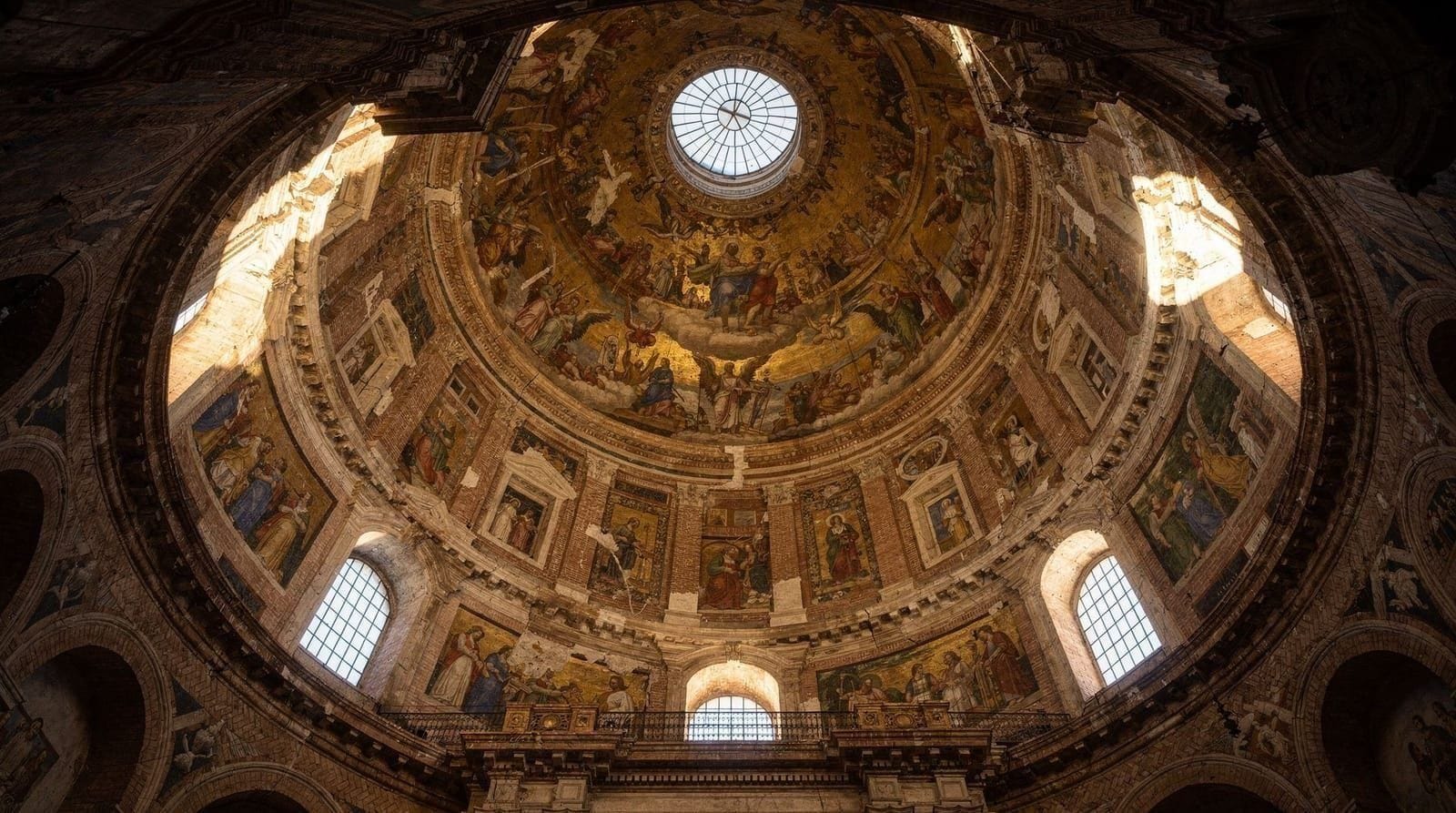
The interior of the Baptistery is octagonal, with galleries running around the upper level and the mosaic covering the entire ceiling of the central vault.
The mosaic programme
The mosaics were executed in stages during the 13th century by Venetian and Florentine mosaicists. The programme is structured in hierarchical bands:
| Zone | Subject |
|---|---|
| Apse (east) | Christ in Majesty — approximately 8 metres tall |
| Outer band | Last Judgement — the saved and the damned |
| Narrative bands (reading outward) | Life of the Virgin; Life of John the Baptist; Life of Joseph; Story of Genesis |
| Central ring | Ranks of angels |
The scale is overwhelming at first. Stand in the centre of the floor and look straight up to orient yourself, then work outward from the apse figure. The Christ figure in the apse — his face severe, his right hand raised in judgement, his left hand lowering toward the damned — is one of the most powerful Byzantine-derived images in Tuscany.
The floors are equally notable: the geometric marble pavement is 12th century, with some panels depicting the signs of the zodiac.
The Tomb of Antipope John XXIII
In the interior, against the north wall, stands the funerary monument of Baldassare Cossa, who held the papacy briefly as John XXIII before being deposed by the Council of Constance in 1415. Donatello and Michelozzo designed the monument between 1422 and 1427 — a gilt bronze effigy of the deceased lying on a bier above a classical sarcophagus. It is an early and important work of the Florentine Renaissance and often missed by visitors focused on the ceiling.
Tickets, hours, and logistics
| Detail | Information |
|---|---|
| Admission | Included in €30 Duomo Complex pass (72-hour validity) |
| Opening hours | Mon–Sat 8:15–19:15; Sun 8:15–13:30 (last entry 30 min before close) |
| Timed entry | Required — slot booked as part of Duomo Complex pass |
| Duration inside | 20–35 minutes |
| Photography | Permitted without flash |
| Accessibility | Step-free entry to main floor; no step to threshold |
Booking: The Baptistery is included in the €30 Duomo Complex pass, purchased online via the Opera del Duomo website or authorised platforms. A separate timed-entry slot for the Baptistery is assigned at booking.
Crowds: The Baptistery interior is less crowded than the dome climb and Campanile, though the square outside is perpetually busy. Visiting early (before 9:30) or in the last hour before closing gives the most space inside.
What to look for on the exterior
The exterior marble panels date from the 11th and 12th centuries; the upper levels with their blind arcading and geometric inlays are particularly fine examples of the Florentine Romanesque style that influenced everything built in the city subsequently — including Santa Maria Novella’s facade.
Above the three pairs of doors, the tympanum of the east portal (the Gates of Paradise side) contains a mosaic of Christ in Glory with John the Baptist and the Virgin by Jacopo Torriti (1300) — one of the few surviving exterior mosaics in Florence and typically missed because visitors are looking at the doors.
The marble lantern at the apex of the exterior is 13th century and was the model for the lanterns on several subsequent Florentine churches.
Visiting in context
The Baptistery sits at the western edge of the Piazza del Duomo, directly opposite the cathedral’s main facade. After visiting, the natural sequence continues:
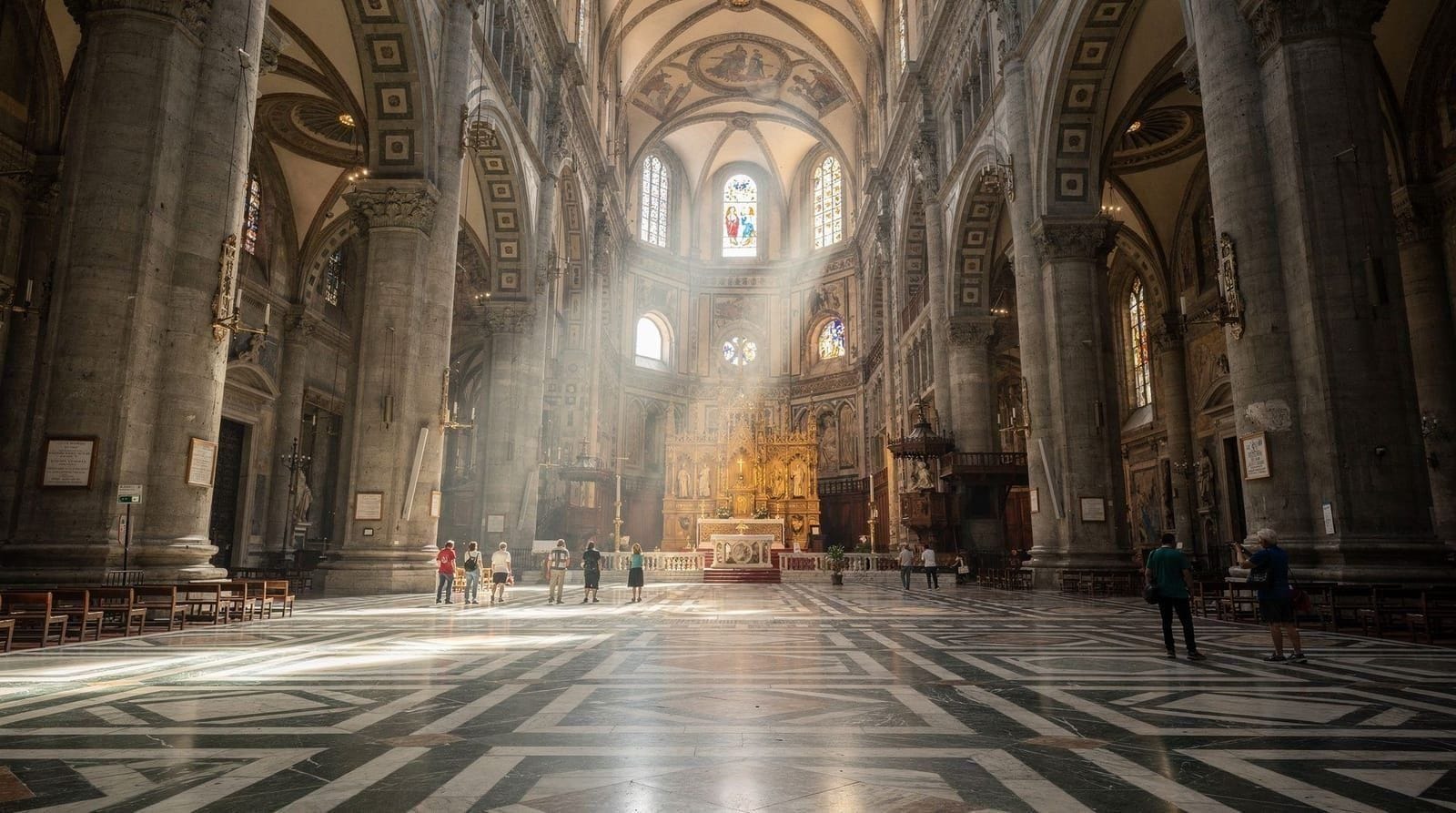
- Cathedral of Santa Maria del Fiore (free, directly adjacent) — main nave, Uccello frescoes, clock
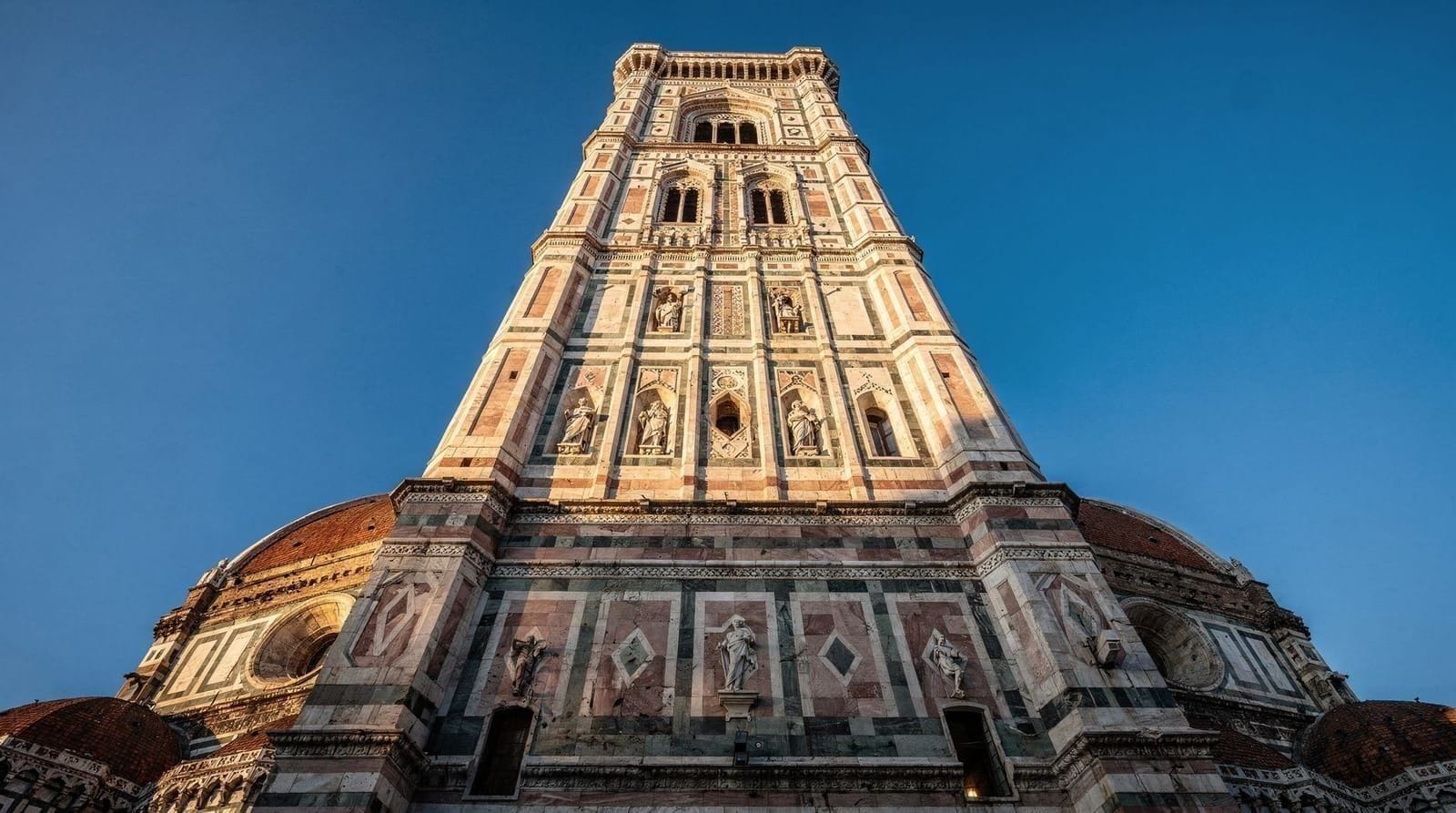
- Campanile (adjacent to cathedral) — 414-step climb
- Museo dell’Opera del Duomo (200 m east) — see the Opera del Duomo Museum guide for the original Gates of Paradise panels and Donatello’s Magdalene
- Brunelleschi’s Dome (requires pre-booked timed entry)
From the Piazza del Duomo, the Piazza della Signoria is 8 minutes on foot. For context on the neighbourhood and logistical planning, see the Florence destination guide. The Medici Renaissance tour covers the connections between the Baptistery patrons and the Medici family.
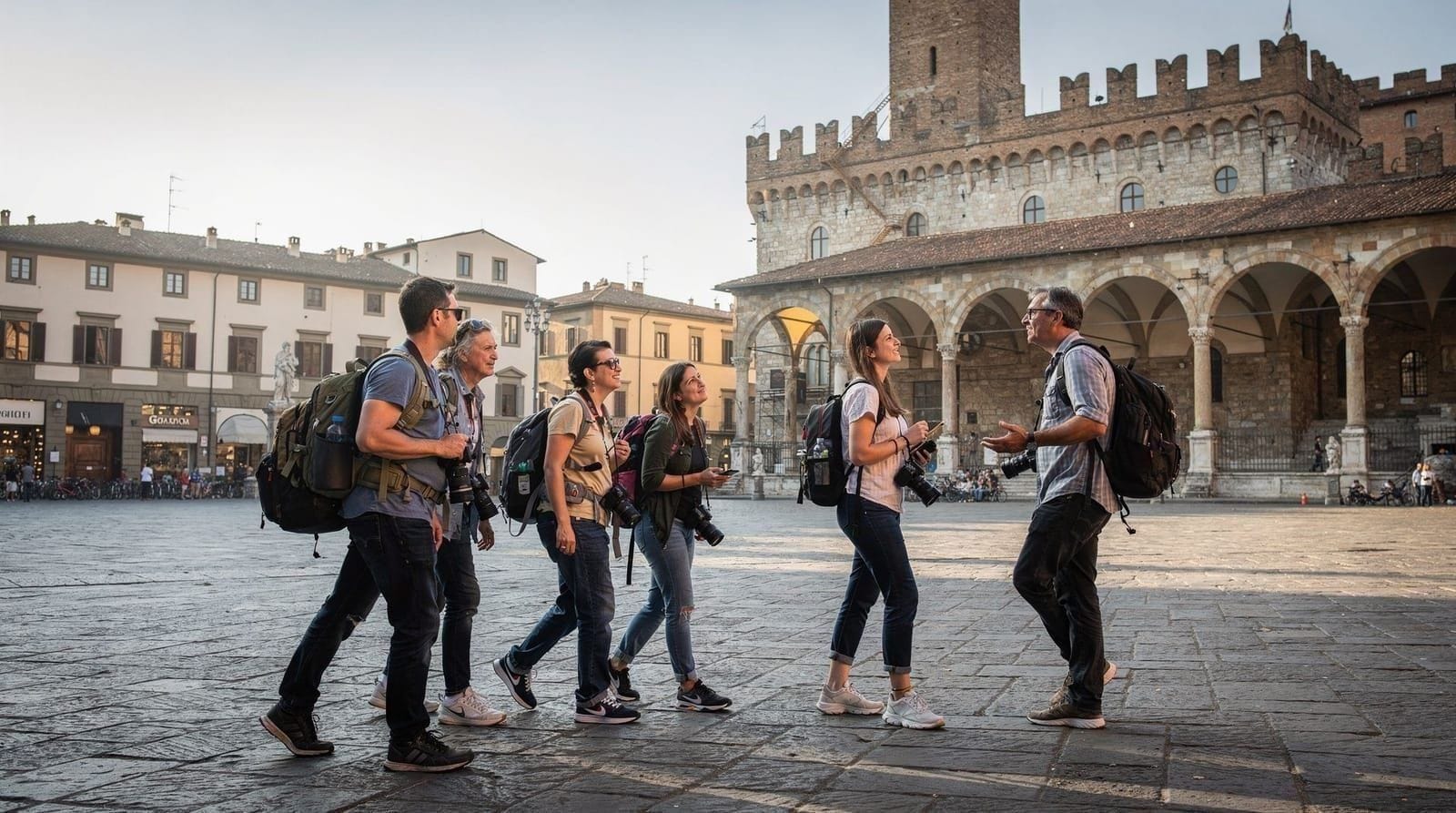
For guided context with a historian-guide, the best walking tours of Florence nearly all stop here.
Frequently asked questions about the Florence Baptistery
Are the Gates of Paradise original or replicas?
The doors on the Baptistery are high-quality replicas. The ten original gilded bronze panels by Ghiberti are preserved in the Museo dell’Opera del Duomo, displayed in a climate-controlled room. The originals show far more detail than the exterior doors.
What did Dante Alighieri have to do with the Baptistery?
Dante was baptised in the Baptistery in 1265 — in the Inferno he refers to “il mio bel San Giovanni” (my beautiful Saint John). In the poem he also describes the baptismal fonts, which in his time were large stone basins let into the floor (since replaced). The Baptistery’s significance in Florence’s civic religion is a central theme of the Divine Comedy’s opening canticles.
How long does the Baptistery visit take?
20–35 minutes is sufficient to see the mosaic ceiling, the Donatello-Michelozzo tomb, the floor pavements, and the interior in full. Combine it with 15–20 minutes on the exterior doors before entering.
Is the Baptistery the oldest building in Florence?
It is among the oldest surviving structures in the city centre. The church of San Miniato al Monte on the hill south of the city is approximately contemporary in its current form (early 11th century). Roman and early Christian remains beneath the Baptistery floor are older.
Can I visit the Baptistery without booking the whole Duomo Complex pass?
No — the Baptistery is only accessible as part of the €30 Duomo Complex pass, which also covers the dome, Campanile, cathedral crypt and the Opera del Duomo Museum. There is no standalone Baptistery-only ticket. See the Duomo complex tickets guide for how the pass works and which combination suits different visit lengths.
Top experiences
Bookable activities with verified prices and instant confirmation on GetYourGuide.