Mercato Centrale Florence: complete visitor guide
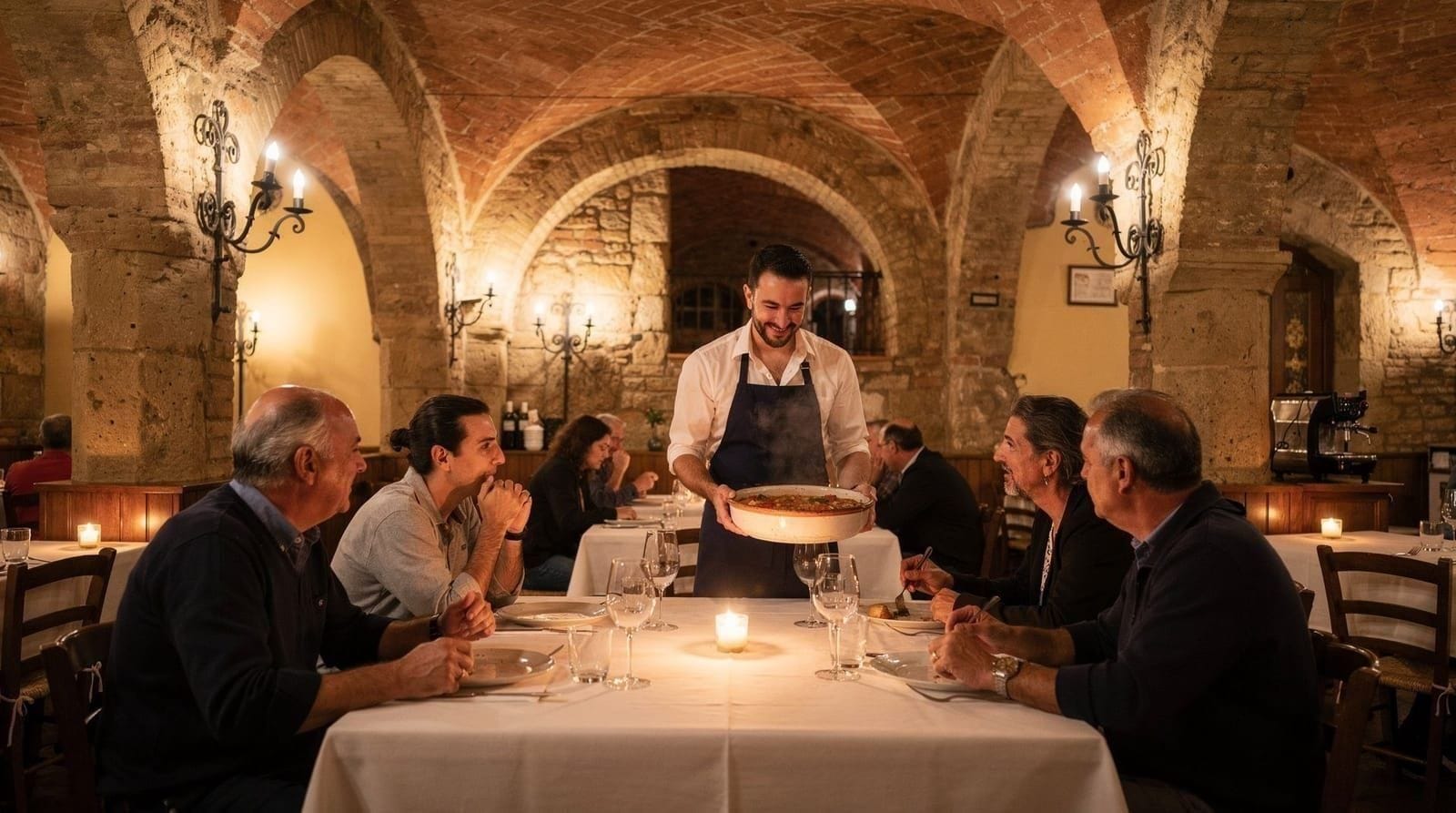
Florence: San Lorenzo food market and wine tasting tour
- Free cancellation
- Small group
Is Mercato Centrale worth visiting in Florence?
Yes, especially the ground-floor market (open 07:00–14:00 Mon–Sat). It's a genuine working food market with excellent meat, cheese, charcuterie, and the legendary Nerbone lampredotto counter. The first-floor food court (open daily 10:00–midnight) is tourist-oriented but decent.
The iron palace of Florentine food
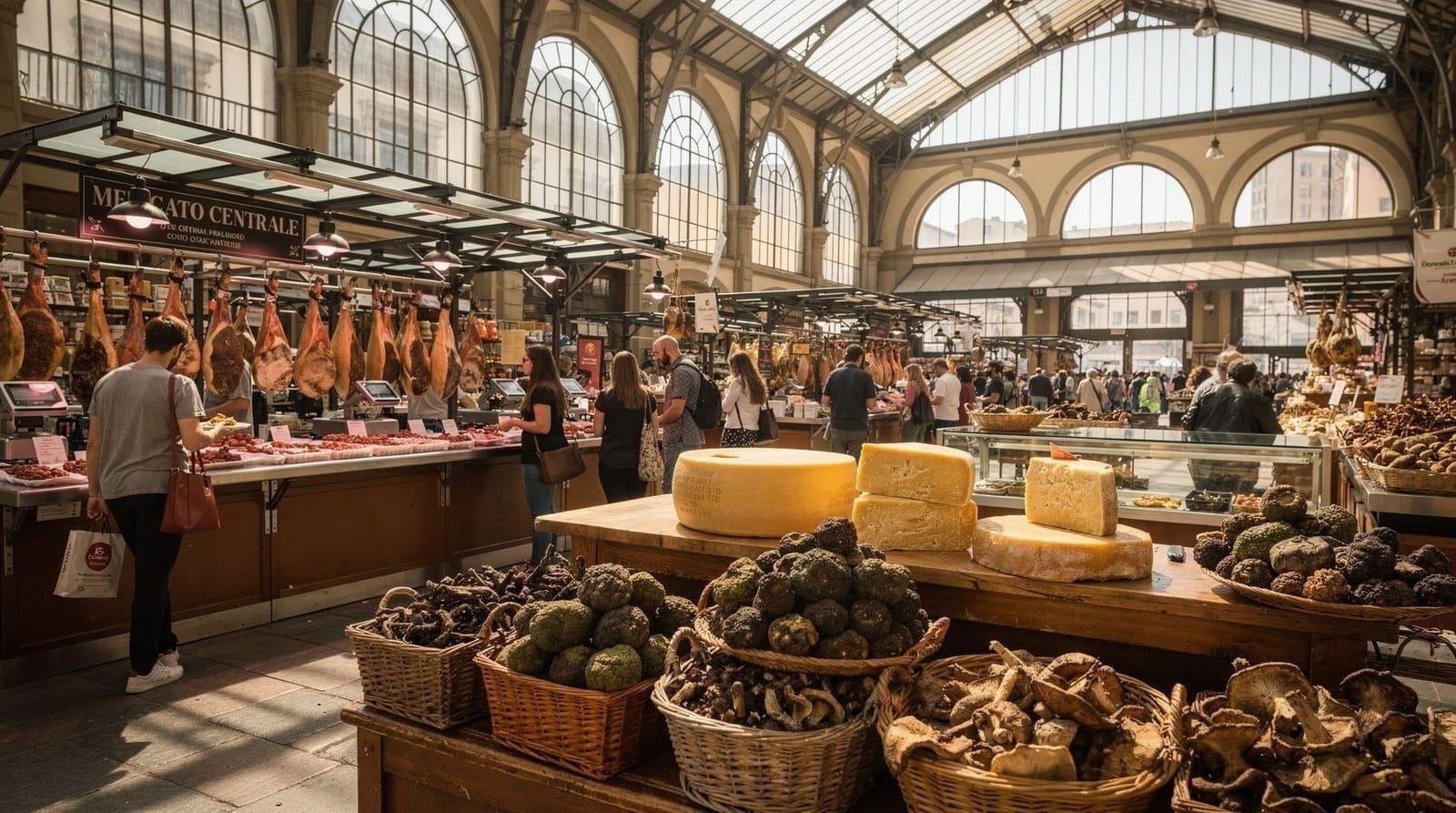
Mercato Centrale is housed in a two-storey iron-and-glass structure built in 1874 by Giuseppe Mengoni — the same architect who designed Milan’s famous Galleria Vittorio Emanuele II. The building is a piece of Risorgimento-era industrial architecture: soaring cast-iron columns, a latticed glass roof that floods the interior with light, elaborate wrought-iron balustrades. It is architecturally significant even before you consider what is sold inside.
The market sits in the heart of the San Lorenzo district, Florence’s market quarter. The neighbourhood has been a trading hub since the Medici era; the Basilica di San Lorenzo stands a block away.
| Where | Via dell’Ariento 12, San Lorenzo district |
| Ground floor | Mon–Sat, around 07:00–14:00, cash preferred |
| First floor | daily, around 10:00–midnight, cards everywhere |
| Cost | lampredotto around €5, first-floor dish around €10–14 |
| Best for | ground floor for real food shopping; first floor for a Sunday or evening meal |
Ground floor: the real market
The ground floor is a working food market. It has operated continuously since 1874 and supplies both private households and restaurant kitchens. Opening hours are Monday–Saturday, 07:00–14:00.
Meat
Florence’s butchery culture centres on the bistecca alla fiorentina — the T-bone cut from Chianina cattle, the white breed raised in the Val di Chiana. Ground-floor butchers sell genuine Chianina beef at €35–55 per kg; the bistecca should be at least 1.2 kg for two people, ideally 1.5 kg. You’ll also find:
- Trippa (tripe) and lampredotto for home cooking
- Rabbit and free-range chicken
- Cured meats: prosciutto crudo, bresaola, coppa
- Whole suckling pig during festivals
Full details on the bistecca tradition, how to order it in a restaurant, and what “rare” actually means in Florence are in the bistecca alla fiorentina guide.
Cheese
The cheese counters are some of the most interesting in the market. Key cheeses to look for:
| Cheese | Type | Flavour | Price |
|---|---|---|---|
| Pecorino Toscano DOP fresco | Sheep’s milk, young | Mild, slightly tangy | €18–22/kg |
| Pecorino Toscano DOP stagionato | Sheep’s milk, aged 4+ months | Nutty, firmer, saltier | €22–28/kg |
| Marzolino del Chianti | Traditional Florentine sheep’s cheese | Aromatic, lightly herbal | €24–30/kg |
| Raviggiolo | Fresh cow or sheep milk | Very mild, cream-textured | €12–16/kg |
| Parmigiano-Reggiano (24 months) | Cow’s milk, aged | Rich, crystalline texture | €28–35/kg |
Most vendors offer tastings. Ask for posso assaggiare? (can I taste?).
Charcuterie and salumi
Tuscan charcuterie is among Italy’s finest. The ground floor has several dedicated salumerie (charcuterie shops) stocking:
Finocchiona: The flagship Tuscan salami, made with fennel seeds. The artisan stagionata version, from small producers using cinta senese pork, tastes entirely different from the industrial version. Price: €24–32/kg.
Prosciutto Toscano DOP: Darker, slightly saltier, and more herbal than its Parma counterpart. Less famous, arguably more interesting.
Cinta senese products: Everything from the native Sienese belted pig. Recognisable by the DOP label. Premium pricing — €30–45/kg for aged products — but genuinely distinctive.
Lardo di Colonnata: Cured fatback from Colonnata near Carrara, aged in marble containers with herbs. More interesting than it sounds; wonderful on warm crostini. €35–50/kg.
Fish
A working fishmonger operates on the ground floor, sourcing from the Ligurian coast. The selection is good on Tuesday, Thursday, and Saturday mornings (delivery days). Friday has the best selection for religious reasons — many Florentines still observe the tradition of fish on Friday. Expect sea bass, bream, clams, mussels, and seasonal fish.
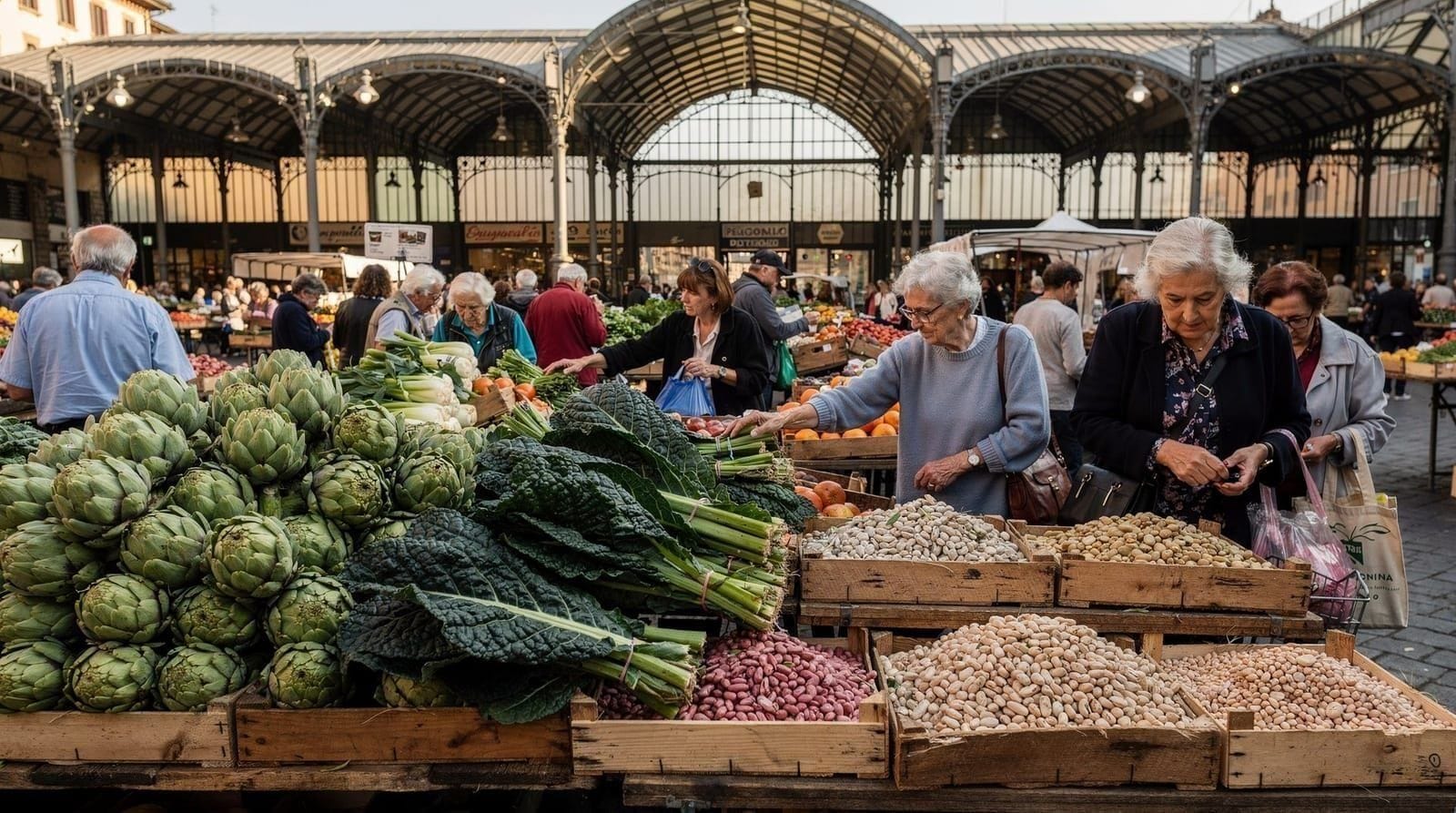
Fruit, vegetables, and dry goods
The produce stalls change dramatically by season:
- Spring (March–May): Artichokes, asparagus, wild herbs, new-season broad beans
- Summer (June–August): Pomodori cuore di bue (beef-heart tomatoes), aubergine, courgette flowers, fresh figs
- Autumn (September–November): Funghi porcini, chestnuts, grapes, persimmons
- Winter (December–February): Cavolo nero (black kale), radicchio, citrus, cardoons
Several stalls sell dried goods: porcini mushrooms, saffron from Abruzzo, Tuscan dried legumes (borlotti, cannellini, cicerchie), and an excellent range of Tuscan olive oils.
Nerbone: the market institution
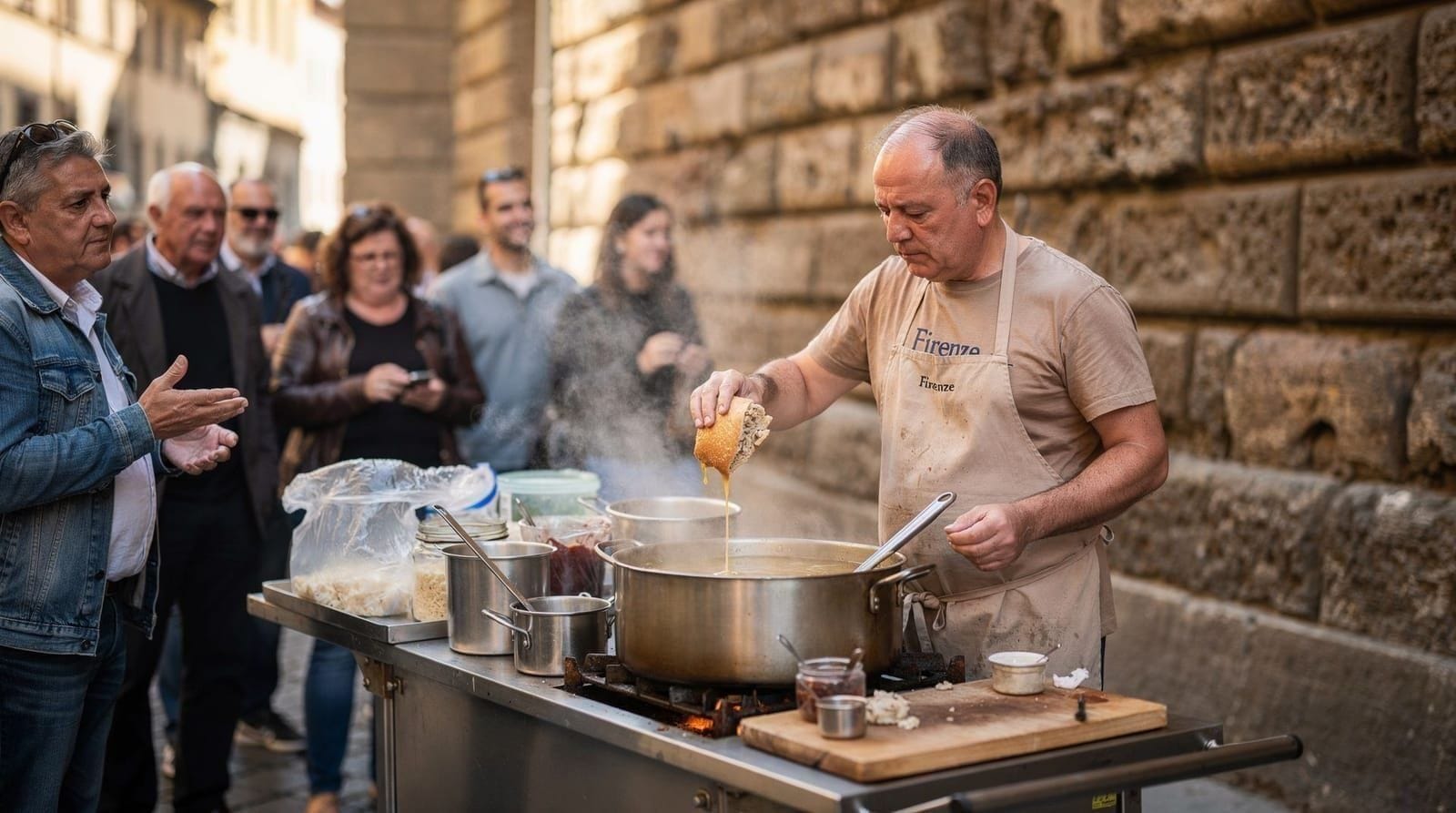
Nerbone has operated at Mercato Centrale since 1872 and is the most famous eating counter in the building. It serves working Florentines, market vendors, and increasingly food-curious tourists, in a noisy, tray-based setup that feels unchanged from the 1950s.
The lampredotto sandwich (panino con lampredotto) is the essential order: braised tripe on a rosetta roll, dipped briefly in the cooking broth (bagnato — ask for it wet), dressed with salsa verde (parsley, capers, anchovies, garlic) and a hit of chilli. Price: €5.
Ribollita is served in a deep bowl with a drizzle of olive oil on top. It’s denser and better here than at many restaurants charging three times the price. €7.
The pasta del giorno changes daily — expect pappardelle al cinghiale, rigatoni with meat sauce, or simple garlic and oil pasta. €7–9.
Bollito misto (mixed boiled meats with salsa verde and mostarda) appears on the menu in winter. One of Florence’s great under-appreciated dishes.
Practical: queue at the counter, place your order, pay immediately, collect your food. There are standing tables and a small seating area. Cash and card accepted. Open from 07:00 until the market closes at 14:00.
First floor: the food court
The upper floor was renovated in 2014 and opened as a modern food market hall (Mercato Centrale Firenze, the brand). It operates 10:00–midnight daily, including Sundays when the ground floor is closed.
The setting is extraordinary — under the original Victorian iron roof, with views down into the ground-floor market. The stalls are curated, the quality control is above average, and the concept (artisan producers presenting their food directly) is appealing. The target audience is clearly visitors and the upper-middle-class Florentine weeknight market.
What to eat on the first floor
| Stall type | Price range | Notes |
|---|---|---|
| Pasta fresca | €10–14 per dish | Fresh pasta made on-site; good quality |
| Lampredotto and trippa | €6–8 | Good if the ground floor is closed |
| Pizza al trancio | €4–6 per slice | Thick Roman-style; decent |
| Seafood | €12–18 | Varies by catch and season |
| Vegetarian | €10–14 | Seasonal vegetable dishes |
| Charcuterie plates | €12–18 | Good selection; slightly overpriced |
| Cocktail bar | €8–12 per cocktail | Aperol Spritz, Negroni, etc. |
| Wine and beer | €5–10 per glass | Decent Tuscan wines by the glass |
Honest assessment: the first floor is fine for a drink or a light meal, particularly if you’re arriving on a Sunday or after 14:00 when the ground floor is closed. For serious food shopping or the best value meal, the ground floor is superior.
The outdoor San Lorenzo market: what surrounds the building
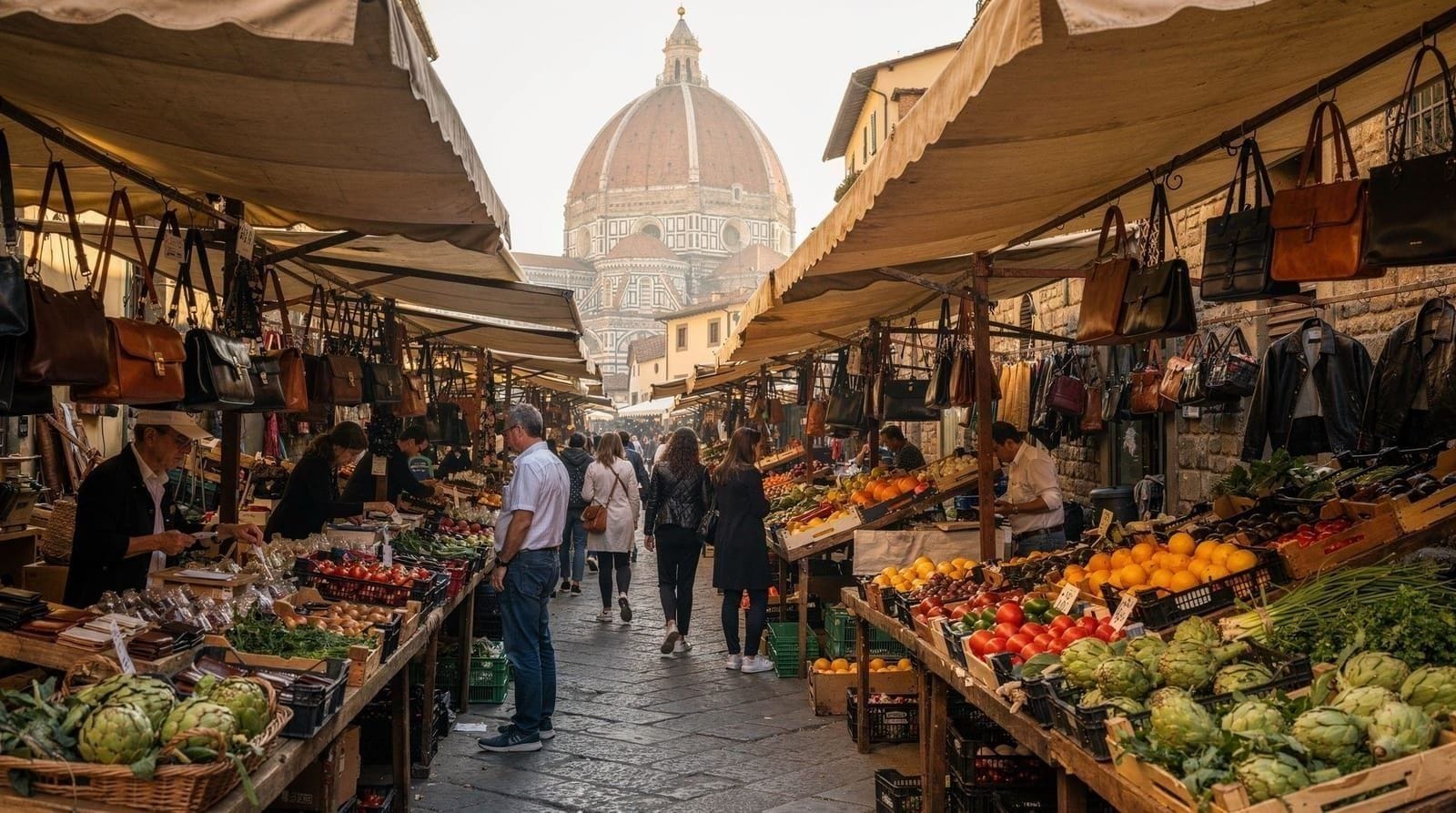
The streets surrounding Mercato Centrale — Via dell’Ariento, Via Sant’Antonio, Piazza San Lorenzo — host an outdoor market that runs most days. This market sells primarily tourist goods: leather bags (mostly not Florentine leather), scarves, souvenirs, and clothing. It is not a food market.
The leather sold here is almost never made in Florence. Real Florentine leather workshops are concentrated in Oltrarno and at the Santa Croce leather school. The San Lorenzo outdoor market is atmospheric but approach any leather purchase with scepticism — the honest Florence guide covers this in more detail.
Getting there and practical information
Address: Via dell’Ariento 12, 50123 Firenze
Getting there:
- On foot from Santa Maria Novella station: 5 minutes heading east along Via Nazionale
- Tram T1: Alamanni-Stazione stop, then 3-minute walk
- Bus: multiple lines stop on Via Nazionale
- Parking: largely unavailable in the area due to ZTL restrictions — do not drive into the city centre
Ground floor hours: Monday–Saturday 07:00–14:00. Closed Sundays.
First floor hours: Daily 10:00–midnight (including Sundays and holidays).
Payment: Ground-floor vendors prefer cash; most accept cards. First floor accepts cards everywhere.
Language: English is spoken by most first-floor vendors and some ground-floor traders. Basic Italian helps on the ground floor.
Photography: Vendors generally do not mind photography, but ask first at individual counters. The building itself is photographed constantly from the first-floor balcony overlooking the ground floor.
Combining Mercato Centrale with cooking
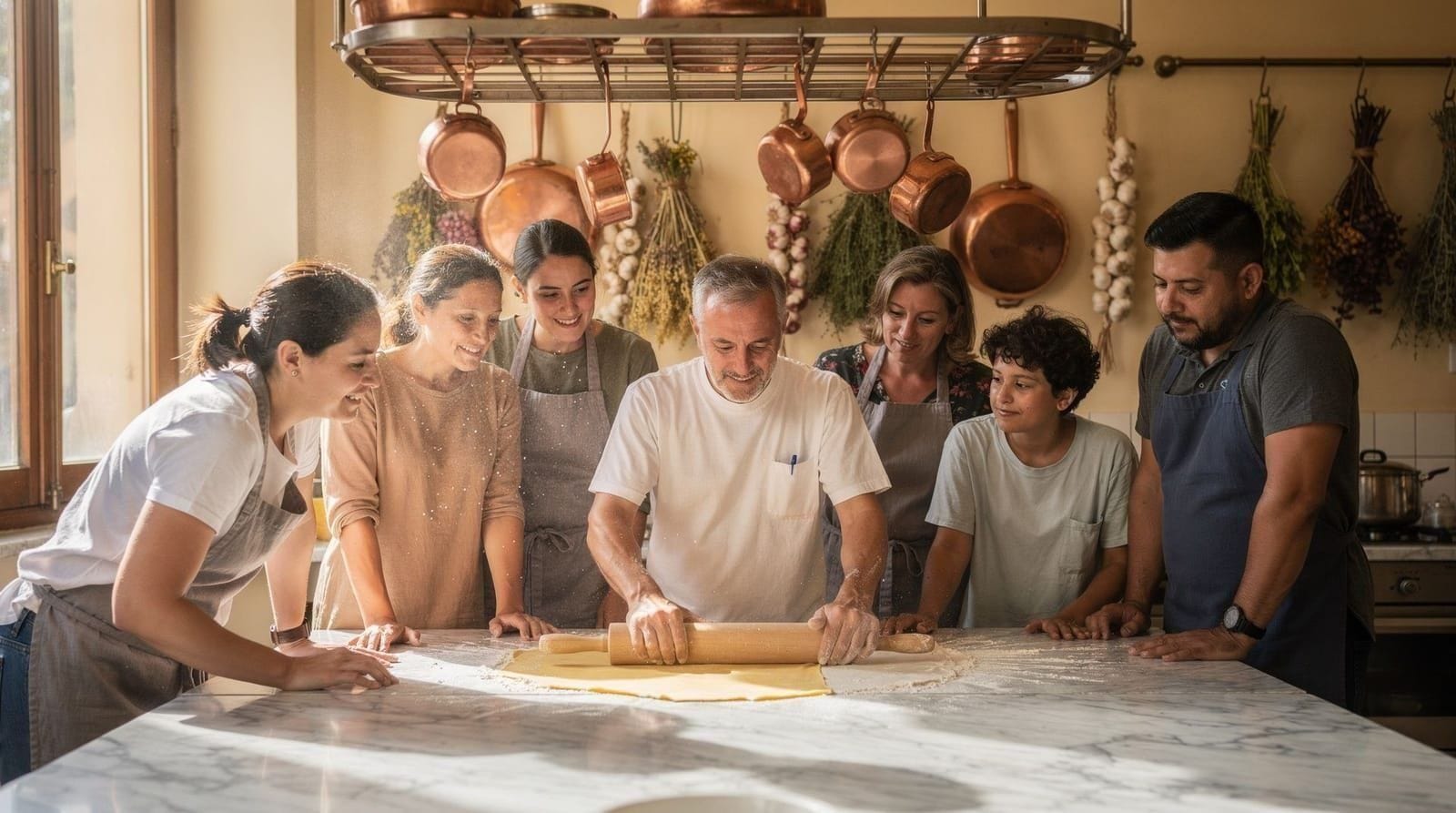
The most popular use of Mercato Centrale for food travellers — beyond eating and shopping — is as the starting point of a cooking class. Several of Florence’s best classes include a guided ground-floor market tour where you buy the day’s ingredients before heading to a kitchen to cook. The best cooking classes in Florence guide covers these in detail, and the market-to-table cooking guide focuses specifically on this format.
Mercato Centrale versus Sant’Ambrogio
Florence has a second, smaller working market worth knowing about: Sant’Ambrogio, a ten-minute walk east, near Santa Croce. Where Mercato Centrale has become a genuine tourist destination — beautiful building, curated first floor, coach parties on the ground floor by mid-morning — Sant’Ambrogio has stayed almost entirely local. Prices are lower, the produce stalls spill outdoors, and the surrounding streets (particularly Via dei Macci) have some of Florence’s best-value neighbourhood restaurants.
Neither market is “better” in an absolute sense. Mercato Centrale wins on architecture, convenience, and range — one building covers meat, cheese, fish, produce, and two floors of prepared food. Sant’Ambrogio wins on authenticity and price, at the cost of fewer prepared-food options. If you only have time for one, Mercato Centrale is the more complete experience for a first visit; if you’re staying more than a few days, add Sant’Ambrogio for a genuinely different atmosphere. See the Florence food markets guide for a full comparison of both, plus the smaller neighbourhood markets.
A realistic visit plan
For most visitors, the highest-value approach is a weekday morning visit, timed to combine shopping, a Nerbone lunch, and a walk through the surrounding San Lorenzo streets. Arrive by 09:00 to see the ground floor before the coach groups, browse the cheese and charcuterie counters (ask for tastings — vendors expect it), then queue at Nerbone around 12:00–12:30, just ahead of the worst of the lunch rush. Save the first floor for later in your trip: a Sunday brunch, a rainy-afternoon coffee, or an evening drink when the ground floor is closed and you want the atmosphere without needing the best possible prices.
Travellers doing a broader Florence street food crawl often use Mercato Centrale as the anchor stop, since it’s the only place in the historic centre where you can sample lampredotto, ribollita, fresh pasta, and Tuscan cheese in one visit without moving between multiple addresses.
Frequently asked questions about Mercato Centrale
Is it worth visiting Mercato Centrale as a tourist?
Yes — the building alone is worth seeing, and the ground-floor food market is an authentic piece of Florentine life. The lampredotto sandwich at Nerbone is one of the city’s essential food experiences. Even if you don’t buy anything, a 30-minute walk around the ground floor is interesting and free.
Is the first-floor food court worth the money?
For lunch: maybe. For dinner: there are better options. The first floor is convenient, photogenic, and the quality is respectable — but for €12–16 per dish you can eat more interesting food at a neighbourhood trattoria. Use the first floor for a drink or a light snack, or if you’re visiting on a Sunday when other options are fewer.
What should I buy to take home from Mercato Centrale?
The most travel-friendly purchases: vacuum-packed finocchiona salami, aged Pecorino Toscano (hard enough to travel well), dried funghi porcini, and small bottles of single-estate Tuscan olive oil. Avoid soft cheeses and anything requiring refrigeration unless you’re travelling home the same day.
Can I visit Mercato Centrale in the evening?
The first floor is open until midnight daily. In the evenings it functions more as a social venue — wine and cocktails at the bar, sharing plates of charcuterie and cheese — than a food market. The ground floor is closed by then, so the food shopping dimension is absent.
How crowded is Mercato Centrale?
The ground floor is busiest 08:00–13:00 weekdays and 08:00–12:00 on Saturdays. The first floor peaks at lunch (12:30–14:30) and dinner (19:30–21:30). For the most comfortable experience, visit the ground floor at 07:30–09:00 on a weekday morning.
Top experiences
Bookable activities with verified prices and instant confirmation on GetYourGuide.

Florence: San Lorenzo food market and wine tasting tour
- Free cancellation
- Small group
Florence: Sant Ambrogio market food tour of 10 local dishes
- Free cancellation
- Small group
Florence: food and wine tour
- Free cancellation
- Small group
Florence: Tuscan cooking course with visit to San Lorenzo market
- Free cancellation
- Small group