Family gelato treats in Florence
Florence: gelato making class
- Free cancellation
- Small group
How do we find good gelato in Florence for kids?
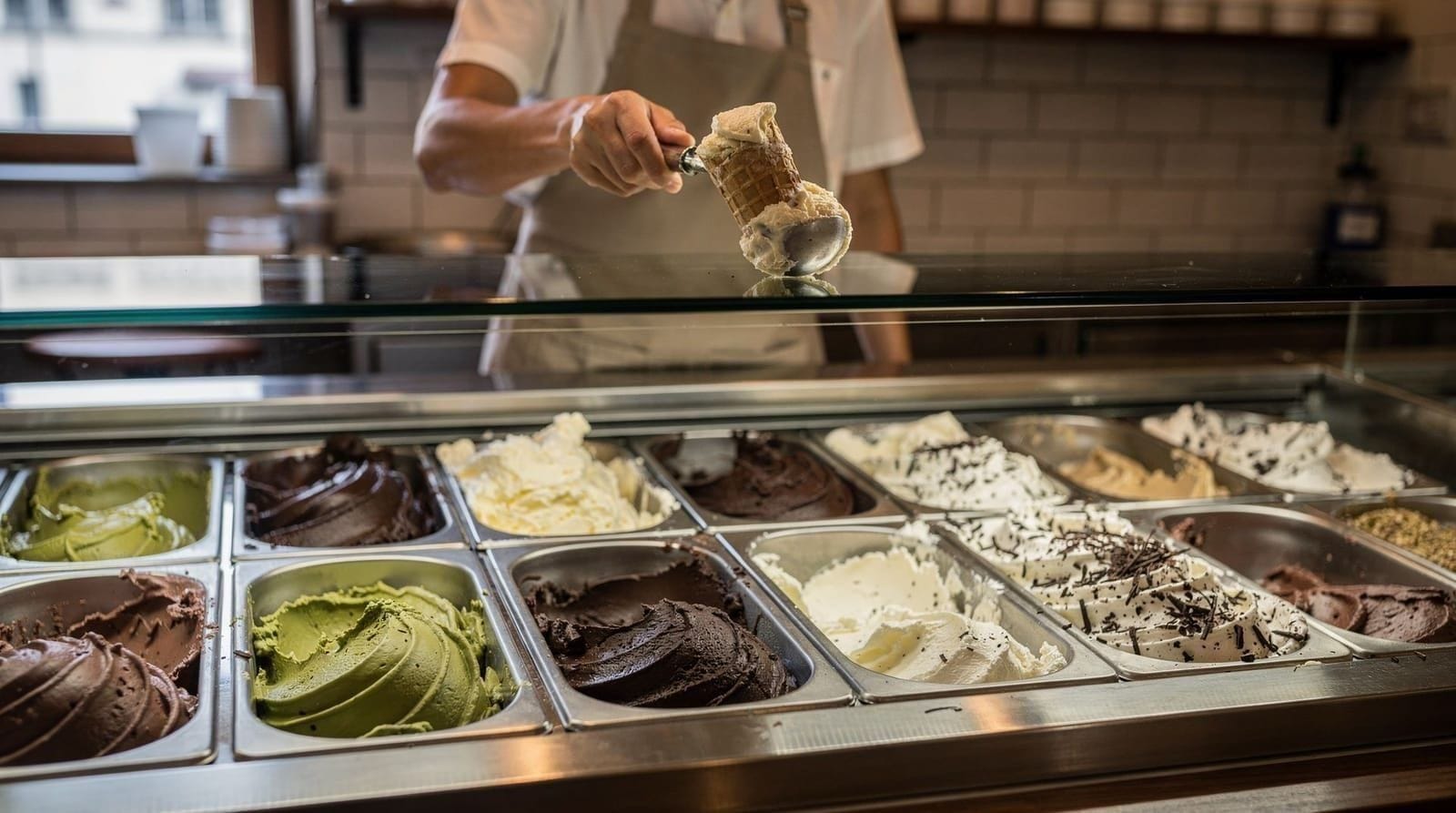
Look for shops serving gelato from covered metal pozzetti (flat pans with lids), not tall coloured mounds. Colours should be muted and natural. Gelaterie near the Duomo and Ponte Vecchio are almost universally tourist-grade. Walk one or two streets further.
Why gelato is the best thing that happens to children in Florence
Of all the Florentine experiences families describe when they return home, gelato appears more often than the Uffizi. This is partly because the best gelato is genuinely extraordinary — a fundamentally different product from supermarket ice cream — and partly because it works as a reward, a pacifier, a waypoint in a long afternoon, and a cultural experience all at once.
Florence has a legitimate claim as the birthplace of gelato (the Medici court chef Bernardo Buontalenti is often credited with developing the first recipe in the 16th century), which adds historical weight to what children experience as simply very good ice cream.
This guide tells you where to go, what to order, how to spot the tourist traps, and how a gelato-making class works in practice.
| Cost | Around EUR 2.50–4 per small cup at real gelaterie |
| Avoid | Anywhere within 50m of the Duomo or Ponte Vecchio |
| Look for | Covered pozzetti, muted natural colours |
| Best area for families | Santa Croce (Via dei Neri) or Oltrarno |
| Making a class? | Book 2–3 weeks ahead in peak season |
How to identify real gelato
The difference between artisan gelato and tourist-grade gelato is visible before you taste anything.
Real artisan gelato:
- Served from flat covered metal containers (pozzetti) — you cannot see the gelato until it is scooped
- Colours are muted and natural: pistachio is pale sage green, hazelnut is brown, strawberry is dusty rose, mint is very pale
- The texture does not hold architectural peaks — it is slightly soft and formless in the container
- Displayed at cooler temperatures (artisan gelato is served at -11°C rather than the -18°C of industrial ice cream)
Tourist-trap gelato:
- Displayed in towering mounds of brightly coloured gelato, open to the air
- Fluorescent greens (pistachio), lurid pinks (strawberry), unnaturally vivid yellows (lemon) — colours achieved with dye rather than ingredients
- Usually positioned within 50 metres of the Duomo, Ponte Vecchio or tourist sites
- Signs reading “Artigianale” or “Genuine Italian Gelato” plastered across every surface
The pistachio test: If a gelateria’s pistachio is bright green, walk away. Real pistachio gelato is the colour of unbleached linen — pale, slightly grey-green. The colour of pistachio nut paste, not pistachio-flavour dye.
The best gelaterie for families in Florence
Gelateria dei Neri (Santa Croce area)
Address: Via dei Neri 9-11 Hours: Daily 11 am - midnight
One of the most consistently recommended gelaterie by residents. Via dei Neri is a narrow street south of Piazza della Signoria — busy but not as saturated with tourists as the Duomo area. The shop uses seasonal ingredients: in late summer the peach and melon flavours are exceptional.
Good for children because: the line moves quickly, flavours are clearly labelled, and the staff are used to international visitors making decisions slowly with small children.
Best for children: Cioccolato fondente (dark chocolate), nocciola (hazelnut), stracciatella, and in season fragola (strawberry). Small cup EUR 2.50.
Gelateria Artigiana Sbrino
Address: Borgo la Croce 34 Hours: Daily 10 am - 10:30 pm
Near the Sant’Ambrogio market area, slightly removed from the main tourist circuit. The cream-based flavours here are the signature: fior di latte, mascarpone with figs, rice cream. Smaller shop, less crowded, excellent for toddlers who need a calm environment to make their choice without being rushed.
Best for children: Fior di latte (very mild cream — ideal for children who prefer plain flavours), nocciola, cioccolato al latte (milk chocolate).
Vivoli (Santa Croce)
Address: Via dell’Isola delle Stinche 7 Hours: Tuesday-Sunday 7:30 am - midnight, closed Monday
Vivoli has been making gelato since 1930 and is a Florence institution. Served only in cups (no cones — a point of pride). The shop is slightly old-fashioned and the prices are honest. Children respond to the cups rather than cones — less dripping, easier to manage.
The chocolate and coffee flavours are the strongest here; the chocolate semifreddo is worth getting if the child is old enough to appreciate it.
Best for children: Cioccolato, caffe, crema (custard-based, similar to French vanilla). Small cup EUR 3.
Il Gelato di Filo (Oltrarno)
Address: Via San Miniato 5 Hours: Wednesday-Monday 11 am - 8 pm
In the Oltrarno neighbourhood south of the Arno, this small gelateria uses local Tuscany ingredients. The pistachio comes from Bronte (Sicily) and passes the colour test emphatically. Good stop on the way to or from Piazzale Michelangelo.
Best for children: Pistachio (the benchmark), pesca (peach, seasonal), cioccolato. Small cup EUR 2.80-3.
Gelateria dei Neri (Oltrarno branch) at Ponte Vecchio approach
The Via dei Neri location mentioned above is the easiest to reach from most tourist routes. When you cross Ponte Vecchio into the Oltrarno, there are good independent gelaterie within 5 minutes’ walk — look on Via de’ Bardi and around Piazza Santo Spirito.
What to avoid
The cone-shaped towers near the Duomo
Venues immediately on Piazza del Duomo and within 100 metres of Ponte Vecchio are almost entirely tourist-facing. Some serve reasonable gelato; most serve an industrial product at premium prices (EUR 4-6 for a small serving). The visual display of coloured mounds is a marketing technique, not a quality indicator.
This is worth explaining to children — “we walk a bit further and get better ice cream for less money” is a lesson most children aged 7 and up understand and remember.
The “free cone” shops
Several venues near the Duomo offer a “free cone with any flavour” as a selling point. Real artisan gelaterie charge the same price for cup or cone. A free cone with a premium gelato is fine; a free cone with overpriced tourist gelato is not a saving.
Making gelato together: family classes in Florence
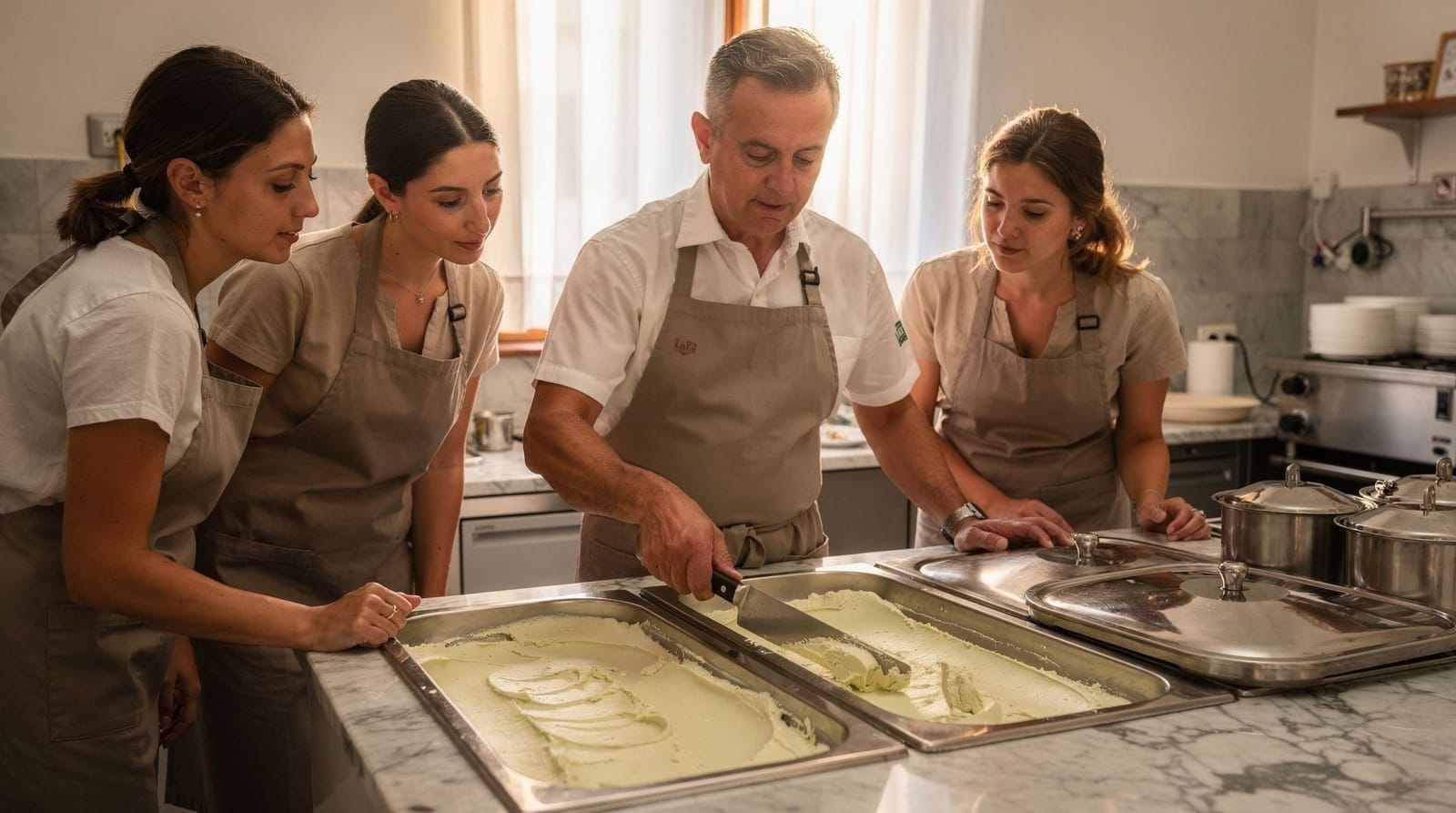
The best investment for families who want gelato as an experience rather than just a purchase is a gelato-making class. Florence has several options specifically designed for children.
What happens in a family gelato class
Typical structure for a 60-90 minute session:
-
Introduction to ingredients (15 minutes): The instructor shows the base ingredients — milk, cream, egg yolks, sugar — and explains how industrial ice cream differs from artisan gelato (less air pumped in, better fats, no stabilisers beyond those naturally present in eggs).
-
Choosing flavours (5 minutes): Children choose which flavour they want to make. Standard options include chocolate, strawberry, pistachio, lemon. Most classes make one batch per group, then children can taste different flavours before choosing their take-home serving.
-
Making the gelato (25 minutes): The instructor guides children through mixing, tasting the base, adding the flavour base, and operating the (monitored) gelato machine. Children aged 4 and up can participate in mixing and pouring; the machine is operated by the instructor.
-
Eating and take-home (15 minutes): The fresh gelato is served immediately — it tastes different from the day-old gelato in shops because it has not been stabilised for storage. Most classes provide a small container of gelato to take away.
Minimum age: Most classes accept children aged 4 and up with a parent present. Some classes specify 6 and up for the more technical elements.
Cost: EUR 30-45 per person for standalone gelato classes; EUR 50-80 per person for combined pizza and gelato classes (approximately 2 hours).
Booking: These fill 2-3 weeks ahead in peak season. Book online before your trip.
Combining gelato with pizza: the classic family class
The most popular family cooking experience in Florence combines pizza-making and gelato in a single session. Children aged 4 and up:
- Learn to stretch pizza dough by hand
- Choose toppings and assemble their pizza
- Watch it cook in a proper pizza oven
- Make gelato (or finish with a tasting) while the pizza cooks
The session runs approximately 2 hours and ends with lunch or dinner. Most classes are in the early afternoon (lunch slot) or early evening (dinner slot). The early afternoon slot works better for families with young children who fade in the evening.
These classes use real equipment and real ingredients — children are doing actual cooking, not just playing with dough. Instructors who work with families pace the session to children’s attention spans.
Gelato tasting as a family activity
If a structured class is not your style, an informal gelato tasting route is a free alternative. Choose three gelaterie from the list above (or from our full gelato guide) that are within walking distance, buy a small cup at each, and discuss the differences.
Children aged 7 and up can engage meaningfully with this as a comparative exercise:
- Which was creamier?
- Which tasted most strongly of real pistachio/chocolate/strawberry?
- Which was coldest?
- Which did you prefer?
This turns a food stop into a sensory education and a reason to visit multiple parts of the city. The Oltrarno neighbourhood is particularly good for a gelato walk — less crowded than the centre, three good gelaterie within 15 minutes’ walk, and interesting streets with artisan workshops between stops.
Gelato flavour guide for children
| Italian name | English | Notes for kids |
|---|---|---|
| Cioccolato fondente | Dark chocolate | Intense, slightly bitter — best for children who eat dark chocolate |
| Cioccolato al latte | Milk chocolate | Milder, sweeter — most popular with younger children |
| Stracciatella | Cream with chocolate chips | Italian equivalent of “cookies and cream” — universally popular |
| Fior di latte | Sweet cream | Very mild — ideal for children who prefer plain flavours |
| Nocciola | Hazelnut | Rich and nutty — try to find shops using Piemonte hazelnuts |
| Fragola | Strawberry | Pale dusty pink if real; bright red if artificial |
| Pistacchio | Pistachio | Pale green if real; bright green if artificial |
| Limone | Lemon | Refreshing in summer, slightly tart |
| Crema | Custard/vanilla | Egg-yolk based, richer than fior di latte |
| Pesca | Peach | Seasonal (July-August); exceptional when fresh |
| Caffè | Coffee | Adult-leaning but often enjoyed by children aged 10+ |
| Menta | Mint | Very pale green; refreshing but can be polarising |
Seasonal specials: The best artisan gelaterie change their menus seasonally. In spring, strawberry and rhubarb. In summer, peach, melon, fig. In autumn, chestnut, pear with chocolate. In winter, hot chocolate versions and spiced flavours.
Frequently asked questions about gelato for families
Can we bring gelato into museums?
No. Florentine museums uniformly prohibit food and drink inside the galleries. Finish your gelato before entering, or choose a gelateria for after your museum visit as a reward.
Is there a good gelato spot near the Accademia?
Via Ricasoli (the street leading to the Accademia) and the surrounding streets have several gelaterie. Most are tourist-facing given the location; walk one block off the main street or go to Piazza San Marco (5 minutes away) for better options. Check our full gelato guide for specific recommendations by neighbourhood.
How do we handle the choice paralysis kids experience at gelato counters?
Limit the choice before you enter: “you can choose two flavours.” If the gelateria serves from covered pozzetti, ask to taste two options before deciding — most good gelaterie offer small tasting spoons without charge. Avoid letting children stand at the counter for more than 3-4 minutes — the queue builds rapidly and pressure mounts.
Is granita suitable for children?
Yes. Granita (shaved flavoured ice, different from gelato) is a Sicilian-origin refreshment available at some Florentine bars. It is lighter than gelato, very refreshing in summer, and suitable for young children. Not widely available at gelaterie — more commonly found at bars as a summer drink offering.
What if a child is lactose intolerant?
Several good gelaterie now offer dairy-free sorbetto (sorbet) and vegan options. Sorbetto is traditionally made with fruit, water and sugar — naturally dairy-free. Dark chocolate gelato made with water-based ganache is also dairy-free at some shops. Ask specifically: “senza latte?” (without milk?). Staff at reputable gelaterie know their ingredients precisely.
Is a gelato-making class worth it for a family with young children?
Yes for most families with children aged 4 and up — it turns a purchase into an activity, runs 60-90 minutes (long enough to feel like an experience, short enough not to exhaust small attention spans), and every child leaves with something they made. Combined pizza-and-gelato classes stretch the value further for a full lunch or dinner slot. Book 2–3 weeks ahead in peak season.
Are there good gelato stops near Piazzale Michelangelo?
Il Gelato di Filo on Via San Miniato is a genuine option on the walk up, and worth timing your climb around. It’s a better stop than anything sold from carts at the viewpoint itself, which tend to be overpriced and industrial. See Piazzale Michelangelo for the fuller visit plan.
The gelato geography of Florence: neighbourhood by neighbourhood
Near the Duomo and Baptistery
The immediate Duomo area (within 50 metres of the facade) is almost entirely tourist-trap gelato. Walk two minutes in any direction and quality improves. Via dei Servi north of the Duomo has better options; Via de’ Martelli east has independent gelaterie that are not on the tourist postcard route.
One exception: Gelateria Grom (Via dei Campanile, just off Piazza del Duomo) is a chain but a reputable one with consistent quality and covered pozzetti. Not artisan, but not a trap.
Piazza della Repubblica and Tornabuoni
The Rinascente department store on Piazza della Repubblica has a food floor with a gelato counter that is better than the street-level options immediately surrounding the piazza. For artisan quality near here, walk to Vivoli (5 minutes southeast toward Santa Croce) or Gelateria dei Neri (Via dei Neri).
Santa Croce area
Via dei Neri (the home street of Gelateria dei Neri) and the Santa Croce neighbourhood have the highest density of good gelato per square metre in Florence. After visiting the Bargello or the Accademia, this area is the best direction to walk for a genuine gelato.
Oltrarno
The Oltrarno has several gelaterie that serve local residents rather than tourist flows. Fewer tourists means lower prices and less incentive to compromise on ingredients. Gelateria Artigianale Sbrino (Borgo la Croce), Il Gelato di Filo (Via San Miniato near Piazzale Michelangelo), and several unnamed neighbourhood shops serve local Florentines’ standards.
San Lorenzo neighbourhood
The San Lorenzo area has tourist-facing gelato on the main Via dell’Ariento and Via Faenza. Walk north to Via Guelfa or east toward Piazza San Marco for better options. If you’re browsing the San Lorenzo market with children, this is a useful area to know before fatigue sets in.
Combining a gelato walk with a food market visit
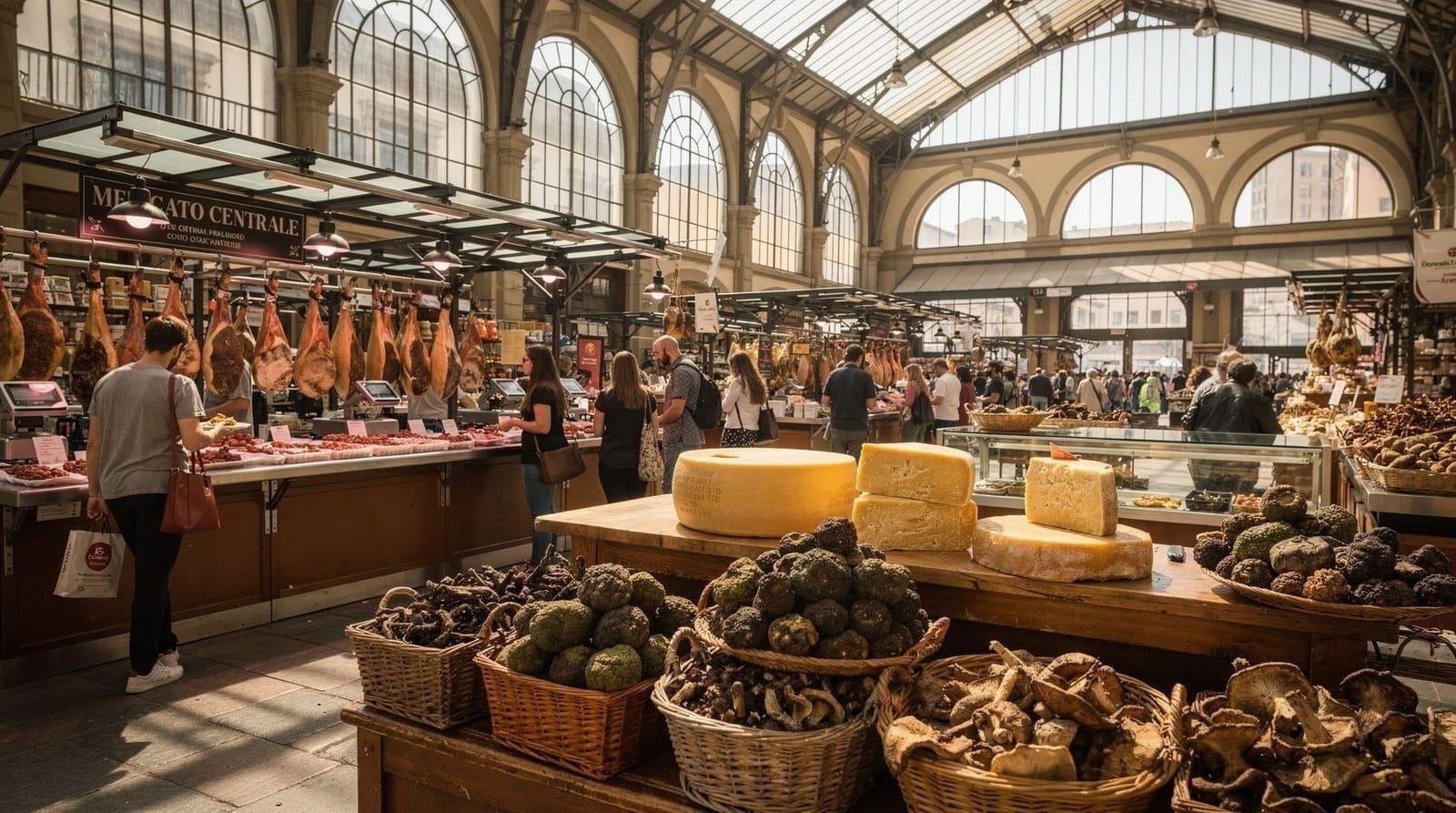
Families exploring Florence’s food markets — Mercato Centrale, Sant’Ambrogio — often use gelato as the natural closing stop after browsing stalls of cheese, meat and produce that aren’t always exciting for younger children. Mercato Centrale in particular has a gelato counter on its ground floor that is more reliable than the surrounding San Lorenzo street stalls, making it a convenient combined stop rather than two separate outings.
Gelato etiquette: small but important
Ordering sequence: In Florence, you typically pay first at the cassa (cash desk) then take your receipt to the gelato counter. In some modern shops you order and pay at the counter. If you are unsure, watch what the person ahead of you does.
Cup or cone (coppa o cono): Both are the same price at good gelaterie. Cones at tourist shops are sometimes charged extra. Cups are more convenient for children — less dripping.
“Con panna?” — with whipped cream? Often asked automatically. This adds a small dollop of unsweetened whipped cream on top. Children often enjoy it; it is traditional.
Tasting spoons: At covered-pozzetti gelaterie, asking for a small tasting spoon (“posso assaggiare?”) is normal and free. At open-display shops with tall mounds, this is less common because the gelato is visible, but you can still ask.
Eating on the go: Florentines eat gelato walking. There is no social rule against moving while eating. However, avoid eating gelato directly in front of the Accademia or Uffizi entrances — the queues create density and gelato in dense crowds leads to accidents.
Building gelato into a family day
Gelato works best as a scheduled reward rather than a random stop, especially with younger children managing museum queues and long walking days. A pattern that works well: gelato after a morning at a kid-friendly museum, a second stop after climbing to Piazzale Michelangelo for the view, and a final one on the way back to the hotel after dinner if energy allows. For a fuller framework of what else works with children in the city, see Florence with kids and, for outdoor breaks between gelato stops, Florence’s parks and playgrounds.
If you’re staying more than a day or two, pace the gelato stops rather than trying every recommended shop at once — most families find two or three genuinely excellent gelaterie over a week is more memorable (and more manageable for small stomachs) than a rushed tasting tour of ten.
What families ask about cost
A small cup at a real gelateria runs EUR 2.50–4; a family of four having gelato daily for a week adds up to a real line item, but it remains one of the cheaper pleasures in a city where museum tickets and meals cost considerably more. Skipping the tourist-trap shops near the Duomo isn’t just about quality — a EUR 5–6 tourist-grade cup versus a EUR 2.50–3 artisan one adds up fast across a week with children who each want their own. Budget-conscious families can find the fuller cost picture in Florence trip cost and budget.
Top experiences
Bookable activities with verified prices and instant confirmation on GetYourGuide.