Hot air balloon over Tuscany
Florence: hot air balloon flight in Tuscany from Chianti area
- Free cancellation
How much does a hot air balloon flight over Tuscany cost?
Hot air balloon flights in Tuscany typically cost €180–260 per person for a standard shared flight (1–1.5 hours). Private flights for two people start around €400–600. Prices include champagne or prosecco at landing, a light breakfast or aperitivo, and a flight certificate. Flights depart at dawn and are weather-dependent — cancellations due to wind are common.
Seeing Tuscany from 1,000 metres
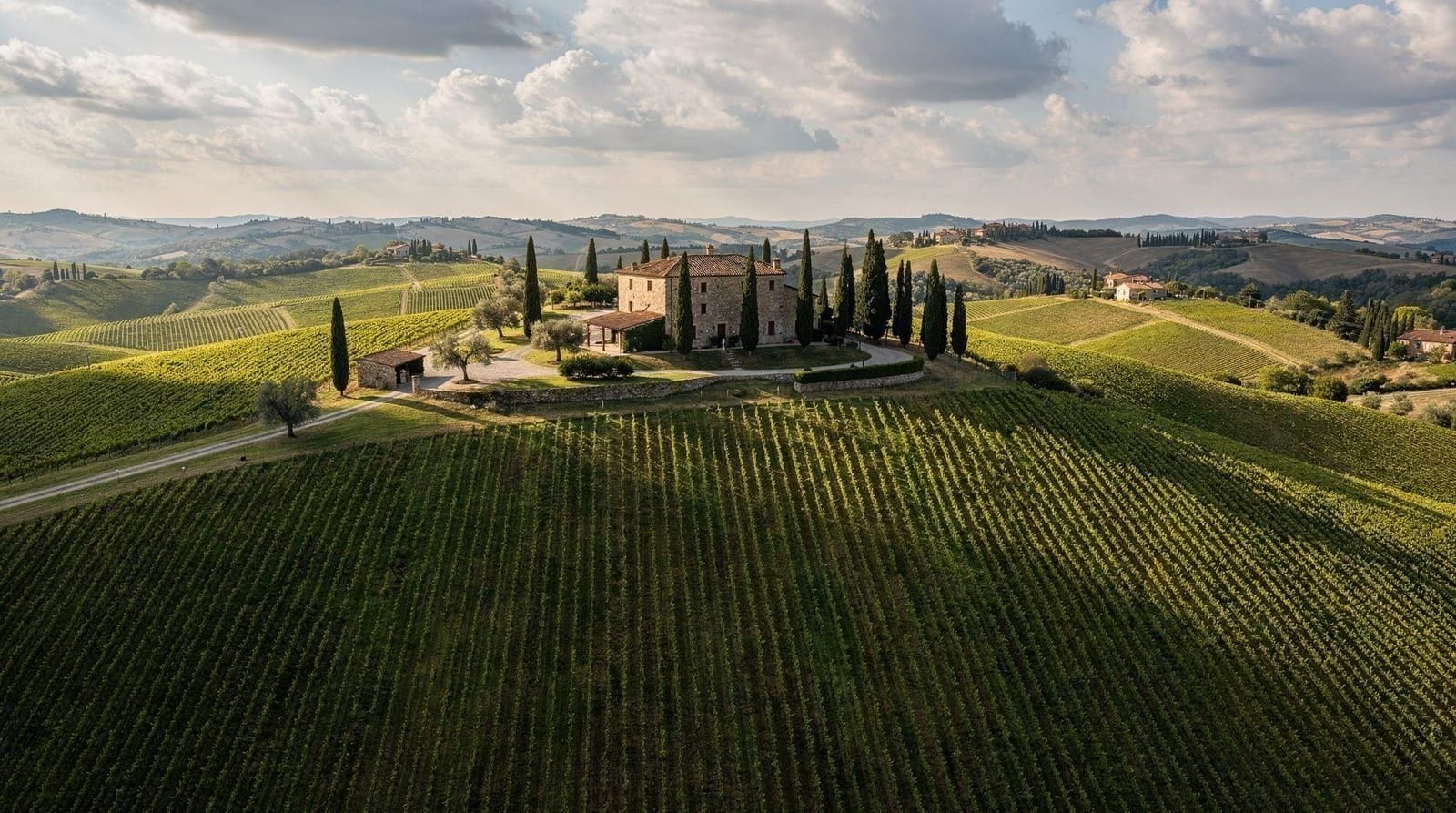
There is no better way to understand the landscape of Tuscany than from a hot air balloon at dawn. From ground level, you see the vineyards, the cypress avenues, the medieval hilltop towns one at a time. From 800–1,500 metres, the entire geometric patchwork of the landscape becomes visible simultaneously — the orderly rows of vines, the perfect lines of cypress trees, the honey-coloured stone of a distant town, the sinuous loops of gravel roads between fields.
Tuscany was made for this view. The region’s landscape is one of the most cultivated and organised in the world — shaped by centuries of careful human attention — and from the air, that intentionality becomes legible in a way that ground-level travel never quite reveals.
This guide covers everything practical: what to expect, where to fly, what it costs, and how to make the most of the experience.
| Where | Chianti (nearest to Florence), Val d’Orcia, Siena province, Lucca |
| Cost | Around €180–260/person shared; €400–900 private |
| Time needed | 3–4 hours total (1–1.5 hours in the air) |
| Getting there | Meeting points 30 minutes to 1h45 from Florence, usually with hotel pickup |
| Best time | Spring (Apr–May) and autumn (Sep–Oct), dawn departure |
How a Tuscany balloon flight works
The evening before: Most operators call or text to confirm the next morning’s weather. This is when they decide whether the flight goes ahead. Wind above 10–15 knots or rain means cancellation. If you haven’t received confirmation by 8–9pm, call them.
Departure time: Typically 5:30–6am for the meeting point. Balloon flights require calm air conditions, which exist only around sunrise. You can’t do a Tuscany balloon flight at 10am — the thermal currents generated by the warming earth make morning the only practical window.
Launch: The balloon is inflated on the ground (which takes 20–30 minutes) while you watch the process. The wicker basket holds 8–16 passengers for group flights, or 2–4 for private flights. The pilot briefs you on safety before boarding.
The flight: 1–1.5 hours in the air. The pilot controls altitude by releasing gas (to ascend) or opening the parachute valve (to descend). Direction is determined by wind — you go where the wind takes you, which means every flight lands in a different location. This is part of the adventure. The ground crew follows by van and retrieves you at landing.
Landing: Balloon landings are not always gentle — you may bump along the ground for a few seconds before stopping. The pilot instructs passengers on the landing position. Injuries are rare but the position (knees slightly bent, holding the basket handles) matters.
Champagne toast: The traditional balloon flight finale. A glass of prosecco (or champagne, depending on operator) and often a light breakfast or aperitivo with local products. A personalised flight certificate is usually included.
Back at base: Most operators drive you back to the meeting point or your hotel. You’re typically finished by 10–11am.
The best areas for balloon flights in Tuscany
Chianti region (near Florence)
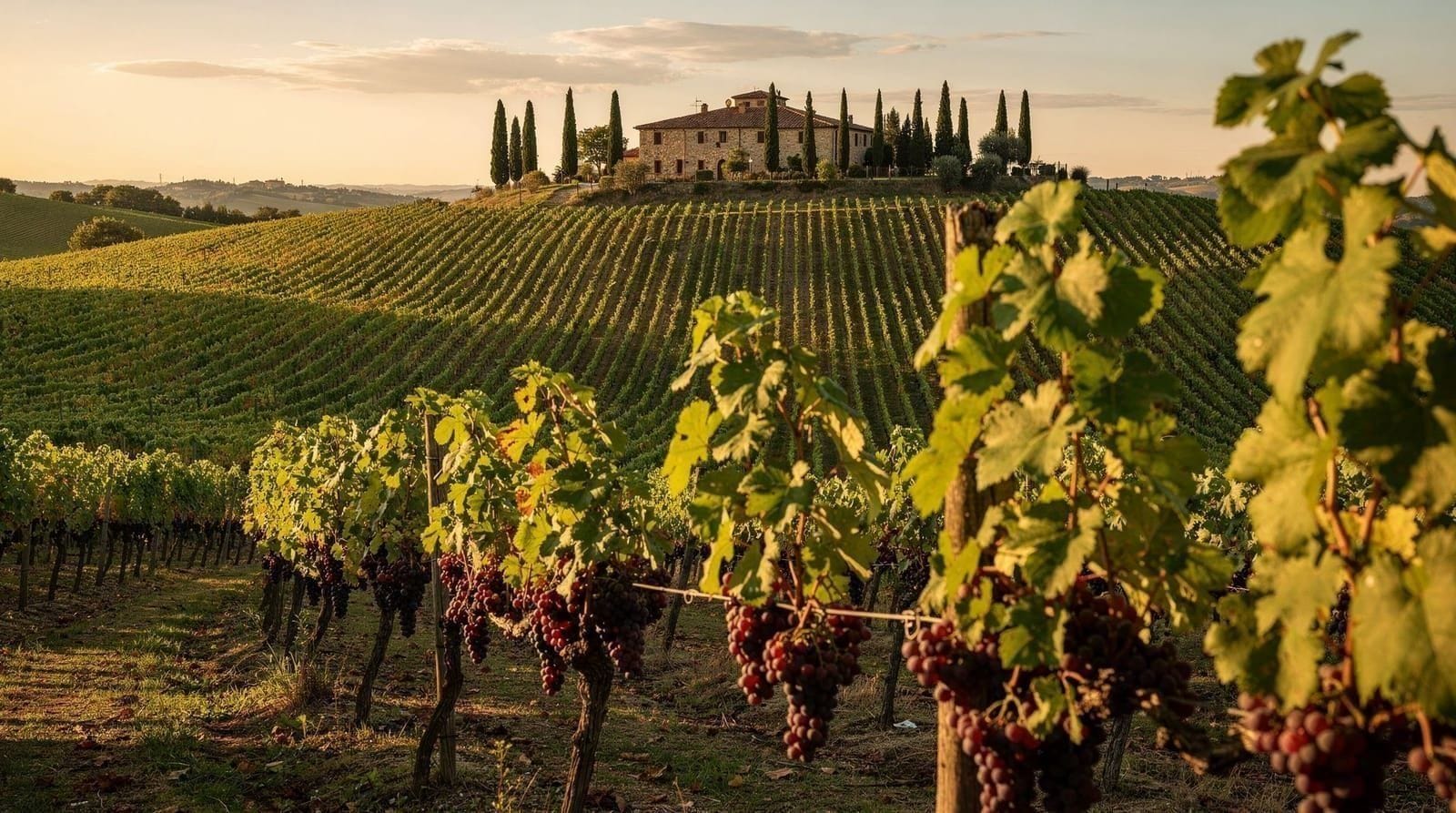
Launch from the wine country south of Florence, flying over the SR222 corridor through Greve, Panzano, and the Chianti Classico vineyards. The landscape in summer is intensely green (vineyards in full leaf); in autumn the vines turn gold and red. The church towers of the Chianti villages and the silhouettes of the medieval castles are visible in every direction.
This is the most accessible area for balloon flights from Florence — the meeting points are 30–45 minutes south of the city. Good option for visitors based in Florence who want to keep logistics simple.
Val d’Orcia (near Siena and Montalcino)
The UNESCO World Heritage Val d’Orcia landscape — rolling clay hills, isolated farmhouses, perfect rows of cypress trees, medieval towns like Pienza and Montalcino on distant ridges — is the most photogenic balloon flight terrain in all of Italy. The composition of the landscape from the air looks almost artistic: it resembles the background landscapes of Renaissance paintings (because it is the landscape of Renaissance paintings).
This is the balloon flight that appears in every Tuscany brochure. The meeting point is typically near Buonconvento or San Quirico d’Orcia — about 1h45 from Florence by car. Worth the extra distance.
Siena province
Flights departing from the Siena hills cover landscapes similar to the Val d’Orcia but often with better views of Siena itself and the surrounding medieval castle ruins. The Crete Senesi (a bare clay landscape south of Siena) is particularly dramatic — lunar and spare, very different from the green Chianti hills.
Lucca area (near Lucca)
Flights from near Lucca cover the flat Lucchese plain and the surrounding hills, with views of the medieval walls of Lucca below and the Apuan Alps (perpetually snow-capped in winter and spring) to the north. A good choice for visitors spending time in Lucca or Pisa who want a different landscape from Chianti or the Val d’Orcia.
What to wear and bring
Clothing: Dress in layers. Ground temperature at 6am in spring or autumn can be 8–12°C, and at altitude it’s colder. Even in summer, bring a jacket for the flight — it warms up on descent and after landing. Wear flat, closed-toe shoes. No heels or sandals; you’ll be standing on grass and possibly climbing into a basket.
Camera: A smartphone works well for balloon photography — most people hold their phone over the edge of the basket rather than using a DSLR. A wide-angle lens setting is best for capturing the landscape. Video is excellent. Bring a camera strap or secure your phone — dropping anything from the basket is not recoverable.
Stomach: Don’t eat a heavy meal beforehand. A light snack is fine. Some people experience mild nausea from the slow swaying motion, especially if conditions are slightly turbulent. It’s rare, but worth knowing.
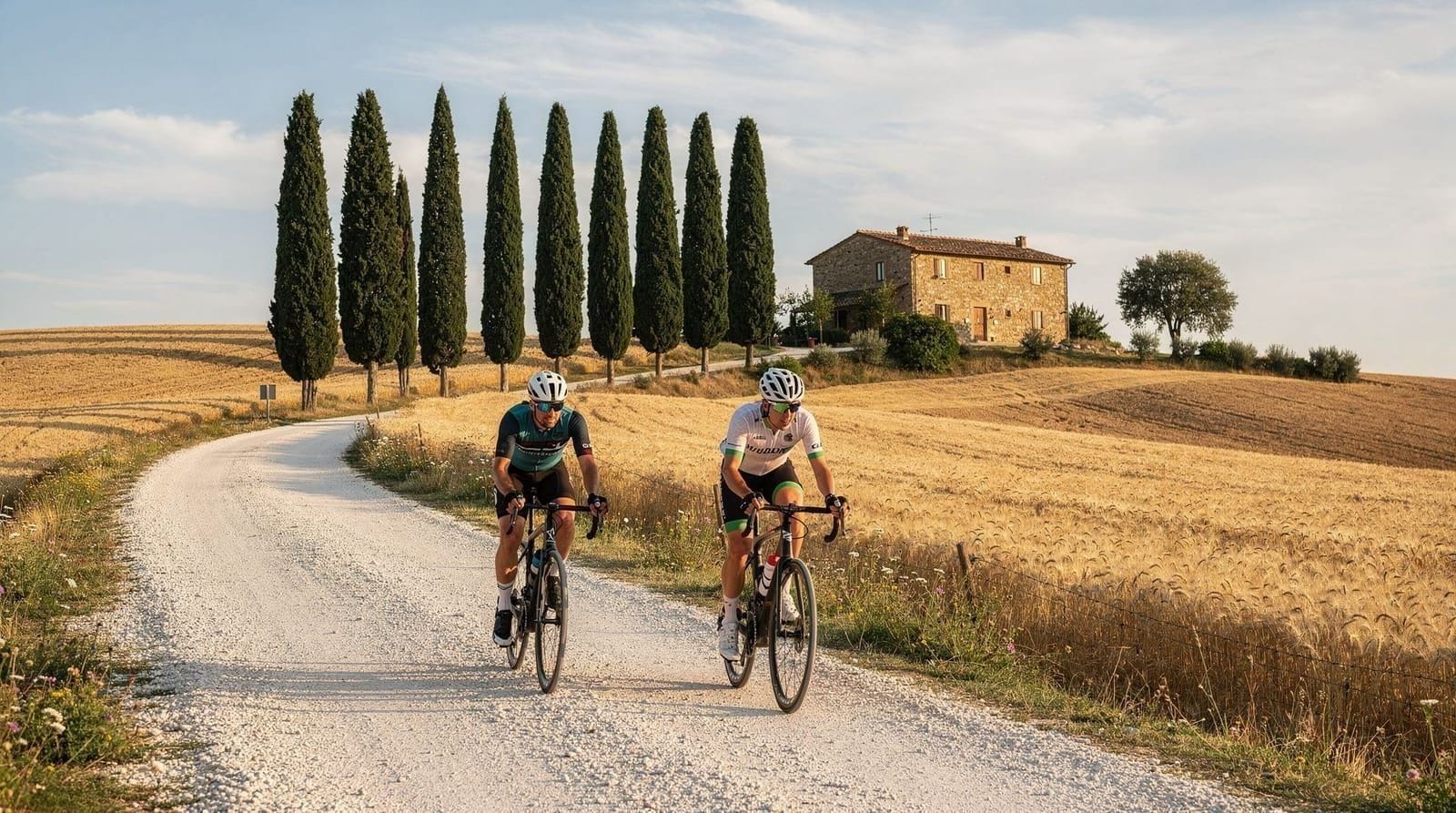
Children: Age restrictions vary by operator — typically minimum 8–12 years old. Some operators take no children under 12. Weight limits also apply (usually maximum 100–120 kg per person). Check before booking. If you’re travelling with younger children who can’t fly, the best gardens in Florence or a gentler outing like cycling in Tuscany makes a better substitute for that morning.
Chianti vs Val d’Orcia vs Siena: choosing your launch area
| Chianti | Val d’Orcia | Siena province | |
|---|---|---|---|
| Distance from Florence | 30–45 min | ~1h45 | ~1h15–1h30 |
| Landscape | Green vineyards, church towers | Iconic cypress hills, Pienza & Montalcino views | Crete Senesi clay hills, castle ruins |
| Best for | Simplest logistics from Florence | The classic “postcard Tuscany” photo | Combining with a Siena day trip |
| Season to avoid | Hazy midsummer | Same — flies less in fog-prone winter mornings | Same |
If you’re based in Florence for a short stay and don’t want an early transfer eating into your morning, Chianti is the pragmatic choice — you’re back in the city by mid-morning. If the flight itself is the main event of your trip and you don’t mind a longer drive each way, the Val d’Orcia delivers the more photogenic landscape and is worth building a full day around, ideally combined with Montalcino or Pienza afterward.
Pricing and booking
Standard group flights
- Per person: €180–260
- Group size: 8–16 passengers
- Duration: 1–1.5 hours flight + ground activities = about 3–4 hours total
- Includes: Flight, champagne toast, certificate, transport back to meeting point
- Booking: 2–4 weeks in advance recommended in spring/autumn. Same-week booking often possible in low season.
Private flights (couples or small groups)
- 2 people: €400–600
- 4 people: €600–900
- Advantage: Personal attention from pilot, more flexibility in what to see, anniversary/honeymoon atmosphere
- Includes: All of the above plus typically better quality champagne
Cancellation policy
Most reputable operators offer free cancellation or rescheduling if they cancel due to weather. If you cancel yourself within 24–48 hours, policies vary — typically 50–100% charge. Always read the cancellation policy before booking, and don’t book the last available morning before your departure date.
What you’ll see: the Tuscan landscape from above
The experience of seeing Tuscany from a balloon is different from looking at photographs of the same landscape. A few things strike almost everyone on their first flight:
The geometry: The Tuscan landscape is more ordered than it appears from the ground. Vine rows run in precisely parallel lines, often following the contour of slopes. Cypress avenues lead from road to farmhouse in dead-straight lines. The white gravel roads (strade bianche) make geometric patterns through fields. From above, the landscape looks like a Renaissance painting — because Renaissance artists from this region used the actual landscape as their compositional vocabulary.
The silence: Hot air balloons are almost silent in flight. There is no engine — only the occasional roar of the gas burner when the pilot adds heat to maintain altitude. In between burns, you hear only wind and the sounds rising from the ground: birdsong, a dog barking in a distant farm, the bells of a village church below.
The scale: It’s one thing to see a vineyard from inside it; another to see several hundred hectares simultaneously and understand the relationship between the vineyard, the estate buildings, the access roads, and the surrounding woodland. Many visitors say they understand the Tuscan landscape differently after the balloon flight — as a designed whole rather than a series of individual views.
Colour variation by season: In spring (April–May) the landscape is intensely green, punctuated by the white and yellow of wildflowers on field margins. In harvest season (September–October), the vineyards turn gold-red-orange before leaf fall, creating a colour that resembles the historic paintings of Sienese masters. Summer is the least dramatic season from above — the landscape becomes drier and dustier in July–August.
The history of ballooning in Tuscany
Hot air balloon flights in Tuscany began commercially in the 1980s, drawing on the region’s international reputation as a tourism destination and the visual drama of its landscape. The Val d’Orcia, in particular, is considered one of the top five balloon destinations in Europe alongside the Loire Valley, Cappadocia, Napa Valley, and Alentejo in Portugal.
The main operators in Tuscany have been flying for 20–35 years, with safety records that reflect serious professional operation. The most established companies (Ballooning in Tuscany, Mongolfiere di Toscana) have flown tens of thousands of passengers without fatalities. Modern balloons use high-tensile ripstop nylon envelopes and are rigorously inspected under Italian Civil Aviation Authority regulations.
The “champagne toast” tradition after balloon flights originated with the Montgolfier brothers’ first manned flights in France in the 1780s — champagne was poured to celebrate safe landings with local farmers and landowners. Tuscany’s operators maintain this tradition with local prosecco or occasionally actual champagne depending on the premium of the flight.
After the balloon: combining with wine
Most Chianti balloon flights naturally pair with a winery visit afterward. You’re already in the wine country at 10am after the flight — and the winery visits start accepting guests at 10:30–11am. A morning balloon flight followed by a Chianti winery lunch is one of the finest single-day experiences available in Tuscany.
Similarly, Val d’Orcia balloon flights combine naturally with visits to Montalcino for Brunello or Montepulciano for Vino Nobile in the afternoon.
Fitting a balloon flight into your itinerary
Because flights depart at dawn and finish by mid-morning, a balloon flight is one of the easiest big-ticket experiences to slot into an existing trip without losing a full day. Book it early in your stay rather than on your last morning, since weather cancellations mean you’ll want a spare day to reschedule if needed. It pairs naturally with a Chianti day trip — fly at dawn, taste wine by midday — or, if you’re basing yourself further south, with a Val d’Orcia day trip built around the same landscape. For a broader sense of how a balloon flight fits alongside Florence’s other big days out, see best day trips from Florence.
Frequently asked questions about Tuscany balloon flights
How far in advance should I book a hot air balloon flight in Tuscany?
For spring and autumn (prime season), book 3–4 weeks in advance, especially for private flights or weekend dates. Weekday group flights often have more availability. The Val d’Orcia area fills up faster than Chianti because it’s more popular.
Can I book a balloon flight and be certain the weather will cooperate?
No. Weather-based cancellations are genuinely common — some operators report cancelling 30–40% of booked flights. If this matters, plan your balloon flight early in your trip with flexibility to reschedule, rather than on your last day before flying home.
What if I’m afraid of heights?
A balloon flight is quite different from a viewing tower or cliff edge — you’re in an enclosed basket, there’s no dramatic edge to look over, and the sensation of movement is gentle. Many people who are nervous about height find balloons fine. However, if heights genuinely cause you anxiety, a balloon flight at 1,000 metres may not be the right choice.
Are there balloon flights that land in a vineyard or winery?
Some operators in the Chianti area specifically route flights to land near partner estates, where a wine tasting follows the prosecco toast. Ask when booking if a vineyard landing is available — this is a premium experience at higher cost.
Is a balloon flight better from Florence or from Siena?
Both work well, but for different reasons. Flying from a Chianti meeting point near Florence keeps logistics simple if you’re based in the city, with a short transfer each way. Flying from Siena province or the Val d’Orcia gives a more dramatic, widely photographed landscape, but adds 30–45 minutes of driving each way — worth it if you’re already staying near Siena or planning a Val d’Orcia day.
What happens if my flight is cancelled for weather?
Reputable operators rebook you for free on another morning within your stay, or refund you if no alternative date works. This is exactly why booking your balloon flight early in a multi-day trip — rather than on your final morning — matters: it leaves room to reschedule without losing the experience entirely.
Top experiences
Bookable activities with verified prices and instant confirmation on GetYourGuide.

Florence: hot air balloon flight in Tuscany from Chianti area
- Free cancellation

Florence: balloon tour over Tuscany's Casciano Val di Pesa
- Free cancellation

Siena: hot air balloon flight over Tuscany
- Free cancellation

Siena: hot air balloon over Pienza, Montalcino and Val d'Orcia
- Free cancellation

Lucca: balloon flight over Tuscany
- Free cancellation