Hiking around Florence
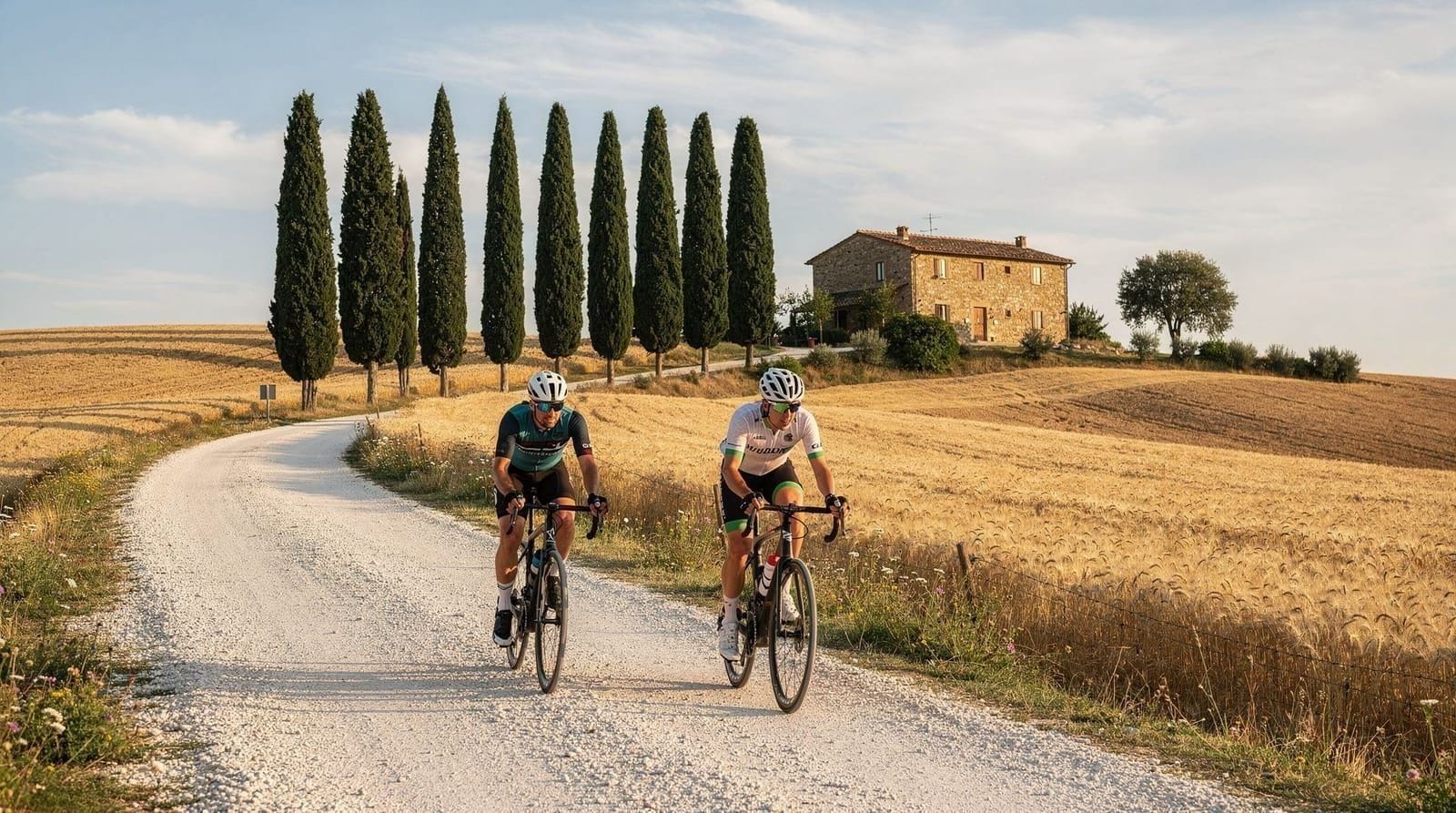
Florence: Fiesole bike tour
- Free cancellation
- Small group
Are there good hiking trails near Florence?
Yes — the hills immediately surrounding Florence offer excellent day hiking. The Fiesole loop (8–12 km) starts from central Florence or Fiesole village. The Via degli Dei (Way of the Gods) is a 130 km multi-day trail from Bologna to Florence passing through outstanding Apennine scenery. For shorter walks, the Chianti hills have extensive marked trail networks.
Walking out of the city and into the hills
Florence is a walking city — but most visitors walk the same cobblestones between the same museums. Step 30 minutes outside the centre and the landscape changes completely: olive terraces, cypress avenues, hill towns, and trails that connect medieval villages through agricultural land that has looked essentially unchanged for five centuries.
The hills surrounding Florence are not dramatic alpine terrain — they’re Apennine foothills at 200–600 metres, covered with mixed woodland, vineyards, and olive groves. The walking is accessible and manageable for most fitness levels. This guide covers the key trails: the short climbs available on foot from the city centre, the longer day hikes in the Chianti hills, and the multi-day Via degli Dei trail from Bologna.
| Where | Fiesole, Chianti hills, Arcetri — all reachable from central Florence |
| Cost | Free (self-guided); around €30–90/person for guided day hikes |
| Time needed | 45 minutes to full day; 5–7 days for the Via degli Dei |
| Getting there | On foot from the centre, or bus to Fiesole/Chianti trailheads |
| Best time | April–June and September–October |
Walking from Florence city centre
Ponte Vecchio to Piazzale Michelangelo
The most-walked hill route from Florence, though calling it a “hike” is generous. The distance is about 3 km from Ponte Vecchio to Piazzale Michelangelo, gaining 80 metres in elevation on paved streets and steps through the Oltrarno.
The route: Cross Ponte Vecchio, continue through Piazza dei Rossi and up via the steps of Costa dei Magnoli or Via dei Bardi to the Costa San Giorgio. Follow the Costa San Giorgio to the Forte di Belvedere (a Medici fortress with free entry and views, though exhibitions are seasonal). From here, the Viale Galileo leads to Piazzale Michelangelo.
Worth doing at sunset for the classic Florence panorama — the terrace is crowded but the view (Duomo, Palazzo Vecchio, Ponte Vecchio framed by the river) is exceptional.
Distance: 3 km one way Elevation gain: 80 metres Time: 45 minutes uphill Difficulty: Easy (paved throughout)
From Piazzale Michelangelo to San Miniato al Monte
Continue from Piazzale Michelangelo up the stepped path or road to San Miniato al Monte — a Romanesque basilica on the highest point of the Florentine hills. San Miniato dates from the 11th century and contains one of the finest Romanesque interiors in Italy: marble floor inlays, a pulpit, and frescoes. The Benedictine monks who live here chant Vespers daily at 5:30pm — attending this is one of the quieter, more moving experiences available in Florence.
From San Miniato, a network of trails continues into the wooded hills above the city. The Via Crucis (Stations of the Cross) path zigzags down the hillside between San Miniato and Piazzale Michelangelo lined with statues.
Distance from Piazzale Michelangelo to San Miniato: 800 metres Elevation gain: 25 metres Time: 15 minutes
The Arcetri walk
From San Miniato, continuing along the ridge brings you to Arcetri — the hilltop village where Galileo spent his last years under house arrest (the Villa Il Gioiello, where he lived, is identifiable on the left as you walk along Via del Pian dei Giullari). This is a pleasant circular walk of 8–10 km from the Ponte Vecchio, returning through the Oltrarno.
The area around Arcetri contains some of Florence’s finest private villas and gardens (not publicly accessible) set in agricultural terraces — olive groves, vineyards, old cypresses — that feel completely removed from the tourist city below.
Circular distance: 8–10 km from Ponte Vecchio Elevation gain: ~200 metres Time: 3 hours at a walking pace Difficulty: Easy-moderate (some steep sections on return)
The Fiesole loop
Fiesole is the most popular walking destination from Florence — an Etruscan city on a hill 8 km northeast of the centre, with archaeological ruins, a Romanesque cathedral, and spectacular views back over the city. The walk from Florence to Fiesole along the “Via Vecchia Fiesolana” is a classic Florentine excursion.
The route
Option 1: Via Settignano and Vincigliata (the scenic route): Start from Piazza della Libertà or take bus 10 to Settignano. Walk from Settignano along the hillside path through mixed woodland and olive terraces to the Castello di Vincigliata (a faux-medieval castle built in the 19th century, privately owned but visible from outside). Continue on the path to Fiesole. Return by bus 7 from Fiesole to Florence.
Option 2: Via San Domenico (easier, more direct): Take bus 7 to San Domenico (20 minutes from Florence) and walk the remaining 2 km uphill to Fiesole on the quieter road. Return by bus or on foot downhill by the Via Vecchia Fiesolana.
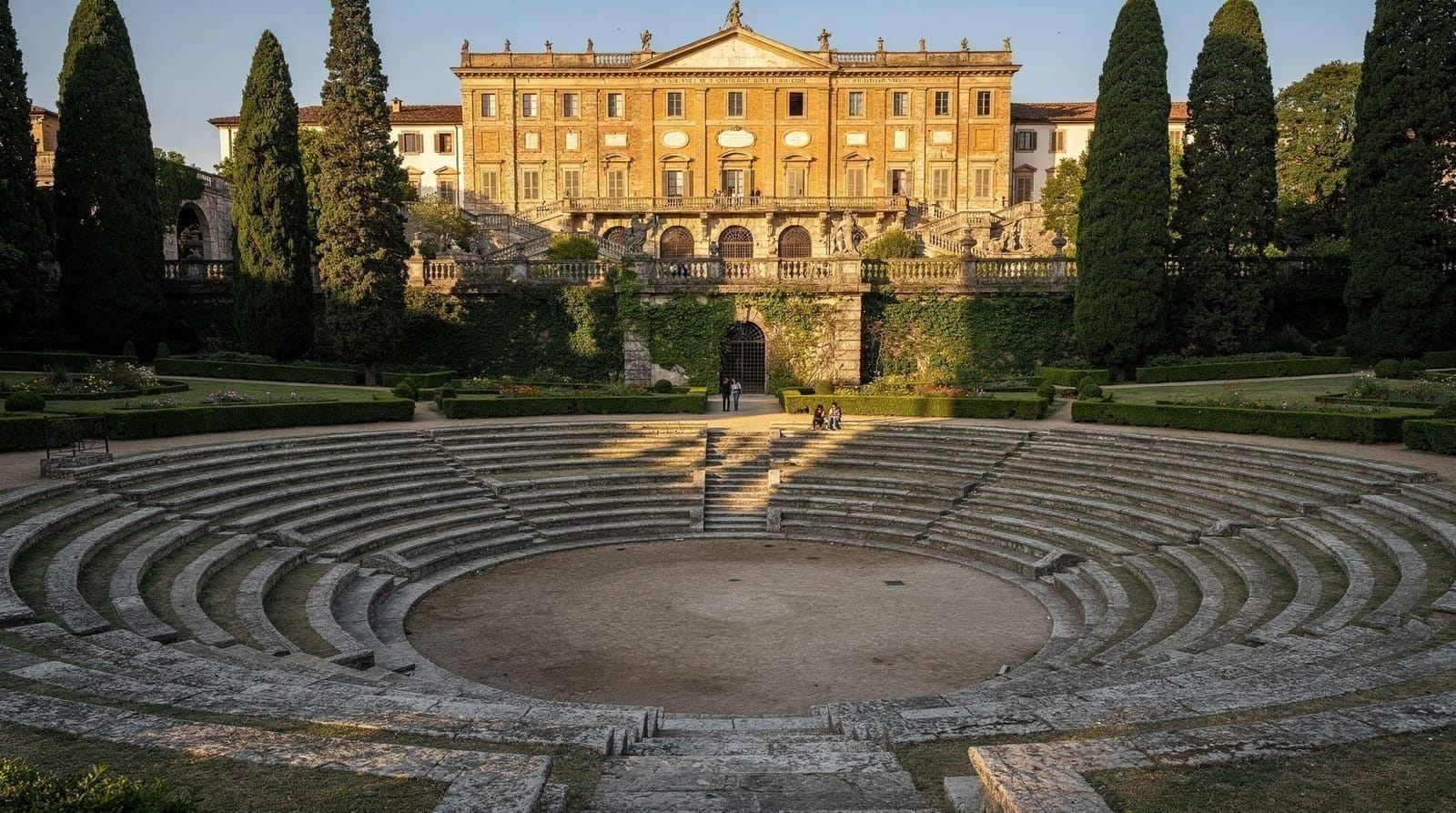
What to see in Fiesole: The archaeological zone (Etruscan and Roman ruins, including a Roman theatre still used for summer concerts, a temple, and baths) — entry €12. The Duomo di San Romolo (11th-century Romanesque, free). The panoramic views from the Franciscan monastery terrace (5 minutes above the main piazza, free).
Circular distance: 12–18 km depending on route Elevation gain: 295 metres Time: 3.5–5 hours walking Difficulty: Moderate (sustained climb on some sections)
Chianti hiking trails
The Sentiero del Chianti
The Sentiero del Chianti is a long-distance walking trail connecting Florence with Siena through the heart of the Chianti Classico wine country. The official route is approximately 130 km, waymarked with red and white CAI trail markers, and divided into stages that can be walked in 5–7 days.
The trail passes through vineyards, woodland, and the classic Chianti villages: Greve, Panzano, Radda, Gaiole, and Castelnuovo Berardenga. Accommodation is available in each village and at some agriturismo (farm stays) along the route.
Individual stages (1 day each):
- Stage 1: Florence to Greve in Chianti (28 km, 600m gain)
- Stage 2: Greve to Panzano to Radda (22 km, 700m gain)
- Stage 3: Radda to Gaiole in Chianti (18 km, 400m gain)
- Stage 4: Gaiole to Castelnuovo Berardenga (22 km, 500m gain)
- Stage 5: Castelnuovo Berardenga to Siena (20 km, 300m gain)
Best sections for day hikes: The Radda–Gaiole section follows particularly beautiful terrain through vineyards and woodland, passing several major Chianti Classico estates (Badia a Coltibuono is on the trail). Take the bus from Florence to Radda in the morning, walk to Gaiole, and take the return bus to Florence from there.
Day hikes from Greve in Chianti
Greve makes an excellent base for day hiking in Chianti. Several marked CAI trails radiate from the town:
Trail 10: Greve to Monte San Michele (12 km, 600m gain): A loop through chestnut woodland to a ridge with views across the Chianti zone. 4–5 hours.
Trail 6: Greve to Montefioralle (6 km, 250m gain): A shorter loop to the tiny medieval hamlet of Montefioralle above Greve — one of the most intact medieval villages in the region. 2 hours.
The Via degli Dei (multi-day)
The Via degli Dei (Way of the Gods) is Florence’s most ambitious hiking connection — a 130 km trail from Bologna to Florence across the Apennine watershed. The trail takes its name from the peaks along the way, each named after an ancient deity: Monte Adone, Monte Venere, Monte Luario.
Overview
- Distance: 130 km (Florence to Bologna direction: some guidebooks describe it as starting in Bologna)
- Duration: 5–7 days (23–26 km per day average)
- Elevation gain: 4,500 metres cumulative (both ascent and descent)
- Difficulty: Moderate to challenging
- Best season: May–June, September–October
What to expect
The Via degli Dei crosses the Apennine crest at around 900–1,100 metres. The terrain varies from Florentine farmland and olive terraces (first day from Florence) to rocky Apennine ridges and chestnut forests (middle days) to the industrial periphery of Bologna (final approach). The middle three days, crossing the watershed, are the most scenic.
Marked with red and white CAI waymarks and (on most sections) additional Via degli Dei directional signs. Trail infrastructure has improved significantly in the last decade — most sections are well-cleared and signposted.
Accommodation: Rifugi (mountain huts), agriturismo, and B&Bs along the route. The trail is popular enough that accommodation is available at each day’s end. Book in advance for June and September weekends.
Starting point: The traditional Florence start is Piazza della Repubblica in the city centre, though most walkers begin from Piazza Vitalba (Sesto Fiorentino, accessible by train). The Bologna end point is Piazza del Nettuno.
Guided hiking tours from Florence
Several Florence-based operators offer guided hiking experiences for visitors who want expert local knowledge without the logistics of independent navigation.
Florence day hikes: Half-day guided walks cover the classic routes — Fiesole, Piazzale Michelangelo, the Arcetri hills. These are good introductions for families or those unfamiliar with the city’s geography. Typically 3–4 hours, €30–50 per person.
Chianti guided walks: Full-day hikes in the wine country, using the Sentiero del Chianti network and often incorporating a winery visit for lunch. These tours transport you to the trailhead by minivan and collect you at the end. Duration 6–8 hours, €70–90 per person including lunch.
Via degli Dei section hikes: Several operators offer guided walks on individual stages of the Via degli Dei, departing from both Florence and Bologna. These typically cover 2–3 days of the route with luggage transfer between overnight stops. Rates: €200–400 for a 3-day guided section.
Which trail should you choose?
| If you want… | Choose | Time commitment |
|---|---|---|
| A quick escape with no planning | Piazzale Michelangelo / San Miniato | 1–2 hours |
| A half-day taste of the countryside | Fiesole loop | 3.5–5 hours |
| A full day with wine and villages | Chianti day hike from Greve | 4–8 hours |
| A serious multi-day trek | Via degli Dei | 5–7 days |
| Views without the legwork | Cycling in Tuscany or a hot air balloon | Half day |
First-time visitors with only one free afternoon should default to Fiesole — it’s the best return on effort, combining Etruscan ruins, a Romanesque cathedral, and skyline views in a single manageable loop. If you’ve already done the classic city sights and have a full day, the Chianti trails from Greve pair walking with wine in a way the Fiesole loop can’t match. For an overview of what else the Chianti wine region offers beyond hiking, see the full destination guide.
Hiking and wine: combining outdoor and culinary
The Chianti hills offer an unusual combination: serious hiking terrain above excellent wine country. Several experiences combine both explicitly.
A logical half-day combines the Sentiero del Chianti trail section between Greve and Panzano (10 km, 400m climbing, 3.5–4 hours) with a pre-arranged tasting at Fontodi or one of the Panzano estates on arrival. Take the bus from Florence to Greve in the morning, walk to Panzano, taste, lunch, and take the late afternoon bus back.
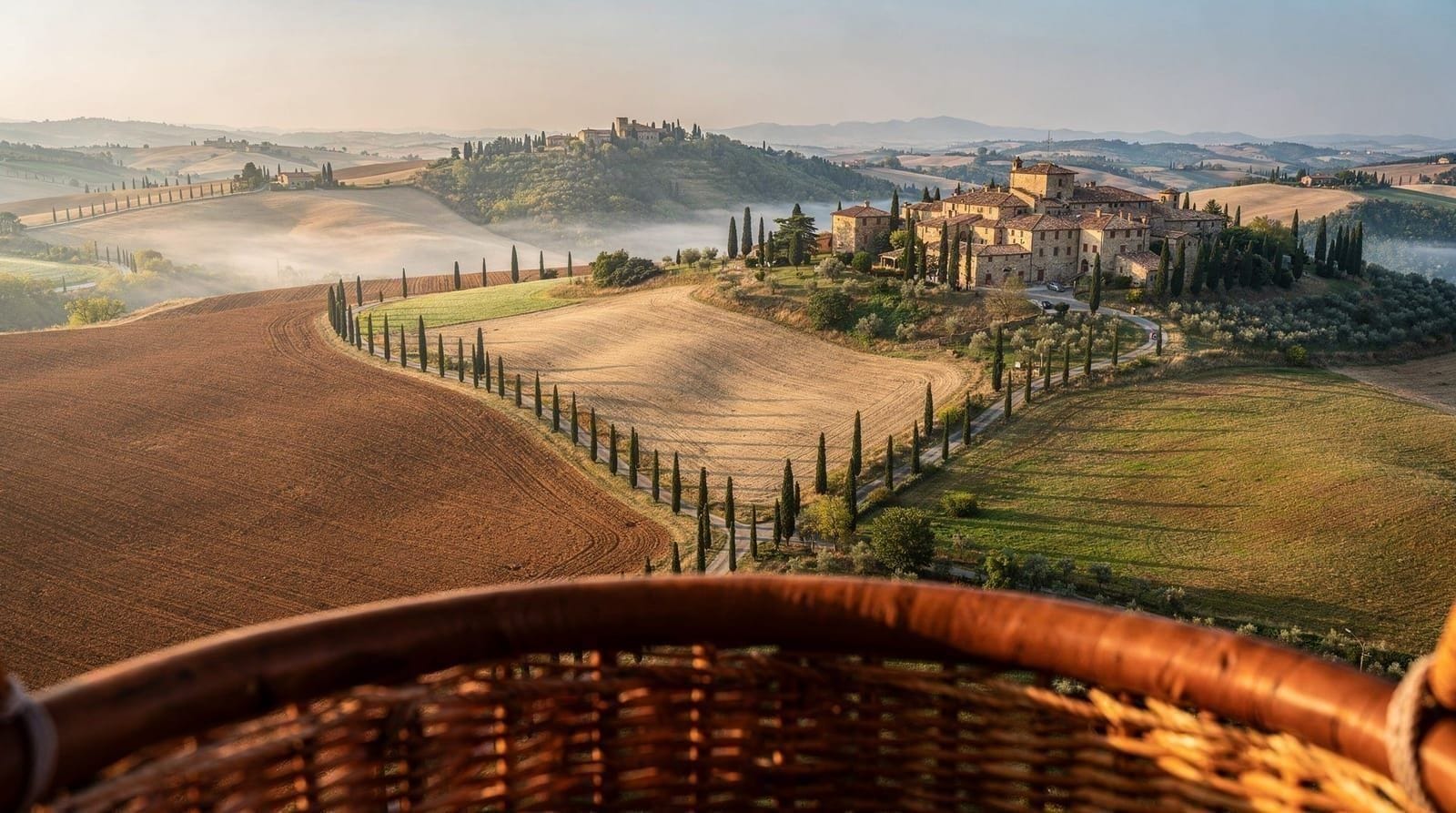
The cycling alternative covers the same landscape with less physical exertion; the hot air balloon lets you see it from above. All three experiences are different but equally worthwhile perspectives on the Chianti landscape.
Trail conditions by season
Spring (March–May): Best conditions. Trails are clear and dry by April. Wildflowers on the hillsides. Some Via degli Dei sections may still have snow on Apennine sections in early March.
Summer (June–August): Hot. Start any significant hike before 8am. Carry more water than you think you need (3+ litres for half-day in July). The Chianti hills offer good shade under the holm oaks; the Via degli Dei Apennine sections above treeline can be brutal.
Autumn (September–November): Ideal season. Cooler temperatures, harvest colours in the vineyards, mushroom season in the woods (licensed mushroom picking is permitted on many trails). October is the best single month.
Winter (December–February): Viable on the lower Florentine hill routes. The Fiesole walk works year-round in waterproof footwear. The Via degli Dei’s high sections require snowshoes or crampons in January–February.
Practical information for hiking
Gear
For day hikes around Florence: Comfortable walking shoes (not flip-flops), water, sun protection, and a light rain layer are sufficient.
For Chianti trails and the Via degli Dei: Proper hiking boots (ankle support is important on uneven terrain), trekking poles (optional but helpful on descents), a daypack with 2–3 litres water capacity, rain gear, and emergency contact information.
Maps and navigation
The CAI (Club Alpino Italiano) publishes 1:25,000 maps covering all trails mentioned here. Available at outdoor sports shops in Florence (Decathlon on Via Pisana or specialist outdoor shops near the Duomo). The Komoot and Wikiloc apps have good Tuscany trail databases with offline download capability.
Safety
- Tell someone your planned route and expected return time
- Carry charged phone with offline maps downloaded
- Mobile signal is poor in the Apennine sections of the Via degli Dei
- The hills around Florence have wild boar, deer, and occasionally — very rarely — wolves (in the more remote Apennine areas). None of these animals present danger if you don’t feed or approach them.
- Snakes (including the rare Vipera aspis, a venomous viper) exist in warm, rocky areas. Wearing boots and watching where you step is adequate precaution.
Fitting a hike into a short Florence trip
If you’re only in Florence for a few days, hiking often loses out to museums — but it doesn’t have to. The Piazzale Michelangelo–San Miniato walk fits easily into any afternoon and works as a natural end to a day of sightseeing, timed for sunset. If you have a spare morning, the Fiesole loop via San Domenico (about 3 hours round trip including the archaeological site) can be done before lunch, leaving the afternoon free for the city centre. See our Florence in three days itinerary for where a half-day hike like this can realistically slot in without derailing the rest of the trip, and best gardens in Florence for shorter green escapes inside the city walls on days when a full hike doesn’t fit.
Frequently asked questions about hiking around Florence
Can I hike in the Chianti hills without a car?
Yes, with some planning. The train reaches Figline Valdarno (southeast of Florence), from where marked trails lead west into the Chianti hills. Several Chianti villages (Greve, Radda, Gaiole) have bus connections from Florence (Siena bus company, about 1h–1h30). These work for point-to-point day hikes, returning by bus.
Is the Fiesole walk suitable for children?
The paved route to Piazzale Michelangelo is suitable for families with young children. The Via Vecchia Fiesolana walk to Fiesole involves 3–4 hours of walking on forest paths and is appropriate for children aged 8+ who are comfortable with longer walks.
Are there guided hiking tours near Florence?
Yes. Several operators offer guided day hikes in the Chianti hills and to Fiesole, departing from Florence. These provide transport to the trailhead, a guide with local knowledge, and sometimes a winery or olive oil tasting at the end. The Fiesole tours and e-bike alternatives give options for less ambitious walkers who still want the hill experience.
What is the best day hike from Florence for a first-time visitor?
The Fiesole loop — either the full walk via Settignano (4–5 hours) or the shorter version via San Domenico (3 hours) — is the best introduction to the Florentine hills. It combines Etruscan and Roman history with excellent views, manageable terrain, and bus connections that make logistics simple. The sunset panoramic tour to Fiesole and Piazzale Michelangelo is the motorised alternative for those who want the views without the walk.
Do I need to book anything in advance for these hikes?
For the Florence hill walks and Fiesole loop, no advance booking is needed — buses run regularly and trails are open access. For Chianti day hikes using the Siena bus company, checking the timetable in advance saves waiting around. For the Via degli Dei, book accommodation at each overnight stop ahead of time, especially for June and September, when demand from other long-distance walkers is highest.
How fit do I need to be for the Fiesole or Chianti walks?
Reasonably fit but not athletic. The Fiesole loop involves a sustained but gentle climb of around 295 metres over several kilometres — comparable to a long flight of stairs spread across an hour. The Chianti day hikes from Greve are similar in character. Anyone who can comfortably walk for 3–4 hours with some hills, and who has reasonably supportive shoes, will manage both without difficulty.
Top experiences
Bookable activities with verified prices and instant confirmation on GetYourGuide.

Florence: Fiesole bike tour
- Free cancellation
- Small group
Florence: 4-hour electric Vespa tour exploring Fiesole
- Free cancellation
- Small group
Florence: local hills e-bike tour with olive oil tasting
- Free cancellation
- Small group
Florence: sunset panoramic tour — Fiesole and Michelangelo Square
- Free cancellation
- Small group