Santo Spirito guide: Florence's most liveable piazza
Florence: Pitti Palace and Boboli Gardens walking tour
- Small group
- Free cancellation
What is the Santo Spirito neighbourhood in Florence?
Santo Spirito is a piazza and surrounding neighbourhood in the Oltrarno district, south of the Arno. It centres on the Basilica di Santo Spirito — Brunelleschi's last major work — and a wide unpaved square where a daily morning market is held. The neighbourhood has a reputation as the most authentically Florentine part of the historic centre, with a concentration of independent restaurants, wine bars, and artisan workshops popular with Florentines and visitors who look past the main tourist circuit.
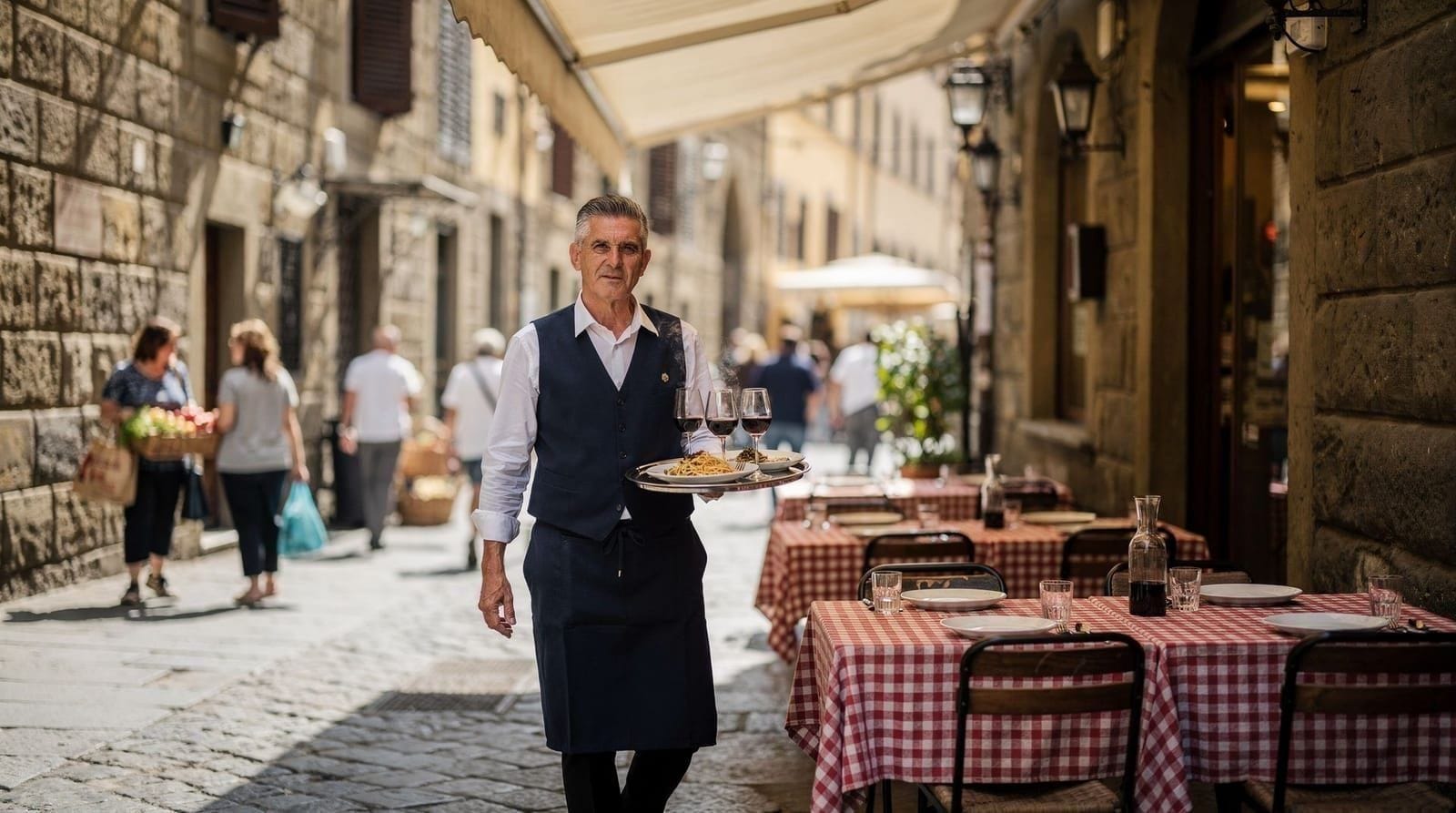
Piazza Santo Spirito is Florence at its most liveable. Not the postcard Florence of the Duomo and the Uffizi, but the version that actually sustains a daily life: a piazza large enough to breathe in, a morning market that Florentines use for actual shopping, bars where regulars know the baristas, restaurants that were not designed to accommodate tour groups.
The piazza is anchored by the facade of Brunelleschi’s Basilica di Santo Spirito — plain grey stucco, austere and beautiful. The interior is one of the great Renaissance spaces. The exterior square is where the neighbourhood actually happens.
| Where | Piazza Santo Spirito, Oltrarno, south of the Arno |
| Best for | evening aperitivo, morning market, Brunelleschi’s church |
| Cost | free to explore; church entry free |
| Time needed | half a day, longer for the full Oltrarno context |
| Getting there | 10 minutes’ walk from Ponte Vecchio |
The Basilica di Santo Spirito
Brunelleschi began designing Santo Spirito around 1434 and started construction in 1446, the year of his death. The building was not completed until 1481; the dome was added in 1482. The intended marble facade was never built, which means that what faces the piazza is simply bare stucco — which has the paradoxical effect of making the building look more severe and more interesting than a more finished exterior would.
The interior is Brunelleschi’s most complete Renaissance space. San Lorenzo, which he also designed, was modified in the 16th century; Santo Spirito is closer to the original conception. The plan follows a Latin cross (nave plus transepts plus choir), surrounded on all sides by a continuous colonnade of 35 semi-circular chapels — an unusual feature that gives the building its characteristic rhythm.
The proportional system is rigorous: the nave height is twice the nave width, and the aisle width is one quarter of the nave height. This mathematical clarity is what produces the sensation of perfect balance that most visitors experience in the space without quite knowing why.
The chapel altarpieces: Each of the 35 chapels was financed by a different Florentine family, who commissioned the altarpiece from their preferred artists. The result is a survey of Florentine painting from roughly 1450 to 1540 in the settings for which the paintings were originally made. Significant works include an Annunciation by Credi, a Madonna and Child by Cosimo Rosselli, and a Pietà by Perugino.
Michelangelo’s crucifix: In the Gondi chapel (sacristy), behind the main altar: a polychrome wooden crucifix attributed to Michelangelo, made around 1493–1494 when he was approximately 18 years old. The attribution was disputed for decades, confirmed by restoration and analysis in the 20th century. The crucifix was reportedly made in exchange for permission to study corpses from the adjacent hospital — the beginning of Michelangelo’s systematic anatomical study.
Practical details: Open Monday–Saturday approximately 10 am–12:30 pm and 3–5:30 pm (hours vary seasonally; check locally). Sunday closed to tourists during Mass but open briefly after. Free entry. No booking required.
Visiting tip: The church is often used for chamber music concerts; check the bulletin boards at the entrance for current programming.
The piazza: hour by hour
Early morning (7–9 am): The piazza at this hour belongs to dog-walkers, joggers, and the stall-holders setting up the market. The bars around the piazza open early — Volume opens from 8 am, as does Caffe Ricchi (on the piazza itself, the most traditional of the surrounding cafes). Stand at the bar for a cornetto and a macchiato; this is how Florentines have breakfast.
Morning market (8 am–2 pm, Mon–Sat): The daily market sells fresh produce, flowers, clothing, and general goods. This is not a tourist market — the prices are market prices, the goods are ordinary Florentine shopping. The cheese vendor and the vegetable stalls are of genuinely good quality. On the second Sunday of the month, the antique and artisan market replaces the daily market; worth visiting if your dates coincide.
Midday (12–3 pm): The piazza is at its busiest, with lunch crowds from the surrounding restaurants and visitors coming through on their way between Palazzo Pitti and the rest of the Oltrarno. The restaurants immediately on the piazza are more tourist-oriented than those a block or two away; see eating section below.
Afternoon (3–6 pm): The market is packed up; the piazza is quieter. Local residents sit in the shade. This is a good time to visit the basilica (less crowded than the morning), browse the artisan workshops on the surrounding streets, or sit in one of the bars and read.
Evening aperitivo (6:30–9 pm): The piazza comes alive again from about 6:30 pm. Florentines returning from work stop for aperitivo; the squares fills with people sitting on the steps of the church, on the benches, at the outdoor tables of the bars. This is one of the most atmospheric moments in the city — particularly in the long evenings of late spring and early summer.
Eating and drinking: what’s genuine, what’s not
The immediate piazza restaurants have improved in recent years but still skew tourist. The rule of thumb: the restaurants directly facing the piazza are primarily aimed at visitors; the restaurants one or two blocks off the piazza are better value and more genuinely Florentine.
Worth it on the piazza:
Buca di Sant’Antonio (Piazza Santo Spirito) — the historic trattoria on the square; reliable rather than exceptional, fair prices for the location.
Caffe Ricchi — the traditional bar on the piazza; good for breakfast and aperitivo, reasonable food at lunch. The outdoor tables overlooking the church facade are worth having once.
Better a short walk away:
Il Santo Bevitore (Via di Santo Spirito 64r) — one of the best restaurants in Florence in any category. Inventive Tuscan cooking with excellent wine list; book well in advance; mains €18–28.
Il Santino (Via di Santo Spirito 60r) — the wine bar attached to Il Santo Bevitore; smaller, less formal, excellent for wine by the glass with small plates; arrive by 7 pm or wait for a table.
Trattoria dell’Orto (Via dell’Orto 35a) — basic but genuine trattoria with paper tablecloths and neighbourhood prices; daily specials depend on market availability; ribollita and pappardelle are excellent.
Simbiosi (Piazza del Carmine 2r) — organic restaurant near the Carmine church; good for lunch, particularly for vegetarians.
For the fuller citywide shortlist, see our best trattorias in Florence guide, which covers several more Oltrarno options beyond this immediate neighbourhood.
For wine:
Enoteca Pitti Gola e Cantina (Piazza de’ Pitti 16r) — across from Palazzo Pitti; small, crowded, excellent selection of Tuscan and Italian wines by the glass; tasting boards available.
Mad Souls and Spirits (Borgo Tegolaio 19r) — creative cocktails using Italian spirits and ingredients; well-made, genuinely interesting drinks in a small, warm space.
Shopping and artisans
The streets immediately around Santo Spirito — particularly Via Sant’Agostino, Borgo San Frediano, and Via dei Serragli — have the highest concentration of non-tourist independent shops in the Oltrarno: butchers, bakers, hardware shops, clothing stores aimed at Florentines.
For artisan crafts: the streets running south and west from the piazza have leather workers, bookbinders, paper makers, and jewellers. The area is more accessible than the more formal artisan district of Via Maggio, and the workshops are often smaller and more genuinely artisan-scale.
Specifics worth finding:
Bizzarri (Via Condotta 32r, slightly north bank) — one of the oldest surviving herbalist shops in Florence; spices, dried herbs, and cosmetics as they were sold in 17th-century Florence.
Giulio Giannini e Figlio (Piazza Pitti 37r) — the most distinguished marbled paper shop in Florence, operating since 1856; journals, stationery, and bookbinding in traditional Florentine patterns.
Il Torchio (Via dei Bardi 17) — bookbindery and paper marbler; you can watch the marbling process; small selection of finished goods.
Staying in Santo Spirito
Accommodation in the immediate piazza area ranges from basic guesthouses to small boutique hotels. The neighbourhood does not have large hotels; the characterful options are boutique and apartment-scale.
Soprarno Suites (Via Maggio 35) — six individual suites in a restored palazzo, the most design-conscious option in the Oltrarno; from €180–280. See Oltrarno neighborhood guide for full context.
Hotel la Scaletta (Via dei Guicciardini 13) — near Ponte Vecchio, a short walk from the piazza; the rooftop terrace is one of the most pleasant in the Oltrarno; €130–190.
For apartments: the streets immediately around the piazza have numerous apartment rentals; verify legal registration (the owner should provide a tourist rental registration number) and check reviews carefully. The piazza-view apartments sound wonderful but can be noisy in summer.
For the fuller picture of how Santo Spirito compares to Florence’s other accommodation areas, see where to stay in Florence and best areas to stay in Florence.
Walking routes from Santo Spirito
To Palazzo Pitti and Boboli: 7 minutes southeast along Via Maggio or Via dei Serragli.
To the Brancacci Chapel: 10 minutes west along Borgo San Frediano; the church of Santa Maria del Carmine is on the piazza of the same name.
To Ponte Vecchio: 10 minutes north along Via Guicciardini or Via dei Bardi.
To Piazzale Michelangelo: 25 minutes east and uphill; follow Via dei Bardi to the hillside steps.
To San Niccolo: 15 minutes east along the Via dei Bardi or the Lungarno.
Frequently asked questions about Santo Spirito
Is there a Sunday market at Santo Spirito?
On the second Sunday of each month, the piazza hosts an antique and artisan market. On other Sundays, the piazza is quieter — no daily market, and the basilica is closed to tourists during morning Mass. The piazza on a quiet Sunday morning, with the market absent and the church closed, is actually one of the most peaceful moments in the neighbourhood.
What church is in Piazza Santo Spirito?
The Basilica di Santo Spirito, designed by Filippo Brunelleschi and completed after his death. It is the largest church in the Oltrarno district. Not to be confused with Santo Spirito in Sassia in Rome — the Florentine church is entirely separate.
Is Santo Spirito a good base for a family?
Yes, particularly for families with older children. The piazza is spacious enough for children to move around. The neighbourhood restaurants are more varied and family-friendly than the tourist-circuit alternatives. Palazzo Pitti and Boboli Gardens are a short walk and have outdoor space. The only concern for families with young children is the evening noise on the piazza in summer, which is audible from accommodation immediately on or near the square.
How does Santo Spirito compare to San Lorenzo?
They are very different neighbourhoods at different ends of the price and atmosphere spectrum. Santo Spirito is in the Oltrarno — more local, better food, quieter residential character. San Lorenzo is north of the Duomo — cheaper accommodation, more tourist-market commerce, noisier. See San Lorenzo neighborhood guide for comparison.
Can I visit Santo Spirito as part of a day trip from another Tuscan city?
Yes, though Florence deserves at least two full days. If arriving by train from Siena, Pisa, or Lucca, you are at Santa Maria Novella station — cross the Arno to Oltrarno is a 25-minute walk or a short taxi. The Brancacci Chapel and Palazzo Pitti are efficient half-day priorities for a short visit to the Oltrarno specifically.
A realistic day plan around Santo Spirito
If you’re spending a full day in this part of Florence, a sensible sequence uses the piazza’s own daily rhythm rather than fighting it. Start at the morning market around 8:30-9am for coffee and a browse — the produce and cheese stalls are worth seeing even if you’re not shopping, and it’s the version of the piazza most residents actually experience. Visit the Basilica di Santo Spirito once the morning crowds thin, around 10:30-11am, before its midday closure.
Spend the early afternoon on the artisan streets to the south and west — Via Sant’Agostino, Borgo San Frediano — where paper makers, leather workers and bookbinders keep working through the hours when the piazza itself goes quiet. Return to the piazza by 6:30-7pm for aperitivo as the evening crowd builds, and finish with dinner at Il Santo Bevitore (booked ahead) or a more casual meal at Trattoria dell’Orto if you’d rather not commit to a reservation. This sequence uses roughly eight hours and touches every side of what makes the neighbourhood distinctive, without doubling back across the piazza more than necessary.
The broader Oltrarno context
Santo Spirito is the social heart of the Oltrarno but not its only character. The neighbourhood extends in several directions, each with its own personality.
East toward San Niccolo: The streets become quieter and more residential. Via dei Bardi has antique dealers and a handful of excellent wine bars; Piazza dei Mozzi is a quiet square with a 13th-century palazzo. This is the direction of the Bardini Gardens and the hillside walk to Piazzale Michelangelo. Full guide: San Niccolo guide.
West toward Borgo San Frediano: A slightly grittier, more working-class extension of Oltrarno that has gentrified slowly. Borgo San Frediano has good wine bars, a genuine local character, and the church of San Frediano in Cestello (on the Arno, with its distinctive unfinished dome). The Porta San Frediano — a surviving medieval gate — marks the western edge of this area.
North toward Via Maggio: The grand Via Maggio runs north from Piazza Santo Spirito to Ponte Santa Trinita. It is Florence’s antique dealing street — the shops here sell genuine period furniture, paintings, decorative objects, and silver, mostly from the 16th–19th centuries. Prices reflect the quality; serious buyers come from across Europe. Browsers are welcome and the interiors — palazzo rooms with period fittings — are worth seeing even if you are not buying.
Toward Palazzo Pitti: Via Guicciardini runs from Ponte Vecchio directly to Piazza de’ Pitti. The shops on this street have improved in quality as the neighbourhood has become more expensive; there are genuine craft businesses alongside the tourist goods. The street gives a good cross-section of the current Oltrarno economy — still a mix of local and international, artisan and commercial.
Santo Spirito versus San Niccolo and San Lorenzo
Santo Spirito is often mentioned in the same breath as San Niccolò and San Lorenzo as one of Florence’s “authentic” neighbourhoods, but the three offer quite different experiences.
| Santo Spirito | San Niccolò | San Lorenzo | |
|---|---|---|---|
| Character | lively piazza, morning market | quiet, residential, hillside | market-heavy, budget accommodation |
| Best for | daytime energy, aperitivo | evening wine bars, quiet walks | cheap sleeps near the Duomo |
| Distance from Ponte Vecchio | 10 minutes | 15 minutes | 15-20 minutes |
| Noise level | high at market and aperitivo hours | consistently low | high, daytime market traffic |
| Restaurant density | very high | moderate, excellent quality | high, mixed quality |
If you have to pick one Oltrarno base, Santo Spirito gives the most all-round experience — market by day, restaurants and bars by evening — while San Niccolò is the better choice for travellers who specifically want quiet. San Lorenzo, on the other side of the river entirely, trades all of this for proximity to the Duomo and lower prices; see the San Lorenzo neighbourhood guide for the honest trade-offs there.
Seasonal notes for Santo Spirito
Spring (April–May): The best time. The Boboli Gardens are in bloom; the evening temperature is perfect for sitting in the piazza; the Brancacci Chapel is accessible without extreme queuing. The morning market is at its most varied. Book accommodation and the Brancacci Chapel well in advance for April–May weekends.
Summer (June–August): The piazza is lively and social in the evenings; daytime is hot. Avoid the middle of the afternoon. The market reduces in August as stall-holders take holidays. Some neighbourhood restaurants close for part of August.
Autumn (September–October): Nearly as good as spring, with the addition of harvest season produce in the markets and new-wine events in the wine bars. October is the least crowded month with generally good weather.
Winter (November–March): Quieter, cooler, less crowded, 20–30% cheaper for accommodation. The piazza has a different atmosphere — more genuinely residential, fewer visitors, the bars more clearly serving local regulars. The Basilica is easier to visit without crowds. November is the wettest month.
Top experiences
Bookable activities with verified prices and instant confirmation on GetYourGuide.