San Niccolò
The quiet Oltrarno riverside strip below the city walls: medieval towers, the best sunset views, local wine bars and the walk up to San Miniato al Monte.
Florence: sunset panoramic tour — Fiesole and Michelangelo Square
- Free cancellation
- Small group
Quick facts
- Best for
- Quiet riverside walks, local bars, hillside views
- Days needed
- 2-3 hours
- Getting there
- 10-min walk from Ponte Vecchio along the south bank
- Key sights
- San Miniato al Monte, Torre San Niccolò, riverside walk
| Where | South bank of the Arno, east of Ponte Vecchio |
| Cost | Free riverside walk and church; €10 Bardini Garden |
| Time needed | 2-3 hours, longer with the San Miniato climb |
| Getting there | 10-min walk from Ponte Vecchio along the south bank |
| Best time | Late afternoon for sunset light at San Miniato |
The quietest part of Oltrarno
San Niccolò is the strip of streets running along the south bank of the Arno between the Ponte alle Grazie (east of Ponte Vecchio) and the base of the Boboli hill. It sits below the medieval city walls and the tower of San Niccolò, and above the river. It is the least tourist-oriented part of the central Oltrarno and, partly as a result, one of the more pleasant places to spend time.
The neighbourhood’s main axis is Via San Niccolò, a narrow street that runs parallel to the Arno, lined with mostly unremarkable facades that conceal some of the city’s best small wine bars, a few late-night spots, and artisan workshops. It’s also the base of the walk up to San Miniato al Monte and Piazzale Michelangelo.
Torre San Niccolò
The Torre San Niccolò is the best-preserved of Florence’s medieval gate towers, dating from 1324. Unlike most of the city walls (torn down in the 1860s for the ring road), this tower was preserved and can be climbed during summer months — typically June through September, in the early evening, with a guide. The view from the top is different from both the Duomo tower and Piazzale Michelangelo: closer to the river, more intimate, with the eastern city spread below.
Check current opening and climbing hours at the tourist information office or the Comune di Firenze website; the schedule changes annually.
The walk to San Miniato al Monte
From the foot of the San Niccolò stairs near Piazza Poggi, a staircase climbs the hill past the terrace of Piazzale Michelangelo and continues to San Miniato al Monte. The full climb from the riverside takes about 20-25 minutes and is entirely on foot (no vehicles).
San Miniato al Monte is the finest Romanesque church in Tuscany and one of the oldest buildings in Florence. Construction began in 1018 on the site of an earlier shrine; the marble facade in white and green geometric patterns (the same colour scheme later adopted for the Baptistery and the Duomo) was added in the 12th century. The eagle atop the facade is the symbol of the Arte di Calimala, the merchant guild that funded the construction.
Inside: original Cosmati marble floor (early 13th century), a marble tabernacle by Michelozzo in the centre of the nave, and a 13th-century mosaic apse depicting Christ between the Virgin and San Miniato. The sacristy has frescoes by Spinello Aretino. The crypt below the nave is the oldest part of the building.
Opening hours: The church is open daily, Monday to Saturday 9:30–13:00 and 15:30–19:00 and Sunday 8:15–13:00 and 15:30–19:00, and cannot be visited during services. The monks sing vespers in Gregorian chant every day at 6:30pm (weekday Mass at 6pm and Sunday Mass at 5:30pm are also sung in chant). The chant draws a small audience and is one of the more genuine and moving religious experiences available in Florence. Free entry.
The cemetery: Immediately beside the church, the Cimitero delle Porte Sante (Cemetery of the Holy Gates) is a notable example of 19th-century funerary architecture. Monuments and mausoleums are ornate and varied; Carlo Collodi (Pinocchio’s author) is buried here. The views from the cemetery back over Florence are excellent.
The riverside walk
Via dei Bardi and the Lungarno Torrigiani connect San Niccolò to the Ponte Vecchio along the south bank. The walk is relatively calm for central Florence — fewer tourist crowds than the north bank lungarni. The buildings here include former medieval towers and Renaissance palazzos; the garden terraces visible above the embankment walls belong to private villas whose gates have been here since the 15th century.
Bardini Garden: Via dei Bardi 1r gives access to the Giardino Bardini, a hillside formal garden with panoramic terraces and a wisteria pergola (spectacular in April-May). Less visited than Boboli. Garden entry €10.
Wine bars and local spots
San Niccolò’s wine bar scene is one of the most authentic in Florence. The bars here are largely local — small, simple rooms with wooden shelves of wine bottles and chalkboard menus. Prices are lower than comparable bars in the centro storico.
- Bevo Vino (Via San Niccolò 59r): Classic wine bar, lunch and evening, simple Tuscan snacks.
- Il Rifrullo (Via San Niccolò 55r): Bar and restaurant with a garden; aperitivo and dinner.
- Zoe (Via dei Renai 13r): Slightly more modern bar; late-night cocktails and aperitivo.
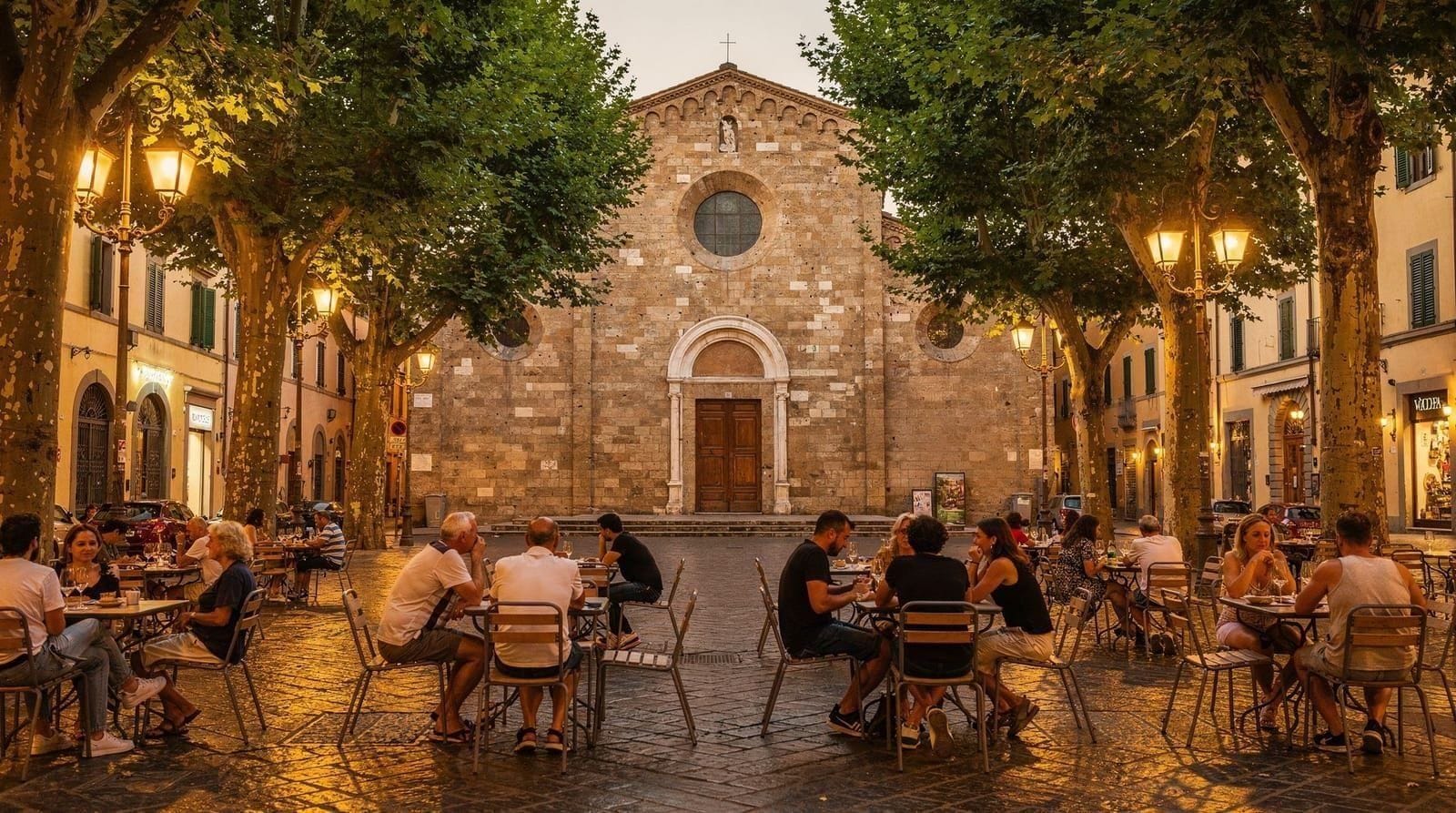
The street also has a few good gelaterie and takeaway lunch options. The atmosphere on a weekday evening, particularly in the warm months when people spill out onto the narrow street, is the closest thing Florence has to a scene that isn’t designed for tourism.
Getting to San Niccolò
From Ponte Vecchio, walk east along the south bank (Lungarno Torrigiani) for about 5-8 minutes to reach the start of Via San Niccolò. From Piazza Poggi (base of the Piazzale Michelangelo stairs), the wine bar strip is 2-3 minutes on foot.
Bus 23 serves the area from the city centre. The neighbourhood is quiet enough that cycling is pleasant — bike parking is available near the Ponte alle Grazie.
San Niccolò versus Piazzale Michelangelo for sunset
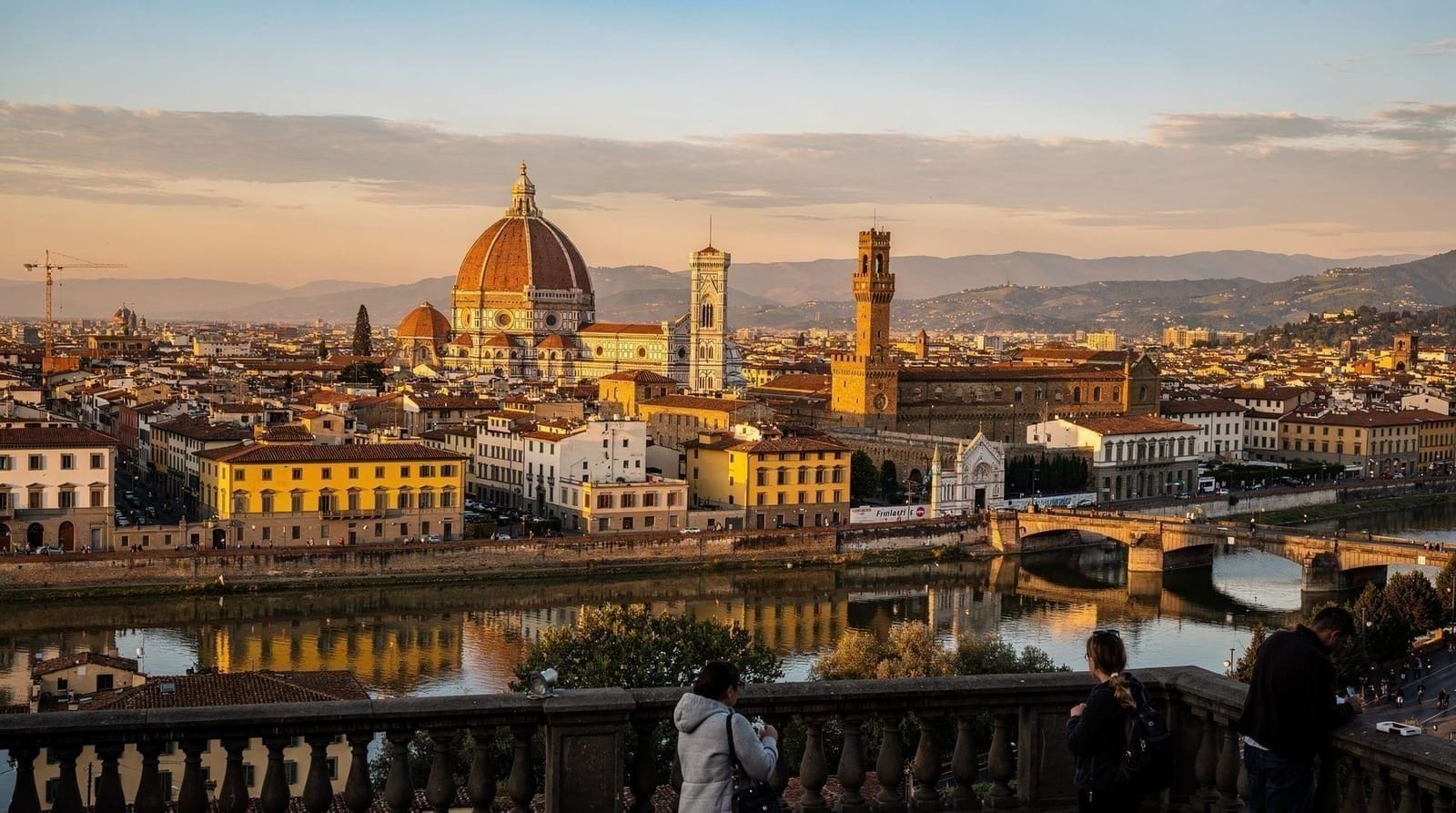
Most first-time visitors head straight for Piazzale Michelangelo, and it remains the most famous sunset viewpoint in Florence for good reason — the classic postcard panorama of the whole city and the Duomo dome. But it’s also the most crowded, particularly on clear evenings from spring through autumn, with tour buses and vendors adding to the scene.
San Miniato al Monte, five minutes further up the same staircase from San Niccolò, offers a comparable view with a fraction of the crowd, plus the church itself and, if your timing lines up, the Gregorian chant. The trade-off is a slightly steeper, longer walk. For a still-quieter alternative with a closer, more intimate vantage, the top of Torre San Niccolò (when open, typically summer evenings) looks back over the river rather than the whole skyline — see the San Niccolò guide for current access details. Our broader sunset spots in Florence guide ranks all the main options against each other.
Combining San Niccolò with the rest of Oltrarno
San Niccolò sits at the quiet eastern edge of Oltrarno, Florence’s south-bank artisan district, and works well as the calm bookend to a busier day exploring Santo Spirito further west. A natural route: spend the afternoon in Santo Spirito’s piazza and artisan streets, walk east along the river through San Niccolò in the late afternoon, then climb to San Miniato for sunset before descending for dinner back in San Niccolò’s wine bars. The Oltrarno walking tour guide lays out this kind of route in more detail, and the Bardini Gardens guide covers the Giardino Bardini’s opening hours and combined tickets with Boboli.
How the neighbourhood feels through the day
San Niccolò changes character more than most Florentine districts. In the morning it is almost entirely residential: shutters open, locals buy bread and coffee, and the narrow street is quiet enough that you can hear the river from a few doors away. This is the best moment to walk the riverside without company and to look at the details that disappear later in the day, such as the old doorways, the workshop signs and the garden walls rising above the embankment.
By the afternoon the pace slows further. Many small businesses keep their own rhythm here, so do not be surprised if a workshop or shop is closed when you arrive; it is part of the neighbourhood’s character rather than a sign you have missed something. Use that lull for the climb towards San Miniato, then come back down as the light turns golden and the wine bars begin to fill. If you want a broader sense of how this fits with the rest of the south bank, the Oltrarno neighbourhood guide explains how the different corners differ, and where to eat in Oltrarno helps you plan a meal beyond the wine bar strip.
A relaxed route for your first visit
If this is your first time here, resist the urge to turn it into a checklist. A simple order works best. Start at the Ponte Vecchio end, with a look at the Ponte Vecchio itself while the bridge is still the busiest spot you will see all day, then walk east along the south bank. The change in atmosphere is noticeable within a few minutes: the souvenir stalls disappear, the pavements narrow and the crowd thins to a handful of residents and strollers.
Take your time along Via San Niccolò. Look up at the tower, peek into the small workshops and let yourself stop at a wine bar for a glass and a snack before you commit to the climb. Many visitors do it the other way round and arrive at the top tired and thirsty; a short pause first makes the staircase far more pleasant. Once you reach San Miniato, give the church proper time rather than treating it as a viewpoint with a roof. The interior rewards slow looking, and the light through the building in the late afternoon is part of the experience. The San Miniato al Monte guide goes deeper into what to look for inside.
Why choose this side of the river
Florence rewards visitors who step away from the Duomo and the Uffizi crowds, and San Niccolò is one of the easiest places to do that without travelling far. You stay within walking distance of the main sights, yet the experience feels like a different city. For travellers who have already seen the headline monuments, it offers something the big museums cannot: a sense of everyday Florentine life. For couples, the combination of a quiet riverside stroll, a hillside view and a relaxed dinner suits the mood well, and our Florence for couples guide places this area alongside other romantic options.
Walkers will also appreciate that the climb is gradual and rewarding rather than technical. If you enjoy being outdoors, the hiking around Florence guide shows how this staircase fits into a wider set of walks, and the best viewpoints in Florence compares the different panoramas so you can decide how much effort each deserves.
Practical tips for a smoother visit
- Wear proper shoes. The stone steps and cobbles are uneven, and the climb is more comfortable in flat, grippy footwear than in sandals.
- Bring water. There is little to buy on the staircase itself, so carry a bottle before you start climbing.
- Dress respectfully for the church. San Miniato is an active place of worship, so covered shoulders and knees are a sensible habit.
- Time the descent. Coming down after sunset is lovely, but the path is less lit than the riverside, so keep a phone torch handy and watch your footing.
- Keep your evening flexible. The wine bars are informal and often fill up gradually, so there is rarely any need to book far ahead, but arriving early gives you a better choice of seat.
If you are staying nearby, the area is also worth considering as a base for travellers who prefer calm evenings. The best areas to stay in Florence guide compares the main districts, and where to stay in Florence covers the practical side of choosing a hotel.
Evenings, aperitivo and a slower dinner
The most natural way to end a visit is with an unhurried aperitivo. Rather than rushing to a restaurant near the Duomo, settle into one of the neighbourhood bars and watch the street fill with locals. The aperitivo in Florence guide explains the custom if you are new to it, and it helps you tell a genuine local spot from a place set up purely for visitors. The same instinct applies to dinner: choose small rooms with short menus and handwritten boards, and you will usually eat better than in the busiest squares.
If you would rather combine the views with something more structured, a guided evening walk can be a good complement; see the evening walking tours guide for how these compare. And for a different take on the same hill, the blog’s sunset at Piazzale Michelangelo story captures how the evening crowd behaves and what it is like to be there.
Pairing San Niccolò with other days
Because the area is compact, it slots easily into longer plans. On a short stay, it works as the final evening of an itinerary such as Florence in three days, where it provides a calmer counterweight to the museum-heavy first days. On a slower trip it can be the destination of a whole unhurried afternoon, especially when combined with the gardens and artisan streets nearby. Whichever plan you choose, treat San Niccolò as a place to slow down rather than a stop to tick off.
Top experiences
Bookable activities with verified prices and instant confirmation on GetYourGuide.

Florence: sunset panoramic tour — Fiesole and Michelangelo Square
- Free cancellation
- Small group

Florence: on e-bike to Piazzale Michelangelo
- Free cancellation
- Small group

Florence: golden hour walk tour to Piazzale Michelangelo
- Free cancellation
- Small group

Florence: 2-hour night walking tour
- Free cancellation
- Small group