Market-to-table cooking classes in Florence
Florence: local food market tour and cooking class with wine
- Free cancellation
- Small group
What is a market-to-table cooking class in Florence?
A market-to-table class starts with a guided tour of Florence's food market (typically Sant'Ambrogio or Mercato Centrale), where you shop for the day's ingredients with the chef-teacher, then move to a kitchen to cook a full Tuscan meal. Duration: 4–5 hours total. Price: €95–140 per person.
The market as classroom
| Where | Sant’Ambrogio or Mercato Centrale, then a nearby kitchen |
| Cost | Around €95–140/person |
| Time needed | 4.5–5 hours total |
| Getting there | Central Florence, walkable from most accommodation |
| Best time | Morning start (8:30–9am), any season except late August |
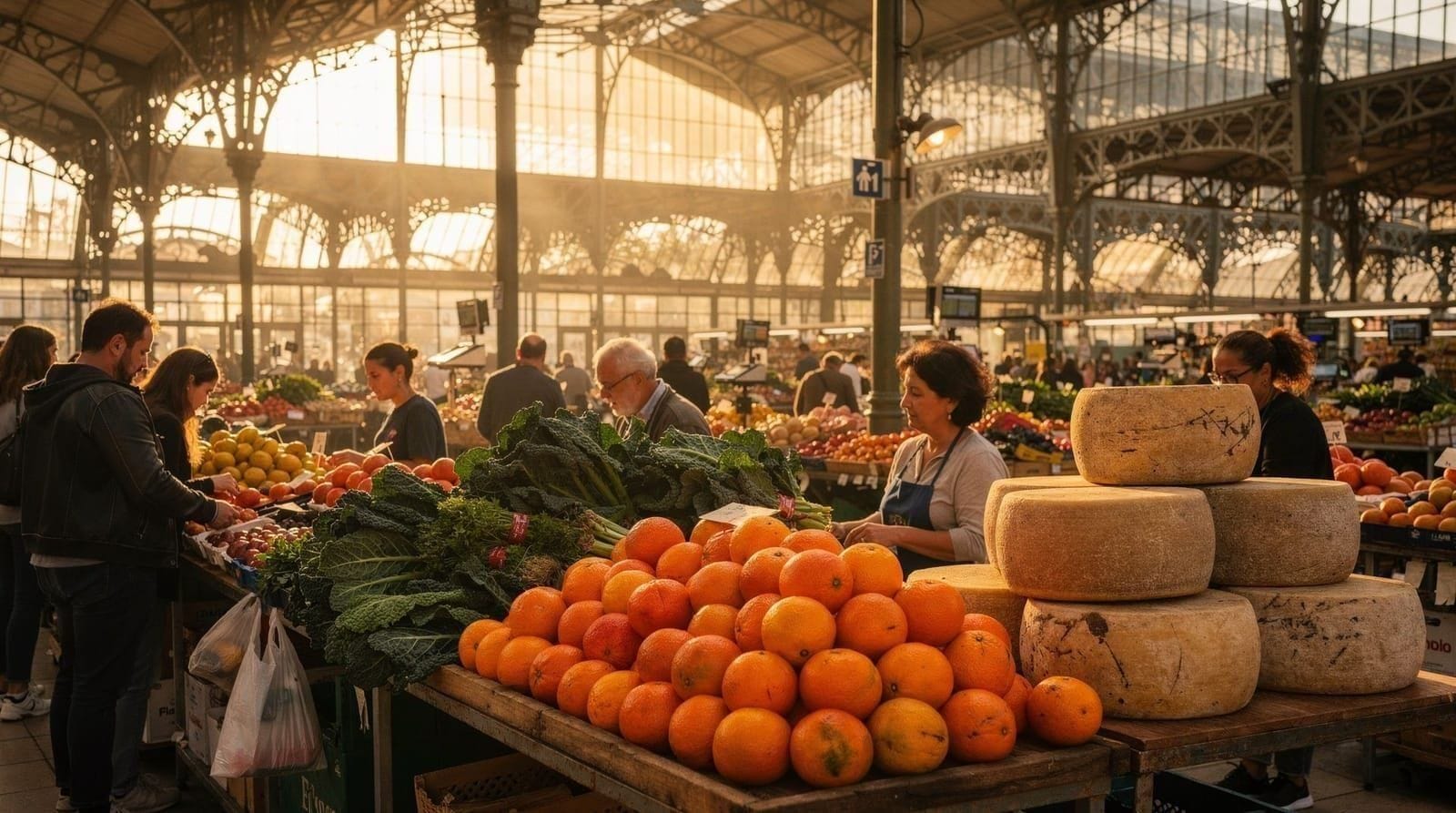
Most cooking classes start in the kitchen. A market-to-table class starts 2–3 hours earlier, at one of Florence’s food markets, where the day’s ingredients are still being unpacked from the morning delivery.
The difference is more than logistical. Walking through a market with an experienced Florentine cook changes the way you understand the food. You see why a ravioli filling is made with spring ricotta rather than aged cheese (texture, freshness, moisture content). You understand why the class is making pasta with funghi porcini rather than with the sun-dried tomatoes you had in mind (because September porcini are incomparably better than any tomato alternative right now). You learn that the Florentine preference for cavolo nero in ribollita is partly aesthetic — the dark green and the rough texture — and partly practical: it doesn’t turn to mush the way other kale varieties do under long cooking.
This is the value of the market-to-table format. Not convenience, not spectacle — education through direct contact with the ingredients before they become a dish.
The two main market starting points
Sant’Ambrogio market
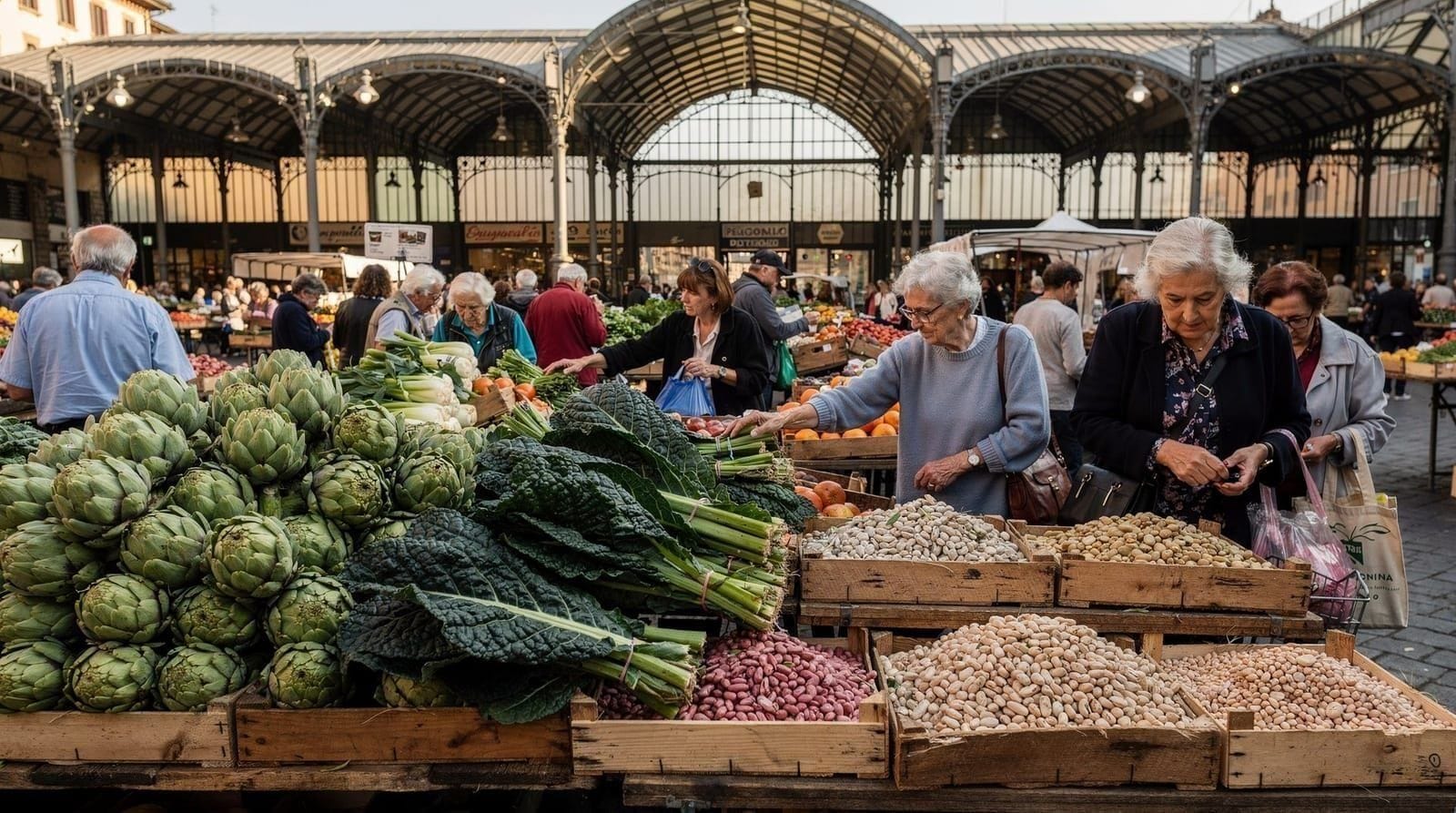
The Mercato di Sant’Ambrogio is the preferred starting point for most high-quality market-to-table classes because it remains primarily a residents’ market. The vendors know the chefs; the selection reflects what’s in season and available locally rather than what photographs well; the prices are fair without tourist markup.
Advantages for a market class:
- Smaller, more navigable than Mercato Centrale
- More personal relationships between vendors and regular buyers (including class chefs)
- More representative of daily Florentine food shopping
- Excellent nearby restaurants for pre- or post-class eating
Disadvantages:
- Less architecturally spectacular than Mercato Centrale
- Slightly smaller selection of specialty products
Mercato Centrale San Lorenzo
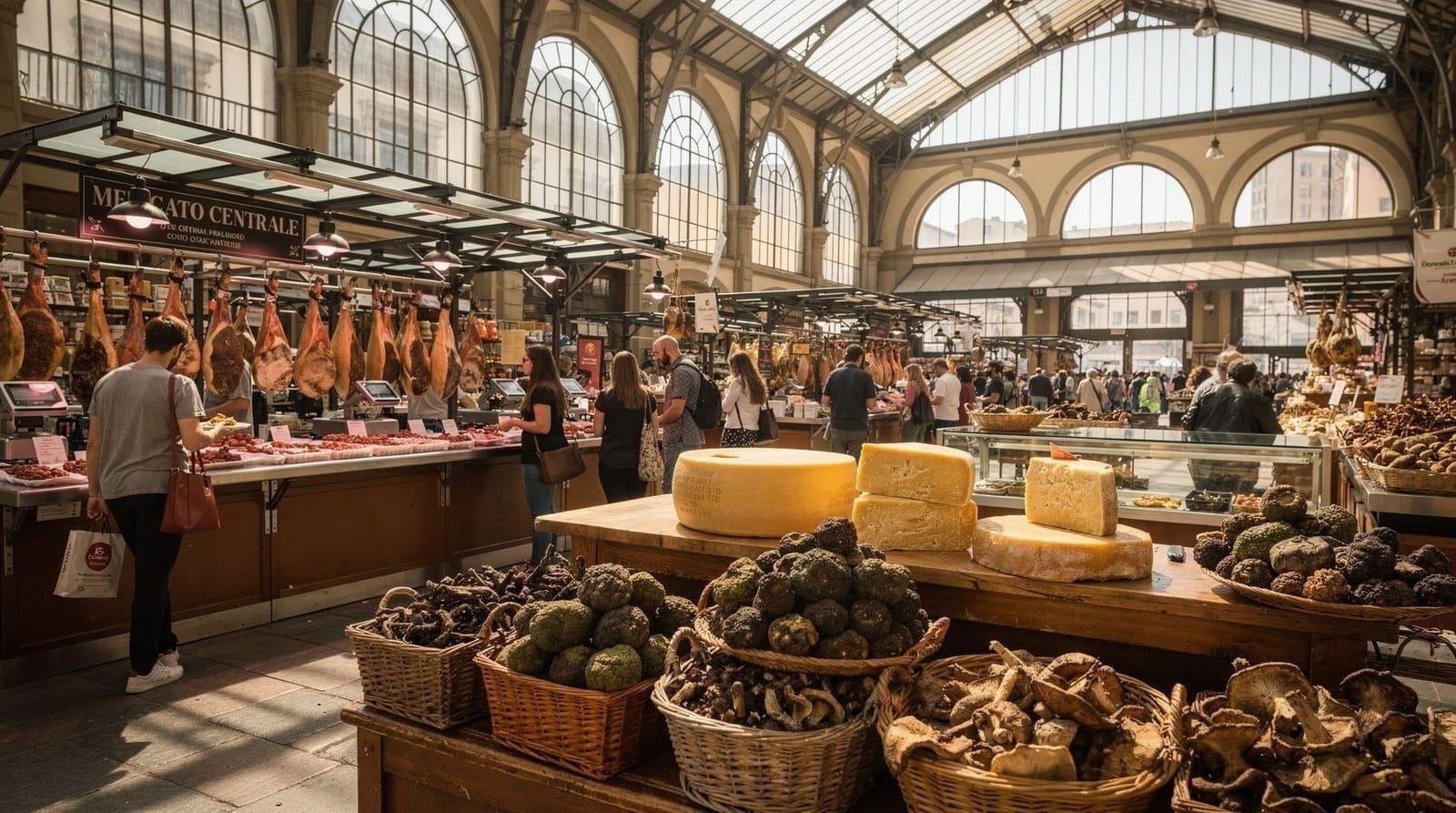
The Mercato Centrale provides a more visually dramatic starting point — the 1874 iron-and-glass building is genuinely impressive — and has a wider variety of specialty producers on the ground floor. Classes starting here typically use the ground floor market (not the tourist-oriented first-floor food court).
Advantages for a market class:
- Wide variety of vendors and specialties
- Architecturally memorable
- Strong cheese, charcuterie, and specialty oil vendors
- More centrally located for most Florence accommodation
Disadvantages:
- Slightly higher tourist presence than Sant’Ambrogio
- Ground floor only (07:00–14:00)
How a market-to-table class works: the typical schedule
08:30–09:00: Meet at the market with the chef-teacher. Brief introduction: the day’s menu (based on what looked best at the market yesterday or this morning), the key seasonal considerations.
09:00–10:30: Market walk. The chef introduces you to specific vendors. You observe ingredient evaluation — pressing a tomato to check firmness, smelling the fresh herbs, discussing the difference between a good and mediocre batch of fresh ricotta. The group purchases ingredients for the day’s cooking; you may be asked to carry some.
10:30: Transfer to the cooking kitchen (typically 5–15 minutes on foot or by taxi from the market).
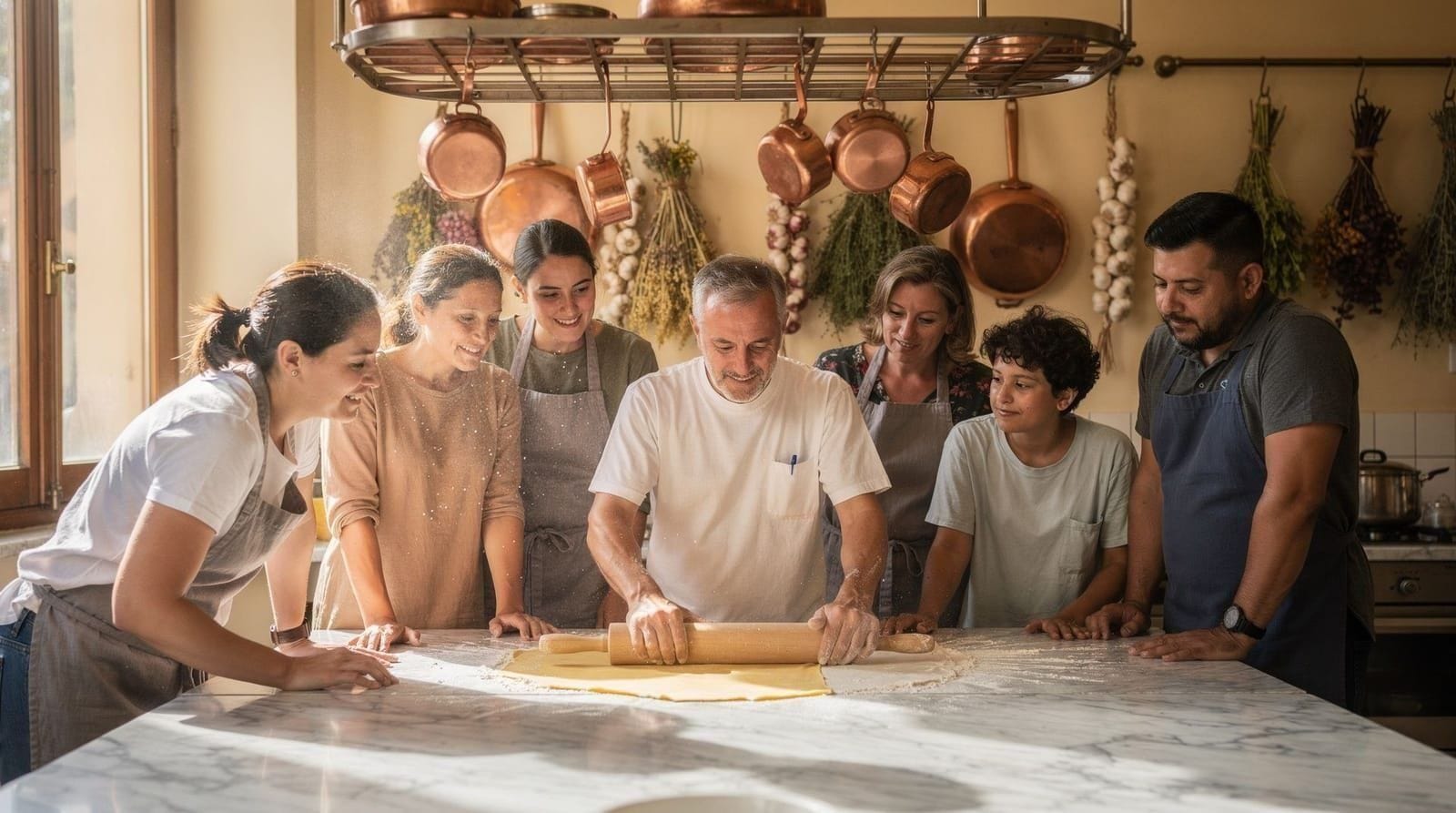
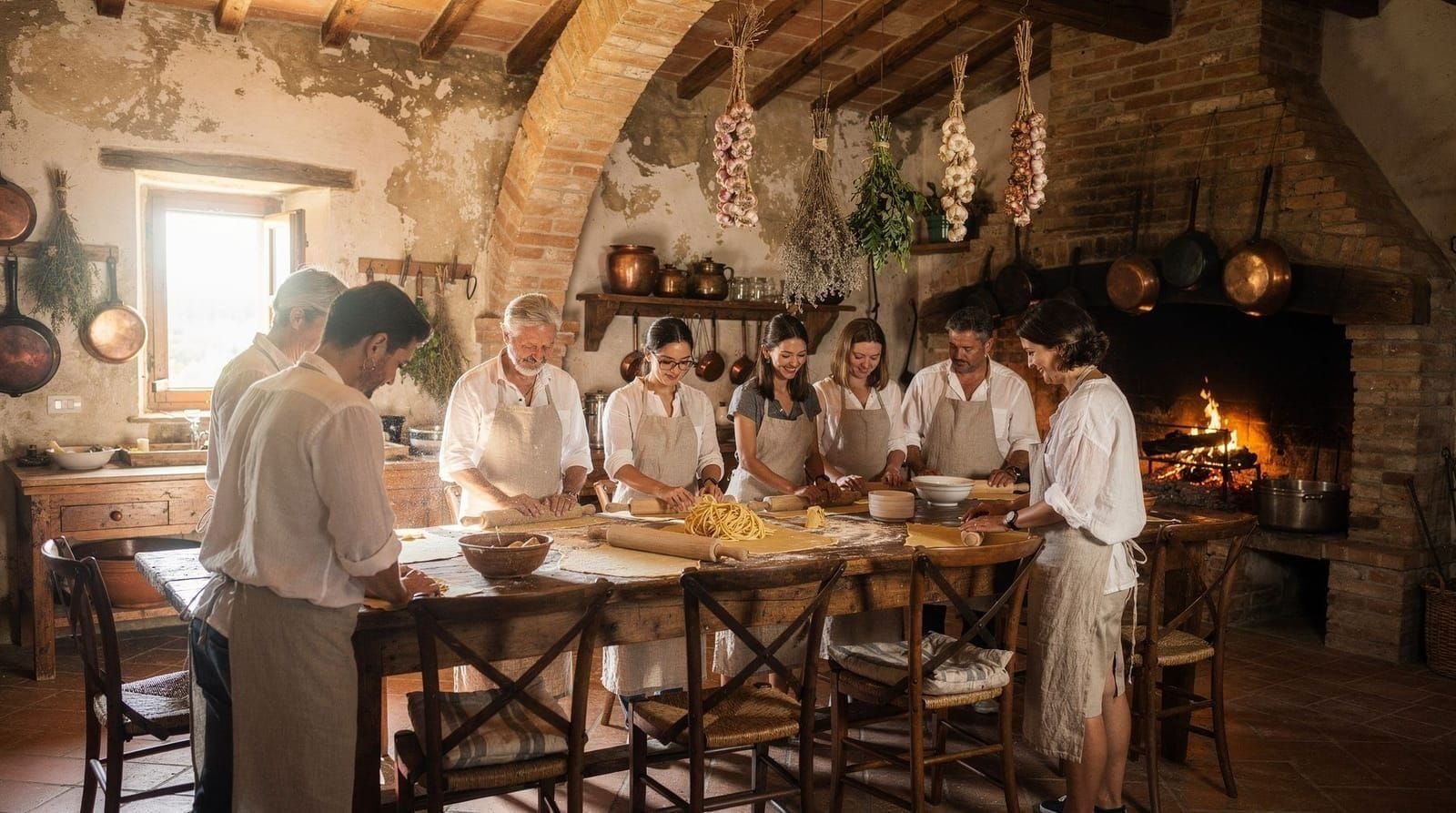
10:45–12:30: Hands-on cooking. Depending on the class structure, you may work as a group on a single menu or divide into stations. The chef-teacher demonstrates and guides.
12:30–13:30: Eat everything you’ve cooked. Communal table, Tuscan wine, the full meal in proper sequence.
13:30: Class ends. Recipe cards distributed.
Total duration: 4.5–5 hours. This is longer than a standard pasta class (2.5–3 hours); plan accordingly.
What you cook: a typical market-to-table menu
The menu varies by season and market availability. A typical October class might produce:
Antipasto: Crostini with funghi porcini (porcini on toast), bruschetta with new-season olive oil
Primo: Pappardelle al ragù di cinghiale (wide pasta with wild boar ragù made from boar purchased at the butcher counter)
Secondo: Coniglio alla cacciatora (rabbit braised in white wine with olives and herbs, from the poultry vendor)
Contorno: Cannellini beans in the style of Trattoria Mario — cooked with sage, garlic, and enough olive oil that the dish is almost a braise
Dessert: Cantucci with Vin Santo (purchased from the market’s dry-goods stalls)
A spring class would likely feature artichoke antipasto, pasta with fresh fava beans and pecorino, roasted lamb or pork, and fresh strawberries from the market.
Seasonal considerations
Spring (March–May): Artichokes, asparagus, fresh peas and broad beans, new-season lamb, first strawberries, fresh ricotta. A particularly good season for market-to-table classes — the variety is extraordinary.
Summer (June–August): Tomatoes of every variety, courgette flowers (for stuffed fritters), aubergine, fresh basil. Note: August is problematic — many market vendors take 2–3 weeks off, reducing variety.
Autumn (September–November): Porcini mushrooms, chestnuts, wild boar season begins (October), grapes, figs, truffle season starts (October for white truffle). The richest season for market-to-table cooking.
Winter (December–February): Cavolo nero (the quintessential ribollita green), radicchio, fennel, cardoons, citrus from Sicily. Excellent season for hearty Florentine cooking; less variety but maximum seasonal depth.
Choosing a market-to-table class: what to ask
Which market do you use? Sant’Ambrogio for authenticity and neighbourhood feel; Mercato Centrale for setting and variety.
What’s the group size? Smaller groups (4–8) mean more personal attention during both the market walk and the cooking. Larger groups (8–12) are fine but the market component becomes more of a guided tour and less of a participatory shopping experience.
Who is the chef-teacher? Ask about their background — trained cook or professional chef with Florentine roots is the ideal. Someone hired primarily for English language skills without significant cooking background will produce a less instructive class.
Is the menu seasonal? A class with a fixed menu regardless of season is less interesting than one that adapts to what the market has. Ask whether the day’s menu is confirmed in advance or determined partly by the market.
What does the price include? Market ingredients (for cooking class purposes), apron, cooking, the meal, wine, recipe cards. Some classes add transport to/from the market; others assume you meet the group there.
Combining the market class with the broader neighbourhood
The Sant’Ambrogio market area is worth exploring beyond the class itself. After the class lunch (typically finishing around 13:30), the streets immediately around the market — Via dei Macci, Borgo la Croce, Via dell’Agnolo — have some of Florence’s best food shopping: artisan pasta shops, local cheese vendors, independent wine merchants. An afternoon spent browsing this quarter provides a good complement to the morning’s market-to-table education.
The Mercato Centrale area near San Lorenzo is less residential but still offers the San Lorenzo district’s concentration of food-related shops. The Mercato Centrale guide covers the surrounding area in detail.
Market-to-table vs a standard pasta class: which to book
| Market-to-table | Standard pasta class | |
|---|---|---|
| Duration | 4.5–5 hours | 2.5–3 hours |
| Starts at | The market | Directly in the kitchen |
| Price | €95–140 | €65–95 |
| Best for | Food-curious visitors with a free morning | Time-limited visitors, families with younger children |
| What you learn | Ingredient selection, seasonality, a full multi-course meal | Pasta-making technique specifically |
If you’re deciding between the two, or between this and other Tuscan food experiences, the best cooking classes in Florence guide ranks the main formats against each other, and pasta-making class Florence covers the shorter, kitchen-only alternative in detail. For a broader look at Tuscan food experiences beyond the classroom, see Tuscan cooking experiences.
Fitting a market-to-table class into your Florence days
Because the class runs 4.5–5 hours starting at 8:30–9am, it effectively occupies your entire morning and early afternoon. This works best on a day without a major museum booking — trying to also fit in the Uffizi or Accademia the same morning isn’t realistic. Many visitors schedule it for their second or third day, once the essential museums are checked off, and treat the afternoon after the class (finishing around 1:30–2pm) as free time for a gentle walk rather than more sightseeing, since you’ll be well fed and likely ready to slow down. If you’re staying near Sant’Ambrogio market itself, the logistics are even simpler — you can walk to the meeting point without needing transport.
After the class: carrying the knowledge forward
The market-to-table format teaches three specific skills beyond the cooking itself:
1. Seasonal eating: Florentine cooking is anchored in the seasonal calendar more explicitly than most cuisines. Understanding this — that ribollita is a winter dish, that pappardelle al cinghiale belongs to autumn and early winter, that pasta with fresh peas is specifically a spring experience — changes how you read restaurant menus and recipe books.
2. Produce evaluation: After spending 90 minutes with a chef at a market learning to assess freshness and quality, you bring that knowledge home. Pressing tomatoes, smelling fresh herbs, asking fishmongers about delivery days — these are practical market skills applicable anywhere.
3. Sauce and flavour building: The soffritto (onion, carrot, celery slowly cooked in olive oil) that begins most Tuscan ragù and braises is the foundation of Florentine cooking. Understanding this — how long it takes, why the vegetables need to be cooked past translucent to develop sweetness — is one of the most transferable cooking insights from a Tuscan class.
Frequently asked questions about market-to-table cooking classes
Is the market-to-table class better than a regular cooking class?
For food-curious visitors with 4–5 hours available: yes, significantly. The market component adds context and educational depth that a kitchen-only class can’t provide. For visitors with limited time or who primarily want cooking technique: a standard pasta class (2.5–3 hours) is a better use of time.
Do I need to carry a lot of groceries during the market walk?
The teacher handles most of the purchasing and carrying. You may be asked to carry a small basket or bag of herbs. The group shopping is participatory observation, not a full weekly shop.
Is the food at the end a full meal or just a tasting?
A full meal. Market-to-table classes produce a complete multi-course Tuscan lunch (antipasto, primo, secondo, sometimes dessert) and the communal eating portion typically lasts 45–60 minutes with proper table settings, good wine, and no hurry.
Can I substitute ingredients if I’m vegetarian?
Yes — with advance notice, most market-to-table class chefs can design a vegetarian version of the same menu using seasonal vegetables in place of meat. Inform the school when booking, not on the day.
What if the market is less full than expected (e.g., in August)?
This is a real consideration in August when many vendors are on holiday. Good class operators are aware of this and either adjust the menu accordingly or substitute with quality food-shop purchases. If you’re booking a market-to-table class in August, ask the school how they handle market closures.
How far in advance should I book a market-to-table class?
Book at least a week ahead in peak season (April–October), and 2–3 weeks ahead if you have a specific date that can’t move, since the best-regarded schools run small groups and fill up. Off-season (November–February), a few days’ notice is usually enough, though some schools reduce their schedule in the quietest winter weeks.
Is a market-to-table class worth it if I’ve already done a regular cooking class elsewhere in Italy?
Yes, if the market component itself is new to you — the format’s real value is the shopping and ingredient selection, not just the cooking technique, so it offers something a kitchen-only class in another city likely didn’t. If you’ve specifically done a market-based class before (in Rome or Bologna, for instance), the Florence version will feel more similar than novel, and a standard pasta class focused on regional Tuscan dishes might be the better use of a shorter block of time.
Top experiences
Bookable activities with verified prices and instant confirmation on GetYourGuide.

Florence: local food market tour and cooking class with wine
- Free cancellation
- Small group
Florence: Tuscan cooking course with visit to San Lorenzo market
- Free cancellation
- Small group
Florence: cooking class and lunch at a Tuscan farmhouse
- Free cancellation
- Small group

Florence: Tuscany full day small group wine and food tour
- Free cancellation
- Small group