A week in Florence on €700: a realistic budget breakdown
Every travel article about Florence either costs you €300 a night at a Renaissance palazzo or waves vaguely at “budget options” without specifying what that means. Here is a specific, honest, line-by-line breakdown of how to spend a week in Florence on approximately €700 — including accommodation, food, museums, and getting there from most European cities.
This is mid-to-low budget. Not hostels-and-instant-noodles budget, but not anything approaching luxury either. It’s the budget of someone who wants good food, real cultural experiences, and enough Chianti to feel like they actually visited Italy.
| Total budget | Around €655–700 for one week |
| Accommodation | Hostel dorm, around €30/night |
| Food | Around €35/day, no self-catering |
| Season | Works best March–April or October–November |
| Biggest splurge | One bistecca Fiorentina dinner, €40–60 |
Accommodation: €210 (7 nights at €30/night)
The cheapest legitimate accommodation in Florence is in a hostel dorm: expect to pay €25-40 per night for a bed in a four to eight-person room at a well-reviewed hostel. The Academy Hostel (Via Ricasoli, near the Accademia) is frequently cited as one of Europe’s better hostels — clean, social, well-run, and €28-35/night depending on season and dorm size.
Alternative: a private room in a family-run B&B in the Oltrarno or Santa Croce neighborhoods, where small properties rent single rooms for €65-80/night. This pushes the week’s accommodation to €455-560, which adjusts the overall budget accordingly.
For €30/night to be realistic, you’re in a hostel. If that doesn’t work for you, revise accommodation upward to €65-80/night and adjust other categories.
Food: €245 (7 days at €35/day)
This is achievable without deprivation.
Breakfast (€2-4/day): A cornetto and cappuccino at a neighborhood bar, standing at the counter, is a daily expense of €2-3. This is non-negotiable — it’s how Florentines eat breakfast, it costs a fraction of what the hotel buffet costs, and it is delicious.
Lunch (€10-15/day): The best lunches in Florence at this price point:
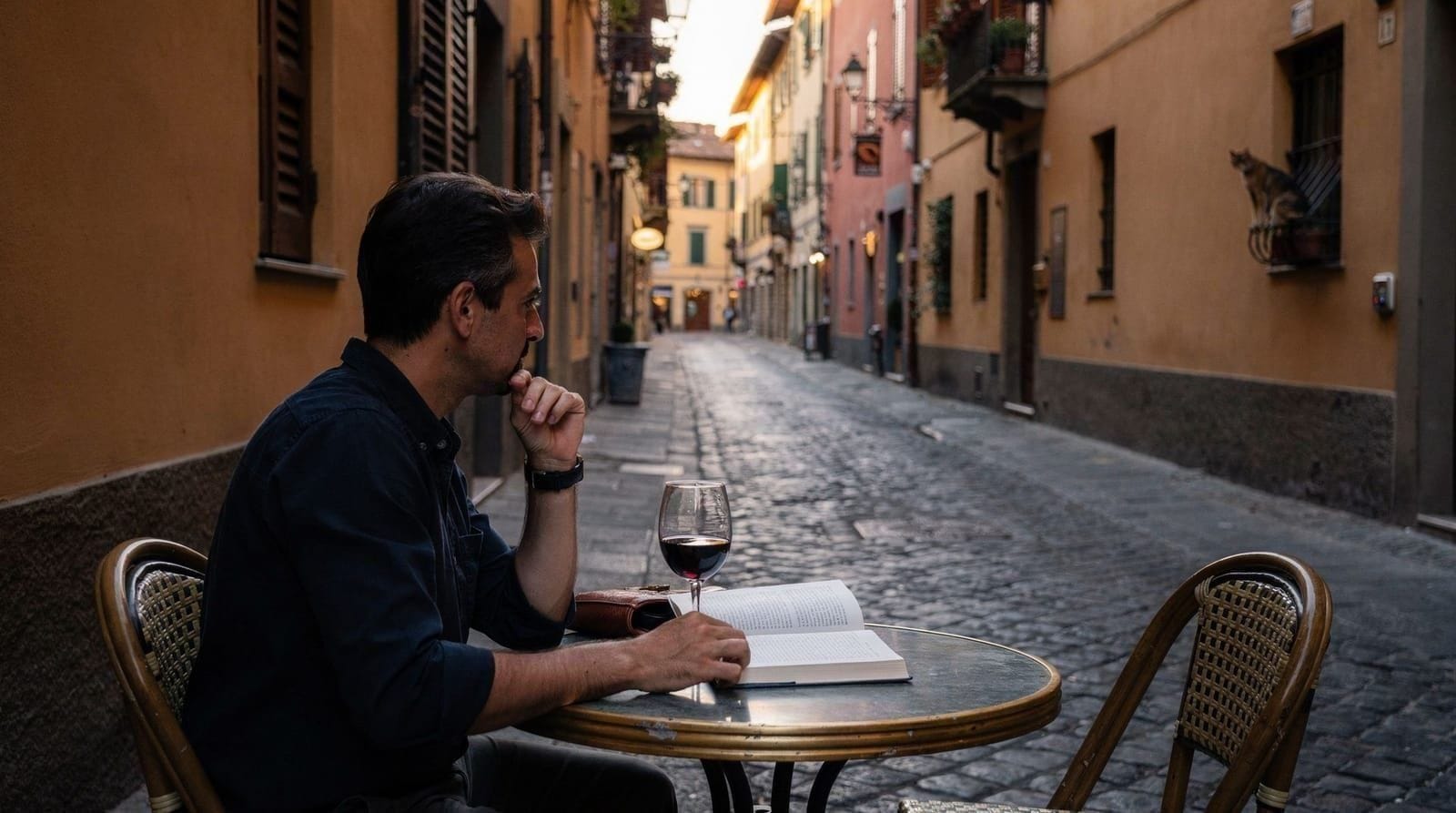
The lampredotto sandwich from a mobile cart near Mercato Centrale or Sant’Ambrogio market (€4-6) is the definitive Florence street food — slow-cooked tripe, salsa verde, hot chilli sauce on a crusty roll. Order it with a small glass of red wine for €2 at the adjacent bar.
A bowl of ribollita at Nerbone inside the Mercato Centrale costs about €8. Pasta at any trattoria without a tourist menu board costs €9-12 for a plate. The fixed-price pranzo (lunch menu) at many trattorias — primo, secondo, bread, half-litre of house wine — runs €12-16 and represents the best food-for-money ratio in the city.
Dinner (€18-20/day): A full trattoria dinner with two courses, bread, and a carafe of house wine costs €22-28 at honest restaurants outside the immediate tourist centre. If you eat one course with wine instead of two, €15-18 is achievable. The key is avoiding the “tourist menu” board restaurants near the Duomo and Ponte Vecchio, where €25 buys you mediocre pasta and a symbolic glass of wine.
Good value dinner areas: Via dei Serragli and Via dello Sprone in the Oltrarno, Via Pietrapiana near Sant’Ambrogio, and the streets immediately east and north of Piazza Santa Croce.
Museums: €95
The main museums you’ll want to prioritise and their current entry prices:
- Uffizi Gallery: €25 (timed entry, book online)
- Accademia (David): €20 (timed entry, book online)
- Duomo complex (Brunelleschi’s dome climb): €30 (includes all Duomo complex sites on a 72-hour pass)
- Medici Chapels: €10
- Bargello: €10
Total for these five: €95. That’s a full cultural programme covering the most significant art in the city.
Free alternatives that cost nothing:
The Piazza della Signoria and Loggia dei Lanzi — major Renaissance sculptures in the open air.
Orsanmichele church (free, check hours) — exterior sculpture programme by Donatello, Ghiberti, Verrocchio; interior fresco cycle; upstairs museum has the original bronze figures.
San Miniato al Monte — a Romanesque basilica above the city with Gregorian chants at vespers (daily at 5:30pm); free entry.
Santa Maria Novella church — modest entry fee (€8) but one of the great Gothic interiors in Italy, with Masaccio’s Trinity fresco (the first painting with mathematically correct linear perspective).
Santa Croce — Giotto’s frescoes, Michelangelo’s tomb, Galileo’s tomb: €8.
Most churches in Florence have free entry or very low admission and hold significant art — the first cloisters of Santa Maria Novella, the Ospedale degli Innocenti loggia, the small oratories throughout the Oltrarno neighborhood.
Transport: €25
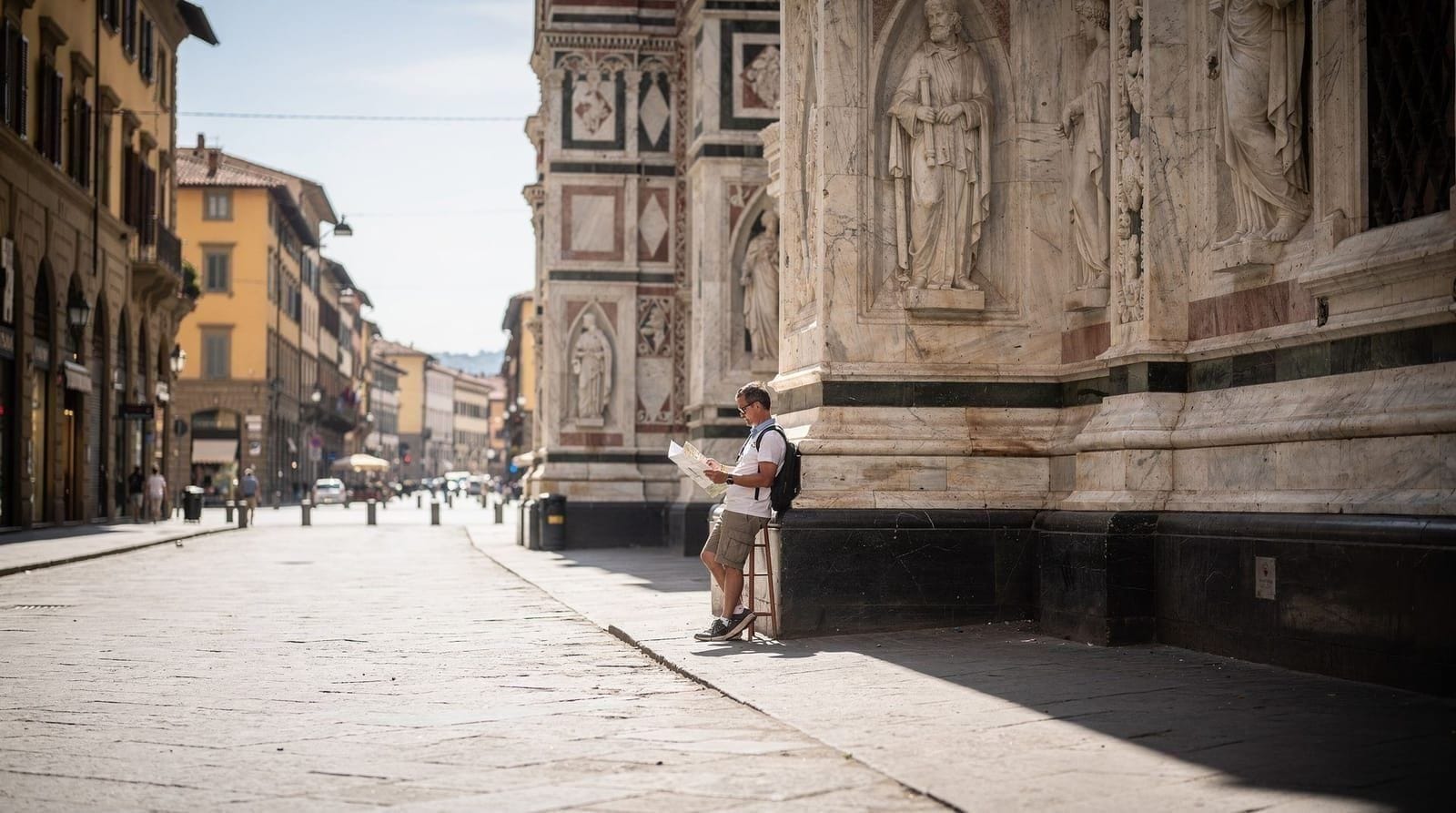
Florence is walkable. End to end of the historic centre takes 25 minutes at a moderate pace. You will spend most of the week on foot.
When you need transport: the tram T1 from the train station to the airport costs €1.70. A single bus/tram ticket (90 minutes, unlimited transfers) is €1.70. If you’re buying a multi-day pass, check current pricing from ATAF.
From the FLR airport to the city: tram T2 to Santa Maria Novella (SMN), 18 minutes, €1.70. Do not take the airport taxi unless you have luggage that can’t manage the tram stairs (taxis are a fixed rate of €25-30 from FLR to city centre, which is fine but not necessary for most people).
From Pisa airport (PSA): regional train to Florence takes 1 hour, costs around €10. More complicated but manageable.
Budget €25 for a week’s local transport and you’ll be fine, probably with change. Skip taxis entirely unless you have heavy luggage or arrive very late at night — the historic centre is small enough that a bag on wheels and 15–20 minutes of walking covers most hotel-to-sight distances anyway.
Day trips: €0 to €50
This budget doesn’t include day trips, which can be done cheaply or expensively depending on approach.
Train to Lucca: €11-15 return, then bicycle rental €12 for half a day at the walls. Total day: €25-30.
Train to Pisa: €8-12 return. Leaning Tower entry costs €21 if you want to climb it; the exterior and Cathedral exterior are free. Total: €8-30 depending on your approach.
Siena bus: The SITA bus from Florence to Siena (recommended over the train, which requires a change) runs roughly every hour, costs about €8 each way, and takes 1 hour 15 minutes. Total: €16.
These add to the week’s budget but remain reasonable at €25-50 for a full day trip.
The realistic total
Accommodation (7 nights hostel dorm): €210 Food (7 days): €245 Museums (key five): €95 Transport: €25 Day trip (one, to Lucca): €30 Incidentals, coffee, gelato, wine: €50
Total: €655
That leaves €45 for your €700 cap — enough for one nice bottle of Chianti from an enoteca to drink in a piazza, a genuinely good gelato every day, and something you didn’t plan.
The honest caveats
This budget works in shoulder season (March-April, October-November). In summer (June-August), hostel prices rise by 20-30% and the cheapest beds disappear first. In peak July-August, add €40-60 to the accommodation total.
It also assumes you’re cooking zero meals — no grocery shopping, no self-catering. You can reduce the food budget slightly by buying lunch supplies at the Mercato Centrale or Sant’Ambrogio market (bread, cheese, fruit, a slice of schiacciata) and eating in a piazza for €5-8 instead of a trattoria.
It does not work for Ferrragosto week (around August 15), when prices spike and many good-value restaurants close entirely. If you’re visiting then, add €80-100 to the budget.
The free Florence that nobody talks about
Florence has a substantial amount of significant art and architecture that costs nothing to access.
The Piazza della Signoria: Donatello’s Judith and Holofernes (a copy; the original is inside the Palazzo Vecchio), Michelangelo’s David (a copy; the original is in the Accademia), Cellini’s Perseus, Giambologna’s Rape of the Sabine Women — these are in the Loggia dei Lanzi, open air, requiring no ticket. This collection, in any other city, would be a major ticketed museum.
The Baptistery exterior: Ghiberti’s Gates of Paradise (copies; the originals in the Duomo Museum) are on the Baptistery doors facing the Cathedral. The doors opposite — the north doors — are also by Ghiberti, earlier work, stunning. The exterior is entirely free to view and photograph.
Street-level sculpture: Florence’s historic centre is dotted with significant sculpture attached to buildings, in niches, over doorways. The Tabernacolo delle Fonticine on Via Nazionale (Fra Bartolommeo’s Madonna, 1522). The Berta bell tower at Orsanmichele. The Sphinx at the Palazzo Nonfinito. A map of public sculpture in Florence would take several days to walk through.
Church art: Many significant works are in Florence’s churches, which are generally free or very low cost. The Brancacci Chapel in Santa Maria del Carmine (€8, or €4 with a Florence Card) has Masaccio’s and Masolino’s frescos — the foundational paintings of Renaissance pictorial space. The Ospedale degli Innocenti has Della Robbia’s roundels on the portico (free). Santa Maria Novella has Masaccio’s Trinity fresco (church entry €8), Ghirlandaio’s fresco cycle in the Tornabuoni Chapel, and Brunelleschi’s wooden crucifix.
The Firenzecard: worth it?
The Firenzecard (€85 for 72 hours at time of writing) covers entry to 72 museums including the Uffizi, Accademia, Bargello, Palazzo Vecchio, Medici Chapels, and Pitti Palace, plus timed entry reservation for the Uffizi and Accademia.
For a visitor spending 3-4 full days focusing heavily on museums, it saves money. For a typical one-week visitor who also wants to eat well, explore neighborhoods, and take day trips, the mathematics are less clear — you need to visit at least five or six covered museums to break even.
On a tight budget, buy individual tickets. On a museum-intensive trip, calculate based on your specific planned visits. The Firenzecard vs individual tickets guide runs the numbers in more detail against several realistic itineraries, and the Firenzecard worth it guide covers the edge cases — families, short trips, repeat visitors — where the calculation shifts.
A realistic sample day on this budget
Morning: cornetto and cappuccino standing at a bar counter (€3), then a booked timed-entry slot at the Uffizi or Accademia (€20–25). Midday: a lampredotto sandwich or the fixed-price pranzo at a trattoria away from the main sights (€10–15). Afternoon: free wandering — Orsanmichele, the Piazza della Signoria sculptures, a church or two — then a walk across to the Oltrarno for the change of pace. Evening: a full trattoria dinner with a carafe of house wine (€22–28), or a lighter one-course meal if you’re saving for the bistecca night later in the week. That’s a full, satisfying day for roughly €55–70, leaving room in the weekly total for the museum-heavy days and the one splurge dinner.
The one splurge worth making
If you’re on a genuine budget, there’s one dinner worth spending €40-60 on: a proper bistecca Fiorentina.
The Florentine T-bone steak — from Chianina cattle, dry-aged, grilled over charcoal to medium-rare or rare, served with white beans and a drizzle of olive oil — is one of the essential food experiences of Italy. It’s priced by the etto (100 grams) and a serving for one typically runs 400-500 grams of steak plus sides.
Buca Mario (near Ponte Vecchio, old institution) and Trattoria Sostanza (Via del Porcellana, the version without tablecloths) are reliable. Expect €35-50 for the steak itself; add beans, bread, and wine for a full meal around €55-65.
This is not the budget option. It is, on a one-week trip, the meal worth building the week’s food budget around. The bistecca alla Fiorentina guide covers where to get it done properly and how pricing by weight actually works, so you’re not surprised by the bill.
See also: Florence solo travel guide for accommodation tips, Florence food scene for where to eat well cheaply, Florence in November for the ideal low-season window, and the Florence on a budget guide for a broader set of money-saving strategies beyond this specific week.
Top experiences
Bookable activities with verified prices and instant confirmation on GetYourGuide.

Florence: walking tour
- Free cancellation
- Instant confirmation
Florence: Accademia Gallery — David skip-the-line ticket
- Skip the line
- Instant confirmation
Florence: Uffizi Gallery skip-the-line entrance ticket
- Skip the line
- Free cancellation
Florence: ticket to Brunelleschi's Dome with panoramic views
- Skip the line
- Free cancellation