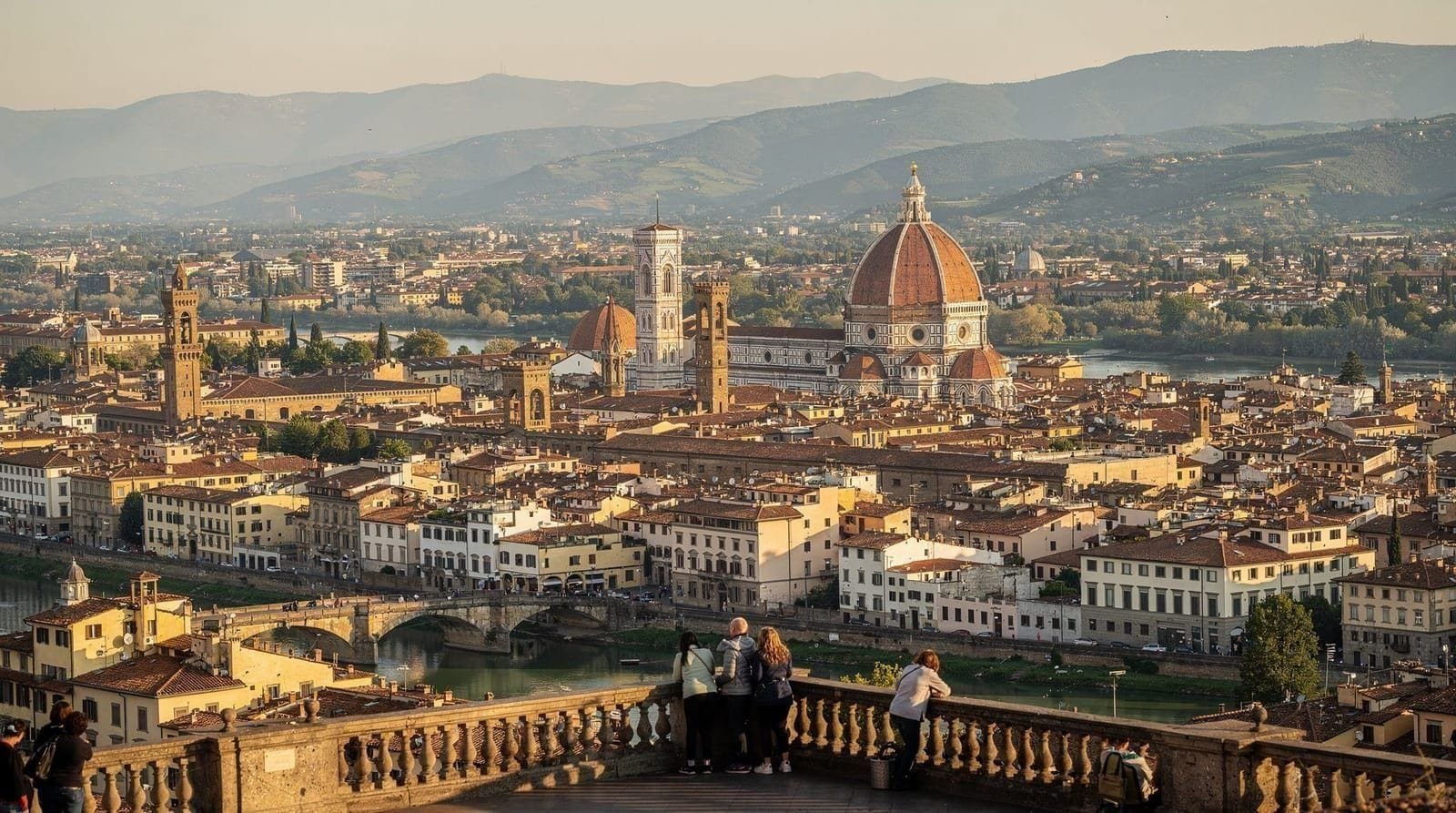
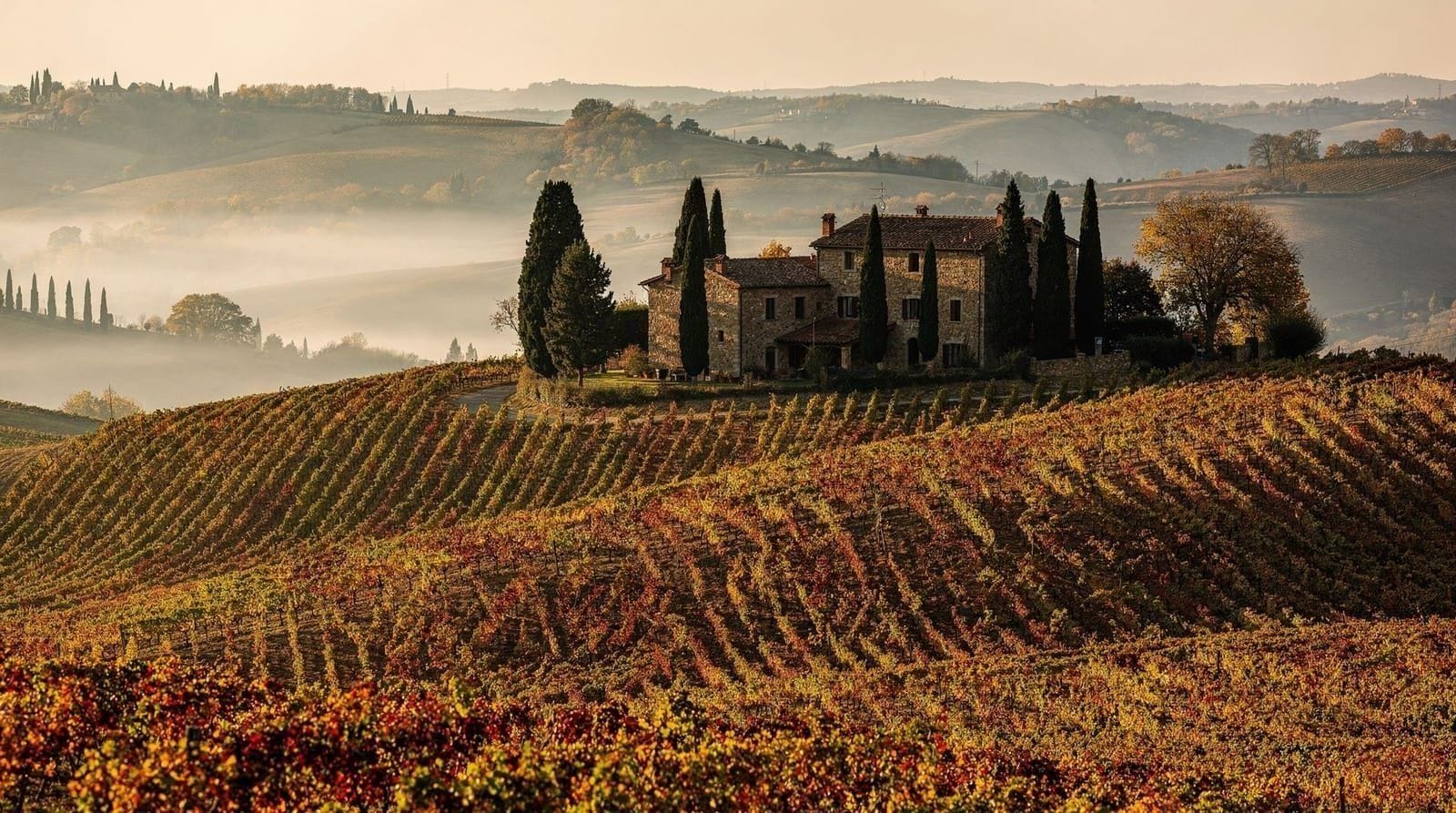
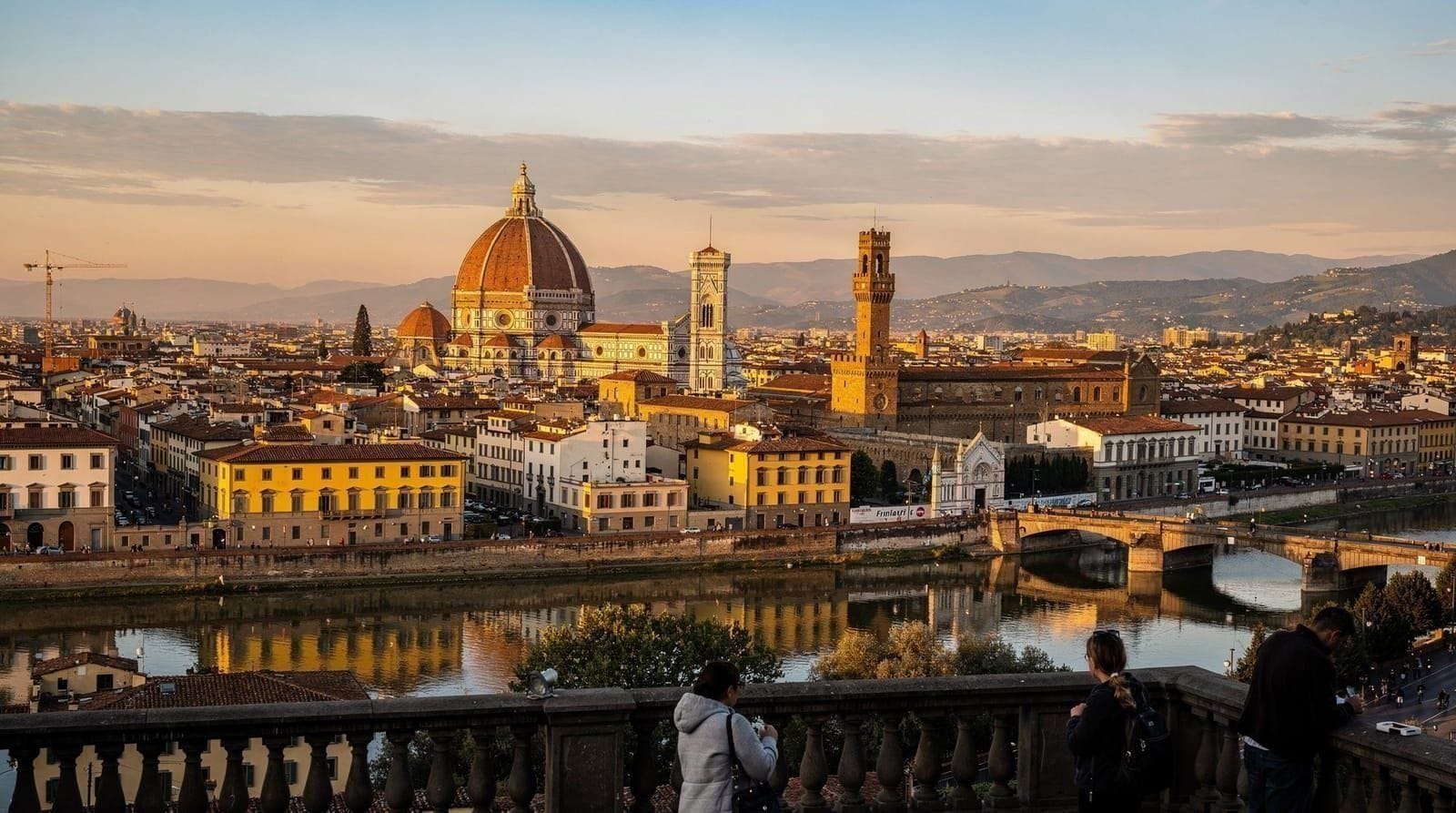
The perfect Tuscany week
Florence: Uffizi Gallery skip-the-line tickets
- Skip the line
- Free cancellation
Seven days is enough to see the essential Tuscany: Florence’s great museums, medieval Siena, the Chianti vineyards, the UNESCO-protected Val d’Orcia landscape, Pisa and the hilltop town of San Gimignano. This itinerary uses a car from Day 3 onward — the Chianti and Val d’Orcia are dramatically better with wheels. Florence itself is best explored on foot.
| Where | Florence, Siena, Chianti, Val d’Orcia, Volterra/Lucca, Pisa |
| Cost | Around €1,200–1,600pp for the week, all-in |
| Time needed | 7 days, car required from Day 3 |
| Getting around | On foot in Florence; rental car from Day 3 |
| Best time | Late April–mid-June or September–mid-October |
Budget estimate (mid-range): €1,200–1,600 per person for seven days including museums (€150 total), accommodation (€80–150/night per room, depending on agriturismo vs city hotel), meals (€60–90/day), car hire (€35–60/day from Day 3), wine tastings (€15–30 per winery) and transport.
Car hire strategy: Pick up the car at Santa Maria Novella station or Florence airport on Day 3 morning, return in Siena or Pisa on Day 7. This avoids ZTL complications in the city for the first two days.
Key advance bookings: Uffizi, Accademia, Duomo dome, Pisa tower. Book 2–3 weeks ahead in April–May and September.
Seven days at a glance:
| Day | Base | Highlights |
|---|---|---|
| Day 1 | Florence | Uffizi Gallery, Piazza della Signoria, Oltrarno |
| Day 2 | Florence | Accademia, Medici Chapels, Duomo complex |
| Day 3 | Siena | Chianti wine stop, arrival in Siena |
| Day 4 | Siena | Siena Duomo, San Gimignano |
| Day 5 | Val d’Orcia | Montepulciano, Pienza, Montalcino |
| Day 6 | Lucca/Pisa | Volterra or Lucca |
| Day 7 | Pisa | Campo dei Miracoli, departure |
Day 1: Florence — Uffizi and Oltrarno
Morning: Uffizi Gallery (9:15–12:30)
The week opens at the Uffizi. With seven days ahead of you, you can take the long approach: start in the medieval rooms (Cimabue, Duccio, Giotto), work through the 15th-century Florentine masters (Lippi, Botticelli, Ghirlandaio), spend 40 minutes in the Botticelli rooms and exit through Raphael and Titian. The terrace view toward the Arno is a good pause point midway.
Afternoon: Piazza della Signoria and Palazzo Vecchio (14:00–17:00)
Piazza della Signoria, Palazzo Vecchio and the Loggia dei Lanzi. With a week ahead, a relaxed afternoon exploring the civic heart of Florence sets the context for everything that follows.
Evening: Oltrarno
Aperitivo in Piazza Santo Spirito, dinner at Trattoria Sostanza or Buca dell’Orafo. Walk Ponte Vecchio after dark.
Day 2: Florence — Accademia, Duomo and San Lorenzo
Morning: Accademia (9:15–11:00) and Medici Chapels (11:30–13:00)
The Accademia and Michelangelo’s David; then the Medici Chapels (separate ticket, ~€12) for the New Sacristy with Night, Day, Dawn and Dusk. See Day 2 of the four-day itinerary for detail.
Lunch: Trattoria Mario or Mercato Centrale ground floor.
Afternoon: Duomo complex (14:30–18:00)
Dome climb, Opera del Duomo Museum, baptistery. The Duomo complex tickets guide explains what to book and in what order.
Evening: Renaissance walking tour
Book an evening Medici and Renaissance walking tour — with two days of museum context, the narrative clicks into place. Dinner at Il Latini or Osteria del Cinghiale Bianco.
Day 3: Florence to Siena — via Chianti (car from Day 3)
Pick up the rental car mid-morning (Santa Maria Novella station car park or airport). Do not drive into the ZTL. Head south on the Via Cassia or SS2, or take the more scenic Chiantigiana road (SR222) through the Chianti hills.
Chianti wine stop (11:00–13:30)
Drive through Castellina in Chianti or Greve in Chianti, stopping at a winery for a cellar tour and tasting. Pre-book through a tour operator or contact the winery directly.
Recommended wineries on the SR222 route:
- Badia a Coltibuono (Gaiole in Chianti) — 11th-century monastery and winery; Chianti Classico and Riserva tasting, self-guided or guided
- Castello di Brolio (near Gaiole) — Ricasoli estate, the home of Chianti Classico; gardens and tasting rooms
- Fattoria di Felsina (near Castelnuovo Berardenga) — elegant wines, professional tasting experience
Allow 2 hours per winery (tour + tasting + drive time).
Lunch: Most agriturismo wineries offer a simple lunch (€20–30 per person) if booked in advance. Alternatively, eat in Castellina or Greve.
Arrival in Siena (15:00–18:00)
Check in to your Siena hotel or agriturismo. Park outside the historic centre (ZTL applies in Siena too — most hotels have a parking code). Then walk into the city.
Siena first afternoon:
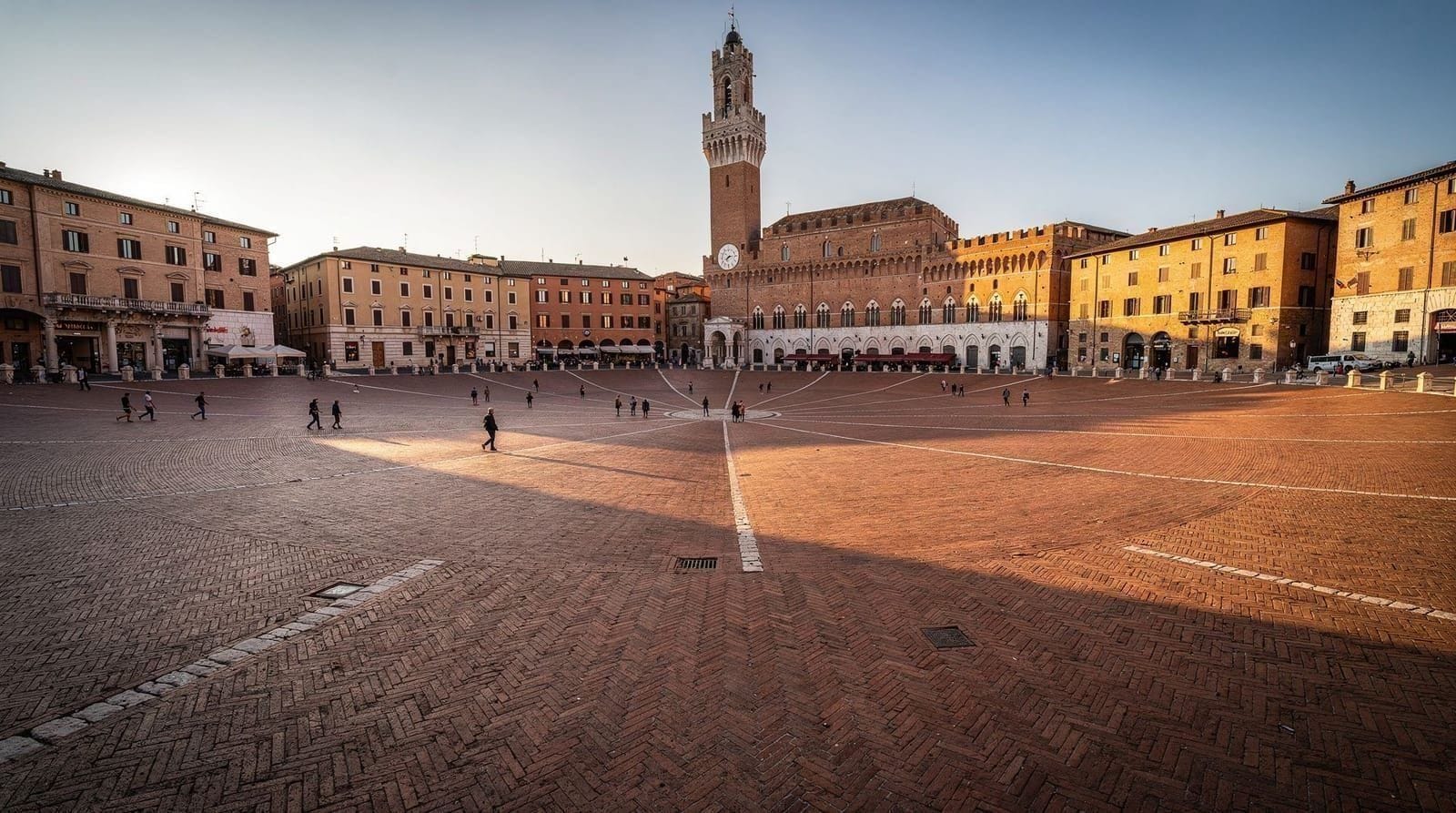
- Walk straight to Piazza del Campo and sit for 30 minutes. Read the square’s history. Notice the nine segments of the paving radiating from the central drain — the Palazzo Pubblico faces the Campo from the northeast.
- The Museo Civico in the Palazzo Pubblico (€10) holds Simone Martini’s Maesta fresco — one of the great works of medieval painting
Dinner in Siena:
- Il Campo (Piazza del Campo) — overpriced for the location, but worth one dinner on the square
- Osteria La Chiacchera (Costa di Sant’Antonio 4) — cheap, excellent pici con ragù
- Trattoria Papei (Piazza del Mercato 6) — traditional, busy, reliable
Day 4: Siena and San Gimignano
Morning: Siena Duomo and sights (9:00–12:00)
The Siena Duomo is arguably the most beautiful Gothic church in Italy. The OPA SI combined pass (€15–25 depending on inclusions) covers the Duomo, the Piccolomini Library, the museum and the Panorama dal Facciatone (spectacular view from the unfinished cathedral wall).
Highlights:
- Piccolomini Library — Pinturicchio’s cycle of Pope Pius II’s life; vivid colours, perfect condition
- Marble floor — 56 panels of intricate marble narrative scenes, visible in full only in September
- Nicola Pisano’s pulpit — proto-Renaissance sculptural revolution, 1265
Walk through the medieval streets south of the Duomo to Piazza del Mercato — the rear of the Campo, and entirely tourist-free.
Lunch in Siena:
- Enoteca I Terzi (Via dei Termini 7) — wine bar, excellent crostini and Tuscan plates, ~€20
- La Vecchia Latteria (Pian dei Mantellini 10) — simple lunch, pasta and salads, €12
Afternoon: San Gimignano (14:00–18:00)
Drive 40 km northwest to San Gimignano. Park outside the walls (free car parks to the north and south). The town’s medieval towers rise into view as you approach on foot.
In San Gimignano:
- Collegiate Church (Duomo) — Ghirlandaio’s Chapel of Santa Fina, right aisle; €5 entry
- Palazzo Comunale — small art collection including a Lippo Memmi Maesta; tower climb for panoramic view (€8)
- Piazza della Cisterna — the 13th-century well and the most photographed corner of town
- Rocca di Montestaffoli — free, excellent view, far fewer visitors than the town below
Buy a cone at Gelateria Dondoli (world champion), then drive back to Siena for the evening.
Dinner back in Siena:
- Osteria il Grifo (Via Pantaneto 57) — neighbourhood trattoria, good Morellino and Brunello by the glass
Day 5: Val d’Orcia — Montepulciano, Pienza and Montalcino
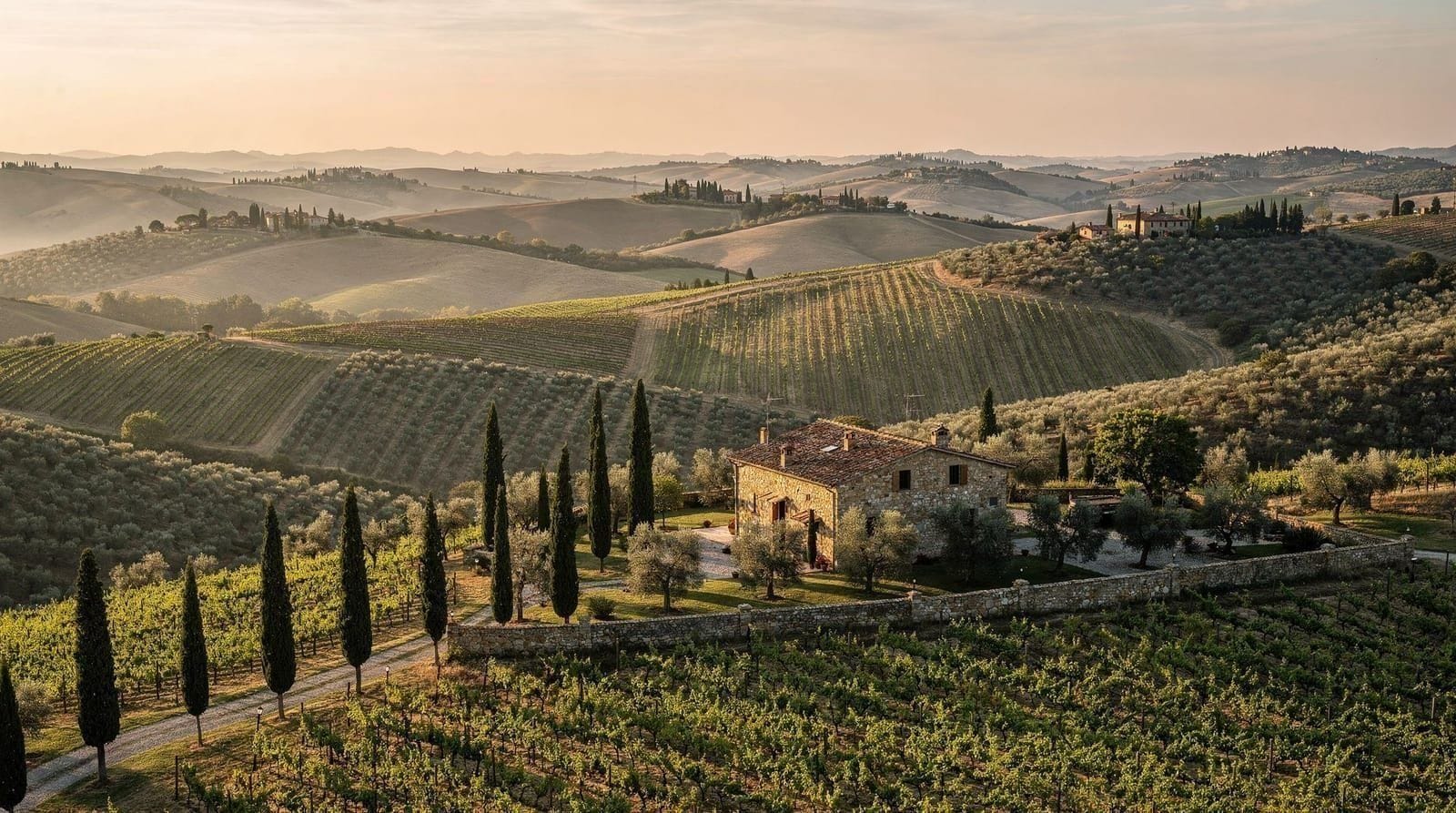
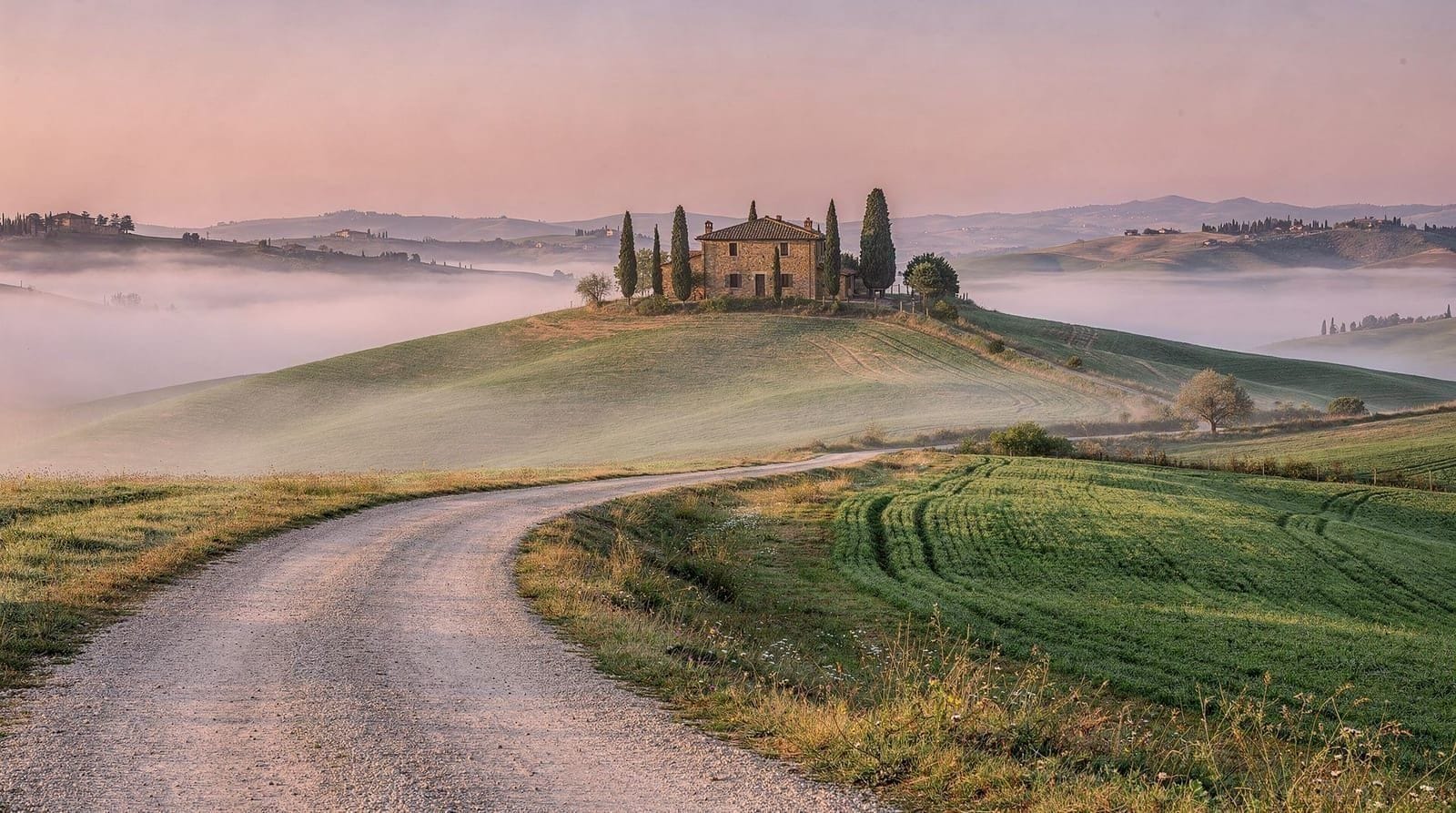
This is the day that most visitors remember longest. The Val d’Orcia UNESCO landscape — rolling hills, cypress-lined roads, medieval hilltops — is what most people imagine when they think of Tuscany.
Route: Siena → Montepulciano → Pienza → Montalcino → Siena or Pienza agriturismo overnight
Drive 65 km southeast from Siena to Montepulciano (1 hour).
Montepulciano (10:00–12:30)
Montepulciano sits on a long ridge at 605 m. The town is known for Vino Nobile di Montepulciano — one of Italy’s top red wines. Walk the main corso from Porta al Prato to Piazza Grande (2 km, steep and winding). At the top:
- Piazza Grande — the civic square with the Palazzo Comunale tower; climb it for the best view of the Val d’Orcia
- Duomo di Montepulciano — Taddeo di Bartolo’s altarpiece inside
For wine, descend into one of the town’s cellars (cantina) built into the volcanic tufa. Cantina dei Ricci (Via Colloredo 2) or Avignonesi for guided tastings (book ahead, ~€25).
Lunch in Pienza:
Drive 14 km west to Pienza. This perfectly preserved Renaissance ideal city (built 1459–1462 for Pope Pius II) is also the capital of Pecorino di Pienza cheese.
- Latte di Luna (Via San Carlo 2) — excellent pasta and the inevitable Pecorino, mains €14–18
- Any of the deli counters on Via del Leone for Pecorino with honey and walnuts
Afternoon: Pienza and Montalcino (14:00–18:00)
Spend 45 minutes in Pienza — the Duomo and Palazzo Piccolomini are worth visiting, and the garden balcony of the palazzo gives a Val d’Orcia view that photographers book before sunrise.
Drive 25 km west to Montalcino. The town (pop. 5,000) produces Brunello di Montalcino, one of Italy’s most powerful and cellar-worthy wines.
- La Fortezza (the medieval fortress, top of town) — the wine bar inside serves Brunello and Rosso di Montalcino by the glass with vineyard views. €8–15 per glass.
- Visit the abbey of Sant’Antimo (12 km south) — a Romanesque masterpiece in a valley, Gregorian chants some mornings; free entry
Overnight: Consider staying in a Val d’Orcia agriturismo tonight rather than returning to Siena — the landscape at dawn is extraordinary and you avoid the 1-hour drive back.
Dinner: Your agriturismo hosts often prepare dinner (€30–40, wine extra). Or drive to Osteria del Casato in Montalcino — excellent Brunello pairing menu.
Day 6: Volterra or Lucca, then travel toward Pisa
Option A: Volterra (morning)
Volterra is 50 km northwest of Siena — an Etruscan and medieval hilltop city with fewer visitors than San Gimignano. The Museo Etrusco Guarnacci (€9) holds one of the best Etruscan collections outside Rome. The Pinacoteca (€7) has a Rosso Fiorentino masterpiece. Alabaster workshops line the main street.
Drive time from Val d’Orcia: 1h30. Return route toward Pisa: 1h.
Option B: Lucca (afternoon)
Lucca is a walled Renaissance city 80 km northwest of Volterra. The 4 km circuit of intact city walls has been converted into a tree-lined promenade — rent bikes inside the walls and cycle the loop. The San Martino Cathedral holds Tintoretto and Giambologna works. Piazza dell’Anfiteatro is built on the oval footprint of a Roman amphitheatre.
Overnight: Stay in Lucca or Pisa for the final night — convenient for Day 7 departure.
Dinner in Lucca:
- Trattoria da Leo (Via Tegrimi 1) — legendary local trattoria, ribollita and garmugia soup, cash only, mains €10–14
- Buca di Sant’Antonio (Via della Cervia 3) — more refined, excellent Lucchese pasta dishes
Day 7: Pisa and departure
Pisa (9:00–13:00)
Pisa is 20 km west of Lucca (20 minutes by car or 30 by train). The Campo dei Miracoli (Field of Miracles) is the monumental concentration of medieval buildings on the city’s north edge:
- Leaning Tower — pre-booked timed entry (~€20), 294 steps, 30-minute slot; lean is real and disorienting
- Cathedral — included with tower ticket; Romanesque interior, Pisano pulpit
- Baptistery — the acoustic demonstrations are a genuine surprise
Leave the car in the free car park on Via Pietrasantina north of the Campo. Or park at the railway station if flying from Pisa airport.
Lunch: Near the Campo or in the university area. Osteria dei Cavalieri (Via San Frediano 16) is reliable.
Departure: Pisa Galileo Galilei airport is 5 km from the centre (10-minute taxi/bus). Or return by train to Florence Santa Maria Novella (1 hour, direct). Drop the rental car at Pisa airport or Pisa station.
Accommodation strategy
Days 1–2: Florence (historic centre or Oltrarno) — no car needed, walk everywhere
Day 3: Siena (hotel within or near the walls, parking code required)
Days 4–5: Siena or Val d’Orcia agriturismo (switch on Day 5 if possible)
Day 6: Lucca or Pisa
Agriturismo options in Val d’Orcia: Castello di Velona (Montalcino, pool, magnificent views), La Foce (Chianciano), Podere Il Casale (Pienza). Book 3+ months ahead in peak season.
Adjusting the pace
Seven days of near-daily driving and a new town every day or two is genuinely tiring, even at a moderate pace. If you’d rather slow down, the easiest cut is Day 6 (Volterra or Lucca) — drop it and add a second night in Val d’Orcia instead, giving Day 5’s landscape the unhurried treatment our dedicated Val d’Orcia road trip itinerary describes in full. Travellers who want more hill towns and less wine-region driving should look at the Tuscany hill towns road trip, which covers Siena, San Gimignano, Volterra, Cortona and Arezzo in a tighter geographic loop. For a shorter Florence-only trip before deciding whether to extend into Tuscany, Florence and Tuscany in 5 days is the natural comparison.
What this itinerary leaves out
Seven days, even used efficiently, cannot cover everything Tuscany offers. It skips the Maremma coastline, Elba, and a proper wine-region stay in Montalcino or Montepulciano beyond a single afternoon. If wine is the priority over sightseeing breadth, consider swapping Day 6 for an extra night in Montalcino and booking a second Brunello estate visit rather than driving to Volterra or Lucca. Cinque Terre is also a common add-on — it works as a Day 6 substitute (see the FAQ below) but pulls the trip toward the coast and away from the wine-country focus this route is built around.
Packing for a week with a rental car
Bring one bag per person that fits comfortably in a mid-size hatchback boot alongside luggage for two — Tuscan hire cars are often smaller than expected. A physical driving licence (plus an International Driving Permit if your licence isn’t EU/UK/US-issued), a phone mount, and a portable charger for GPS use are worth packing. Sturdy shoes matter more than usual: Siena, San Gimignano, Volterra and Cortona are all built on slopes with uneven medieval paving, and Val d’Orcia’s scenic viewpoints often mean parking and walking the last stretch. See driving in Tuscany for a fuller rundown of ZTL rules, tolls and road signage before you pick up the keys.
Frequently asked questions about this itinerary
Do I really need a car for a Tuscany week?
For the Val d’Orcia and Chianti sections, a car transforms the experience — wineries are often off public transport routes, and the scenic drives between towns are part of the appeal. Days 1–2 in Florence: walk. Days 3–7: rent a car. The driving in Tuscany guide covers road signs, autostrada tolls and ZTL rules.
What is the ZTL rule in Siena?
Like Florence, Siena has a ZTL in its historic centre with cameras at every gate. Most hotels provide a temporary access code — get this from your hotel before entering. Do not drive through the ZTL gates without a code. Park in the designated car parks (Campo di Marte, Santa Caterina, San Francesco — all well signposted).
When is the best time for this 7-day Tuscany trip?
Late April to mid-June (wildflowers, green hills, mild temperatures) or September to mid-October (grape harvest, golden light, less crowded). Avoid August: 35°C heat, many businesses closed, beaches overflowing. November and March are dramatically cheaper but some agriturismo close.
Can I substitute Cinque Terre for one of these stops?
Cinque Terre is 2.5–3 hours from Florence by train. If you swap Day 6 Volterra for a Cinque Terre overnight, you could spend one night on the coast and see two villages properly. It’s a 45-minute drive from Lucca to the nearest Cinque Terre train station (La Spezia). See getting to Cinque Terre.
What language do I need beyond Italian basics?
In Florence and major tourist sites, English is widely spoken in museums and restaurants. In rural Val d’Orcia agriturismo and small village restaurants, basic Italian is helpful. Key phrases: “Un tavolo per due” (table for two), “Il conto, per favore” (the bill, please), “Senza glutine” (gluten-free if needed), “Rosso della casa” (house red — usually fine and cheap).
Is 7 days enough to see all of Tuscany?
Seven days covers the essential Tuscany circuit. It does not include Arezzo (Piero della Francesca frescoes), Cortona (overlooking the Valdichiana), or the Maremma coastline. The Arezzo and Cortona guide covers those options for a second Tuscany trip.
Top experiences
Bookable activities with verified prices and instant confirmation on GetYourGuide.

Florence: Uffizi Gallery skip-the-line tickets
- Skip the line
- Free cancellation
Florence: Accademia Gallery — David skip-the-line ticket
- Skip the line
- Instant confirmation

Florence: Chianti wineries tour with wine tasting
- Free cancellation
- Small group
Val d'Orcia: Montepulciano, Pienza and Montalcino with winery
- Free cancellation
- Small group

Siena: walking tour and skip-the-line Duomo tickets
- Skip the line
- Small group

Pisa: timed entry leaning tower and cathedral tickets
- Skip the line
- Instant confirmation