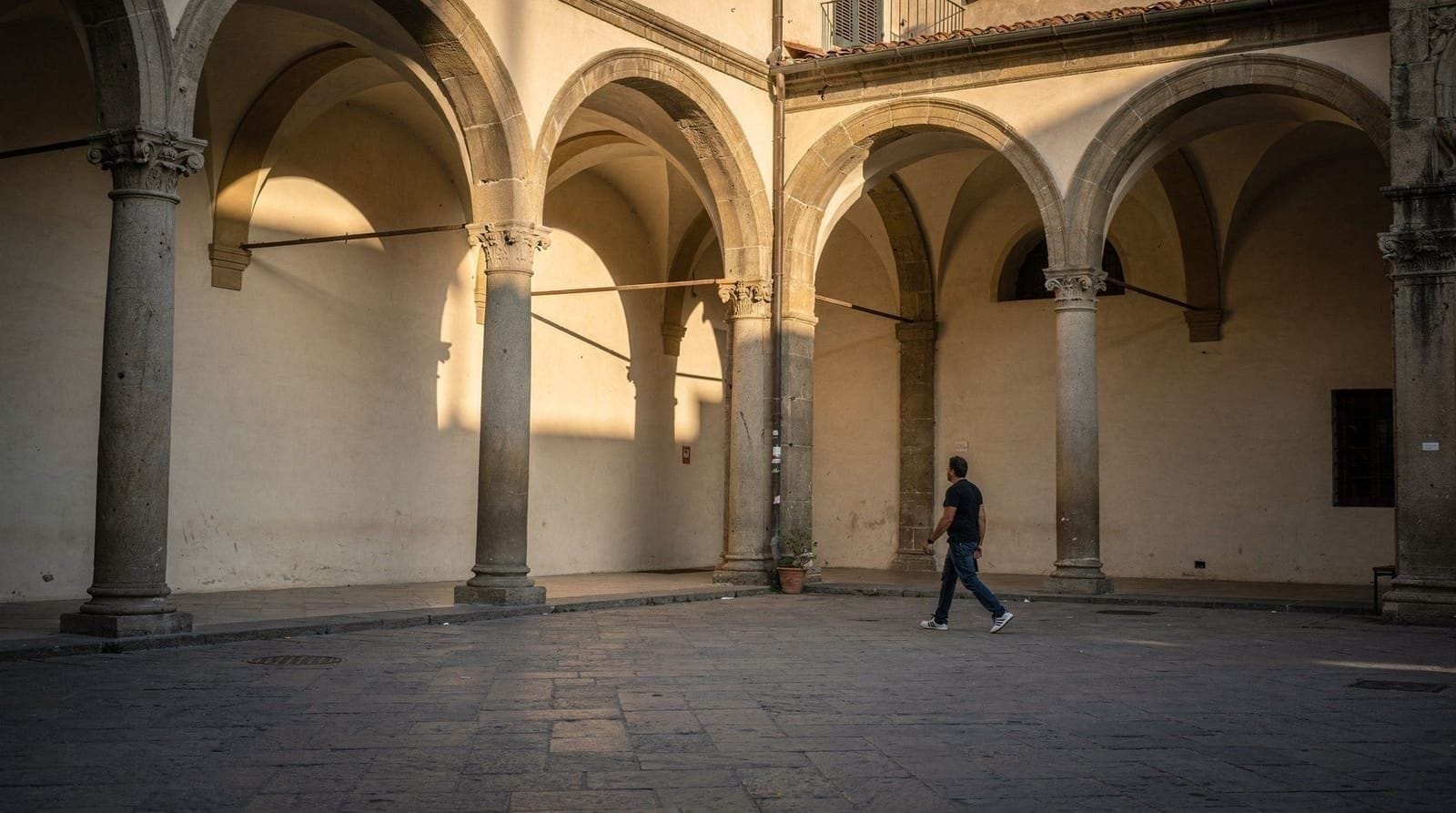
Dante Alighieri in Florence: the poet's city
Florence: private medieval and Renaissance 3-hour walking tour
- Free cancellation
Where can I follow Dante's life in Florence?
The main Dante sites in Florence are: the Casa di Dante museum near Via Santa Margherita; the Badia Fiorentina (where he first saw Beatrice); the Baptistery of San Giovanni (where he was baptised and later dreamed of returning to receive his laurels); Santa Croce (his empty cenotaph, as he is buried in Ravenna); and Piazza della Signoria (where his political enemies ordered his exile).
Dante Alighieri was born in Florence in 1265, lived there until age 37, and spent the last 19 years of his life in exile, never permitted to return. Yet Florence is everywhere in his work — in the dialects he chose to elevate, in the political grudges he settled through the architecture of Hell, in the beauty he attributed to Paradise by having Beatrice, a Florentine girl, lead him through it.
The relationship between Florence and its greatest poet is one of the most complicated in literary history: a city that exiled the poet who would make it immortal, and a poet who made his exile a permanent accusation against those who sent him.
| Where | Casa di Dante quarter, near Piazza della Repubblica |
| Cost | €4 (Casa di Dante) to free (Badia, San Martino) |
| Time needed | 1.5–2 hours for the core sites on foot |
| Getting there | Central — all sites within a 10-minute walk |
| Best time | Early morning, before the medieval lanes fill up |
Dante’s Florence: the medieval city
The Florence Dante knew bore little resemblance to the Renaissance city visitors come to see today. The Duomo was under construction but not yet covered by Brunelleschi’s dome (not completed until 1436). The Palazzo della Signoria did not yet exist. The streets were narrower, the buildings taller and more fortress-like, the city more violent and more factional.
Florence in Dante’s time was divided between the Guelfs (supporters of the Pope) and the Ghibellines (supporters of the Holy Roman Emperor). The Guelfs had largely won, but had themselves split into the White Guelfs (who wanted Florentine autonomy) and the Black Guelfs (who supported direct Papal intervention). Dante’s family were White Guelfs; this would eventually cost him everything.
The city was also extraordinarily prosperous. The florin, minted in Florence from 1252, was the dominant currency of European trade. Florentine banking families — the Bardi, the Peruzzi, later the Medici — were the bankers of kings and popes. The physical wealth is still visible in the medieval towers that survive (mostly reduced in height by later ordinances): these were statements of family power, built as high as possible to overshadow rivals.
The Dante sites in Florence
Casa di Dante museum
Via Santa Margherita 1, a minute’s walk from Piazza della Repubblica. The building presented as Dante’s house is a 20th-century reconstruction — the original medieval structure does not survive. The museum inside, however, is genuinely useful: it traces Dante’s life, the political context of his exile, the structure and content of the Divine Comedy, and his place in Italian cultural history.
For visitors who want to understand what they’re looking at when they walk the medieval quarter, the museum provides the best introductory context available in English. Entry is modest (approximately €4); no advance booking required.
Badia Fiorentina
Directly across from the Bargello on Via del Proconsolo. The Badia (Abbey) is where Dante, according to his own account in the Vita Nuova, first saw Beatrice Portinari. She was eight or nine years old; he was the same age. Whether the encounter was as transcendent as Dante later described it is another matter.
The church is also where Dante heard the clock strike every morning — he mentions the Badia’s bell in the Paradiso. The interior contains a Filippino Lippi altarpiece (free to visit during limited hours). The small courtyard visible from the street is one of the quieter medieval spaces in the centre.
San Martino del Vescovo
Via Dante Alighieri, adjacent to the Casa di Dante. This small oratory was the Alighieri family chapel — the private church of Dante’s clan. The interior contains 15th-century frescoes by the Ghirlandaio workshop. It is rarely visited and almost never crowded. Opening hours are irregular; check locally.
The Baptistery of San Giovanni
The Baptistery on Piazza del Duomo was built between the 4th and 7th centuries, with its distinctive marble inlay exterior added in the 11th and 12th centuries. Dante was baptised here in 1266, as were effectively all Florentines of his generation.
In the Paradiso (Canto XXV), Dante expresses his longing to return to Florence and receive the laurel crown of the poet at the baptismal font where he was christened. He never did return; the laureation never happened. The passage is one of the most poignant in the entire Comedy — a fantasy of the reconciliation that was denied him.
The Baptistery’s bronze doors were a source of civic pride in Dante’s time: the South Doors by Andrea Pisano, depicting scenes from the life of John the Baptist, were completed in 1336, fifteen years after Dante’s death. Ghiberti’s famous Gates of Paradise — which Dante did not live to see — came later (1425–1452). Dante would have known only the older original doors.
The Baptistery interior contains magnificent Byzantine mosaics. Full guide: Florence Duomo guide. Entry included in Duomo complex ticket.
Santa Croce: the empty cenotaph
The Basilica di Santa Croce contains Dante’s cenotaph — an elaborate neoclassical monument (1829) that is entirely empty. Florence asked for Dante’s remains from Ravenna many times over the centuries; Ravenna consistently refused. The cenotaph is a monument to the refusal as much as to the poet.
The monument faces Michelangelo’s tomb across the nave. Nearby are monuments to Galileo, Machiavelli, and Ghiberti. Santa Croce is essentially the Florentine Pantheon — the place where great Florentines who actually lived and died here are buried, and where Dante is memorialised despite being buried 350 kilometres away.
Santa Croce is open daily (small entry fee, approximately €8). See Santa Croce guide for full details.
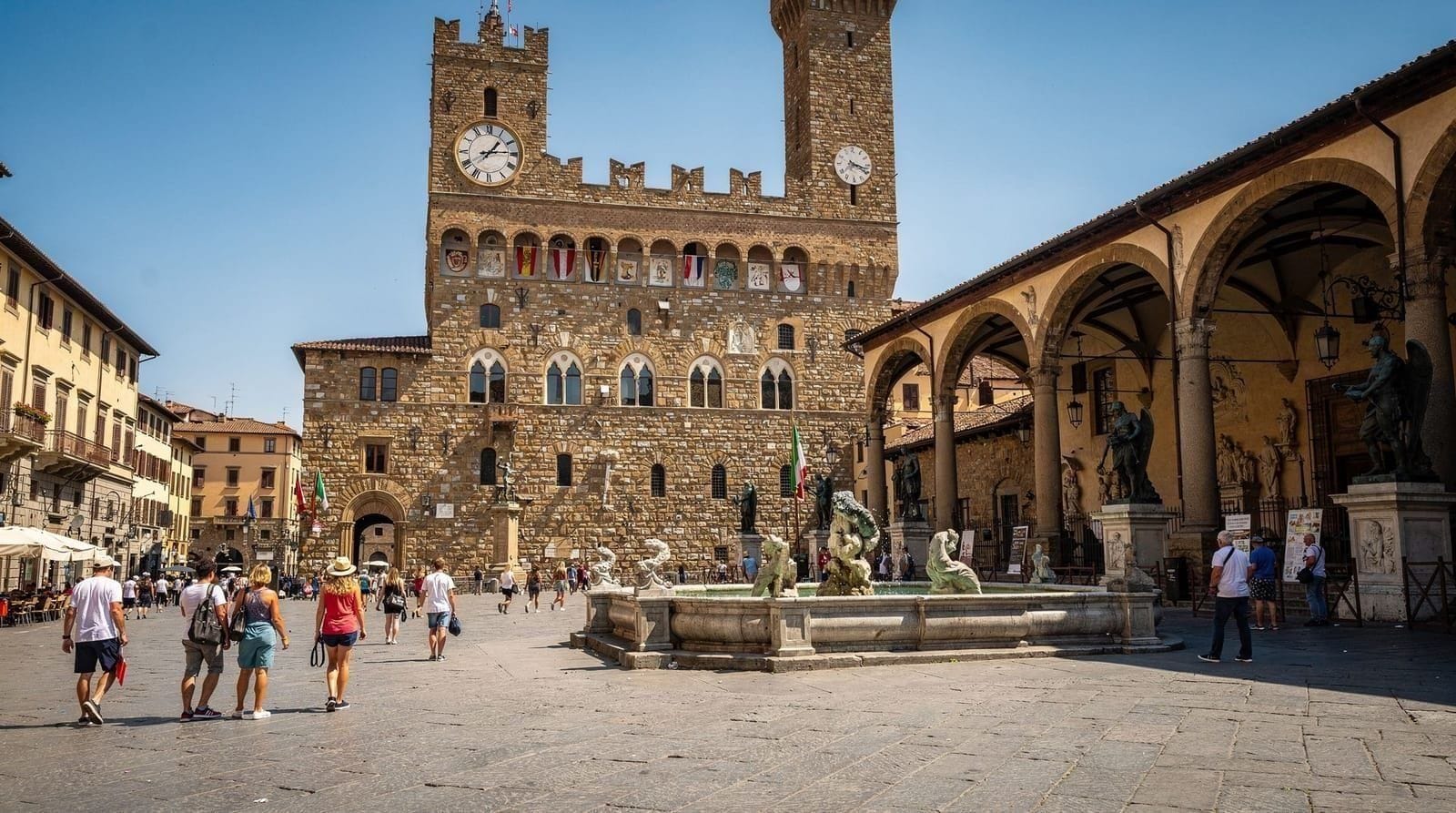
Piazza della Signoria and Palazzo Vecchio
The Palazzo della Signoria (now Palazzo Vecchio) was built between 1299 and 1314 — partly during Dante’s political career and exile. It was in this piazza, before its current landmark, that the political life of Florence was conducted: the Signoria (the governing council) met here; it was here that factional violence was organized, and here that the Black Guelf takeover of 1301–1302 consolidated the power that would send Dante into exile.
Dante served Florence as an elected Prior (a member of the Signoria) in 1300. He later wrote that the root of his troubles began with that election — his responsibilities in that office included banishing political troublemakers from both factions, a decision that made him enemies on both sides.
Dante’s exile: the sentence and its meaning
On January 27, 1302, Dante was found guilty by the Black Guelf-controlled court of financial crimes, corruption, and opposition to Papal authority. He was sentenced to pay a large fine and serve two years in exile. He refused to appear before the court or pay. On March 10, 1302, the sentence was commuted to death by fire if he ever returned to Florentine territory.
He was 37. He never returned.
The exile is the biographical fact that shapes everything in the Divine Comedy. Dante set his journey through the afterlife in the year 1300 — two years before his exile, when he was still a Florentine citizen in good standing. This allowed him to place his enemies in Hell and his friends in Heaven, and to receive “prophecies” of his own exile from characters in the afterlife — prophecies that appear in the text because Dante, writing after the fact, is composing what the dead “foretold.” The literary device is both technically brilliant and personally devastating to read.
He wrote the Divine Comedy in Verona, Lucca, Ravenna, and probably several other cities of his wandering. The Inferno was completed around 1314; the Purgatorio around 1315; the Paradiso was not quite finished when he died in 1321.
He died of malaria in Ravenna at 56, having never seen Florence again.
Dante’s Italian: the language question
The Divine Comedy was written in the Tuscan vernacular rather than in Latin — the language of serious literary and philosophical writing in Dante’s time. This was a deliberate political and aesthetic choice. Dante argued in his treatise De Vulgari Eloquentia that a refined vernacular could be a legitimate literary language; by writing his greatest work in it, he demonstrated the argument.
The result was transformative. Because the Divine Comedy was widely read and widely influential, the Tuscan dialect of the 14th century became the template for standard Italian. When Italy unified in the 19th century and needed a common written language, it took Dante’s Italian as the model. The language spoken by Italian schoolchildren today is, in its literary registers, descended from the dialect of the man who was born on Via Dante Alighieri.
The Divine Comedy: a brief guide for visitors
The Comedy is divided into three canticles: Inferno (34 cantos), Purgatorio (33 cantos), and Paradiso (33 cantos). Dante is guided through Hell and Purgatory by the Roman poet Virgil; through Heaven by Beatrice and then by Saint Bernard of Clairvaux.
Inferno: The most widely read section. Hell is a funnel-shaped structure descending to the centre of the earth, with nine circles each corresponding to a category of sin. The punishments are contrapasso — poetically appropriate mirrors of the sin: the lustful are blown by perpetual storm; the gluttonous lie in mire; the fraudulent are submerged in pitch. The imagery is vivid, often darkly funny, and full of Florentines.
Purgatorio: Generally considered the most human and optimistic canticle — suffering with purpose, working toward redemption. The mountain of Purgatory has seven terraces, one for each of the seven deadly sins, each cleansed in turn. The Earthly Paradise at the summit is where Dante meets Beatrice.
Paradiso: The most difficult and most beautiful section, as Dante rises through the celestial spheres. The theology is dense, but the imagery of light and music, and Beatrice’s gradual transformation into something beyond human, is extraordinary.
For first-time readers, the prose translation by Mark Musa (Penguin Classics) is the most accessible. The verse translation by Clive James (2013) is the most poetic modern version in English.
Walking in Dante’s neighbourhood
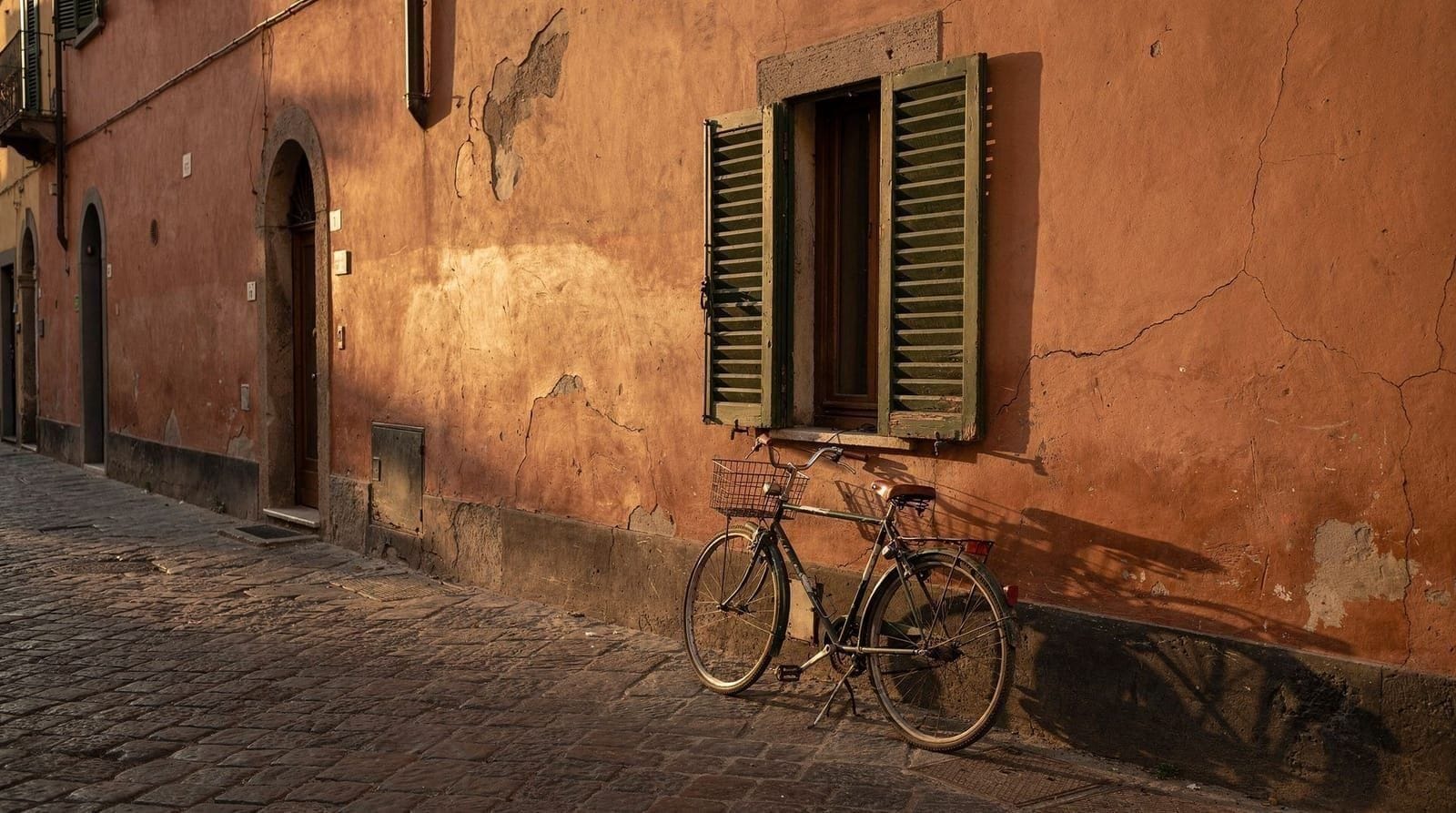
The area around Via Dante Alighieri, Via Santa Margherita, and Via del Corso is the most intact medieval quarter of central Florence. The streets are narrow enough that the tower-buildings on either side still shade the pavement. A slow walk through this area, ideally in the early morning before the tourist flow builds, gives some sense of the compressed, watchful quality of the city Dante knew.
Nearby: the Badia Fiorentina (turn left off Via del Proconsolo), the Bargello (two minutes south), Piazza della Signoria (five minutes west). The Oltrarno — on the other side of the Arno — was Dante’s time largely across the river, but the Ponte Vecchio (or the bridge that stood in its place) was the crossing Dante would have used.
Combining Dante’s sites with a wider Florence day
The Dante quarter sits at the crossroads of several other must-see areas, so it’s easy to fold into a broader morning rather than treating it as a separate outing. From the Casa di Dante, it’s a short walk to the Bargello Museum and the Duomo district, and a slightly longer one to Piazza della Signoria and the Uffizi. If you’re building a first-time Florence itinerary, the Dante sites work well as a low-key, uncrowded start to the day before the major museums open.
None of the individual Dante sites take long on their own, which is exactly what makes them easy to skip and easy to regret skipping. Treating them as a 90-minute prelude to a bigger museum day — rather than a dedicated half-day outing — is the realistic way most visitors actually fit them in, and it works well precisely because none of the stops require booking or a fixed time slot.
Reading the Comedy before or after your visit
Visiting the sites carries more weight if you’ve read at least the Inferno beforehand — even a few cantos change how Piazza della Signoria or the Baptistery feel underfoot. If you’d rather read afterward, seeing the physical geography first (the narrow medieval lanes, the closeness of the Badia to the Bargello, the scale of Santa Croce) makes the political intimacy of Dante’s Florence easier to picture when you do sit down with the text. Either order works; what matters is not skipping the reading altogether if the poet’s Florence has caught your interest.
Even a modest amount of preparation pays off disproportionately here compared to most Florence sights. A single canto of the Inferno — Canto X, with the Farinata degli Uberti episode set among real Florentine political families, is a good starting point — takes ten minutes to read and will make the political geography of Piazza della Signoria and the Bargello area feel entirely different when you’re standing in it.
Frequently asked questions about Dante in Florence
Is there a Dante tour in Florence?
The medieval and Renaissance Florence walking tour covers Dante’s quarter and the political context of his life. Several specialist guides offer literary Florence tours that focus on Dante and Boccaccio (who was born in or near Certaldo, a Tuscan town day-trippable from Florence). The city highlights walking tour typically includes the Casa di Dante area.
Did Dante know Giotto?
Almost certainly yes. Giotto was born in the Mugello valley around 1267 (two years after Dante) and worked in Florence throughout Dante’s time there. Dante mentions Giotto in the Purgatorio (Canto XI): “Cimabue thought he held the field in painting, but now Giotto has the cry.” This is one of the earliest recorded examples of art criticism in Italian literature.
Was Dante friends with any other famous people?
He was a close friend of the poet Guido Cavalcanti and his fellow dolce stil novo poets. He knew Brunetto Latini (his teacher), and places him in Hell with evident grief in Inferno Canto XV. He apparently knew Giotto, possibly Cimabue. He was politically allied with Giano della Bella (reformist) and various White Guelf leaders.
What is Dante’s connection to the Medici?
The Medici rose to prominence more than a century after Dante’s death; the two worlds don’t overlap directly. However, the Medici were enthusiastic promoters of Dante’s legacy: Lorenzo de’ Medici wrote an influential critical essay on the Divine Comedy, lectured on Dante publicly, and saw the promotion of the Tuscan vernacular as both literary and political.
Can you visit Ravenna from Florence to see Dante’s tomb?
Yes. Ravenna is approximately 100 km northeast of Florence — about 1 hour 30 minutes by train from Santa Maria Novella station. The Tomb of Dante is a small neoclassical temple in the centre of Ravenna, adjacent to the Basilica of San Francesco. It is free to enter. Ravenna’s Byzantine mosaics (in the Mausoleum of Galla Placidia and the Basilica of Sant’Apollinare Nuovo) are themselves extraordinary, making a day trip to Ravenna a worthwhile excursion in their own right.
Do I need to book anything in advance for the Dante sites?
No. The Casa di Dante museum, Badia Fiorentina, San Martino del Vescovo, and Santa Croce’s cenotaph are all walk-up, ticketed on arrival where a fee applies. Only the Baptistery requires a slot as part of the Duomo Complex pass — see the booking Florence attractions online guide if you’re combining it with the dome or other timed-entry sites.
Top experiences
Bookable activities with verified prices and instant confirmation on GetYourGuide.