Florence with kids: 3-day family itinerary
Florence: pizza and gelato family-friendly cooking class
- Free cancellation
- Small group
Florence with children is better than many parents expect — and more manageable than the reputation of a “museum city” suggests. Children respond strongly to Michelangelo’s David (the sheer scale), to climbing the Duomo dome (adventure), to gelato tours (obvious), to Fiesole (open air, Roman ruins to clamber over) and to watching artisans at work in the Oltrarno workshops. The trick is to anchor each day with one high-quality museum experience and fill the rest with the city’s streets, food and outdoor spaces.
| Where | Florence historic centre, Oltrarno and Fiesole (day 3) |
| Cost | Around €350–500 for a family of 4 over three days |
| Time needed | 3 days, lighter pace than an adult itinerary |
| Getting around | On foot in Florence; bus 7 to Fiesole (~€1.70pp) |
| Best time | Spring or early autumn — avoid peak midday heat in July–August |
Age reality check:
- Under 5: Boboli Gardens, Fiesole park, gelato and market visits work well. Museums are mostly unsuitable.
- 6–10: Accademia (David is mesmerising), cooking classes, Duomo exterior, Fiesole ruins.
- 10–14: Everything in this itinerary works. The Uffizi is better at 12+ when children can engage with painting narratives.
- 14+: All adult itineraries apply.
Budget estimate (family of 4 with 2 children): €350–500 over three days. Most museums are free for under-18 EU citizens; non-EU children under 18 pay (Uffizi and Accademia ~€8–12 for under-18 with an adult).
Three days at a glance:
| Day | Morning | Afternoon | Evening |
|---|---|---|---|
| Day 1 | Accademia Gallery | San Lorenzo market, Pitti Palace + Boboli Gardens | Pizza and gelato |
| Day 2 | Piazza della Signoria, Duomo complex | Pizza-making class | Aperitivo (parents) and gelato (kids) |
| Day 3 | Fiesole | Oltrarno artisan workshops | Final gelato and dinner |
Day 1: The Accademia, San Lorenzo market and Boboli Gardens
Morning: Accademia Gallery (9:15–11:00)
The Accademia is the right museum for children in Florence. It is focused (one main destination: Michelangelo’s David), not overwhelming, and the David itself is genuinely impressive at any age. The scale — 5.17 m — is hard to convey in photographs; standing beneath it is an experience children remember.
Tips for visiting with kids:
- Book the earliest timed entry slot (9:15) — before larger groups arrive
- Give children a simple task: count the veins on David’s right hand, find the slingshot, look at what he’s looking at (angled left, slightly tense)
- The Prigioni (Prisoners) — the four half-finished figures in the corridor before David — often intrigue children more than the finished statue. “Why didn’t he finish them?” is a great question.
- The museum has toilets and a cloakroom near the entrance
Allow 1.5 hours maximum for children under 12; they’ll be ready to move on.
Mid-morning: San Lorenzo market (11:30–12:30)
Walk five minutes south to the San Lorenzo outdoor market — the busy covered and open-air stalls near the Medici church. The leather goods section is tourist-oriented (and quality varies), but the food section of the Mercato Centrale (ground floor) is excellent: fresh pasta, cheese, lampredotto sandwiches, fruit.
The upstairs hall at Mercato Centrale is a food court — convenient, reasonably priced, children friendly. Budget €10–15 per person for lunch.
Alternatively: Trattoria Mario (Via Rosina 2) has communal tables and simple Tuscan food that children usually accept — ribollita, pasta al ragù, roast chicken. Cash only, mains €8–14.
Afternoon: Pitti Palace and Boboli Gardens (14:00–17:30)
Cross the Arno to the Oltrarno for the Boboli Gardens — the most child-accessible space in central Florence. The terraced Renaissance garden behind the Pitti Palace covers 45,000 square metres with wide gravel paths, shade trees, fountains, grottos and a long cypress allée.
What children enjoy in Boboli:
- The Grotta Grande (Buontalenti’s cave, near the entrance) — stalactite-like decorations, cast figures, theatrical interior; children find it simultaneously spooky and fascinating
- The fountain of Neptune (upper garden) — the big pool is a good rest point
- The Viottolone (long cypress allée) — a straight run downhill that young children love
- The amphitheatre behind the palace — the space where Medici entertainments were staged; good for running around
The Boboli is included in the Pitti Palace combined ticket (~€22 adults; free for EU under-18 in most categories). If you only want the garden, entry is €7.
Skip the Pitti interior for children under 10 — too many ornate rooms in sequence without enough variation to hold attention.
Evening: pizza and gelato (18:00)
Dinner sorted easily tonight. Pizza near the Oltrarno:
- Gustapizza (Via Maggio 46) — possibly the best pizza in Florence; simple, authentic Neapolitan-style, queue outside; children love it. About €8–10 per pizza.
- Il Latini (Via dei Palchetti 6) — family-friendly atmosphere, communal tables, pasta and grilled meats
Gelato: On the way home, pass by one of the better gelaterie. Gelateria dei Neri (Via dei Neri 20–22) is consistently good; Sbrino (Via Sant’Agostino 25, Oltrarno) is excellent. Honest tip on gelato: real artisan gelato is stored in covered metal pans and served at a slightly warmer temperature than industrial ice cream. Avoid places with towering fluorescent mounds of product — those use artificial colours and stabilisers.
Day 2: Duomo and Piazza della Signoria, pizza-making class
Morning: Piazza della Signoria and Palazzo Vecchio (9:30–11:30)
Piazza della Signoria and the Loggia dei Lanzi are an excellent start to Day 2: open-air, free, immediately impressive. Children can see the outdoor sculptures (Cellini’s Perseus with Medusa’s head, Giambologna’s dramatic Rape of the Sabine Women) without waiting in line.
Palazzo Vecchio has a specific family programme (Laboratorio dei Ragazzi — children’s workshop) that runs at scheduled times; check the museum’s current schedule. The standard visit includes the Hall of Five Hundred with Vasari’s enormous ceiling paintings, the private Medici apartments and secret passageways. Children 8+ generally find the secret rooms compelling. Entry ~€12 adults, €2 children.
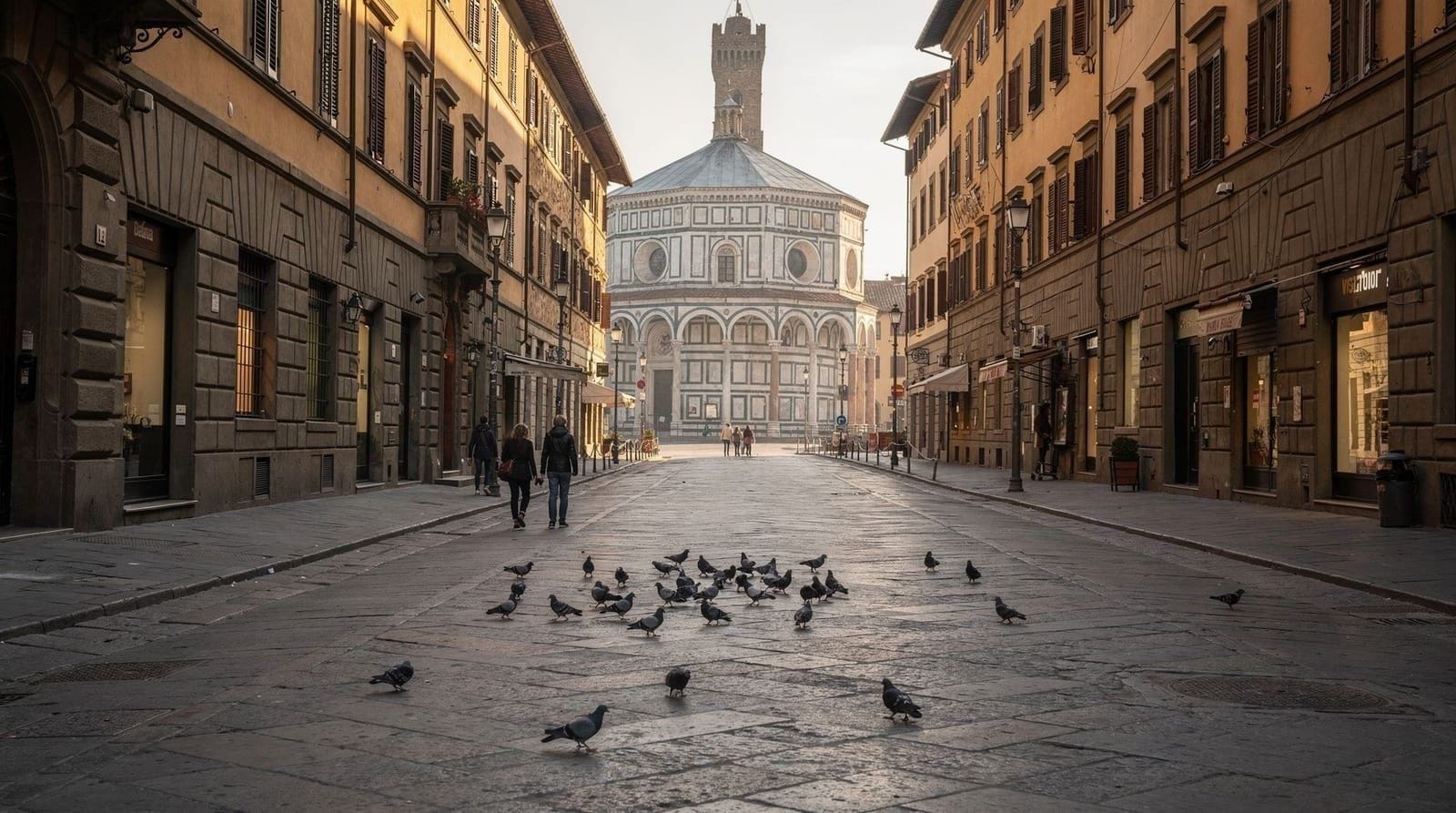
If skipping Palazzo Vecchio, walk five minutes north to the Piazza del Duomo and spend time outside the Baptistery and Cathedral examining the facades.
Mid-morning: Duomo complex (11:30–13:30)
The Duomo dome climb is the natural activity for children with energy. 463 steps up, no lift — treat it as an adventure, not a museum visit. Children 8+ typically do it without difficulty. The interior drum view (Vasari’s fresco up close) is interesting; the panoramic view from the top is the reward.
If the dome is too ambitious, Giotto’s Campanile (414 steps) achieves a similar elevation and is slightly less steep in the upper sections.
Book timed entry in advance. The Duomo complex tickets guide explains the different ticket combinations.
Lunch near the Duomo:
- Pronto Pizza (Via dei Martelli 22) — simple, cheap pizza by the slice; good for hungry children
- Mercato di Sant’Ambrogio — 15 minutes east; less touristy, local market with lunch stalls
Afternoon: pizza-making cooking class (15:00–17:30)
A family-friendly pizza-making class is the most reliably enjoyed activity in Florence for children of all ages. Most classes run 2–2.5 hours and include:
- Making the dough from scratch (children love punching it)
- Topping and baking the pizza
- Eating the result with soft drinks or wine for adults
Look for classes explicitly described as family-friendly (small groups, relaxed environment). The classes combine well with the gelato-making option — some operators run combined pizza + gelato sessions. Book in advance; popular slots in peak season fill 2 weeks ahead.
After the class: Walk along the Arno embankment — the Lungarno on either side of Ponte Vecchio — for the city’s best free views. Cross Ponte Vecchio itself for the goldsmiths’ window displays.
Evening (18:30 onwards)
After a cooking class with pizza dinner, you won’t need a restaurant. Spend the evening with aperitivo (parents) and gelato (children) in Piazza Santo Spirito or along the Lungarno.
Day 3: Fiesole — the hill above Florence
Morning: Fiesole (9:30–13:00)
Fiesole is the half-day excursion that works best with children — open air, historical but tangible (you can walk on actual Roman ruins), not an indoor museum.
Getting there: Bus 7 from Piazza San Marco (30 minutes, €1.70 per adult; children under 10 free on ATAF city buses in Florence). Runs every 30 minutes. The bus journey itself is an adventure — winding up through residential Florence with increasingly good views.
In Fiesole:
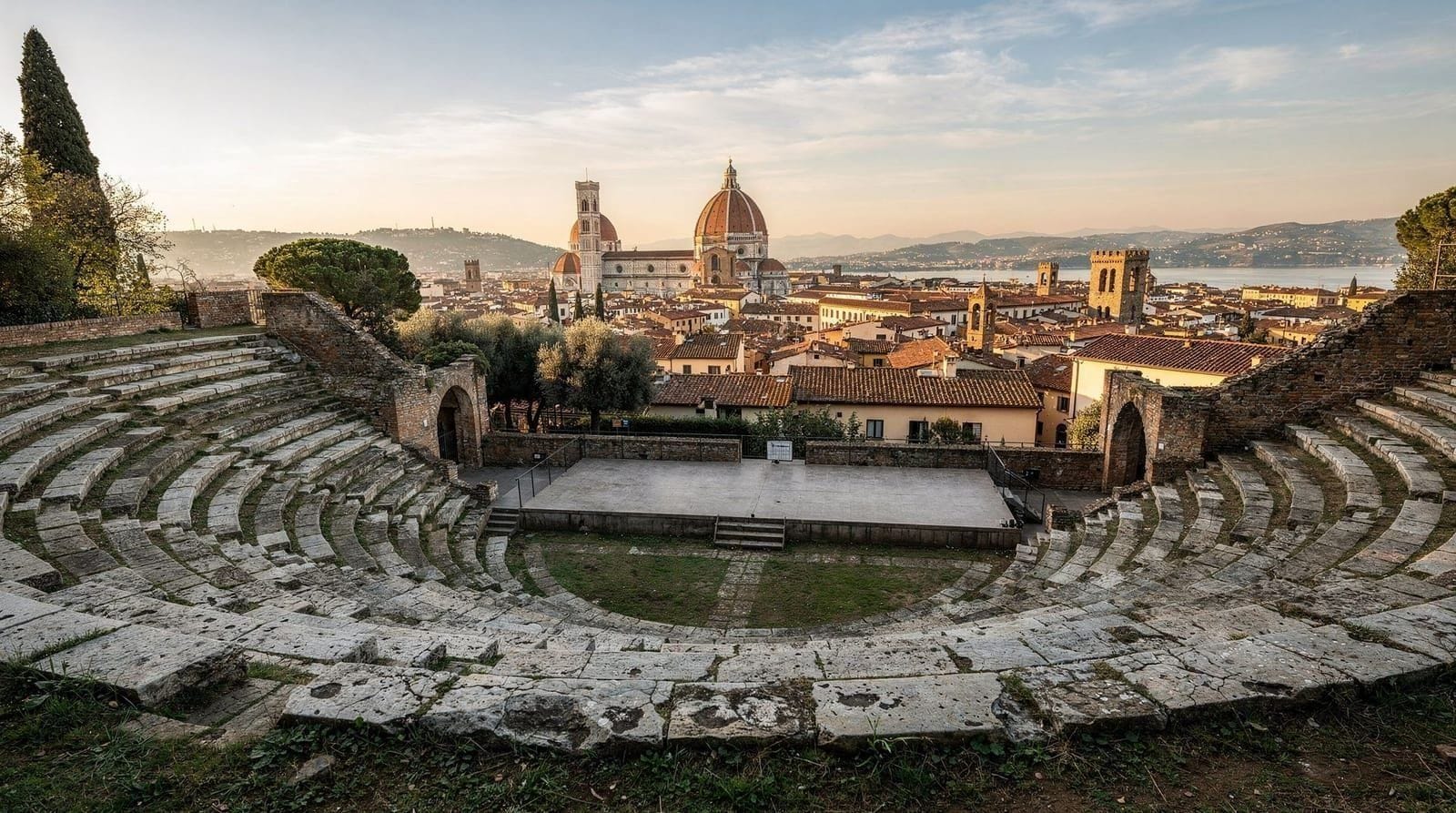
- Archaeological Area (Piazza Mino, €7 adults, ~€5 children) — a 1st-century BC Roman theatre, baths and temple ruins. Children can walk along the theatre seating tiers and down to the stage. The baths have remaining walls at child height that invite exploration.
- Museo Bandini (included with the archaeological ticket) — medieval art; 20 minutes, manageable
- Monastery of San Francesco — 10-minute walk uphill from the main piazza; the panoramic view from the terrace is the best perspective on Florence from outside the city; free; a good reward for the walk
Lunch in Fiesole:
- Bar Aurora (Piazza Mino da Fiesole 39) — basic, quick, panini and pizza; outdoor tables
- Ristorante La Terrazza (Via di Vincigliata 31) — slightly upmarket, terrace with views; pasta and secondi ~€16–22
Afternoon: Oltrarno artisan workshops (14:30–17:00)
Return by bus to Florence and spend the afternoon in the Oltrarno exploring artisan workshops — the neighbourhood has the highest concentration of working craftspeople in any European city centre.
What children enjoy:
- Leather workshops — some ateliers offer short demonstrations or even mini-workshops (ask at the tourist office or book a leather crafting experience)
- Book-binding and marbled paper shops on Via dei Serragli and nearby streets — the Florentine marbled paper is made by a technique children find fascinating to watch
- Sant’Ambrogio market — if it’s a weekday morning slot, or Saturday — the produce market is genuine and lively
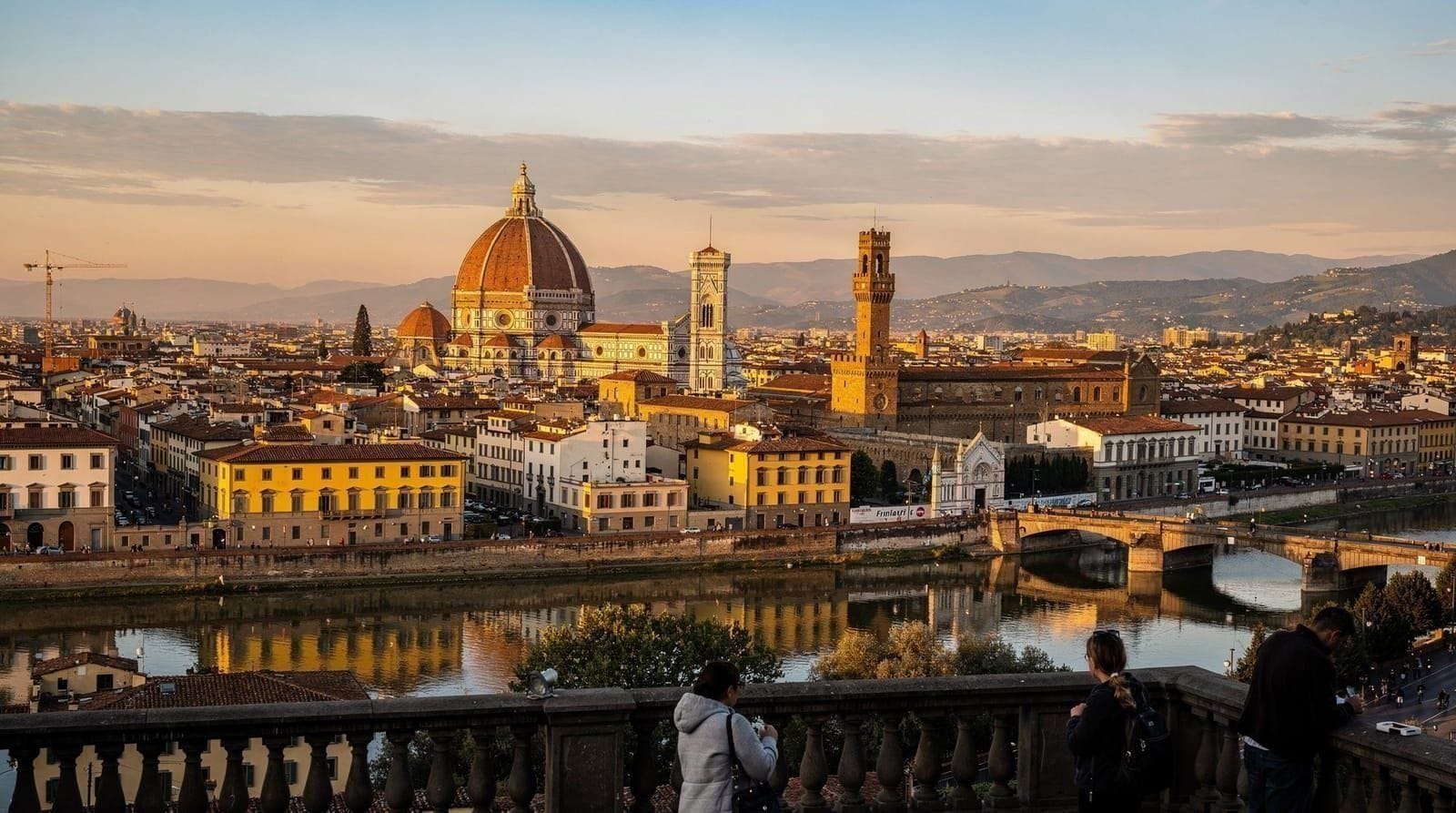
Piazzale Michelangelo (optional): if children have energy and the weather is clear, the 20-minute walk up gives the city view that ends every Florence trip. Bus 13 from Piazza Adua if legs are tired.
Final gelato and dinner (18:30)
Dinner, last night:
- Buca Mario (Piazza degli Ottaviani 16) — family-friendly, dependable Florentine classics
- Il Guscio (Via dell’Orto 49) — quieter, seasonal cooking, good for the last evening
Family logistics
Pushchairs/strollers: Florence’s historic centre has uneven stone paving (the selciato) and frequent steps. Compact umbrella strollers work; large prams are difficult. The Boboli Gardens and Fiesole archaeological site are manageable with a compact stroller on most paths.
Museum skip-the-line: With children, skip-the-line bookings are not optional. A 2-hour queue with young children transforms a good experience into a bad one. Always pre-book.
Changing rooms: Most major museums have baby-changing facilities. Ask at the ticket desk. The Boboli Gardens has toilet facilities near the upper entrance.
Heat: July–August temperatures of 30–35°C hit hard with young children. Schedule outdoor activities in the morning and late afternoon; rest during 13:00–16:00 at the hotel or in shaded gardens.
Food allergies: Italian restaurants are increasingly well-informed about allergens. “Senza glutine” (gluten-free) and “senza latticini” (dairy-free) are understood in Florence’s better restaurants. Call ahead if severe.
If a child (or parent) needs a break
Build slack into the plan rather than fighting it. The Boboli Gardens and the Bardini Gardens next door are the easiest pressure valves — open space, shade, no queue, no ticket pressure if you already hold the Pitti Palace combined ticket. On a hot afternoon, gelato and 30 minutes sitting in a piazza (Santo Spirito or Santa Croce) resets the day more reliably than pushing on to the next sight. If a museum visit is clearly not working, leave — the Accademia and Duomo tickets are non-refundable but a miserable forced 20 more minutes achieves nothing. Our Florence with kids guide has a longer list of Florence’s parks and playgrounds for exactly these moments.
Rainy day backup
Florence’s museums make a wet day easier with children, not harder: the Accademia, Duomo complex museum, Palazzo Vecchio and Pitti Palace are all indoors and all kid-tolerant in short doses. Swap the Boboli Gardens or Fiesole (both largely outdoors) for whichever indoor stop you had planned for a clear day, and save the archaeological area and Piazzale Michelangelo for when the weather turns. The rainy day Florence guide has a fuller indoor-activity list, including a couple of hands-on options children tend to enjoy more than gallery-walking.
Packing and daily rhythm
Pack a light day bag each morning: water bottles, a snack, sun hats in summer, and a phone charger if you’re using it for photos and translation. Aim to be out the door by 9:00–9:30 to hit museums before the 11:00 rush, and treat 13:00–15:30 as flexible — lunch, a rest at the hotel, or a slow gelato rather than a fixed activity. This itinerary already builds that rhythm in, but it’s worth protecting it rather than adding a fourth stop to an already full day. For a shorter version of the same idea without children, see Florence in two days; families wanting a slower week instead should look at the perfect Tuscany week, which works well with older children.
Frequently asked questions about this itinerary
At what age are children ready for the Uffizi?
Most children under 10 find the Uffizi overwhelming rather than engaging — too many rooms, too much detail. The Accademia (David) works from age 6. Palazzo Vecchio’s family programme works from age 6–7. The Uffizi is better at 12+. Our best museums in Florence guide notes which museums have family programmes.
Are museums free for children in Florence?
EU children under 18 enter the Uffizi and Accademia free. Non-EU children under 18 pay a reduced rate (~€8–12). The Boboli Gardens and Pitti Palace follow similar rules. Always carry ID for children (passport or birth certificate). Municipal museums (Palazzo Vecchio) have different policies — check at the ticket desk.
What is the best gelato in Florence for children?
Beyond the major gelaterie, look for: covered metal pans (not towering mounds), natural colours (pistachio should be grey-green, not luminous green; melon should be pale, not orange), and small operations with visible production. Our best gelato in Florence guide covers 10 honest options.
How do we handle the Duomo dome with young children?
The dome climb (463 steps) is not recommended for children under 7 or for those afraid of confined spaces — the middle section is a narrow spiral between the inner and outer shells of the dome. For younger children, Giotto’s Campanile (414 steps, wider staircase) is a better choice. The external Duomo complex (baptistery, facade) is accessible and free for all ages.
Is Florence safe for families?
Very safe. Florence has almost no violent crime. The main risks are pickpockets near the Uffizi (keep bags in front), and heat exhaustion in summer. The city is walkable and compact, making it easy to return to the hotel mid-day. The Oltrarno neighbourhood is particularly calm and residential.
Where should a family stay in Florence?
The Oltrarno is the most relaxed neighbourhood — quieter than the north bank, close to the Boboli Gardens and with good local restaurants. Santa Maria Novella district is convenient for transport. See our where to stay in Florence guide for family-friendly hotels in each area.
Top experiences
Bookable activities with verified prices and instant confirmation on GetYourGuide.

Florence: pizza and gelato family-friendly cooking class
- Free cancellation
- Small group
Florence: Accademia Gallery — David skip-the-line ticket
- Skip the line
- Instant confirmation
Florence: Pitti Palace and Boboli Gardens ticket
- Instant confirmation
- Mobile ticket
Florence: ticket to Brunelleschi's Dome with panoramic views
- Skip the line
- Free cancellation