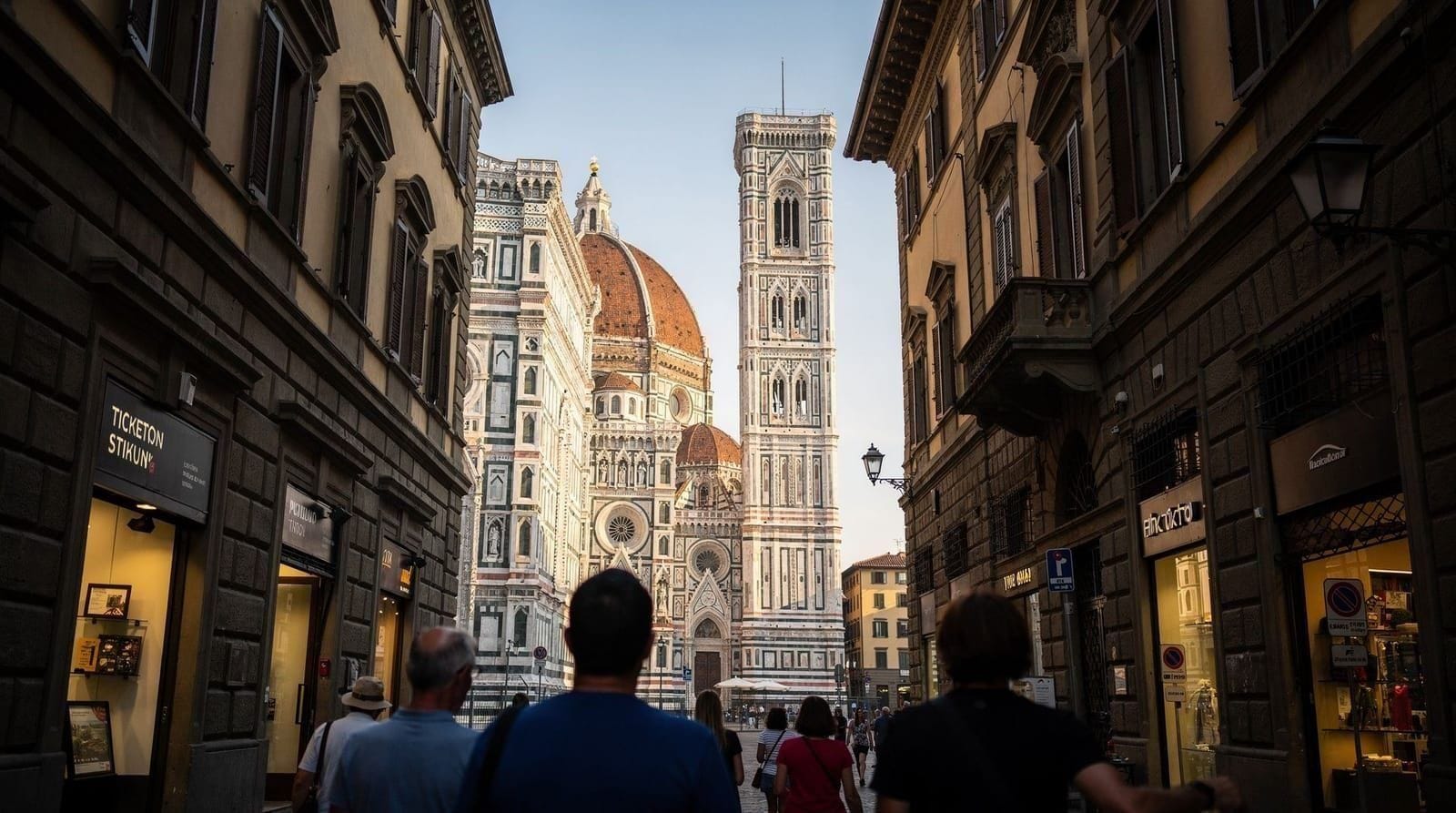
Florence vs Rome: which Italian city should you visit first?
The question that starts every Italy itinerary argument
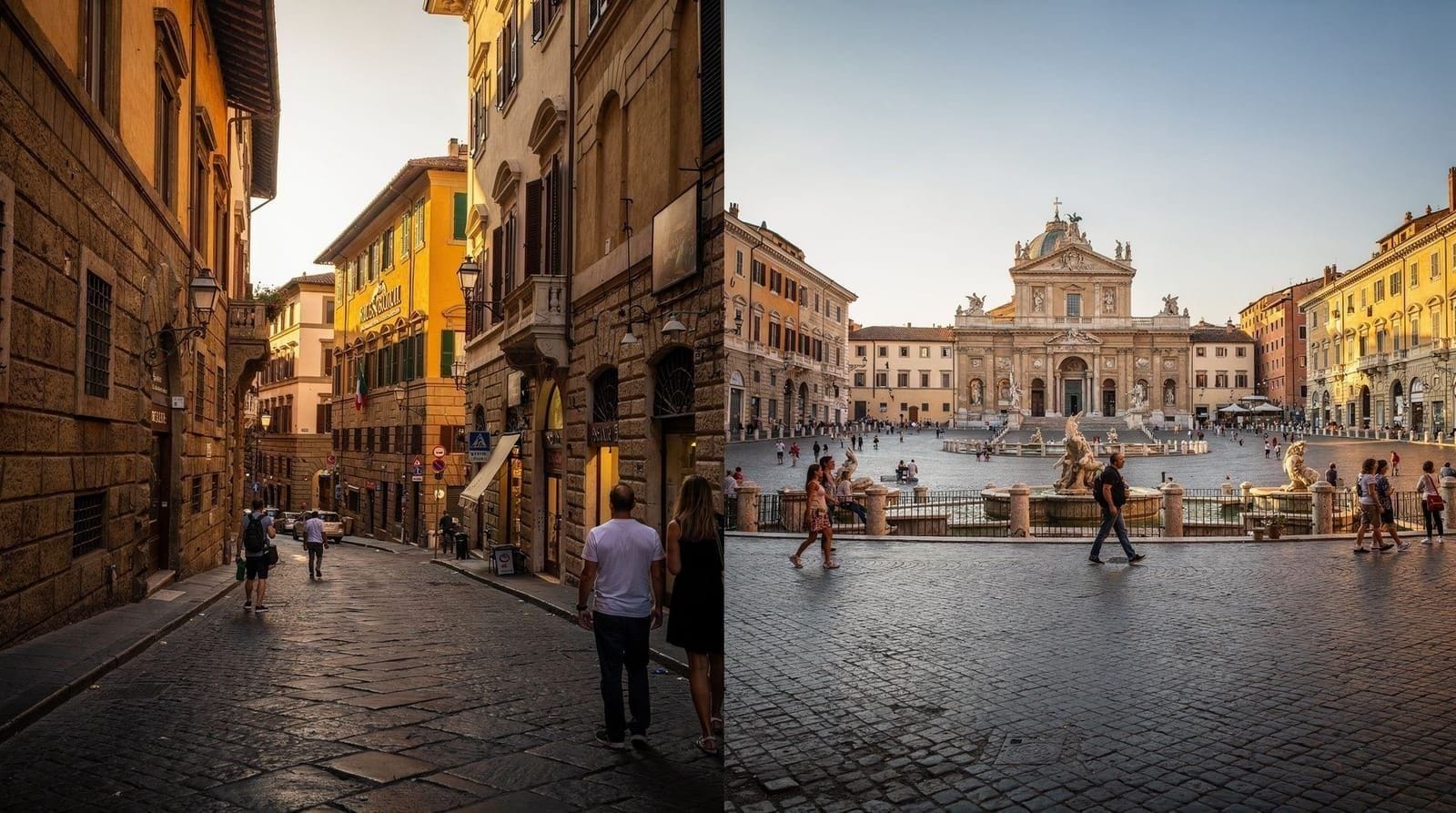
There is no version of the Florence-versus-Rome conversation that doesn’t become a referendum on your entire personality. Florence people tend toward a certain quiet intensity — smaller city, fewer distractions, more focus. Rome people tend toward the expansive, the chaotic, the feeling that history is happening to you rather than being presented for viewing.
Both are right. This is not a guide that will tell you one is better than the other, because they are not competing in the same category. It’s a guide to help you figure out which one is right for you, and when.
| Choose Florence first if | Limited time, first Italy trip, travelling with young kids |
| Choose Rome first if | 10+ days available, already know Florence, want classical antiquity |
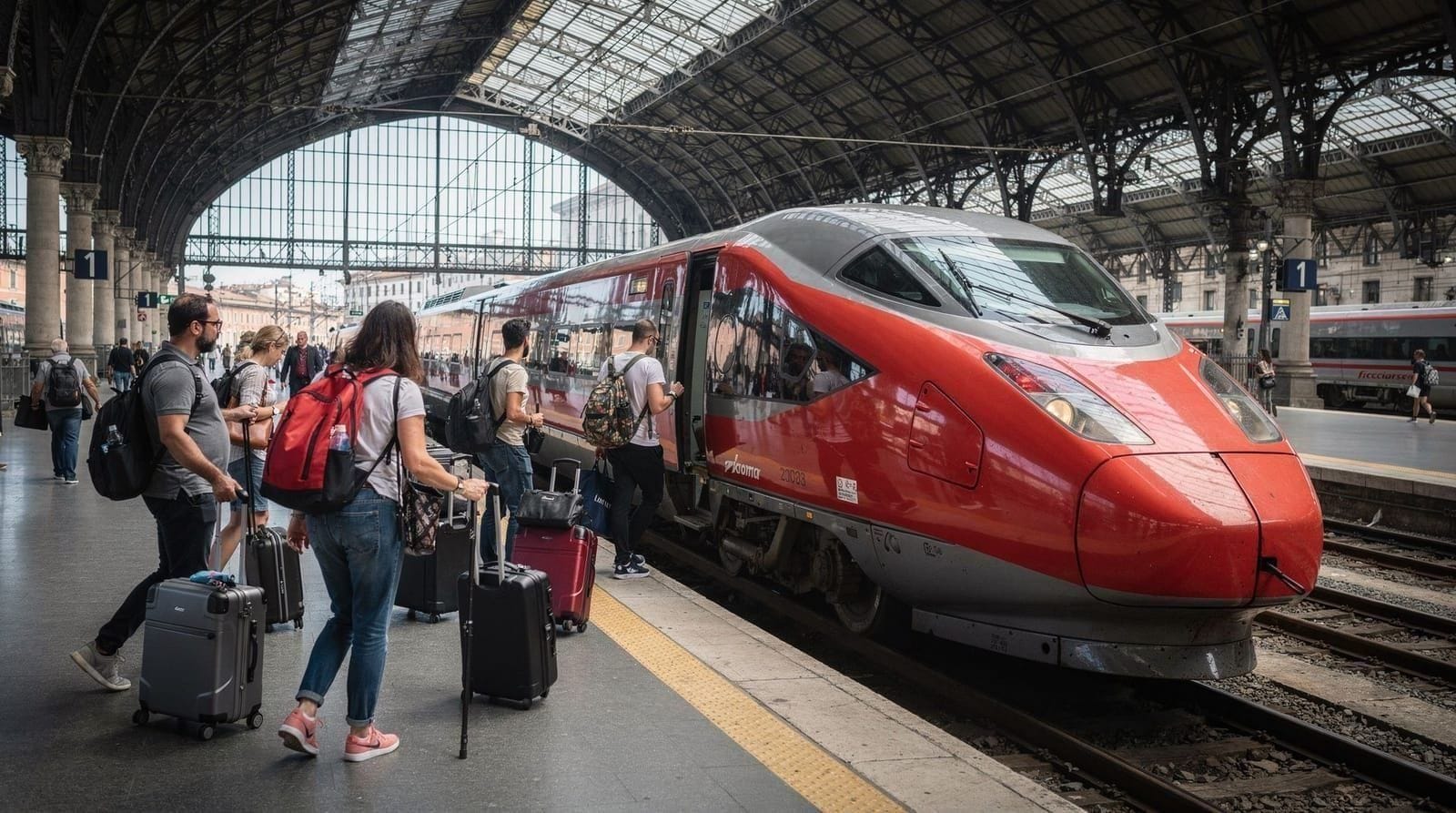
| Train between them | Frecciarossa, about 1h27, €25–50 |
| Best combined trip | 3+ nights Florence, 4+ nights Rome |
| Neither is a mistake | Both reward slower, unrushed visits |
The case for Florence first
Florence is manageable. This is the word that comes up most often from first-time Italy visitors who went to Rome first and found it overwhelming: “I wish I’d started somewhere I could actually get my bearings.”
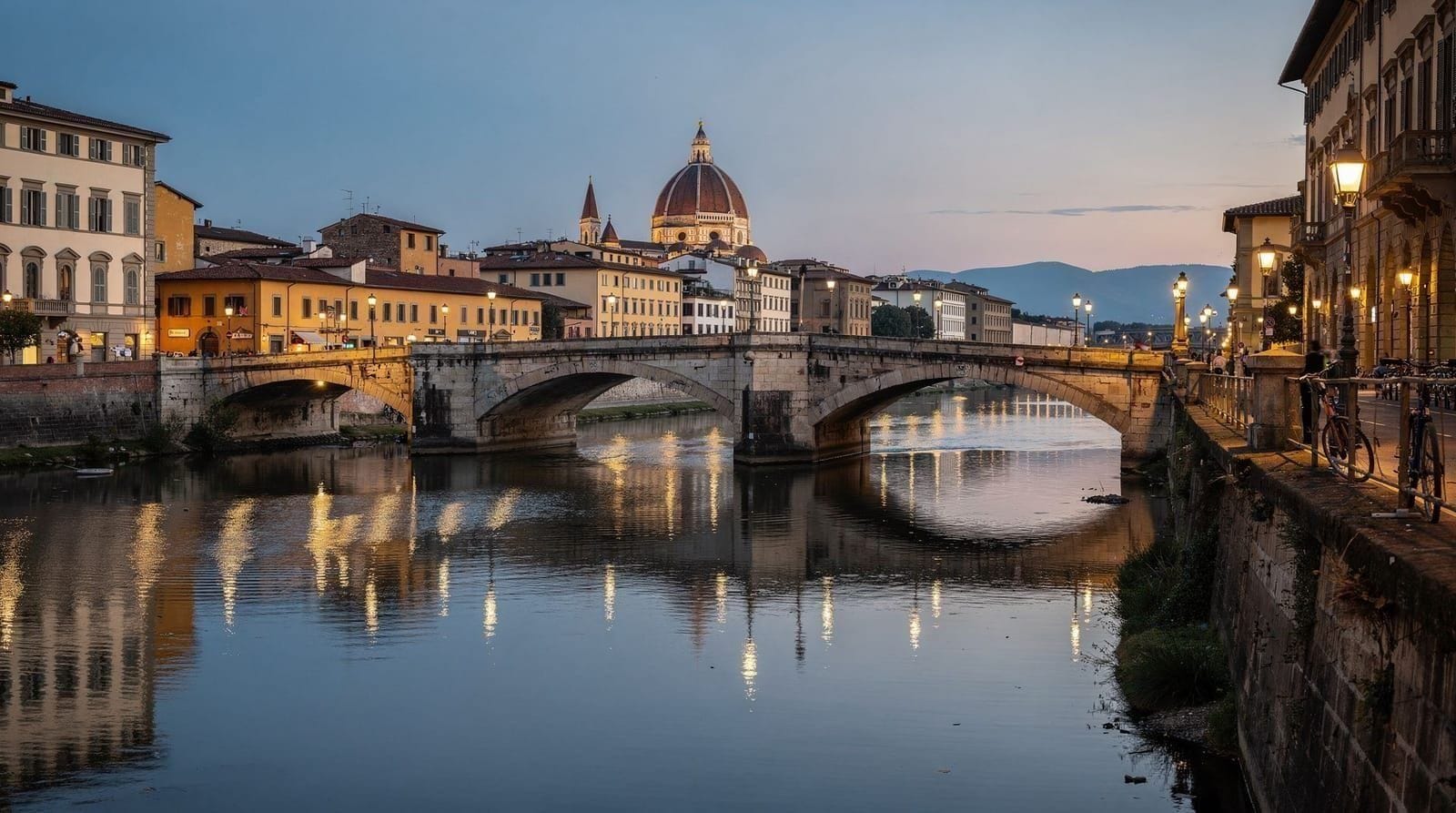
The historic centre of Florence is walkable in its entirety. You can walk from the train station to the Uffizi in twelve minutes. The Accademia to Piazzale Michelangelo takes twenty-five minutes on foot. There are no buses to navigate, no complex metro system to decode (Florence has no metro), no twenty-minute taxi rides to cover the distance between sights. Everything is close.
The first-time Florence guide lays out a logical two-to-three-day itinerary that hits the major sights without feeling frantic. That itinerary exists because Florence is the kind of city where a first-time visitor can successfully plan and execute it. Rome, which is five times larger and has fifteen times more to see, is harder to navigate on a first Italian trip.
Florence’s museums, despite being world-class, are more curated. The Uffizi is large — 50,000 square metres — but it is a coherent collection with a clear narrative. The Accademia is genuinely compact. There are no sprawling corridors that swallow two hours without delivering much. You can do Florence’s museum highlights in three concentrated days and feel satisfied rather than defeated.
For art history specifically, Florence is the origin story. The Italian Renaissance began here, in the workshops of Brunelleschi, Ghiberti, Donatello, and Masaccio, before expanding to Rome and Venice and the rest of Europe. Seeing the Uffizi, the Duomo, the Accademia and the Medici Chapels in sequence is an education in European art that no other city can provide in such concentrated form. The renaissance art guide gives the context that makes the visual experience meaningful.
Florence also wins on food specificity. The cuisine is more defined, the ingredients are more local, the traditions are more traceable. Bistecca alla Fiorentina from Chianina cattle. Ribollita made with the specific bitter cavolo nero that grows in the Tuscan hills. Lampredotto — a tripe sandwich that is the authentic street food of the city. The best restaurants in Florence guide and the Mercato Centrale guide give the framework. There is also excellent day-trip potential: Chianti, Siena, San Gimignano within an hour or two.
The case for Rome first
Rome is the capital of the classical world and the centre of Western Christianity, and these are not small claims. The Colosseum, the Forum, the Pantheon, the Vatican Museums, the Sistine Chapel — these are among the most significant human-made objects in existence, and their scale and age create a particular emotional effect that Florence, as extraordinary as it is, doesn’t quite replicate.
Rome also has the advantage of heterogeneity. You can spend two weeks in Rome and feel that you’ve only scratched the surface — because you have. Florence, lovingly, gives itself up more fully. In a week in Florence you will understand the city reasonably well. A week in Rome leaves you knowing how much you don’t know.
The food in Rome is different and (in certain categories) better. Pasta traditions are more complex: cacio e pepe, amatriciana, gricia, carbonara — these are Rome’s dishes, and in the right trattoria in Trastevere or Testaccio they are among the best things you can eat in Italy. The bar culture is slightly more casual, the aperitivo culture slightly less institutionalised than Milan but alive in the right neighbourhoods.
Rome is also, logistically, a hub in a way Florence isn’t. Direct flights from the US, UK, and most of Europe land at Rome Fiumicino in large numbers. International train connections through Rome are frequent. If your Italy trip involves other southern regions — Naples, Amalfi, Sicily — Rome is the natural base.
How they compare on specific practical factors
| Factor | Florence | Rome |
|---|---|---|
| Size | ~3×2km historic centre, fully walkable | 30-min walk across; sights spread further apart |
| Museum queuing | Well-organised timed entry (Uffizi, Accademia) | Can be chaotic (Colosseum, Vatican); pre-book essential |
| Cost | Similar; budget rooms €50–90, mid-range €120–200 | Similar, trattorias slightly cheaper |
| Transport needed | None — walk everywhere | Metro/tram combination often needed |
| Crowds | Concentrated in a small area, feels intense | Spread over more ground, feels less suffocating |
| Day trips | Excellent and numerous, most under an hour | Good but fewer and more spread out |
Size: Florence historic centre is roughly 3 × 2 kilometres, walkable. Rome’s historic centre is a 30-minute walk across, with attractions spread much further — the Vatican is 30 minutes from the Colosseum on foot.
Museum queuing: Both cities have severe queuing problems at the major attractions. Pre-booking is essential in both. Florence is slightly better organised — the timed-entry system at the Uffizi and Accademia works well. Rome’s Colosseum and Vatican bookings can be chaotic.
Cost: Very similar at equivalent quality levels. Budget accommodation runs €50–90 per room in both cities; mid-range €120–200. Restaurant prices are comparable, with Rome slightly cheaper in its trattorias. Florence’s museum tickets (€20–25 per attraction) are comparable to Rome’s major sights.
Transport: Florence needs no transport — you walk everywhere. Rome requires some combination of metro, tram, and walking to cover the distances. This is not a disadvantage — Rome’s transport is functional — but it adds logistical complexity.
Crowds: Both are heavily visited. Florence’s concentration of visitors in a small area means certain spots (the Ponte Vecchio, Piazza della Signoria, outside the Uffizi) feel overwhelmed in summer. Rome’s crowds are spread over a larger area and feel slightly less suffocating as a result, though the Vatican in July is a particular form of structured chaos.
Day trips: Florence has a significant advantage. Siena, Pisa, Chianti, Lucca, San Gimignano, Cinque Terre — all within two hours, most under one. Rome’s day trips (Tivoli, Ostia Antica, Pompeii, Orvieto) are good but fewer in number and less dramatically varied.
If you can only pick one city, not a combined trip
Some travellers genuinely have only three or four days for Italy and won’t be combining cities this trip. In that specific case, the how many days in Florence guide and the is Florence worth visiting guide both make the case in more depth: a tightly-planned three days lets you see the Uffizi, the Accademia, the Duomo complex, and still have time for a single day trip such as Siena or Pisa — something that’s much harder to pull off convincingly in Rome on the same timeline.
The combined Italy itinerary
For most first-time visitors to Italy with ten days or more, the answer is not Florence or Rome — it is both. The high-speed Frecciarossa train between Florence Santa Maria Novella and Roma Termini takes 1 hour 27 minutes and costs €25–50 depending on class and booking time. This makes a combined itinerary almost mandatory.
A workable structure: three nights in Florence, one night (or afternoon) in Siena or Pisa en route south if time allows, four nights in Rome. Or the reverse. The Florence to Rome train guide covers all the booking options.
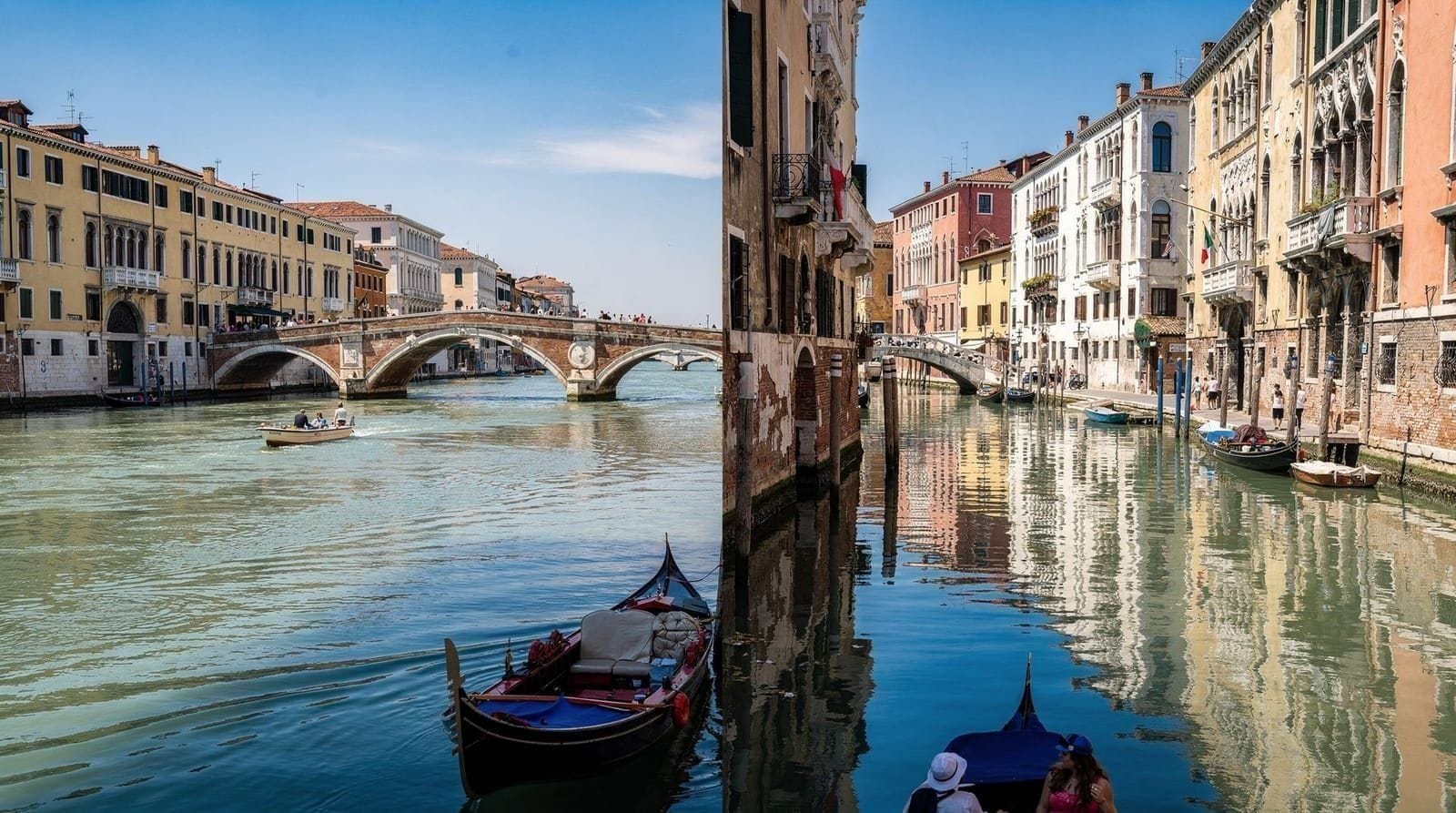
Venice is sometimes added to this itinerary, and Florence to Venice takes 2 hours by high-speed train. The three-city Italy circuit — Florence, Rome, Venice — is one of the most-traveled itineraries in European tourism for good reason: it’s genuinely the best introduction to three different and complementary cities.
Which to visit first, if you must choose
If you are visiting Italy for the first time and have limited time (five to seven days): Florence. The city is more legible, more manageable, and the art and history are presented at a scale that doesn’t overwhelm.
If you have ten days or more, or if you have been to Florence already: Rome. The scale and the experience of being in the city that invented so much of what we call Western civilisation is not replicable anywhere else.
If you are specifically coming for Renaissance art: Florence, without hesitation.
If you are specifically coming for classical antiquity or early Christian architecture: Rome.
If you are coming with children under ten: Florence, because the manageable distances and the more compact museum experiences are significantly easier with young people who get tired and hungry unpredictably.
What both cities share
Both Florence and Rome are cities that reward slowness. The traveller who plans eight sights a day and eats lunch at 11:45 to avoid the rush will leave having accomplished their checklist but missed the actual cities. The traveller who builds in two hours of unplanned walking per day, who sits in a piazza with a coffee and watches what’s happening, who takes a wrong turn and follows it — that traveller comes home with something harder to photograph but more durable.
Florence gives itself up more readily than Rome. Rome keeps secrets longer. Both are inexhaustible. Both will pull you back. The real argument is not which one first — it’s how soon you can return.