A Chianti weekend: vineyards, wrong turns and the best lunch I've ever had
The plan was simple — which is always where the trouble starts
We rented the car from a lot outside the city walls on a Friday afternoon, specifically because the ZTL cameras would have fined us into poverty if we’d driven anywhere near the historic centre. The plan was this: drive south on the Via Chiantigiana — the SS222, known as the Chianti road — spend two days in the wine villages between Florence and Siena, sleep one night somewhere with a view, and come back on Sunday knowing more about Sangiovese than we had before we left.
The plan, as plans in Tuscany tend to do, immediately became something else.
| Where | SR222 from Grassina to Castellina, via Greve and Panzano |
| Cost | Around €80–140/night agriturismo, €10–30 tastings |
| Time needed | A full weekend (2 days, 1 night) |
| Getting there | Car essential; rent outside the ZTL |
| Best time | September–October (harvest) or November (light, quiet) |
Saturday: the Chianti road south of Florence
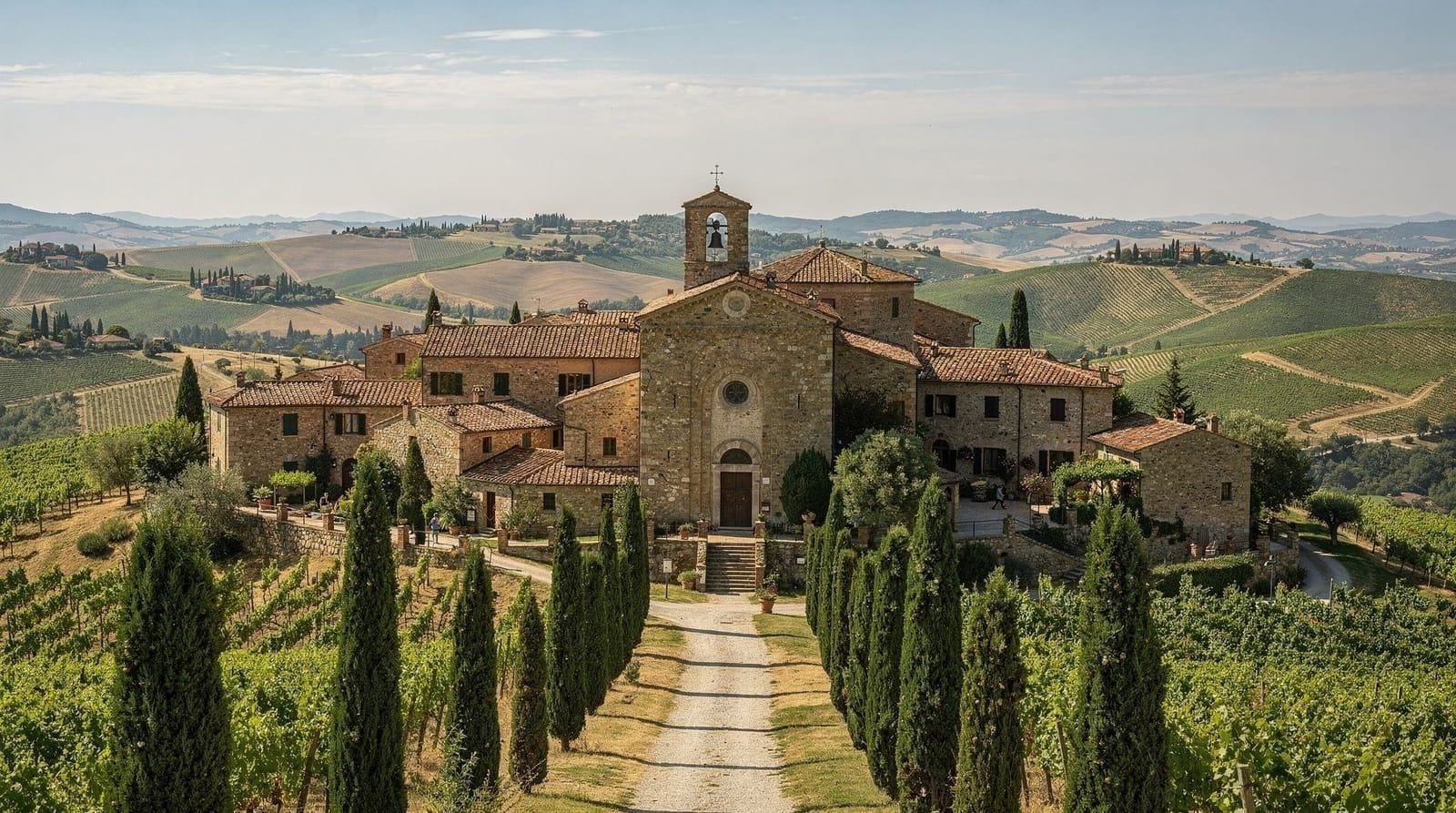
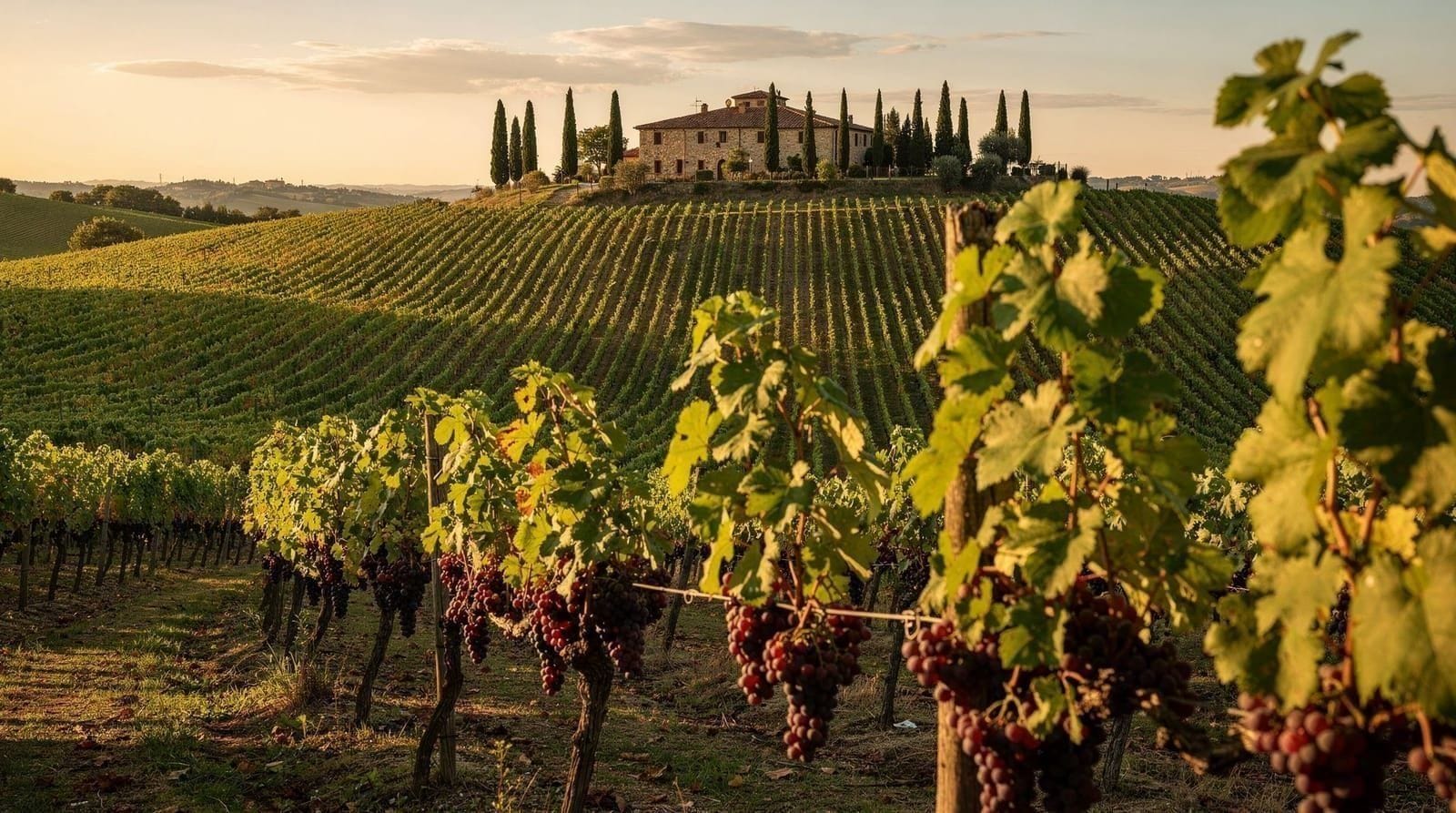
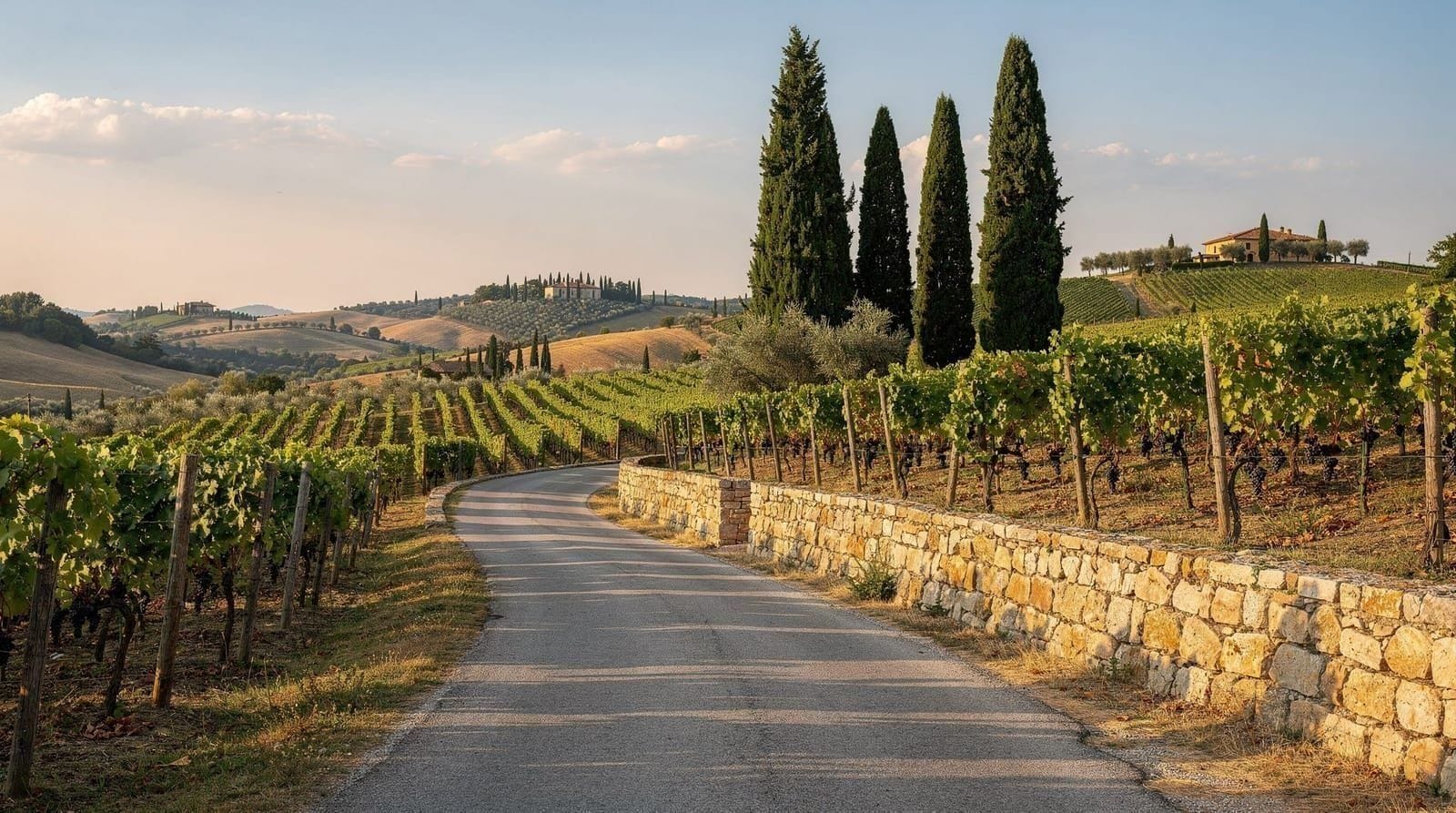
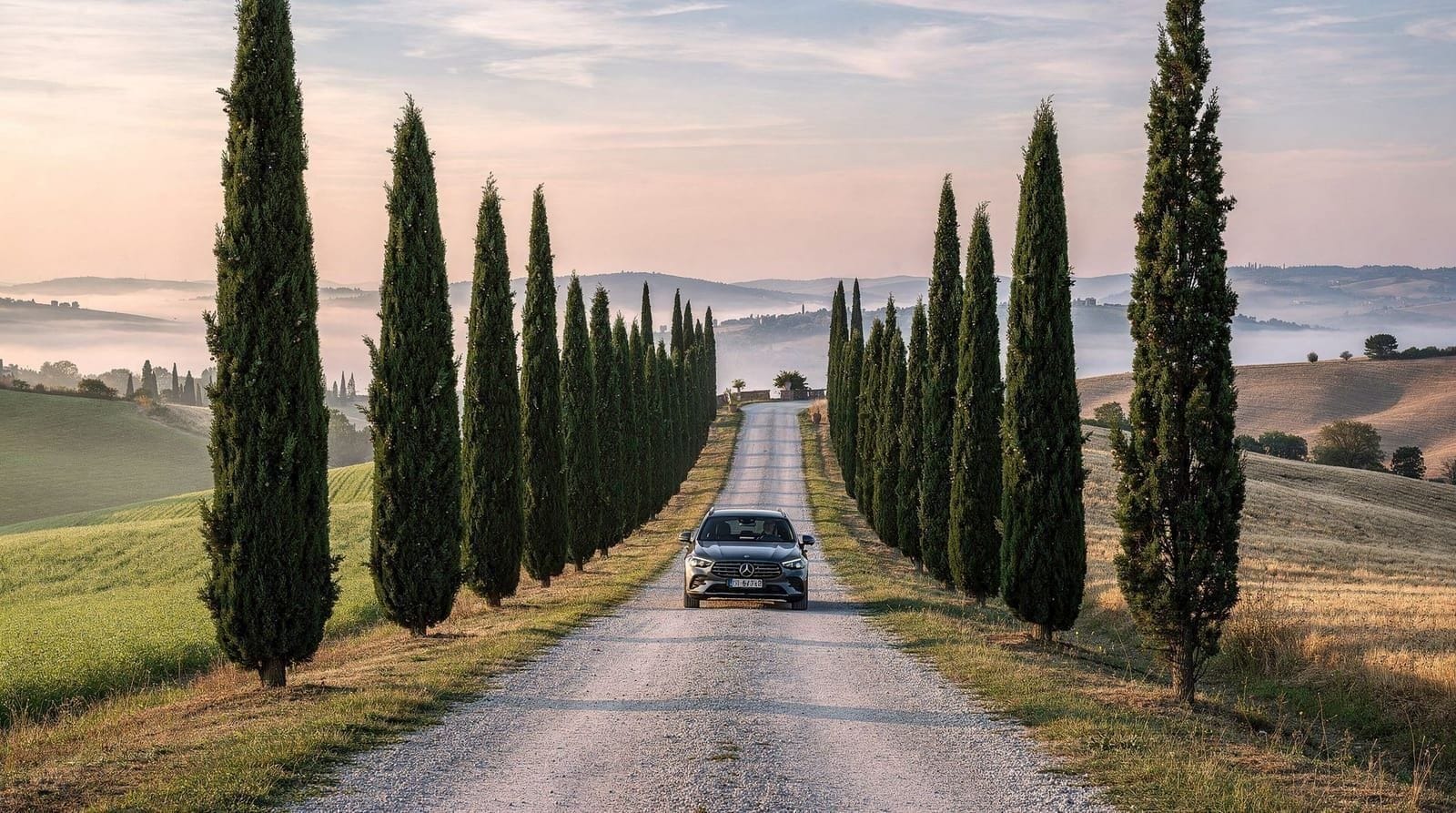
The SS222 south from Grassina is one of those roads that makes you involuntarily slow down. It winds between cypress-lined crests and olive groves, through villages that appear and disappear around corners, with views opening and closing over vineyards that are, in early November, turning every shade of gold and red before the vines go to sleep for winter.
We stopped in Greve in Chianti — the main town in the northern Chianti Classico zone — for the Saturday morning market in the triangular piazza. A butcher there sells the prosciutto and salami from Falorni, the oldest salumeria in Chianti (founded 1806 by the Falorni family, still operating, still on the piazza). I bought 200 grams of lardo and ate it standing up next to the car. This was, I think, the correct decision.
The Chianti Classico zone — the DOCG wine region between Florence and Siena — runs roughly 70 kilometres north to south. The villages are close together. Greve, Panzano, Castellina, Radda, Gaiole: you could hit all five in a day of aggressive driving, but that is not the point of the Chianti road. The point is to stop.
The winery we found by accident
We had a plan for wineries: Castello di Ama near Gaiole (a DOCG producer known as much for its contemporary art installations as for its Chianti Classico Gran Selezione), and a smaller producer in Radda whose name I’d seen in a wine magazine. We reached neither.
About eight kilometres south of Panzano, on a road that had narrowed to a single track between stone walls, we passed a wooden sign indicating a cantina that was neither on our map nor in any guidebook we’d consulted. We pulled in anyway, into a farmyard where a woman was stacking firewood and a dog came to investigate.
The woman — she was perhaps sixty, with the tan of someone who spends most of their time outdoors — looked at us with the mildly amused expression of someone who has seen city visitors appear in their farmyard before. She spoke some English and we spoke some Italian, and between us we established that the cantina was open, that they made wine and olive oil, and that if we wanted to taste, we should come inside.
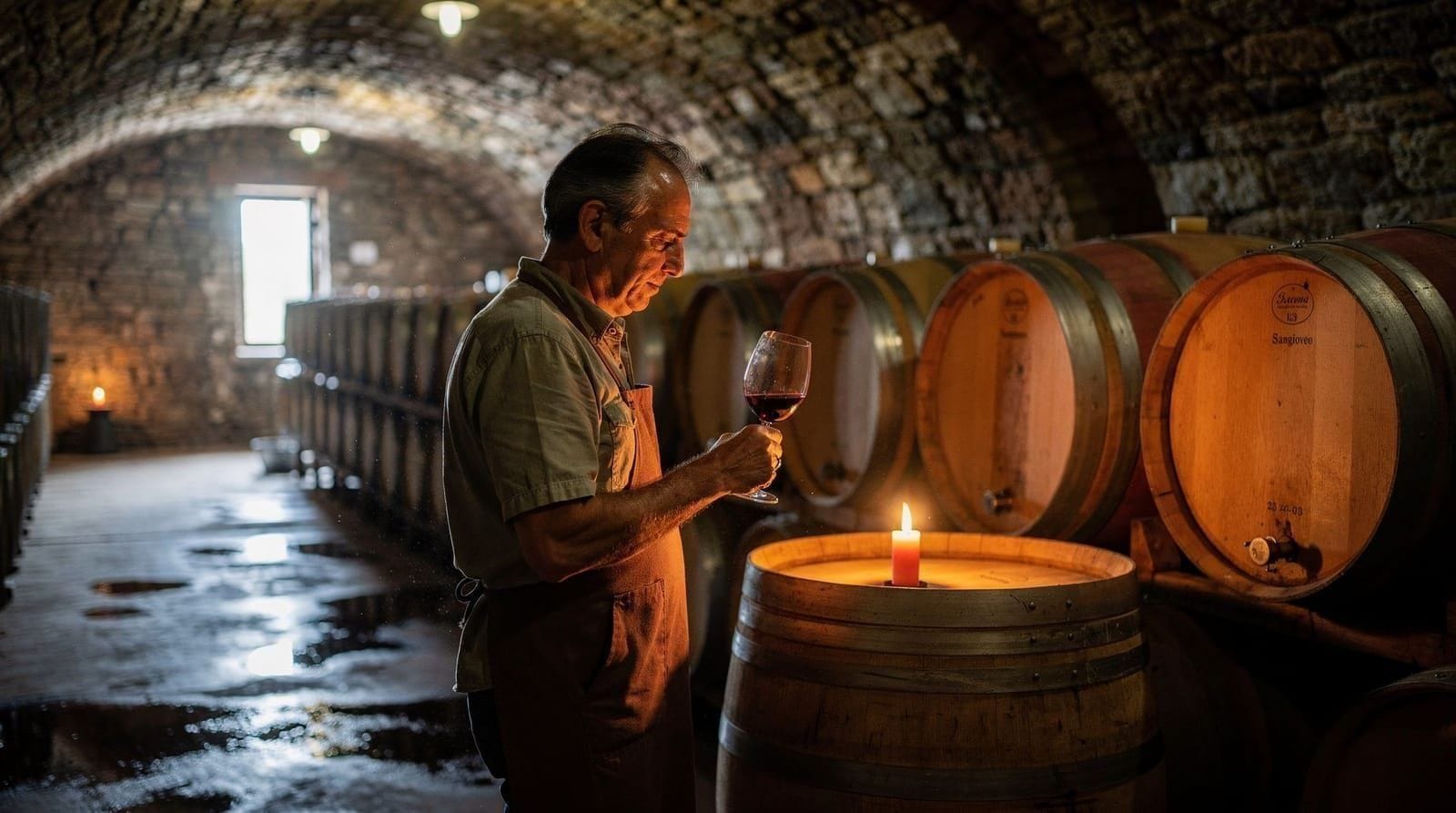
Inside was a low room with stone walls and a long table. She brought a plate of bread and a jar of olive oil and four glasses, and poured us the current vintage of their Chianti Classico — a 2018, aged in large Slavonian oak barrels rather than small barriques, which is the traditional method and produces a different kind of wine: earthier, more austere when young, built to age.
We stayed for two hours. We bought six bottles and a tin of oil. We probably overstayed our welcome, or possibly didn’t — Tuscans have a complicated relationship with hospitality that doesn’t always look like what hospitality looks like elsewhere.
Lunch in Panzano with Dario Cecchini
Panzano in Chianti is a small village on a ridge between Greve and Castellina, and it is home to Dario Cecchini, the most famous butcher in Italy — possibly the world. Cecchini has been running his butchery, Antica Macelleria Cecchini, since 1983, and has turned it into something between a cultural institution and a performance: he declaims Dante while cutting meat, plays opera in the shop, and will shake your hand and pour you a glass of Chianti Classico if you come at the right moment.
We had heard about this and didn’t entirely believe it. We went anyway.
The shop is on the main street of Panzano, immediately recognisable by the queue and the music. Inside, it is smaller than you expect: packed with hanging prosciutto, hanging salumi, the smell of rosemary and meat and wine. Cecchini himself was not there on a Saturday afternoon — he appears more in the mornings — but the shop was fully operational and a young assistant pressed a glass of wine into my hand before I had a chance to ask for one.
The Officina della Bistecca, his restaurant attached to the butchery, does set menus built around beef — the famous Bistecca alla Fiorentina, a thick T-bone from Chianina cattle, priced by weight at about €60 per kilogram. We ate there. The steak came to the table on a wooden board, sliced, with nothing on it, in the Florentine style. It was the best piece of meat I have ever eaten. I say this with full awareness that it is an extraordinary claim.
Afternoon: vineyards and the light at 4 p.m.
November in Chianti has an advantage over the more-visited spring and summer: the light. The afternoon sun comes in low and oblique, turning the remaining leaves on the vines gold, casting long shadows across the rows, illuminating the colour of the soil — which varies from the alberese white limestone in some zones to the galestro dark clay in others — in a way that disappears in summer’s flat overhead light.
We drove toward Castellina in Chianti without any particular agenda, then sat in a bar in the village piazza drinking a caffè macchiato and watching the light change on the towers of the medieval village. Castellina in Chianti is the kind of place that resists being photographed — too much of what makes it beautiful is ambient, sensory, about temperature and smell rather than appearance.
An enoteca on the main street had three tasting options at €15, €25, and €40 per person, working up through the zones and quality levels of Chianti Classico. We chose the middle option and learned more in 45 minutes than in all the wine books I’d half-read at home.
What the Chianti Classico wine hierarchy actually means
The Chianti Classico wine guide covers this in full, but the quick version: the hierarchy goes from Chianti Classico base (the entry level, minimum 80% Sangiovese) through Chianti Classico Riserva (minimum 24 months of ageing) to Chianti Classico Gran Selezione — introduced in 2014, representing single-vineyard selections with minimum 30 months of ageing, and consistently the most expensive and complex.
The Gran Selezione from producers like Riecine, Isole e Olena, and Fèlsina regularly competes with Super Tuscans and Barolo for critical attention. Prices range from €15–20 for a decent Chianti Classico up to €60–100+ for Gran Selezione from top estates.
The best wineries near Florence guide covers the producers that are accessible to day-trippers without a pre-arranged appointment.
Sunday: olive oil and the drive back
Sunday morning in the Chianti is very quiet. We drove north along minor roads through the hills above Impruneta — wine and olive oil territory, slightly cooler than the Chianti Classico core — and stopped at a small estate that was pressing olive oil. The new-harvest oil, called olio nuovo, is available only in October and November and is intensely green, peppery, and tastes nothing like the olive oil you buy in a supermarket. A producer offered us bread and oil in the same way that Chianti producers offer wine: as an entirely natural act of hospitality.
The Chianti wine and olive oil tour with lunch is the best way to experience this if you don’t have a car or don’t want to navigate the roads yourself. The guided version visits two or three producers and typically includes lunch at an agriturismo — a working farm that also functions as a restaurant or guesthouse.
We drove back to Florence on the autostrada, which felt like a betrayal but took forty minutes instead of ninety. The six bottles of wine were in the back seat in a box provided by the farmhouse, wrapped in old newspaper. I have been back to Chianti twice since. I still haven’t made it to Castello di Ama.
The weekend, if you want to copy it roughly
| Day | Morning | Afternoon | Evening |
|---|---|---|---|
| Saturday | Drive SR222, Greve market | Wineries near Panzano, lunch in Panzano | Castellina, tasting, agriturismo |
| Sunday | Olive oil estate near Impruneta | Drive back via autostrada | Home in Florence by lunch |
This is not a fixed script — the whole point of the weekend was the wineries we hadn’t planned for — but it’s a realistic shape if you want a starting structure rather than a blank map. Building in unscheduled time is not optional; the best hour of the trip was the two we spent at a cantina with no name on our map.
What I’d do differently next time
Book one winery visit in advance — ideally somewhere like Castello di Ama, which requires a reservation for its art-and-wine tours — and leave the rest of the weekend unplanned. Having one anchor appointment gives the day a shape without eliminating the chance of another farmyard discovery. I’d also spend less time driving between villages: Greve, Panzano and Castellina are close enough that picking two rather than trying for three leaves more time for the kind of two-hour tasting that made this trip.
Planning your own Chianti weekend
You need a car. There is no public transport within the Chianti Classico zone beyond occasional buses between the main villages, and those buses don’t go to the wineries. The driving in Tuscany guide covers the ZTL, motorway tolls, and how to navigate the SR222 without losing yourself in the lanes.
Budget: two nights in an agriturismo with breakfast runs €80–140 per room. Winery tastings typically cost €10–30 per person. Restaurant meals in the village trattorias run €25–45 per person. A day-trip version from Florence — without the overnight stay — is also possible and covered in the Chianti day trip guide.
The best months: September and October for the harvest, November for the light and the solitude, April and May for the flowers. June to August is hot and increasingly busy.
Frequently asked questions about a Chianti weekend trip
How far is Chianti from Florence?
Greve in Chianti, the main town, is 27 kilometres south of Florence by the SR222 — about 45 minutes by car in light traffic. The wider Chianti Classico zone extends south to the edge of Siena, roughly 70 kilometres from Florence.
Can you do Chianti without a car?
Yes, with some compromise. Organised wine tours from Florence include transport and typically visit two or three producers in a day. The independent public bus from Florence’s SITA terminal reaches Greve and some of the other main villages. But to get to the farmhouse wineries on minor roads, you need either a car or a guided tour with your own driver.
When is the best time to visit Chianti for wine tasting?
Year-round. The harvest (September-October) is dramatic — pickers in the vineyards, tractors on the roads, the smell of fermenting grape juice from every winery. November is quieter and beautiful. December through February is cold but the wineries are usually open. Spring (April-May) is excellent.
What is the difference between Chianti and Chianti Classico?
Chianti Classico is a DOCG wine made specifically within the historic zone between Florence and Siena. It is a separate, stricter designation from the broader Chianti DOC, which covers a much larger area with less stringent rules. When people talk about Chianti wine tourism, they almost always mean the Chianti Classico zone.
Should I combine Chianti with Siena or San Gimignano on the same trip?
If you only have one weekend, no — the point of a Chianti weekend is the slow, unplanned pace, and adding a second destination undoes that. If you have three or four days, Chianti pairs naturally with a night in Siena or a stop in San Gimignano, both roughly 30–45 minutes from the southern Chianti villages, since they sit on the same SR222/SS2 corridor.
Is it worth staying overnight versus doing Chianti as a day trip?
For the wine and the pace, yes. An evening tasting followed by dinner at an agriturismo, then a slow Sunday morning without needing to drive back to Florence, is a genuinely different experience from a single day squeezed between a morning departure and an evening return. If time is tight, though, the Chianti day trip guide covers a realistic single-day version that still hits two or three wineries.
Top experiences
Bookable activities with verified prices and instant confirmation on GetYourGuide.