The great Florence gelato taste test: which shops actually deliver
Two weeks, five shops, and rather more gelato than any one person should eat — here’s what actually held up.
| Best pistachio | Gelateria dei Neri, Via dei Neri |
| Best nocciola | Gelateria dei Servi, Via dei Servi |
| Best sorbet | Sorbetteria dei Corsari, Via dei Benci |
| Price (quality shop) | around €2.50–4.50 for small/medium |
| Avoid | Anything over €5 near Ponte Vecchio with neon colours |
How to identify good gelato before you order
Before we get to the rankings, you need one piece of practical information that will save you from a lot of mediocre frozen dessert: real gelato doesn’t look spectacular.
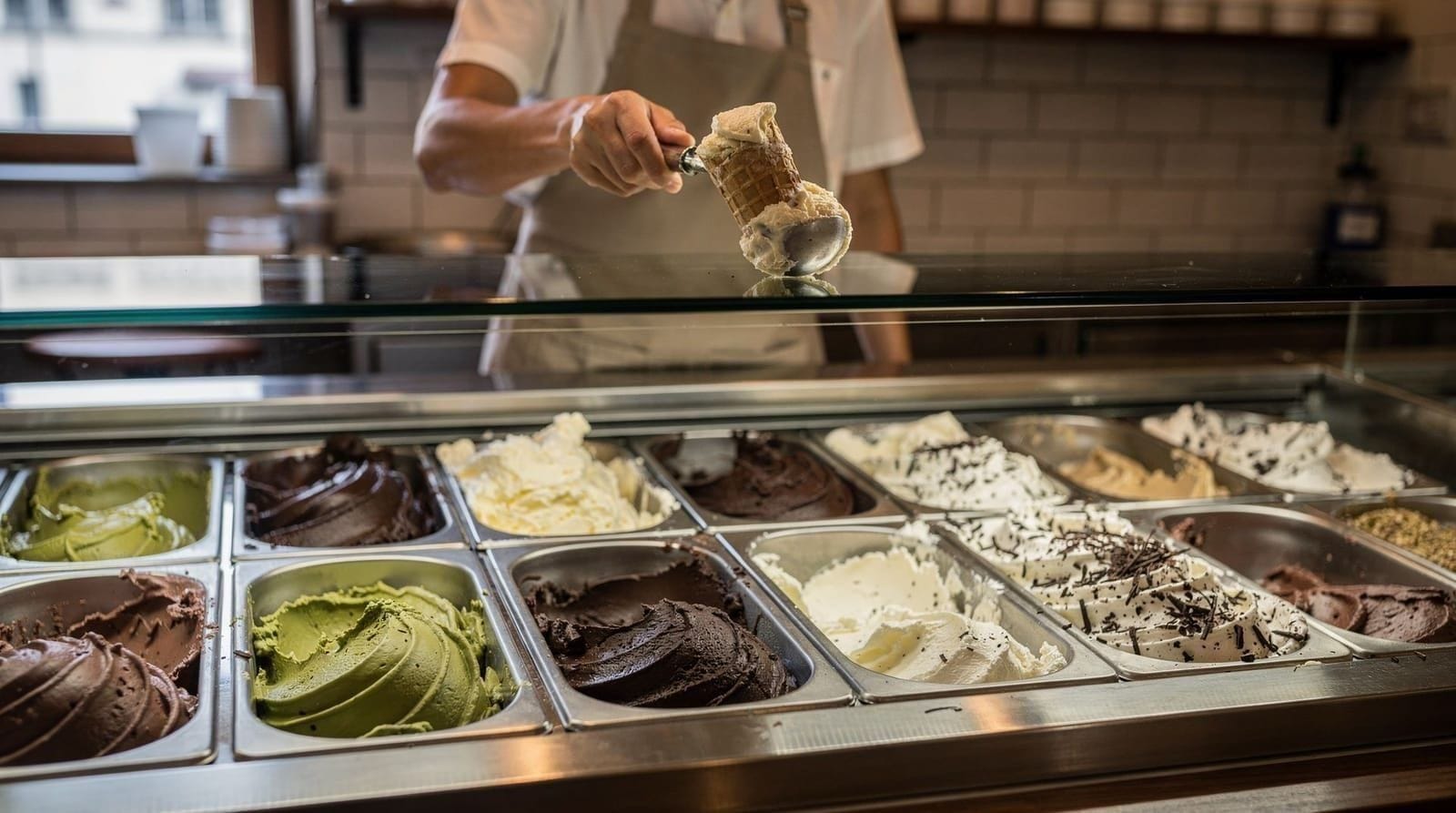
Authentic Florentine gelato — gelato artigianale — is stored in covered metal containers called pozzetti, or in metal trays (vaschette) behind the counter, not piled into photogenic peaks above the edge of the glass case. The colours of quality gelato are muted: pistachio is sage-grey-green, the colour of the nut itself; hazelnut looks like damp earth; strawberry is barely pink. If you see neon-green pistachio and fire-engine-red strawberry piled two feet high in a glass case near the Ponte Vecchio, that’s a sign: artificial colouring, low-quality base, and a bill that doesn’t match the product.
That said — there are legitimate exceptions. Some excellent shops use artisan ingredients and display in glass cases. The difference is the quality of the ingredients and the skill of the maker, which you can usually smell and taste rather than see.
With that established: here is what I found across two weeks and rather more gelato than was strictly necessary.
The shops I tested, and why
I chose a mix of frequently-recommended artisan shops, tourist-facing central locations, and a couple of less-discussed places I’d heard about from people who actually live in Florence. The goal was to test each shop’s signature flavours — pistachio, nocciola (hazelnut), and a fruit sorbet — under the same conditions: a medium cup, eaten within five minutes of purchase, in the shade.
This was not a rigorous scientific exercise. It was one person eating a lot of gelato over two weeks in May. But it produced some clear and consistent conclusions.
Gelateria dei Neri (Via dei Neri, Santa Croce)
This was the first place a Florentine friend told me to go, and her directness suggested it was not a recommendation she made casually. Via dei Neri is a narrow street between the Santa Croce neighbourhood and the Arno — not on the main tourist circuit, though it’s a ten-minute walk from the Uffizi.
The pistachio was exceptional. Dense, aromatic, with a faint saltiness that kept pulling me back for another spoonful. The nocciola had a depth of flavour that made me want to sit down with it. The mango sorbet was bright and clean without being sweet.
Price: €2.50 for a small, €3.50 for a medium. Long queues in the afternoon; go at 11 a.m. or after 5 p.m.
Verdict: the best single gelato stop in Florence.
Gelateria Edoardo (Piazza del Duomo)
Location-wise, this is the worst possible sign: directly facing the Duomo, surrounded by tour groups, on the most-photographed piazza in the city. And yet Edoardo is a genuine exception. The owner uses organic ingredients and seasonal fruit; the display case, though visible rather than pozzetti-covered, holds products with properly muted, natural colours.
The pistachio was outstanding — rivalling Dei Neri for the title of best in the city. The stracciatella (cream base with chocolate chips) was excellent. The lemon sorbet was bright and perfectly tart.
The price reflects the location: €3.50–4.50 for a medium, which is steep by local standards. But it’s the rare case of tourist-location pricing being at least partly justified by product quality.
Verdict: exceptional quality despite the location. Worth knowing about if you’re near the Duomo.
Gelateria dei Servi (Via dei Servi)
Via dei Servi is the long straight street running north from the Duomo to Piazza della Santissima Annunziata. Gelateria dei Servi is about halfway along, which makes it easy to incorporate into the walk between the two.
The nocciola here is the best I found in Florence — roasted, complex, with the kind of flavour that lingers rather than disappearing immediately. The chocolate (crema al cioccolato) was also serious: dark and slightly bitter, not the sweetened version designed for tourists.
The coffee gelato (caffè) was less impressive — a bit thin — but that may have been the batch on the day I visited.
Price: €2.50 for a small, €3.50 for a medium. Consistently short queues, perhaps because the location is slightly off the main tourist routes despite being close to several major sights.
Verdict: best nocciola in Florence. A neighbourhood gem that deserves more attention.
Sorbetteria dei Corsari (Via dei Benci, near Santa Croce)
A smaller operation, not on most tourist maps. A Florentine acquaintance who works at a restaurant nearby mentioned it almost reluctantly, with the slightly pained expression of someone sharing a good secret they know will be ruined.
The specialty here is the fruit sorbets, and they were extraordinary. A watermelon sorbet in May (early season, hence the slight pang of something running before its time) was clean, intensely flavoured, and only barely sweet. The blackberry sorbet had a tartness that felt like eating the actual fruit.
The cream-based flavours were less distinguished — fine but not exceptional. If you want the best sorbet in Florence, come here. If you want pistachio or nocciola, Dei Neri or Dei Servi are better.
Price: €2.00–3.00, the most affordable of the places I tested. Small space; get there early or after the lunch rush.
Verdict: the best fruit sorbets in the city. Outstanding for non-cream flavours.
What to avoid near the major sights
The piazzas immediately surrounding the Ponte Vecchio, Piazza della Repubblica, and the area between the Uffizi and the Ponte Vecchio are the highest-concentration zones for the over-piled, artificially coloured tourist-trap gelato. Prices run €5–8 for a medium cup, the flavours are bright and artificial, and the containers are designed to look Instagrammable rather than to maintain quality.
None of these places are selling you artisan gelato. You’re paying for the location. The honest Florence guide covers more of these traps — the same geography that makes Florence irresistible also makes it a magnet for businesses that profit from beauty rather than quality. The same logic applies across Florence’s food scene generally — proximity to a major sight is a reliable inverse indicator of quality.
Does the season change which shop is best?
Broadly yes, though not as much as you’d think. Fruit sorbets are seasonal by nature: Sorbetteria dei Corsari’s watermelon and berry sorbets peak from June through September and can taste thin outside that window, when the fruit is imported rather than local. Cream-based flavours — pistachio, nocciola, crema — are consistent year-round because the base ingredients (nuts, milk) don’t have the same seasonal dependency. Visiting in winter or early spring, lean toward Dei Neri or Dei Servi for cream flavours rather than chasing sorbet at Corsari. If you’re in Florence over Christmas, several shops also run seasonal flavours — chestnut, panettone gelato — worth trying once even if they don’t make a permanent top list.
How to order like a local
Walk in. Look at the flavours. Pick two or three (medium cup, cono or coppetta — cone or cup). Pay first at some shops, after at others — follow what the person ahead of you does. Do not ask for whipped cream on top unless you see locals doing it; it’s rare in artisan shops. Accept the small wooden spade or spoon they give you. Eat quickly.
There is no complicated vocabulary involved. “Posso avere un coppetta media con pistacchio e nocciola?” (Can I have a medium cup with pistachio and hazelnut?) will get you exactly what you want. They will understand you in English anyway.
The gelato tour option
If you want a guided introduction to Florence’s gelato landscape — with someone who knows the neighbourhood shops, can explain the artisan process, and will take you to places you’d never find on a two-day visit — a gelato walking tour makes genuine sense. The San Lorenzo market food and wine tour combines gelato stops with visits to the market and a broader introduction to Florentine food culture.
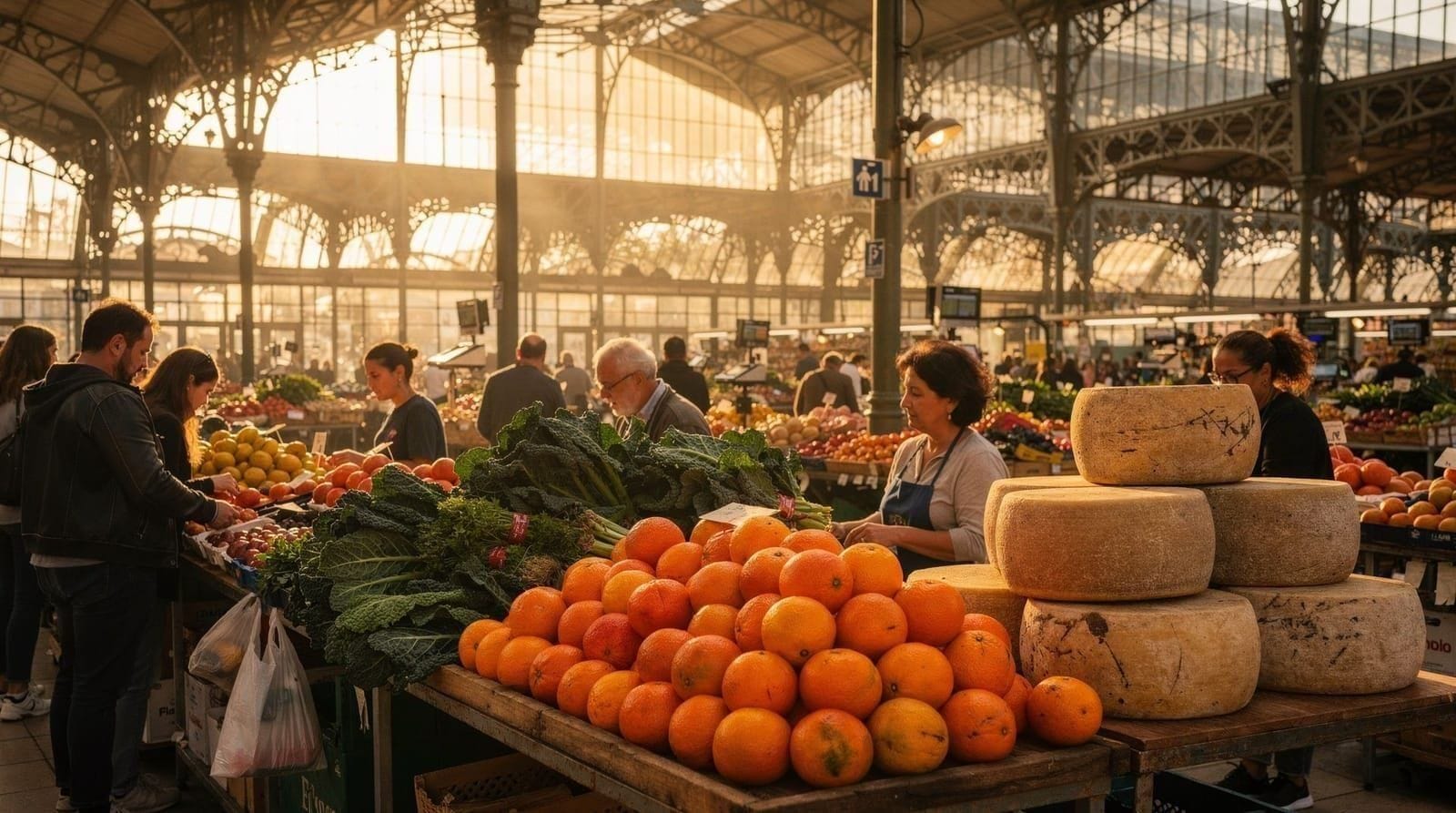
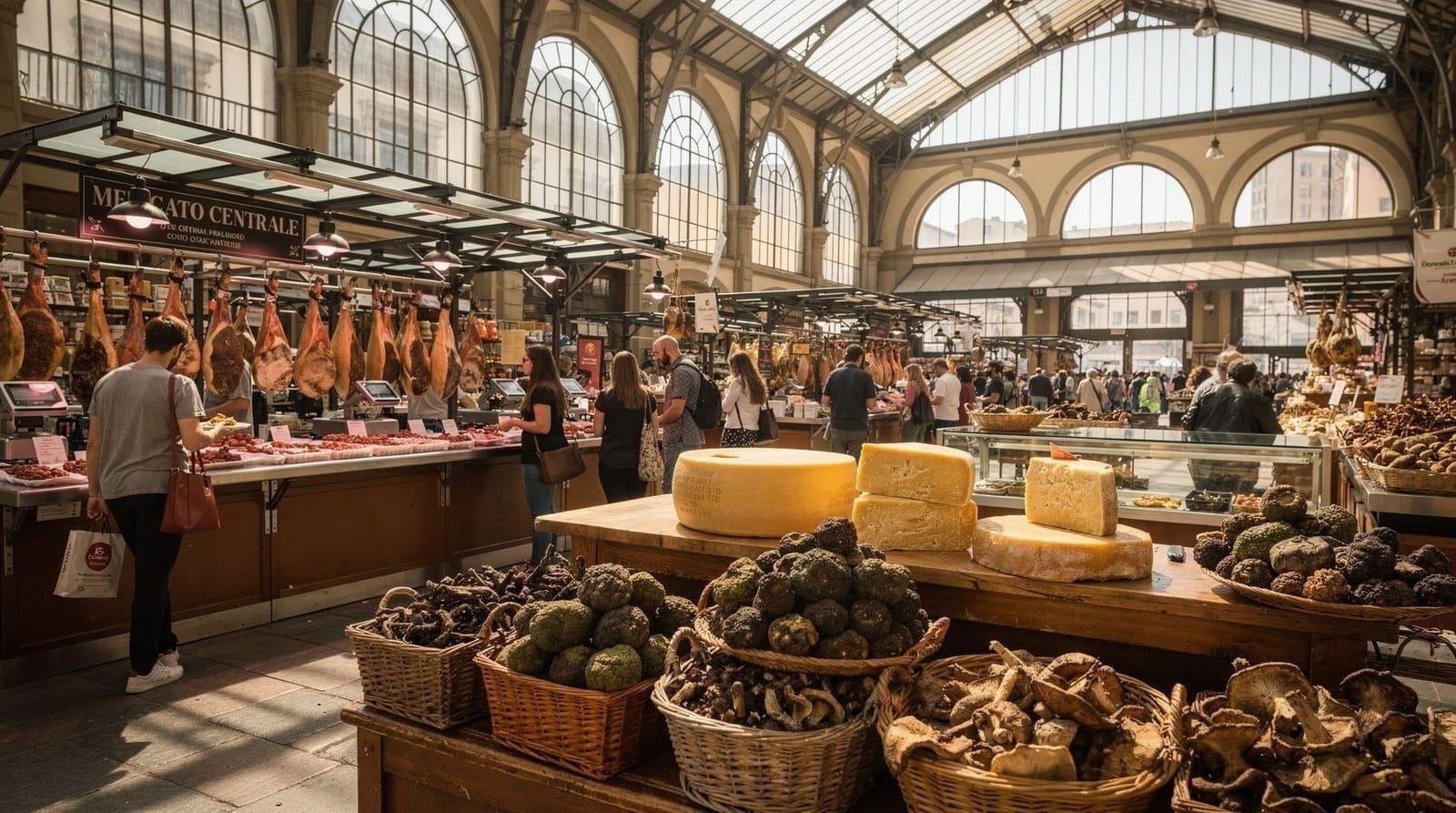
The Mercato Centrale is also worth visiting for food education: the ground floor sells produce, meat, cheese, and fresh pasta with the serious atmosphere of Florentines who came to buy ingredients. The upper floor is a food hall with more tourist-facing options, but the ground floor is the real thing.
The verdict: where to go
For pistachio: Gelateria dei Neri. For nocciola: Gelateria dei Servi. For fruit sorbets: Sorbetteria dei Corsari. For when you’re near the Duomo and don’t want to compromise: Edoardo. For everything else: walk until you find a place with pozzetti-covered containers and muted colours in the flavours, and you’re probably in good hands.
If you’re building gelato into a wider Santa Croce food walk, the Santa Croce district guide covers the neighbourhood around Dei Neri and Sorbetteria dei Corsari in more detail — both shops sit within a few minutes of the basilica.
Frequently asked questions about gelato in Florence
How much should gelato cost in Florence?
At a quality artisan shop, expect €2–3.50 for a small, €3–4.50 for a medium. If you’re paying more than €5 for a standard serving, you’re paying tourist-location tax rather than artisan-quality tax. The product at €3 from Gelateria dei Neri is better than the product at €6 from a kiosk near the Ponte Vecchio.
Is it better to get a cone or a cup?
For the experience: a cone. For the practicality of eating two or three scoops without architectural disaster: a cup. Both are standard. Waffle cones are usually slightly better than plain ones.
What flavours should I definitely try?
Pistachio, nocciola, and crema (vanilla custard base) are the classics that reveal a shop’s quality most clearly. In summer, any fresh fruit sorbet is also a useful indicator — if it tastes like real fruit rather than flavouring syrup, you’re in a good place.
Can I make my own gelato in Florence?
Yes — there are several cooking classes that include a gelato-making session alongside pasta or pizza. The gelato and pizza classes guide covers the best options, most of which run two to three hours and cost €60–90 per person including the finished product you eat at the end.
Are there good gelato shops outside the historic centre worth a detour?
A few, but for a short trip it’s rarely worth the extra travel time — the shops covered above (Dei Neri, Edoardo, Dei Servi, Sorbetteria dei Corsari) already represent the top tier and all sit within a 15-minute walk of the Duomo. If you’re staying in the Oltrarno for several days, ask locally; smaller neighbourhood shops there are inconsistent but occasionally excellent, and part of the fun is finding your own.
Top experiences
Bookable activities with verified prices and instant confirmation on GetYourGuide.