Florence in the rain: the best indoor and covered experiences
| Where | City centre — covered markets, museums, arcades |
| Time needed | A half-day to a full day |
| Cost | Free walking; museum entries around €10; a cooking class considerably more |
| Getting there | On foot — the best rainy-day spots are close together |
| Best time | Any rainy morning; November and April are Florence’s wettest months |
Rain in Florence is not a disaster
Florence gets about 840 millimetres of rain per year, distributed fairly evenly across the seasons with peaks in autumn and spring. November and April are the rainiest months; July and August the driest. If you’re visiting in spring or autumn — which are otherwise the best times to come — you will, statistically, experience at least one or two rainy days.
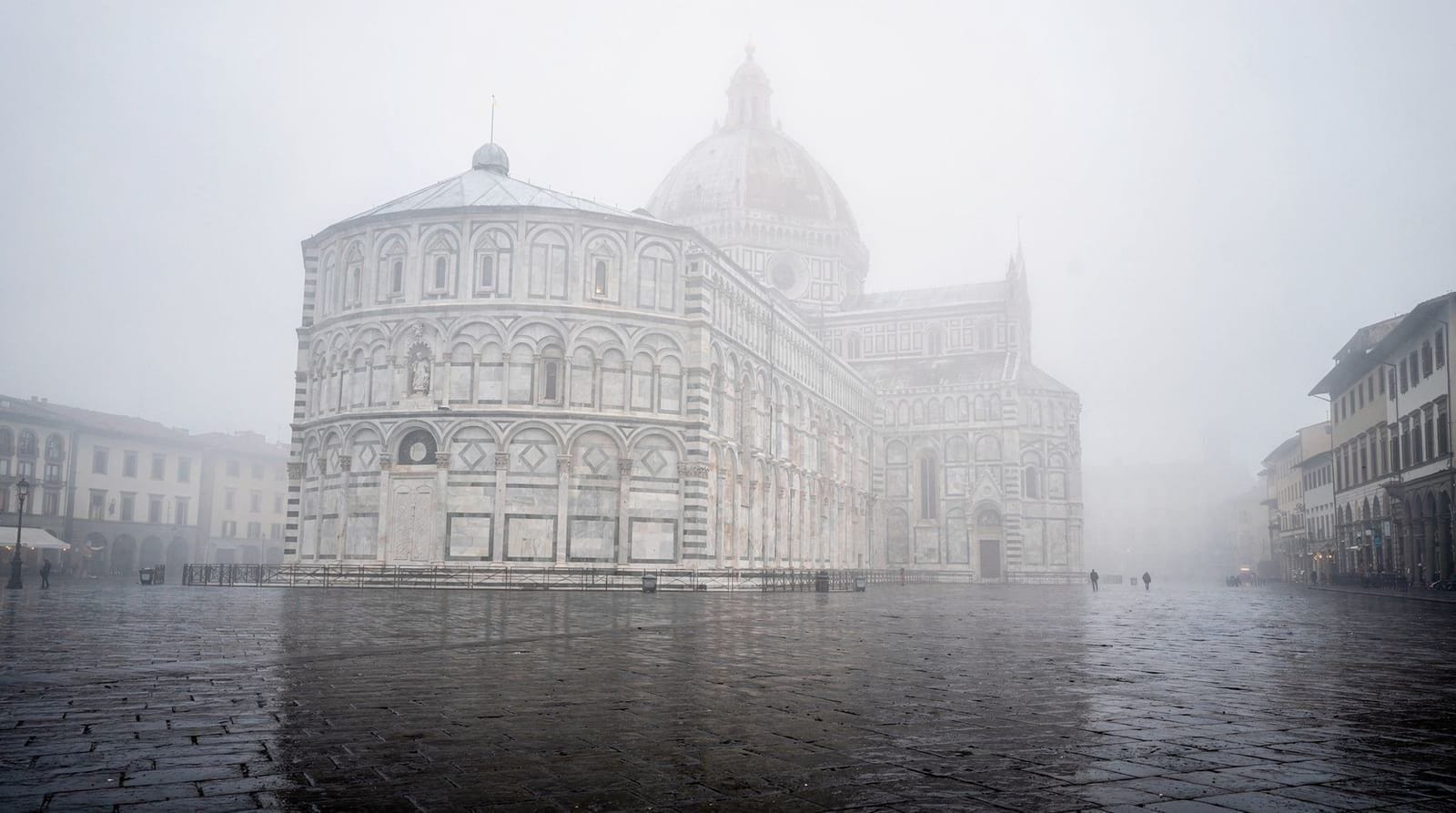
The good news: Florence on a rainy day is arguably better than Florence on a sunny one, in specific ways. The crowds at the Uffizi and Accademia are marginally thinner when it’s wet. The marble of the Duomo turns a deeper, more saturated white. The streets of the Oltrarno smell of rain and stone in a way that feels like the city revealing something it holds back in good weather.
This is a guide to the rainy day in Florence — not as something to be survived, but as a distinct and sometimes excellent experience.
Start with coffee and sit in it properly
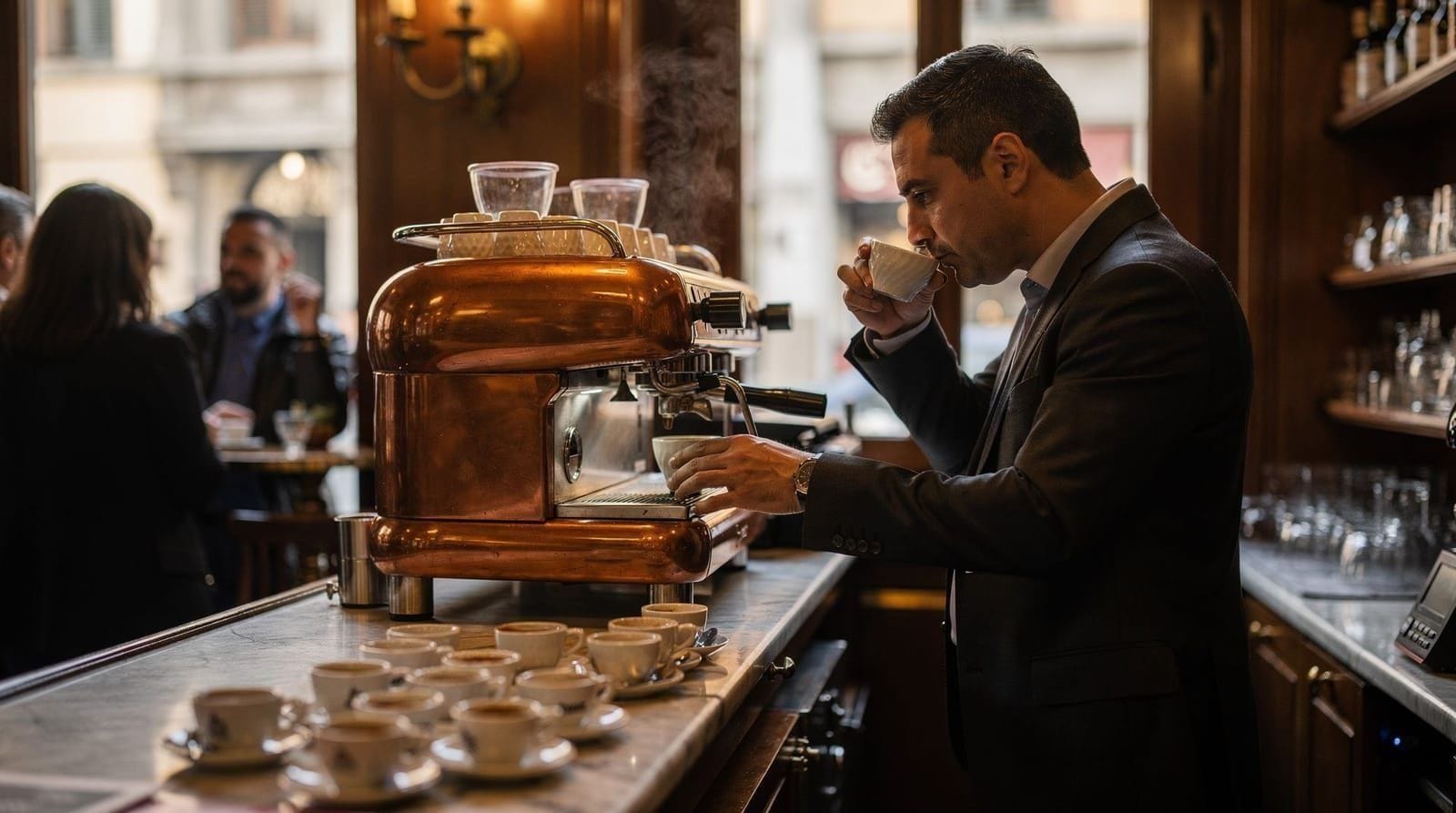
The Italian relationship with coffee is not the British relationship with tea, but it has something of the same ritualistic comfort on a grey day. A caffè macchiato — espresso with a small amount of hot milk foam — consumed standing at a counter in a bar while rain hits the windows is one of the more satisfying small experiences Florence offers.
The bars worth knowing for a wet morning:
Caffè Gilli on Piazza della Repubblica dates to 1733 (making it one of the oldest cafés in Europe in continuous operation) and is the kind of place where the interior matches the bad-weather mood — all dark wood and marble and mirrors. It’s a tourist draw and the prices reflect this (espresso at the counter €1.50–2, sitting down considerably more), but the atmosphere on a rainy Tuesday is genuinely good.
Caffè Rivoire on Piazza della Signoria is the other historical landmark — known particularly for its hot chocolate, which is a thick, almost pudding-like preparation that bears little resemblance to its English equivalent. On a cold rainy day this is the correct choice.
For a less touristy option: any neighbourhood bar in the Oltrarno or Sant’Ambrogio area. The coffee will be the same or better; the price will be €0.90–1.20 for an espresso. Look for the blue Lavazza or Illy signs.
The Mercato Centrale: a natural rainy day shelter
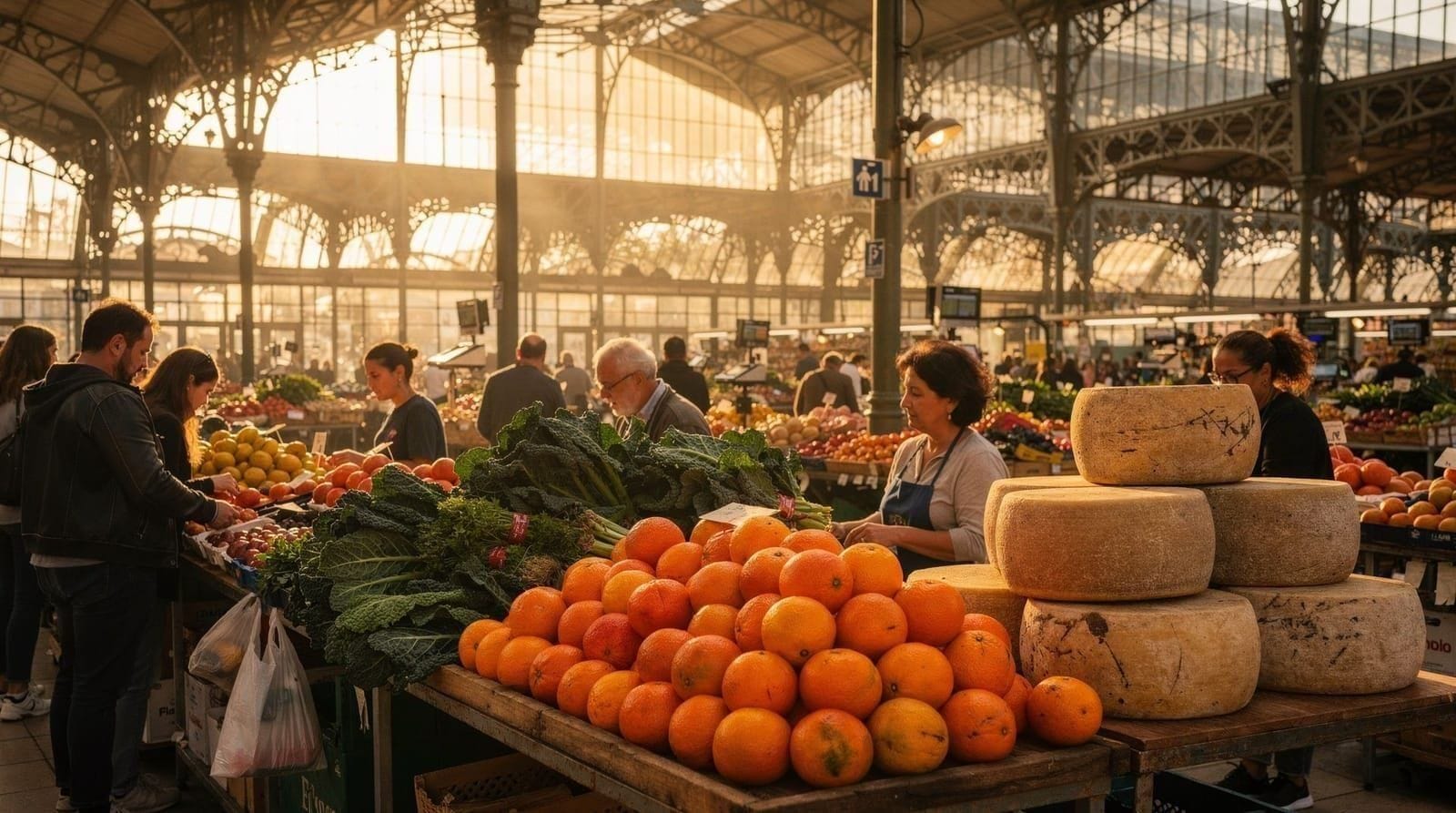
The Mercato Centrale was built in the 1870s by the architect Giuseppe Mengoni, who also designed the Galleria Vittorio Emanuele II in Milan — another covered iron-and-glass market designed to be weather-proof. The structure makes the Mercato Centrale a natural refuge on a wet day.
The ground floor is the proper food market: butchers, fishmongers, cheesemongers, pasta-makers, fruit and vegetable sellers. The smell and the noise are immediate and overwhelming in the best way. You can buy anything from fresh porcini mushrooms (in season October–December) to aged Parmigiano Reggiano to a whole roasted chicken and take it somewhere to eat. The vendors are Florentine professionals, not performers, and the market feels like the city working.
The upper floor is a food hall that opened in 2014 and is more curated, more expensive, and more tourist-friendly — but it also has good coffee, wine by the glass, and a central bar where you can sit for an hour without anyone minding. It’s warm and covered, which are exactly the qualities you need.
The lesser-known museums for rainy days
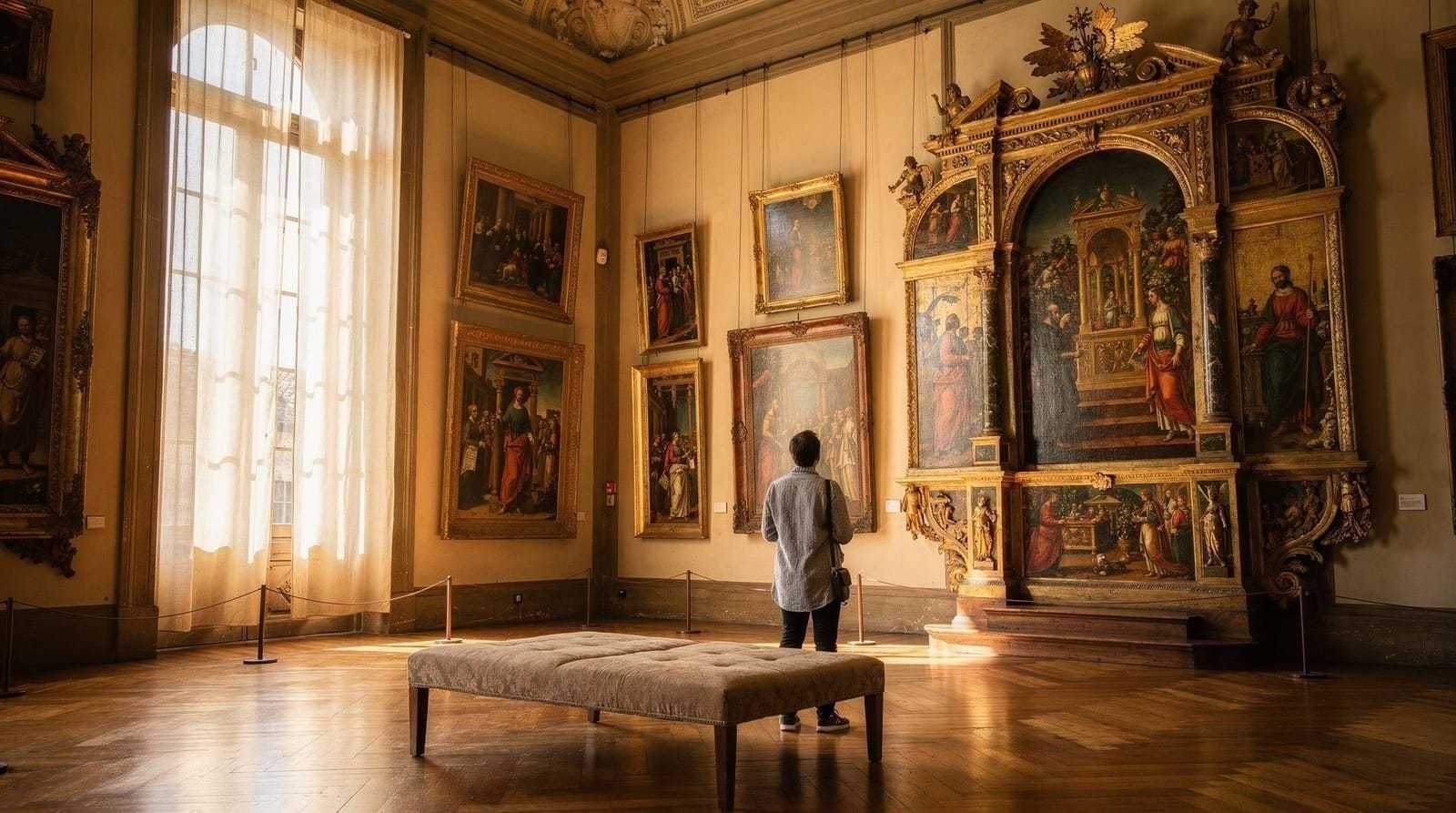
The best museums in Florence guide covers the full landscape. On a rainy day, the specific recommendation is to choose something that isn’t the Uffizi or the Accademia — not because those are bad rainy-day choices, but because your advance booking will determine when you go regardless of the weather. The museums worth discovering on a spontaneous rainy afternoon:
Museo Galileo (Piazza dei Giudici): This is one of the most underrated museums in Florence, which is saying something in a city where everything is ranked against the Uffizi. Galileo’s actual telescopes. The lens through which he observed Jupiter’s moons. The finger of Galileo himself, preserved in a reliquary. Orreries, astrolabes, and scientific instruments of extraordinary beauty. The Galileo museum guide covers the collection in depth. It takes about 90 minutes and is almost never crowded.
Museo Nazionale del Bargello (Via del Proconsolo): The Bargello contains Donatello’s David — the earlier, bronze version that preceded Michelangelo’s — along with Michelangelo’s early works, Giambologna’s Mercury, and a comprehensive collection of applied arts. The building itself is the oldest public building in Florence (begun 1255). The Bargello guide is worth reading before you go. Admission is €10.
Museo di San Marco: The convent and church where Fra Angelico lived and worked, with his frescoes painted directly on the walls of the friars’ cells. Each cell has a different devotional image, and the experience of moving from one to another — rain audible through the high windows — has a contemplative quality unlike any other museum in the city. The San Marco museum guide covers opening hours and what not to miss.
Cooking classes and indoor experiences
Rain is the ideal weather to spend two hours making fresh pasta with someone who has been doing it for thirty years. Florence has a strong tradition of cooking classes — from the market-to-table format (you visit a market, then cook what you bought) to evening pasta sessions with unlimited wine. The best cooking classes in Florence guide covers the landscape.
The market-to-table class format depends on the market being open, which it is rain or shine — the Sant’Ambrogio market operates covered, and the Mercato Centrale is entirely sheltered. A morning that combines browsing the market with a cooking class and lunch is one of the best rainy-day programmes Florence offers.
For something less culinary: leather wallet-making or leather crafting sessions in the Oltrarno workshops take about two hours, are entirely indoors, and you leave with something specific and well-made. These need advance booking.
Covered routes through the city
The Vasari Corridor — the elevated covered passageway connecting the Uffizi to Pitti Palace across the Ponte Vecchio — is the most famous covered route in Florence. It was built in 1565 in a miraculous five months so that the Medici could walk between their offices and their home without mixing with the public. The corridor contains a collection of self-portraits (Raphael, Rembrandt, Velázquez) and the experience of walking above the city at roof height, watching the rain on the Arno through the oval windows, is extraordinary. Check current access status before visiting — the corridor has had intermittent closures for restoration in recent years.
For a dry walk through the city centre, the covered arcades (portici) under the buildings around Piazza della Repubblica provide shelter for about 300 metres of prime shopping and café territory. Via dei Calzaiuoli, the pedestrian street between the Duomo and the Piazza della Signoria, has awnings on some sections and is manageable in light rain.
Bookshops and sitting places
Seeber Bookshop on Via dei Tornabuoni dates to 1845 and is one of the oldest bookshops in Italy, with an excellent English-language section and the warm, slightly eccentric atmosphere of a bookshop that has been accumulating books for nearly two centuries. A rainy hour there, with a purchase, is not wasted time.
Libreria Café La Cité in the Oltrarno on Borgo San Frediano is smaller, more contemporary, and has an excellent programme of events. The attached café serves good coffee.
For a more structured indoor programme: the Opera and music in Florence guide covers the Teatro del Maggio Musicale Fiorentino (the main opera house, with a full calendar), the smaller concert venues, and the evening programmes at several of the church spaces. A rainy evening is a particularly good reason to see whether there’s a string quartet at the Orsanmichele or a chamber concert at one of the historic venues.
The Brancacci Chapel on a quiet morning
One of Florence’s greatest but least-visited treasures is the Brancacci Chapel in the church of Santa Maria del Carmine in the Oltrarno — the “Sistine Chapel of the Renaissance,” containing Masaccio’s frescoes of 1424–1428 that changed the course of Italian painting by introducing coherent perspective and psychological depth to religious narrative painting. Michelangelo came here as a student to study them.
Entry is controlled (maximum 30 visitors at a time, timed sessions of 30 minutes), which makes it manageable in a way the Uffizi is not. On a rainy Wednesday morning the wait is usually short or non-existent. Admission is €10. The Oltrarno walking tour includes the chapel as a stop.
What to pack for a rainy Florence day
A compact umbrella is the standard tool. Waterproof footwear matters more than you might think: Florence’s streets are cobblestones and smooth stone, which become genuinely slippery when wet. Good-quality walking shoes or waterproof trainers are better than elegant ones. The museums are well-heated; inside the churches, which are not, it can be cold and damp — a thin warm layer helps.
Most importantly: do not treat a rainy day in Florence as a failed sunny day. It is a different programme. The museums are quieter, the trattorias fill up more slowly at lunch, the streets of the Oltrarno are atmospheric in a way they’re not in August sunshine. The city is doing something different in the rain. Pay attention to it.
When rain is most likely, month by month
Florence doesn’t have a true “rainy season” the way some destinations do — rain is spread across the year — but some months are noticeably wetter than others, which is worth knowing when you’re planning around it.
| Period | Rain likelihood | Notes |
|---|---|---|
| Nov–Dec | Highest | Wettest months; also quiet, atmospheric, and cheap |
| Mar–Apr | High | Spring showers, often brief; blossoms and mild temperatures compensate |
| Sep–Oct | Moderate | Occasional storms; otherwise one of the best times to visit |
| May–Jun | Lower | Mostly dry with occasional afternoon storms |
| Jul–Aug | Lowest | Driest months, but heat can be more of a problem than rain |
| Jan–Feb | Moderate | Cold rain rather than storms; good museum crowds trade-off |
If a wet day is a real risk for your trip dates, build in at least one flexible half-day rather than fixed outdoor plans for every slot — the Florence in winter guide and Florence in autumn guide go into what to expect season by season.
A sample rainy half-day
If you want a ready-made plan rather than picking from the list above: start with coffee at a neighbourhood bar, spend 90 minutes at the Museo Galileo or the Bargello, walk the covered arcades around Piazza della Repubblica to the Mercato Centrale for lunch on the upper floor, then finish with an hour at Seeber Bookshop or a cooking class if you’ve booked one. This covers indoor culture, food, and shelter without ever needing an umbrella for more than a few minutes at a time.
Frequently asked questions about rainy days in Florence
Is it worth visiting Florence if the forecast shows rain for most of the trip? Yes. Florence has enough covered markets, museums, historic cafés, and indoor experiences that a genuinely wet week is still a full, satisfying trip — it just requires swapping viewpoint visits and long outdoor walks for museum time, cooking classes, and covered arcades. The best museums in Florence guide alone has enough content for several rainy days.
What’s the single best rainy-day activity in Florence for someone with limited time? The Mercato Centrale, especially combined with a nearby museum. It’s fully covered, warm, has food and coffee for every budget, and sits close to the Duomo and San Lorenzo, making it easy to pair with the Museo Galileo, the Bargello, or a short walk through the covered arcades around Piazza della Repubblica.
Top experiences
Bookable activities with verified prices and instant confirmation on GetYourGuide.